
Exodus 7:10
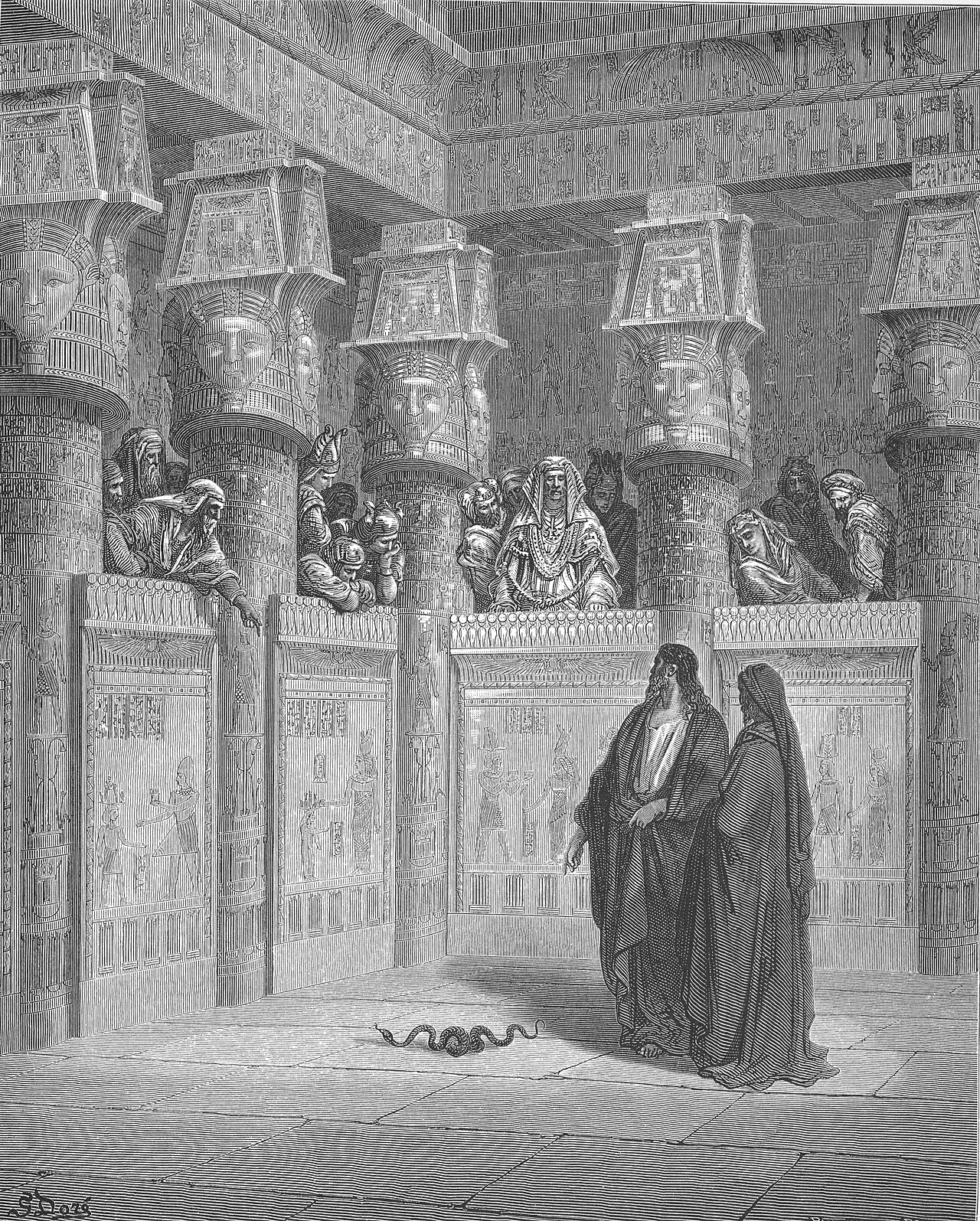
in Exodus 7So Moses and Aaron went to Pharaoh and did just as the LORD had commanded. Aaron threw his staff down before Pharaoh and his officials, and it became a serpent.
BSB
The same verse in ASV and KJV ▾
ASV
And Moses and Aaron went in unto Pharaoh, and they did so, as Jehovah had commanded: and Aaron cast down his rod before Pharaoh and before his servants, and it became a serpent.
KJV
And Moses and Aaron went in unto Pharaoh, and they did so as the Lord had commanded: and Aaron cast down his rod before Pharaoh, and before his servants, and it became a serpent.
⋯
This verse in Exodus 7
Commentary
9 notes on this verseHe cast down his rod, and it became a serpent which devoured the serpents of Egypt. This signified that the Word should become flesh to destroy the poison of the dread serpent by the forgiveness and pardon of sins. For the rod stands for the Word that is true, royal, filled with power and glorious in ruling. As the rod became a serpent, so he who was the Son of God begotten of the Father became the Son of man born of a woman.
This site's exposition
spake unto Moses and unto Aaron
on Exodus 7:8-10
The first sign given at the bush comes back. At 4:2-4 the rod became a serpent and Moses fled from it, and here Aaron casts it down before Pharaoh on command, though the Hebrew noun is not the one used at the bush. Exodus 4:3 has nachash, the ordinary word for a snake, while 7:9, 7:10 and 7:12 have tannin, a word used elsewhere of a great creature of the water. The same rod turns the river at verse 20, divides the sea at 14:16 and strikes the rock at 17:6.
This site's exposition
Aaron threw his staff down before Pharaoh
Moses and Aaron do exactly as commanded, and the sign is given before Pharaoh and his officials. Aaron handles the staff, in keeping with his role as the prophet of Moses. Ambrose of Milan read the staff that became a serpent as a figure of the Word made flesh, sent to destroy the poison of the serpent.
The record, by era
The Church Fathers2 voices
For by the serpent is to be understood death, which was brought about by the serpent in paradise, according to the manner of speech which attributes the effect to the cause. Therefore the rod was turned into a serpent, and the whole Christ, together with his body which is the church, into the resurrection, that will take place at the end of time. This is signified by the tail of the serpent which Moses held, in order that it might be turned again into a rod. But the serpents of the magicians are like those who are dead in the world, for, unless by believing in Christ they have been as it were swallowed up and entered into his body, they will not be able to rise in him.
The staff is a sign of the cross. It caused all the plagues when it swallowed the snakes, just as [the cross] would destroy all idols. With [the staff], [Moses] divided the sea and drowned the Egyptians. That prefigured the destruction of the Canaanites.
The Puritans and the Awakening3 voices
And Moses and Aaron went in unto Pharaoh,....
This first miracle, though it was not a plague, yet amounted to the threatening of a plague. If it made not Pharaoh feel, it made him fear; and this is God's method of dealing with sinners--he comes upon them gradually. This miracle, though too plain to be denied, is enervated, and the conviction of it taken off, by the magicians' imitation of it,
He chastises his disobedience by a plague, the first of the ten, turning the waters into blood; but Pharaoh hardens his heart against this correction,
1 more voice on this verse
The Nineteenth Century1 voice
It became a serpent - תנין tannin. What kind of a serpent is here intended, learned men are not agreed. From the manner in which the original word is used in Psa 74:13; Isa 27:1; Isa 51:9; Job 7:12; some very large creature, either aquatic or amphibious, is probably meant; some have thought that the crocodile, a well-known Egyptian animal, is here intended. In Exo 4:3 it is said that this rod was changed into a serpent, but the original word there is נחש nachash, and here תנין tannin, the same word which we translate whale, Gen 1:
How the passage was read
What the Jewish commentators add
This too, namely, that the rod became a tannin (serpent), was a wonder.
2 more on this passage, in their own words ▾
Moshe and Aharon came to Pharaoh and they did exactly as Adonoy commanded [them].
AND THEY ALSO, THE MAGICIANS OF EGYPT, DID IN LIKE MANNER ‘B’LAHATEIHEM’ (WITH THEIR SECRET ARTS). Our Rabbis have said. Sanhedrin 67b.
This section is reception history: how the passage was read and kept in the Jewish tradition. Where a reading parts from an essential of the Christian faith, the section says so at that point.
Texts and citation data: Sefaria; each excerpt follows its version’s licence. 1 further source is cited on this chapter that carry no English text this site may quote or only restate the verse.
The words behind it
20 Hebrew wordsEvery Hebrew word of this verse in the order it stands, with what it means and the door to its own study. The last column counts the times a word stands in the whole Bible: the rarer the word, the more the places it appears belong together.
| Hebrew | Sound | Meaning | Word study | In the Bible |
|---|---|---|---|---|
| וַיָּבֹ֨א | vaiyavo' | and he went | H935 → | 2568 times |
| מֹשֶׁ֤ה | mosheh | Moses | H4872 → | 765 times |
| וְאַהֲרֹן֙ | veaharon | and Aaron | H175 → | 347 times |
| אֶל־ | ʾel- | to | H413 → | 5510 times |
| פַּרְעֹ֔ה | paroh | Pharaoh | H6547 → | 274 times |
| וַיַּ֣עַשׂוּ | vaiyaasu | and they did | H6213 → | 2628 times |
| כֵ֔ן | khen | so | H3651 → | 771 times |
| כַּאֲשֶׁ֖ר | kaasher | just as | H834 → | 5497 times |
| צִוָּ֣ה | tzivah | he had commanded | H6680 → | 494 times |
| יְהוָ֑ה | yahweh | Yahweh | H3068 → | 6520 times |
| וַיַּשְׁלֵ֨ךְ | vaiyashlekh | and he threw down | H7993 → | 125 times |
| אַהֲרֹ֜ן | ʾaharon | Aaron | H175 → | 347 times |
| אֶת־ | ʾet- | <obj.> | H853 → | 10935 times |
| מַטֵּ֗הוּ | matehu | staff his | H4294 → | 252 times |
| לִפְנֵ֥י | lifnei | <to> before | H6440 → | 2123 times |
| פַרְעֹ֛ה | faroh | Pharaoh | H6547 → | 274 times |
| וְלִפְנֵ֥י | velifnei | and <to> before | H6440 → | 2123 times |
| עֲבָדָ֖יו | ʾavadav | servants his | H5650 → | 799 times |
| וַיְהִ֥י | vayhi | and it became | H1961 → | 3559 times |
| לְתַנִּֽין׃ | letanin | <into> a serpent | H8577 → | 28 times |
וַיָּבֹ֨אand he went
vaiyavo'H935 →2568 times
מֹשֶׁ֤הMoses
moshehH4872 →765 times
וְאַהֲרֹן֙and Aaron
veaharonH175 →347 times
אֶל־to
ʾel-H413 →5510 times
פַּרְעֹ֔הPharaoh
parohH6547 →274 times
וַיַּ֣עַשׂוּand they did
vaiyaasuH6213 →2628 times
כֵ֔ןso
khenH3651 →771 times
כַּאֲשֶׁ֖רjust as
kaasherH834 →5497 times
צִוָּ֣הhe had commanded
tzivahH6680 →494 times
יְהוָ֑הYahweh
yahwehH3068 →6520 times
וַיַּשְׁלֵ֨ךְand he threw down
vaiyashlekhH7993 →125 times
אַהֲרֹ֜ןAaron
ʾaharonH175 →347 times
אֶת־<obj.>
ʾet-H853 →10935 times
מַטֵּ֗הוּstaff his
matehuH4294 →252 times
לִפְנֵ֥י<to> before
lifneiH6440 →2123 times
פַרְעֹ֛הPharaoh
farohH6547 →274 times
וְלִפְנֵ֥יand <to> before
velifneiH6440 →2123 times
עֲבָדָ֖יוservants his
ʾavadavH5650 →799 times
וַיְהִ֥יand it became
vayhiH1961 →3559 times
לְתַנִּֽין׃<into> a serpent
letaninH8577 →28 times
A shaded row is a word that stands 400 times or fewer in the Bible.
The walk
8 stopsEach card is a verse this one points to, and under it the verses that one points to in turn. Where several paths arrive at the same place, that place is listed first: the text keeps returning to it.
Through
Luke 10:19Behold, I have given you authority to tread on snakes and scorpions, and over all the power of the enemy. Nothing will harm you.
it leads to
- Psalms 91:13
You will tread on the lion and cobra; you will trample the young lion and serpent.
- Mark 16:18
they will pick up snakes with their hands, and if they drink any deadly poison, it will not harm them; they will lay their hands on the sick, and they will be made well.”
- Romans 16:20
The God of peace will soon crush Satan under your feet. The grace of our Lord Jesus Christ be with you.
- Acts 28:5
But Paul shook the creature off into the fire and suffered no ill effects.
- Revelation 11:5
If anyone wants to harm them, fire proceeds from their mouths and devours their enemies. In this way, anyone who wants to harm them must be killed.
- Psalms 91:13
Through
Mark 16:18they will pick up snakes with their hands, and if they drink any deadly poison, it will not harm them; they will lay their hands on the sick, and they will be made well.”
it leads to
- Luke 10:19
Behold, I have given you authority to tread on snakes and scorpions, and over all the power of the enemy. Nothing will harm you.
- James 5:14–15
Is any one of you sick? He should call the elders of the church to pray over him and anoint him with oil in the name of the Lord.
- Acts 28:3–6
Paul gathered a bundle of sticks, and as he laid them on the fire, a viper, driven out by the heat, fastened itself to his hand.
- Luke 10:19
Where this verse is studied
On this page
Studies1
About Exodus
Who and where
2 names in this verse with a page on the site.
This page draws on Adam Clarke, Commentary on the Bible; Ambrose of Milan, On the Duties of the Clergy 3.15.94; Ambrose of Milan, On the Duties of the Clergy; Augustine of Hippo, THE TRINITY 3.20; Ephrem the Syrian, COMMENTARY ON EXODUS 7:4; John Gill, Exposition of the Old Testament (1748-1763); Keil and Delitzsch, Biblical Commentary on the Old Testament: The Pentateuch and Matthew Henry, Commentary on the Whole Bible.