
Exodus 7:13
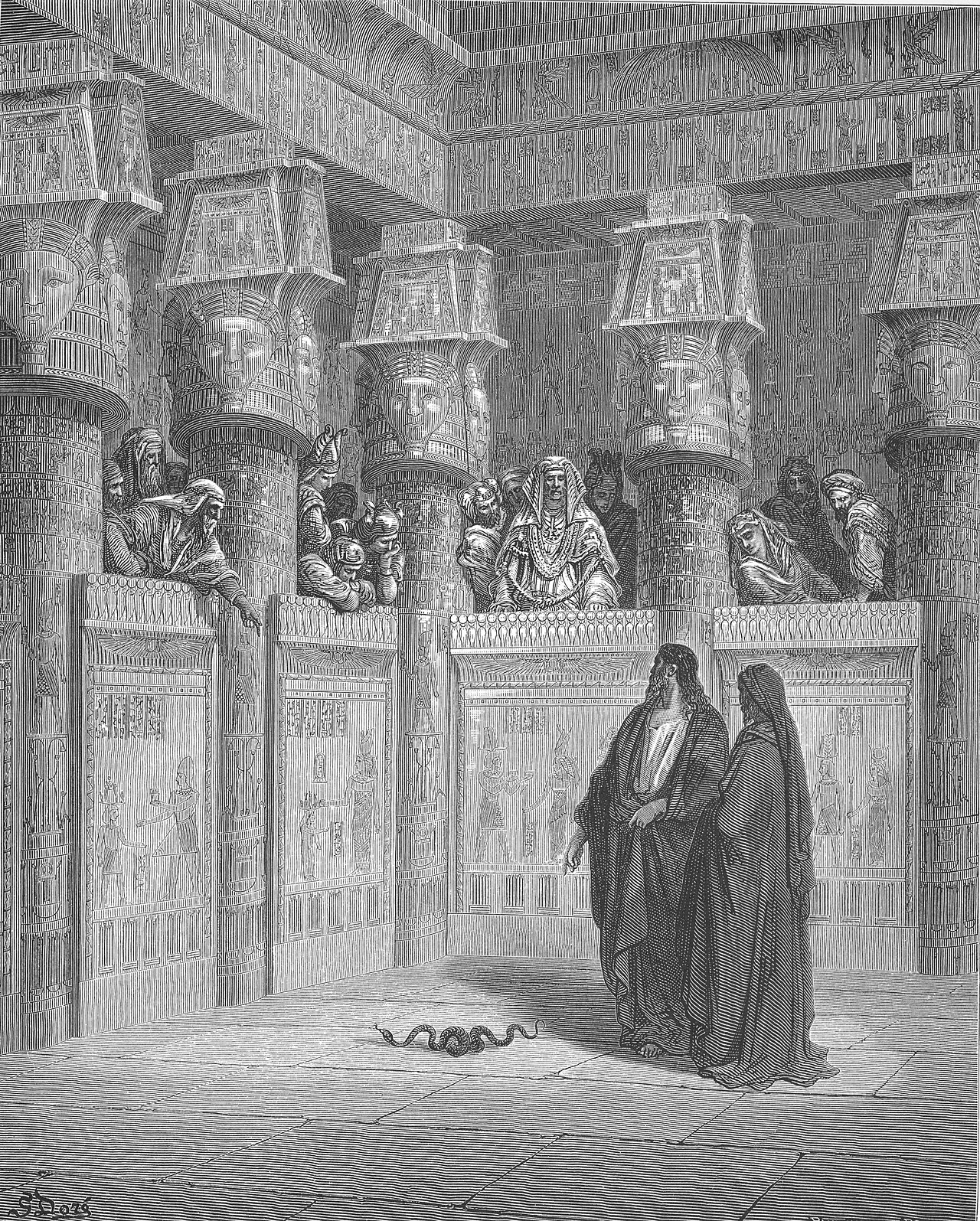
in Exodus 7Still, Pharaoh’s heart was hardened, and he would not listen to them, just as the LORD had said.
BSB
The same verse in ASV and KJV ▾
ASV
And Pharaoh’s heart was hardened, and he hearkened not unto them; as Jehovah had spoken.
KJV
And he hardened Pharaoh’s heart, that he hearkened not unto them; as the Lord had said.
⋯
This verse in Exodus 7
Commentary
5 notes on this verseAnd he hardened Pharaoh’s heart - ויחזק לב פרעה vaiyechezak leb Paroh, “And the heart of Pharaoh was hardened,” the identical words which in Exo 7:22 are thus translated, and which should have been rendered in the same way here, lest the hardening, which was evidently the effect of his own obstinate shutting of his eyes against the truth, should be attributed to God. See Clarke’s note on Exo 4:21.
This site's exposition
Pharaoh’s heart was hardened
The closing clause, just as the LORD had said, points back to the refusal foretold at verse 4. Adam Clarke argued that the Hebrew verb here matches verse 22, where the King James renders it as passive.
The record, by era
The Puritans and the Awakening2 voices
And he hardened Pharaoh's heart,....
He chastises his disobedience by a plague, the first of the ten, turning the waters into blood; but Pharaoh hardens his heart against this correction,
The Nineteenth Century1 voice
A commentator
Albert Barnes1798–1870
Notes, Explanatory and Practical, on the Old and New Testaments (1832-1869)
proposed
And he hardened - Or Pharaoh’s heart was hardened. See Exo 4:21.
How the passage was read
What the Jewish commentators add
By itself. 62 God did not harden Pharaoh’s heart. Pharaoh hardened it himself.
2 more on this passage, in their own words ▾
This, the swallowing of the magicians’ rods by Aaron’s staff and their consequent disappearance, 58 The magicians’ rods disappeared permanently. was a second wonder.
AND THE LORD SAID…PHARAOH’S HEART IS STUBBORN. Kaved (is stubborn) is a verb in the perfect.
This section is reception history: how the passage was read and kept in the Jewish tradition. Where a reading parts from an essential of the Christian faith, the section says so at that point.
Texts and citation data: Sefaria; each excerpt follows its version’s licence. 1 further source is cited on this chapter that carry no English text this site may quote or only restate the verse.
The words behind it
9 Hebrew wordsEvery Hebrew word of this verse in the order it stands, with what it means and the door to its own study. The last column counts the times a word stands in the whole Bible: the rarer the word, the more the places it appears belong together.
| Hebrew | Sound | Meaning | Word study | In the Bible |
|---|---|---|---|---|
| וַיֶּחֱזַק֙ | vaiyechezak | and it was strong | H2388 → | 291 times |
| לֵ֣ב | lev | [the] heart of | H3820 → | 595 times |
| פַּרְעֹ֔ה | paroh | Pharaoh | H6547 → | 274 times |
| וְלֹ֥א | velo' | and not | H3808 → | 5168 times |
| שָׁמַ֖ע | shama' | he listened | H8085 → | 1159 times |
| אֲלֵהֶ֑ם | ʾalehem | to them | H413 → | 5510 times |
| כַּאֲשֶׁ֖ר | kaasher | just as | H834 → | 5497 times |
| דִּבֶּ֥ר | diber | he had said | H1696 → | 1141 times |
| יְהוָֽה׃ פ | yahweh | Yahweh | H3068 → | 6520 times |
וַיֶּחֱזַק֙and it was strong
vaiyechezakH2388 →291 times
לֵ֣ב[the] heart of
levH3820 →595 times
פַּרְעֹ֔הPharaoh
parohH6547 →274 times
וְלֹ֥אand not
velo'H3808 →5168 times
שָׁמַ֖עhe listened
shama'H8085 →1159 times
אֲלֵהֶ֑םto them
ʾalehemH413 →5510 times
כַּאֲשֶׁ֖רjust as
kaasherH834 →5497 times
דִּבֶּ֥רhe had said
diberH1696 →1141 times
יְהוָֽה׃ פYahweh
yahwehH3068 →6520 times
A shaded row is a word that stands 400 times or fewer in the Bible.
The walk
8 stopsEach card is a verse this one points to, and under it the verses that one points to in turn. Where several paths arrive at the same place, that place is listed first: the text keeps returning to it.
Through
Romans 1:28Furthermore, since they did not see fit to acknowledge God, He gave them up to a depraved mind, to do what ought not to be done.
it leads to
- 2 Thessalonians 2:10–12
and with every wicked deception directed against those who are perishing, because they refused the love of the truth that would have saved them.
- Titus 1:16
They profess to know God, but by their actions they deny Him. They are detestable, disobedient, and unfit for any good deed.
- Romans 1:21
For although they knew God, they neither glorified Him as God nor gave thanks to Him, but they became futile in their thinking and darkened in their foolish hearts.
- Jeremiah 9:6
You dwell in the midst of deception; in their deceit they refuse to know Me,” declares the LORD.
- Romans 1:24
Therefore God gave them over in the desires of their hearts to impurity for the dishonoring of their bodies with one another.
- 2 Thessalonians 2:10–12
Through
Exodus 4:21The LORD instructed Moses, “When you go back to Egypt, see that you perform before Pharaoh all the wonders that I have put within your power. But I will harden his heart so that…
it leads to
- Exodus 14:8
And the LORD hardened the heart of Pharaoh king of Egypt so that he pursued the Israelites, who were marching out defiantly.
Reached by 2 separate paths from here.
- Romans 9:18
Therefore God has mercy on whom He wants to have mercy, and He hardens whom He wants to harden.
- Joshua 11:20
For it was of the LORD to harden their hearts to engage Israel in battle, so that they would be set apart for destruction and would receive no mercy, being annihilated as the LORD…
- Exodus 14:8
Where this verse is studied
On this page
Studies9
About Exodus
This page draws on Adam Clarke, Commentary on the Bible; Albert Barnes, Notes, Explanatory and Practical, on the Old and New Testaments (1832-1869); John Gill, Exposition of the Old Testament (1748-1763); Keil and Delitzsch, Biblical Commentary on the Old Testament: The Pentateuch and Matthew Henry, Commentary on the Whole Bible.