
Exodus 16:9
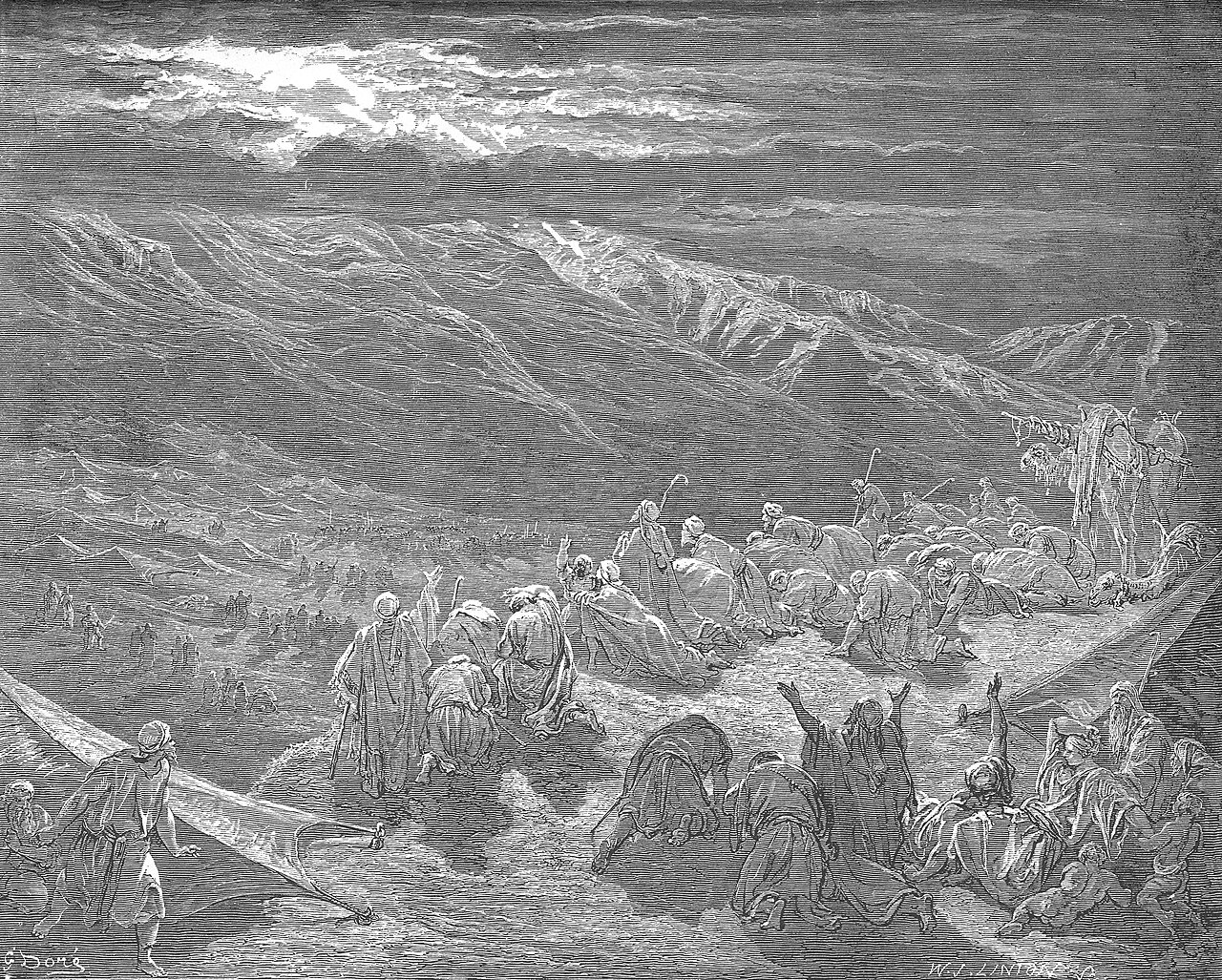
in Exodus 16Then Moses said to Aaron, “Tell the whole congregation of Israel, ‘Come before the LORD, for He has heard your grumbling.’”
BSB
The same verse in ASV and KJV ▾
ASV
And Moses said unto Aaron, Say unto all the congregation of the children of Israel, Come near before Jehovah; for he hath heard your murmurings.
KJV
And Moses spake unto Aaron, Say unto all the congregation of the children of Israel, Come near before the Lord: for he hath heard your murmurings.
⋯
This verse in Exodus 16
Commentary
6 notes on this verseThis site's exposition
in the evening flesh to eat
on Exodus 16:8-9
Moses says twice in one verse where the murmuring has actually landed, that it is not against us, but against the LORD. The complaint was addressed to two men in the camp and it is answered by God directly. Aaron's summons then puts a grumbling crowd in the posture of an assembly, come near before the LORD, before anything has been given them.
This site's exposition
Then Moses said to Aaron
Moses speaks to the congregation through Aaron, as he had spoken to Pharaoh through him, and Adam Clarke traces the pattern to 7:1, where Aaron is named Moses's prophet. He has heard your grumbling now stands for the third time.
The record, by era
The Puritans and the Awakening3 voices
Many there are of whom we say that they are better fed than taught; but the Israelites were thus fed, that they might be taught. He led him about, he instructed him ( Deut. xxxii.
quarantine:debris (2026-07-29) — unbalanced-parens
); and some think that, while Aaron was giving a public summons to the congregation to come near before the Lord, Moses retired to pray, and that the appearance of the glory of the Lord (
quarantine:debris (2026-07-29) — leading-punctuation
And Moses spake unto Aaron,....
The Nineteenth Century1 voice
Come near before the Lord - This has been supposed to refer to some particular place, where the Lord manifested his presence.
How the passage was read
What the Jewish commentators add
On the verses either side of this one
It became clear to them that when Aaron spoke to them, they came near before the Lord.
This section is reception history: how the passage was read and kept in the Jewish tradition. Where a reading parts from an essential of the Christian faith, the section says so at that point.
Texts and citation data: Sefaria; each excerpt follows its version’s licence. 4 further sources are cited on this chapter that carry no English text this site may quote or only restate the verse.
The words behind it
17 Hebrew wordsEvery Hebrew word of this verse in the order it stands, with what it means and the door to its own study. The last column counts the times a word stands in the whole Bible: the rarer the word, the more the places it appears belong together.
| Hebrew | Sound | Meaning | Word study | In the Bible |
|---|---|---|---|---|
| וַיֹּ֤אמֶר | vaiyomer | and he said | H559 → | 5305 times |
| מֹשֶׁה֙ | mosheh | Moses | H4872 → | 765 times |
| אֶֽל־ | ʾel- | to | H413 → | 5510 times |
| אַהֲרֹ֔ן | ʾaharon | Aaron | H175 → | 347 times |
| אֱמֹ֗ר | ʾemor | say | H559 → | 5305 times |
| אֶֽל־ | ʾel- | to | H413 → | 5510 times |
| כָּל־ | kol- | all | H3605 → | 5413 times |
| עֲדַת֙ | ʾadat | [the] congregation of | H5712 → | 149 times |
| בְּנֵ֣י | benei | [the] people of | H1121 → | 4930 times |
| יִשְׂרָאֵ֔ל | yisrael | Israel | H3478 → | 2507 times |
| קִרְב֖וּ | kirvu | draw near | H7126 → | 280 times |
| לִפְנֵ֣י | lifnei | <to> before | H6440 → | 2123 times |
| יְהוָ֑ה | yahweh | Yahweh | H3068 → | 6520 times |
| כִּ֣י | ki | for | H3588 → | 4482 times |
| שָׁמַ֔ע | shama' | he has heard | H8085 → | 1159 times |
| אֵ֖ת | ʾet | <obj.> | H853 → | 10935 times |
| תְּלֻנֹּתֵיכֶֽם׃ | telunoteikhem | grumblings your | H8519 → | 8 times |
וַיֹּ֤אמֶרand he said
vaiyomerH559 →5305 times
מֹשֶׁה֙Moses
moshehH4872 →765 times
אֶֽל־to
ʾel-H413 →5510 times
אַהֲרֹ֔ןAaron
ʾaharonH175 →347 times
אֱמֹ֗רsay
ʾemorH559 →5305 times
אֶֽל־to
ʾel-H413 →5510 times
כָּל־all
kol-H3605 →5413 times
עֲדַת֙[the] congregation of
ʾadatH5712 →149 times
בְּנֵ֣י[the] people of
beneiH1121 →4930 times
יִשְׂרָאֵ֔לIsrael
yisraelH3478 →2507 times
קִרְב֖וּdraw near
kirvuH7126 →280 times
לִפְנֵ֣י<to> before
lifneiH6440 →2123 times
יְהוָ֑הYahweh
yahwehH3068 →6520 times
כִּ֣יfor
kiH3588 →4482 times
שָׁמַ֔עhe has heard
shama'H8085 →1159 times
אֵ֖ת<obj.>
ʾetH853 →10935 times
תְּלֻנֹּתֵיכֶֽם׃grumblings your
telunoteikhemH8519 →8 times
A shaded row is a word that stands 400 times or fewer in the Bible.
The walk
8 stopsEach card is a verse this one points to, and under it the verses that one points to in turn. Where several paths arrive at the same place, that place is listed first: the text keeps returning to it.
Through
Exodus 16:8And Moses added, “The LORD will give you meat to eat this evening and bread to fill you in the morning, for He has heard your grumbling against Him. Who are we? Your grumblings…
it leads to
- Romans 13:2
Consequently, whoever resists authority is opposing what God has set in place, and those who do so will bring judgment on themselves.
- 1 Samuel 8:7
And the LORD said to Samuel, “Listen to the voice of the people in all that they say to you. For it is not you they have rejected, but they have rejected Me as…
- Luke 10:16
Whoever listens to you listens to Me; whoever rejects you rejects Me; and whoever rejects Me rejects the One who sent Me.”
- 1 Thessalonians 4:8
Anyone, then, who rejects this command does not reject man but God, the very One who gives you His Holy Spirit.
- Numbers 14:27
“How long will this wicked congregation grumble against Me? I have heard the complaints that the Israelites are making against Me.
- Romans 13:2
Through
Exodus 16:2And there in the desert they all grumbled against Moses and Aaron.
it leads to
- 1 Corinthians 10:10
And do not complain, as some of them did, and were killed by the destroying angel.
- Exodus 15:24
So the people grumbled against Moses, saying, “What are we to drink?”
- Psalms 106:25
They grumbled in their tents and did not listen to the voice of the LORD.
- 1 Corinthians 10:10
Where this verse is studied
About Exodus
Who and where
2 names in this verse with a page on the site.
This page draws on Adam Clarke, Commentary on the Bible; John Calvin, Commentary on the Four Last Books of Moses Arranged in the Form of a Harmony; John Gill, Exposition of the Old Testament (1748-1763) and Matthew Henry, Commentary on the Whole Bible.