
Exodus 15:10
in Exodus 15But You blew with Your breath, and the sea covered them. They sank like lead in the mighty waters.
BSB
The same verse in ASV and KJV ▾
ASV
Thou didst blow with thy wind, the sea covered them: They sank as lead in the mighty waters.
KJV
Thou didst blow with thy wind, the sea covered them: they sank as lead in the mighty waters.
⋯
This verse in Exodus 15
Commentary
5 notes on this verseMoses himself says in his song, "You sent your Spirit, and the sea covered them." You observe that even then holy baptism was prefigured in that passage of the Hebrews, wherein the Egyptian perished, the Hebrew escaped. For what else are we daily taught in this sacrament but that guilt is swallowed up and error done away, but that virtue and innocence remain unharmed?
This site's exposition
with the blast of thy nostrils the waters were gathered together
on Exodus 15:8-10
Chapter 14 called it a strong east wind and the song calls it the blast of thy nostrils, the same event told as breath. Verse 9 gives the enemy six short clauses in a row, I will pursue, I will overtake, I will divide the spoil, my lust shall be satisfied upon them, I will draw my sword, my hand shall destroy them, and every one of them is a boast about what he will do next. Verse 10 answers the whole speech in one line, Thou didst blow with thy wind, the sea covered them. Psalm 33:7 and Psalm 78:13 both pick up the heap of waters from verse 8.
This site's exposition
You blew with Your breath
The Hebrew ruach means breath, wind and spirit. Ambrose of Milan read the line as God sending His Spirit over the sea, and he took the waters that covered Egypt as a figure of baptism, where the Egyptian sank and the Hebrew escaped.
The record, by era
The Puritans and the Awakening2 voices
), under the weight of their own guilt and God's wrath. Their sin had made them hard like a stone, and now they justly sink like a stone. Nay, the earth itself swallowed them (
quarantine:debris (2026-07-29) — leading-punctuation
Thou didst blow with thy wind,....
How the passage was read
What the Jewish commentators add
Rabbi Abraham ibn Ezra said that nashaphta is derived from the root nesheph (twilight), 153 “For there are two kinds of nesheph (twilight): the nesheph after sundown, and the nesheph before sunrise” (Ibn Ezra)! Here the nesheph before sunrise is referred to.
This section is reception history: how the passage was read and kept in the Jewish tradition. Where a reading parts from an essential of the Christian faith, the section says so at that point.
Texts and citation data: Sefaria; each excerpt follows its version’s licence. 3 further sources are cited on this chapter that carry no English text this site may quote or only restate the verse.
The words behind it
8 Hebrew wordsEvery Hebrew word of this verse in the order it stands, with what it means and the door to its own study. The last column counts the times a word stands in the whole Bible: the rarer the word, the more the places it appears belong together.
| Hebrew | Sound | Meaning | Word study | In the Bible |
|---|---|---|---|---|
| נָשַׁ֥פְתָּ | nashafta | you blew | H5398 → | |
| בְרוּחֲךָ֖ | veruchakha | with breath your | H7307 → | 378 times |
| כִּסָּ֣מוֹ | kisamov | it covered them | H3680 → | 152 times |
| יָ֑ם | yam | [the] sea | H3220 → | 396 times |
| צָֽלֲלוּ֙ | tzalalu | they sank | H6749 → | |
| כַּֽעוֹפֶ֔רֶת | kaoferet | like <the> lead | H5777 → | |
| בְּמַ֖יִם | bemayim | in [the] waters | H4325 → | 581 times |
| אַדִּירִֽים׃ | ʾadirim | mighty | H117 → |
נָשַׁ֥פְתָּyou blew
nashaftaH5398 →
בְרוּחֲךָ֖with breath your
veruchakhaH7307 →378 times
כִּסָּ֣מוֹit covered them
kisamovH3680 →152 times
יָ֑ם[the] sea
yamH3220 →396 times
צָֽלֲלוּ֙they sank
tzalaluH6749 →
כַּֽעוֹפֶ֔רֶתlike <the> lead
kaoferetH5777 →
בְּמַ֖יִםin [the] waters
bemayimH4325 →581 times
אַדִּירִֽים׃mighty
ʾadirimH117 →
A shaded row is a word that stands 400 times or fewer in the Bible.
The walk
8 stopsEach card is a verse this one points to, and under it the verses that one points to in turn. Where several paths arrive at the same place, that place is listed first: the text keeps returning to it.
Through
Exodus 14:21Then Moses stretched out his hand over the sea, and all that night the LORD drove back the sea with a strong east wind that turned it into dry land. So the waters were…
it leads to
- Nehemiah 9:11
You divided the sea before them, and they crossed through it on dry ground. You hurled their pursuers into the depths like a stone into raging waters.
Reached by 2 separate paths from here.
- Isaiah 63:12
who sent His glorious arm to lead them by the right hand of Moses, who divided the waters before them to gain for Himself everlasting renown,
- Exodus 15:8
At the blast of Your nostrils the waters piled up; like a wall the currents stood firm; the depths congealed in the heart of the sea.
- Psalms 66:6
He turned the sea into dry land; they passed through the waters on foot; there we rejoiced in Him.
- Joshua 4:23
For the LORD your God dried up the waters of the Jordan before you until you had crossed over, just as He did to the Red Sea, which He dried up before us until…
- Nehemiah 9:11
Through
Matthew 8:27The men were amazed and asked, “What kind of man is this? Even the winds and the sea obey Him!”
it leads to
- Mark 7:37
The people were utterly astonished and said, “He has done all things well! He makes even the deaf hear and the mute speak!”
- Matthew 14:33
Then those who were in the boat worshiped Him, saying, “Truly You are the Son of God!”
- Mark 1:27
All the people were amazed and began to ask one another, “What is this? A new teaching with authority! He commands even the unclean spirits, and they obey Him!”
- Mark 7:37
Where this verse is studied
About Exodus
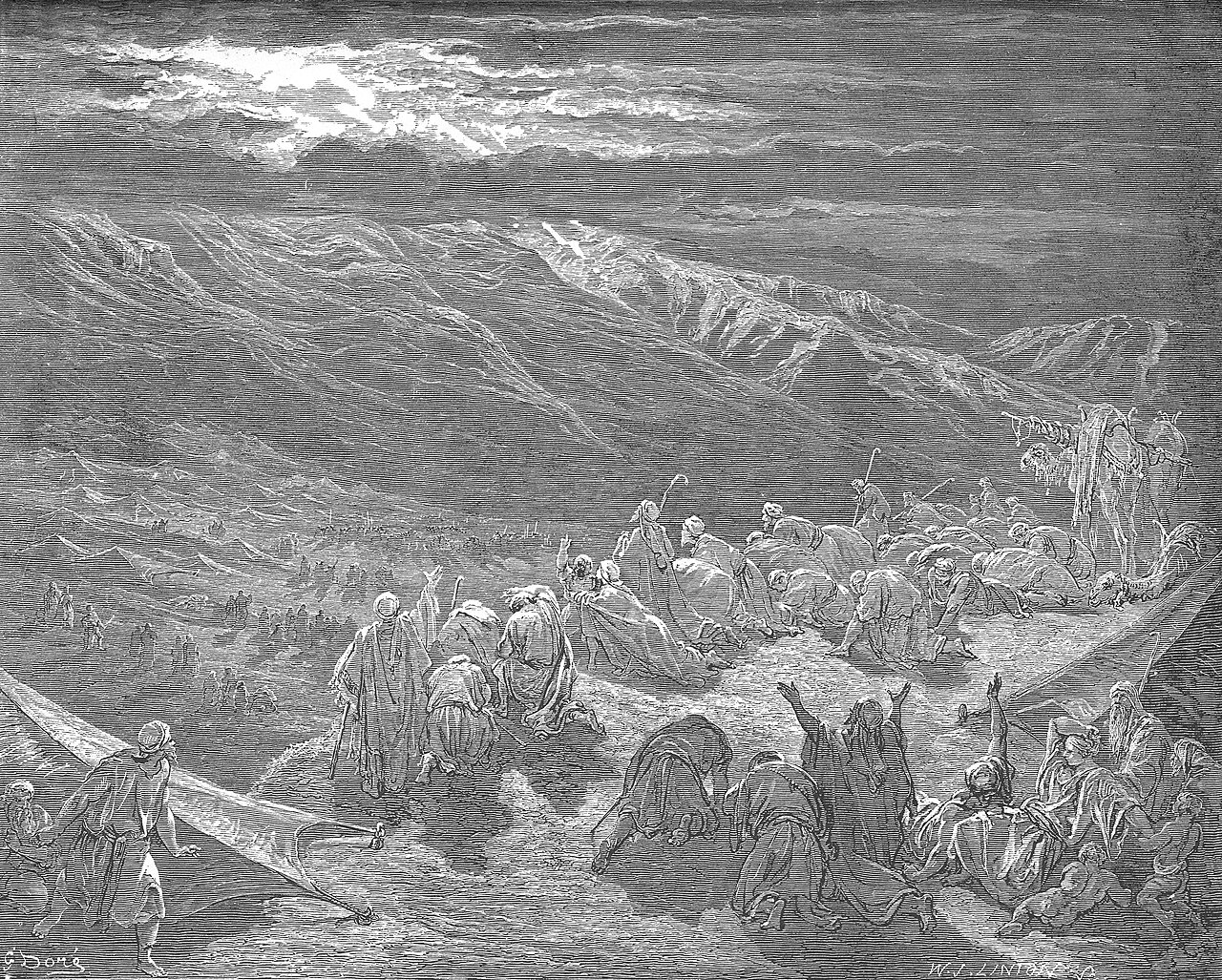
This page draws on Ambrose of Milan, On the Mysteries 3.12; John Gill, Exposition of the Old Testament (1748-1763); Keil and Delitzsch, Biblical Commentary on the Old Testament: The Pentateuch and Matthew Henry, Commentary on the Whole Bible.