
Exodus 14:9
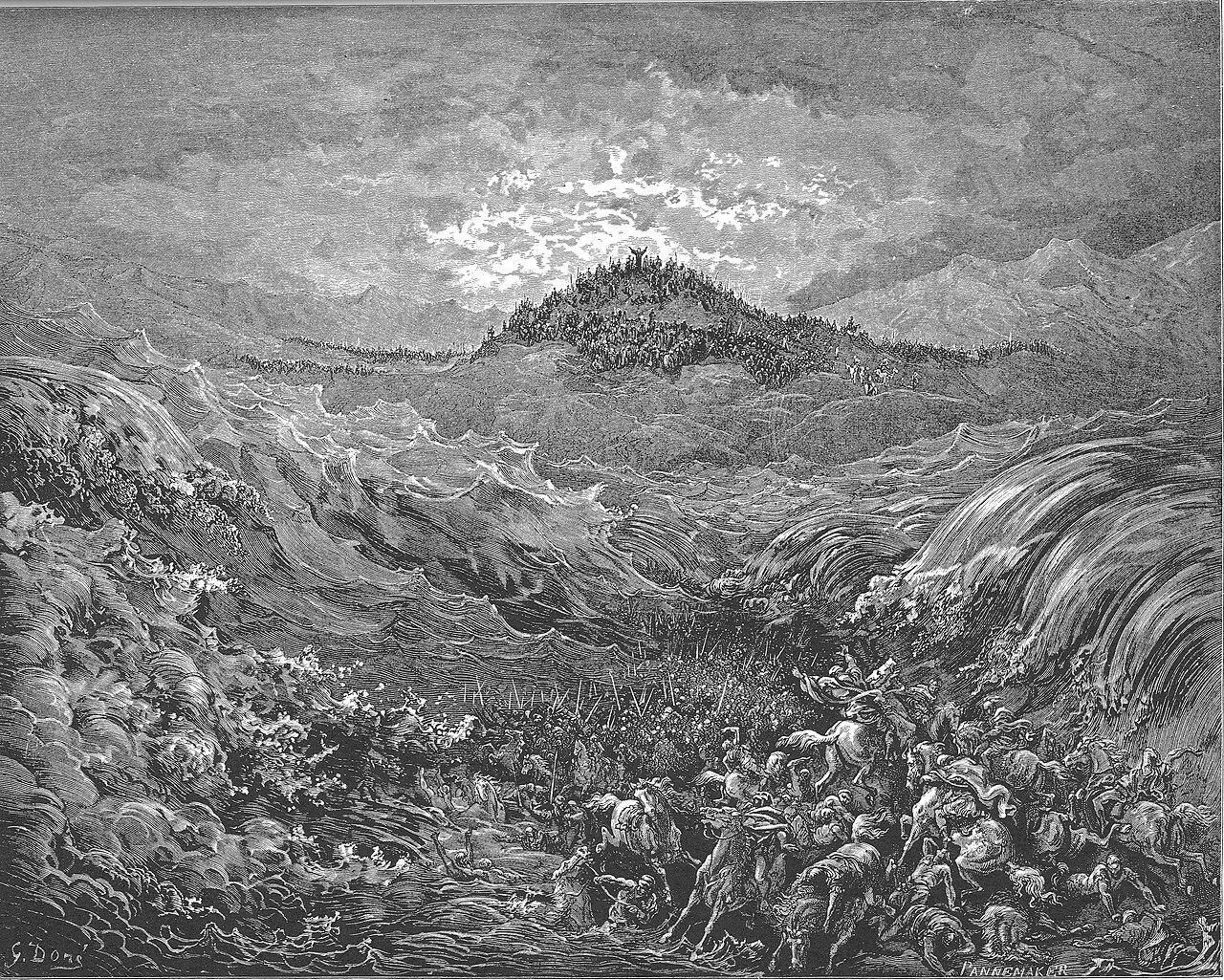
in Exodus 14The Egyptians—all Pharaoh’s horses and chariots, horsemen and troops—pursued the Israelites and overtook them as they camped by the sea near Pi-hahiroth, opposite Baal-zephon.
BSB
The same verse in ASV and KJV ▾
ASV
And the Egyptians pursued after them, all the horses and chariots of Pharaoh, and his horsemen, and his army, and overtook them encamping by the sea, beside Pi-hahiroth, before Baal-zephon.
KJV
But the Egyptians pursued after them, all the horses and chariots of Pharaoh, and his horsemen, and his army, and overtook them encamping by the sea, beside Pi–hahiroth, before Baal–zephon.
⋯
This verse in Exodus 14
Commentary
3 notes on this verseBut the Egyptians pursued after them,.... When they thought nothing of it, and had no fears about it: all the horses and chariots of Pharaoh, and his horsemen, and his army; by the latter Aben Ezra understands the foot, as distinguished from the cavalry, the horses and horsemen; and perhaps these, as before observed, might be carried in the chariots for quicker dispatch: and overtook them encamping by the sea, beside Pihahiroth, before Baalzephon; where they had pitched their camp by divine appointment, Exo 14:2.
This site's exposition
hardened the heart of Pharaoh king of Egypt
on Exodus 14:8-9
One verse says both that the LORD hardened Pharaoh and that Israel went out with an high hand, so the pursuit and the boldness are reported together. Numbers 33:3 looks back on the same march and keeps the same phrase for it. What overtakes them is the whole force counted item by item, the horses, the chariots, the horsemen and the army, drawn up against a camp the text gives no weapons to.
The record, by era
The Puritans and the Awakening1 voice
Note, Those that in good earnest set their faces heaven-ward, and will live godly in Christ Jesus, must expect to be set upon by Satan's temptations and terrors.
How the passage was read
What the Jewish commentators add
On the verses either side of this one
Pharaoh drew near, and the B’nei Yisrael looked up, and beheld the Egyptians coming after them.
This section is reception history: how the passage was read and kept in the Jewish tradition. Where a reading parts from an essential of the Christian faith, the section says so at that point.
Texts and citation data: Sefaria; each excerpt follows its version’s licence. 3 further sources are cited on this chapter that carry no English text this site may quote or only restate the verse.
The words behind it
20 Hebrew wordsEvery Hebrew word of this verse in the order it stands, with what it means and the door to its own study. The last column counts the times a word stands in the whole Bible: the rarer the word, the more the places it appears belong together.
| Hebrew | Sound | Meaning | Word study | In the Bible |
|---|---|---|---|---|
| וַיִּרְדְּפ֨וּ | vaiyirdefu | and they pursued | H7291 → | 143 times |
| מִצְרַ֜יִם | mitzrayim | Egypt | H4713 → | 70 times |
| אַחֲרֵיהֶ֗ם | ʾachareihem | after them | H310 → | 715 times |
| וַיַּשִּׂ֤יגוּ | vaiyasigu | and they overtook | H5381 → | |
| אוֹתָם֙ | ʾotam | <obj.> them | H853 → | 10935 times |
| חֹנִ֣ים | chonim | encamped | H2583 → | 143 times |
| עַל־ | ʾal- | at | H5921 → | 5755 times |
| הַיָּ֔ם | haiyam | the sea | H3220 → | 396 times |
| כָּל־ | kol- | every | H3605 → | 5413 times |
| סוּס֙ | sus | <the> horse of | H5483 → | 140 times |
| רֶ֣כֶב | rekhev | [the] chariotry of | H7393 → | 119 times |
| פַּרְעֹ֔ה | paroh | Pharaoh | H6547 → | 274 times |
| וּפָרָשָׁ֖יו | ufarashav | and horsemen his | H6571 → | 57 times |
| וְחֵיל֑וֹ | vecheilo | and army his | H2428 → | 246 times |
| עַל־ | ʾal- | at | H5921 → | 5755 times |
| פִּי֙ | pi | Pi- | H6367 → | 7 times |
| הַֽחִירֹ֔ת | hachirot | hahiroth | H6367 → | 7 times |
| לִפְנֵ֖י | lifnei | <to> before | H6440 → | 2123 times |
| בַּ֥עַל | baal | Baal- | H1189 → | 6 times |
| צְפֹֽן׃ | tzefon | Zephon | H1189 → | 6 times |
וַיִּרְדְּפ֨וּand they pursued
vaiyirdefuH7291 →143 times
מִצְרַ֜יִםEgypt
mitzrayimH4713 →70 times
אַחֲרֵיהֶ֗םafter them
ʾachareihemH310 →715 times
וַיַּשִּׂ֤יגוּand they overtook
vaiyasiguH5381 →
אוֹתָם֙<obj.> them
ʾotamH853 →10935 times
חֹנִ֣יםencamped
chonimH2583 →143 times
עַל־at
ʾal-H5921 →5755 times
הַיָּ֔םthe sea
haiyamH3220 →396 times
כָּל־every
kol-H3605 →5413 times
סוּס֙<the> horse of
susH5483 →140 times
רֶ֣כֶב[the] chariotry of
rekhevH7393 →119 times
פַּרְעֹ֔הPharaoh
parohH6547 →274 times
וּפָרָשָׁ֖יוand horsemen his
ufarashavH6571 →57 times
וְחֵיל֑וֹand army his
vecheiloH2428 →246 times
עַל־at
ʾal-H5921 →5755 times
פִּי֙Pi-
piH6367 →7 times
הַֽחִירֹ֔תhahiroth
hachirotH6367 →7 times
לִפְנֵ֖י<to> before
lifneiH6440 →2123 times
בַּ֥עַלBaal-
baalH1189 →6 times
צְפֹֽן׃Zephon
tzefonH1189 →6 times
A shaded row is a word that stands 400 times or fewer in the Bible.
The walk
8 stopsEach card is a verse this one points to, and under it the verses that one points to in turn. Where several paths arrive at the same place, that place is listed first: the text keeps returning to it.
Through
Exodus 14:2“Tell the Israelites to turn back and encamp before Pi-hahiroth, between Migdol and the sea. You are to encamp by the sea, directly opposite Baal-zephon.
it leads to
- Numbers 33:7–8
They set out from Etham and turned back to Pi-hahiroth, opposite Baal-zephon, and they camped near Migdol.
- Jeremiah 44:1
This is the word that came to Jeremiah concerning all the Jews living in the land of Egypt—in Migdol, Tahpanhes, and Memphis—and in the land of Pathros:
- Exodus 13:17–18
When Pharaoh let the people go, God did not lead them along the road through the land of the Philistines, though it was shorter. For God said, “If the people face war, they might…
- Jeremiah 46:14
“Announce it in Egypt, and proclaim it in Migdol; proclaim it in Memphis and Tahpanhes: ‘Take your positions and prepare yourself, for the sword devours those around you.’
- Numbers 33:7–8
Through
Exodus 15:9The enemy declared, ‘I will pursue, I will overtake. I will divide the spoils; I will gorge myself on them. I will draw my sword; my hand will destroy them.’
it leads to
- Judges 5:30
‘Are they not finding and dividing the spoil—a girl or two for each warrior, a plunder of dyed garments for Sisera, the spoil of embroidered garments for the neck of the looter?’
- Exodus 14:5
When the king of Egypt was told that the people had fled, Pharaoh and his officials changed their minds about them and said, “What have we done? We have released Israel from serving us.”
- Isaiah 53:12
Therefore I will allot Him a portion with the great, and He will divide the spoils with the strong, because He has poured out His life unto death, and He was numbered with the…
- Luke 11:22
But when someone stronger attacks and overpowers him, he takes away the armor in which the man trusted, and then he divides up his plunder.
- Judges 5:30
Where this verse is studied
On this page
Studies4
About Exodus
This page draws on John Gill, Exposition of the Old Testament (1748-1763); John Gill, Exposition of the Old Testament; Keil and Delitzsch, Biblical Commentary on the Old Testament: The Pentateuch and Matthew Henry, Commentary on the Whole Bible.