
Daniel 8:27
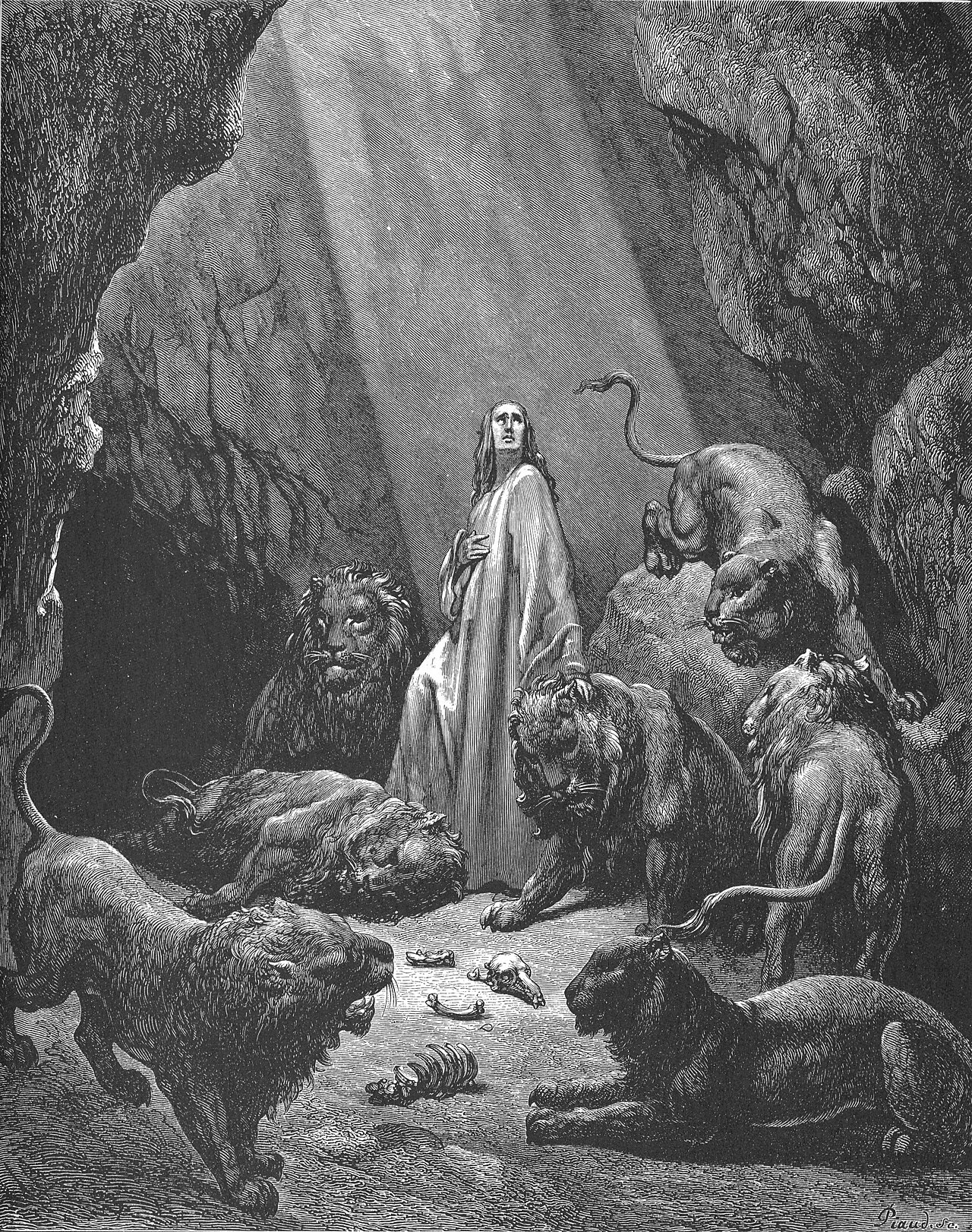
in Daniel 8I, Daniel, was exhausted and lay ill for days. Then I got up and went about the king’s business. I was confounded by the vision; it was beyond understanding.
BSB
The same verse in ASV and KJV ▾
ASV
And I, Daniel, fainted, and was sick certain days; then I rose up, and did the king’s business: and I wondered at the vision, but none understood it.
KJV
And I Daniel fainted, and was sick certain days; afterward I rose up, and did the king’s business; and I was astonished at the vision, but none understood it.
⋯
This verse in Daniel 8
Commentary
11 notes on this verseVerse 27. "And I, Daniel, languished and was sick for some days. And when I rose from my bed, I performed the king's tasks." This is the same thing as we read in Genesis about Abraham, for after he had heard the Lord speaking to him, he averred that he was but dust and ashes (Genesis 18:27). And so Daniel states that he languished as a reaction to the horror of the vision, and suffered illness.
This site's exposition
shut thou up the vision
on Daniel 8:26-27
The vision of the evening and the morning is declared true, and Daniel is told to shut it up, for it belongs to many days yet to come, a sealing the commentators set beside Daniel's own sealed book at 12:4, the same prophet given visions kept for a later reading. Daniel's response is bodily rather than merely intellectual: he faints and is sick certain days, then rises to do the king's business, astonished at what he has seen. The chapter ends with an admission rare in prophecy, none understood it, the older writers noting that even the seer himself is left short of full comprehension of his own vision.
The record, by era
The Church Fathers2 voices
On learning the troubles that would overtake the people in due course, I became so unwell as to fall a victim to illness. Yet despite being thus indisposed, I managed the work entrusted to me by the king, with no one aware of the cause …
That these things are true, just as has been said, Daniel himself testifies. For he spoke in this way, "And it happened when I saw the vision and I sought to understand, and behold, there stood before me an appearance of a man, and I heard the voice of a man above the midst of the Ubal, and he called and he said, 'Gabriel cause him to understand that vision.' And he came and stood holding me, and when he came, I was astounded and fell upon my face and he said to me, 'Understand son of man. For the vision is for the end of time.' And while he spoke with me I was astounded and I fell upon my face upon the ground and he touched me and stood me on my feet and he said, 'Behold, I myself make known to you what will be at the end of wrath. For the vision is of the end of time. The ram which you saw, who had horns, he is the king of the Persians and Medes. And the male goat is king of the Greeks. And the great horn which was above the midst of his eyes, he is the first king. And after he is shattered, four horns stood up after him, four kings from his nation shall arise and not in his strength. And at the end of their kingdom, when their sins are full, a king, shameless in countenance, shall arise, and who understands riddles. And his rule shall be strong and not in his own strength and he shall destroy wonderful things and he shall prosper and he shall practice and he shall destroy the mighty and the holy people, and the yoke of his chain shall prosper. Cunning is in his hand and in his heart he shall be magnified and in cunning he shall destroy many and he shall stand for the destruction of many and he shall shatter people as eggs in a hand. And the vision of evening and morning which was said is true. […]
The Puritans and the Awakening3 voices
11 Yea, he magnified himself even to the prince of the host, and by him the daily sacrifice was taken away, and the place of his sanctuary was cast down. 12 And a host was given him against the daily sacrifice by reason of transgression, and it cast down the truth to the ground; and it practised, and prospered.
quarantine:scripture (2026-07-29) — scripture-overlap:98%@v11-12
Was sick - Being overwhelmed by a sense of the calamity that should befall the people of God. Did the king's business - Having recovered strength, he minded his place, duty and trust, and concealed the whole, that they might not see it by his countenance.
And I Daniel fainted and was sick certain days,....
4 more voices on this verse
The Puritans and the Awakening1 voice
He fainted, and was sick, with the multitude of his thoughts within him occasioned by this vision, which oppressed and overwhelmed him the more because he was forbidden to publish what he had seen, so that his belly was as wine which has no vent, he was ready to burst like new bottles, Job xxxii.
The Nineteenth Century3 voices
A commentator
Albert Barnes1798–1870
Notes, Explanatory and Practical, on the Old and New Testaments (1832-1869)
And I Daniel fainted - Hebrew, “I was “ - נהייתי nı̂heyēythı̂y. Compare Dan 2:1. The meaning, according to Gesenius (“Lexicon”), is, “I was done up, and was sick:” - I was done over, etc. Perhaps the “reason” of his using this verb here is, that he represents himself as “having been sick,” and then as fainting away, as if his life had departed. The Latin Vulgate renders it langui. Theodotion, ἐκοιμήθην ekoimēthēn - “ was laid in my bed.” The general idea is plain, that he was overcome and prostrate at the effect of the vision.
A commentator
Jamieson, Fausset & Brown1802–1910
Commentary Critical and Explanatory on the Whole Bible (1871)
I . . . was sick--through grief at the calamities coming on my people and the Church of God (compare Ps 102:14). afterward I . . . did the king's business--He who holds nearest communion with heaven can best discharge the duties of common life. none understood it--He had heard of kings, but knew not their names;
Daniel fainted - To foresee the desolations that were coming on the land, the city, the temple, and the people. Did the king’s business - Transacted the affairs of state that belonged to my department, after having been sick for certain days through the effects of this vision. He had a pious and feeling heart; and he was distressed for the desolations that were coming upon his people.
The words behind it
15 Hebrew wordsEvery Hebrew word of this verse in the order it stands, with what it means and the door to its own study. The last column counts the times a word stands in the whole Bible: the rarer the word, the more the places it appears belong together.
| Hebrew | Sound | Meaning | Word study | In the Bible |
|---|---|---|---|---|
| וַאֲנִ֣י | vaani | and I | H589 → | 874 times |
| דָנִיֵּ֗אל | daniyel | Daniel | H1840 → | 24 times |
| נִהְיֵ֤יתִי | nihyeiti | I was done [in] | H1961 → | 3559 times |
| וְנֶֽחֱלֵ֙יתִי֙ | venecheleiti | and I was sick | H2470 → | |
| יָמִ֔ים | yamim | days | H3117 → | 2304 times |
| וָאָק֕וּם | vaakum | and I arose | H6965 → | |
| וָאֶֽעֱשֶׂ֖ה | vaeeseh | and I did | H6213 → | 2628 times |
| אֶת־ | ʾet- | <obj.> | H853 → | 10935 times |
| מְלֶ֣אכֶת | melekhet | [the] work of | H4399 → | |
| הַמֶּ֑לֶךְ | hamelekh | the king | H4428 → | 2525 times |
| וָאֶשְׁתּוֹמֵ֥ם | vaeshtomem | and I was appalled | H8074 → | 86 times |
| עַל־ | ʾal- | on | H5921 → | 5755 times |
| הַמַּרְאֶ֖ה | hamareh | the vision | H4758 → | 103 times |
| וְאֵ֥ין | veein | and there not | H369 → | 789 times |
| מֵבִֽין׃ פ | mevin | [was one] giving understanding | H995 → | 170 times |
וַאֲנִ֣יand I
vaaniH589 →874 times
דָנִיֵּ֗אלDaniel
daniyelH1840 →24 times
נִהְיֵ֤יתִיI was done [in]
nihyeitiH1961 →3559 times
וְנֶֽחֱלֵ֙יתִי֙and I was sick
venecheleitiH2470 →
יָמִ֔יםdays
yamimH3117 →2304 times
וָאָק֕וּםand I arose
vaakumH6965 →
וָאֶֽעֱשֶׂ֖הand I did
vaeesehH6213 →2628 times
אֶת־<obj.>
ʾet-H853 →10935 times
מְלֶ֣אכֶת[the] work of
melekhetH4399 →
הַמֶּ֑לֶךְthe king
hamelekhH4428 →2525 times
וָאֶשְׁתּוֹמֵ֥םand I was appalled
vaeshtomemH8074 →86 times
עַל־on
ʾal-H5921 →5755 times
הַמַּרְאֶ֖הthe vision
hamarehH4758 →103 times
וְאֵ֥יןand there not
veeinH369 →789 times
מֵבִֽין׃ פ[was one] giving understanding
mevinH995 →170 times
A shaded row is a word that stands 400 times or fewer in the Bible.
The walk
8 stopsEach card is a verse this one points to, and under it the verses that one points to in turn. Where several paths arrive at the same place, that place is listed first: the text keeps returning to it.
Through
Daniel 10:8So I was left alone, gazing at this great vision. No strength remained in me; my face grew deathly pale, and I was powerless.
it leads to
- Daniel 7:28
Thus ends the matter. As for me, Daniel, my thoughts troubled me greatly, and my face turned pale. But I kept the matter to myself.”
Reached by 2 separate paths from here.
- Daniel 7:28
Through
Daniel 10:16And suddenly one with the likeness of a man touched my lips, and I opened my mouth and said to the one standing before me, “My lord, because of the vision, I am overcome…
it leads to
- Daniel 7:15
I, Daniel, was grieved in my spirit, and the visions in my mind alarmed me.
Reached by 2 separate paths from here.
- Isaiah 6:7
And with it he touched my mouth and said: “Now that this has touched your lips, your iniquity is removed and your sin is atoned for.”
- Daniel 8:15
While I, Daniel, was watching the vision and trying to understand it, there stood before me one having the appearance of a man.
- Daniel 7:15
Through
Habakkuk 3:16I heard and trembled within; my lips quivered at the sound. Decay entered my bones; I trembled where I stood. Yet I must wait patiently for the day of distress to come upon the…
it leads to
- Jeremiah 23:9
As for the prophets: My heart is broken within me, and all my bones tremble. I have become like a drunkard, like a man overcome by wine, because of the LORD, because of His…
- Daniel 10:8
So I was left alone, gazing at this great vision. No strength remained in me; my face grew deathly pale, and I was powerless.
- Habakkuk 3:2
O LORD, I have heard the report of You; I stand in awe, O LORD, of Your deeds. Revive them in these years; make them known in these years. In Your wrath, remember mercy!
- Habakkuk 1:5–11
“Look at the nations and observe—be utterly astounded! For I am doing a work in your days that you would never believe even if someone told you.
- Jeremiah 23:9
Where this verse is studied
On this page
Studies7
About Daniel
Who and where
1 name in this verse with a page on the site.
This page draws on 11 works. Open the list of works
This page draws on Adam Clarke, Commentary on the Bible; Albert Barnes, Notes, Explanatory and Practical, on the Old and New Testaments (1832-1869); Hippolytus of Rome, Commentary on Daniel 4.27.1-2; Jamieson, Fausset & Brown, Commentary Critical and Explanatory on the Whole Bible; Jerome, St. Jerome, Commentary on Daniel, CHAPTER EIGHT; John Calvin, Commentary on the Prophet Daniel; John Gill, Exposition of the Old Testament; John Gill, Exposition of the Old Testament (1748-1763); John Wesley, Explanatory Notes upon the Old Testament; Matthew Henry, Commentary on the Whole Bible and Theodoret of Cyrus, COMMENTARY ON DANIEL 8:27.