

Daniel 2 and 7 · Featured Study
The Statue and the Stone
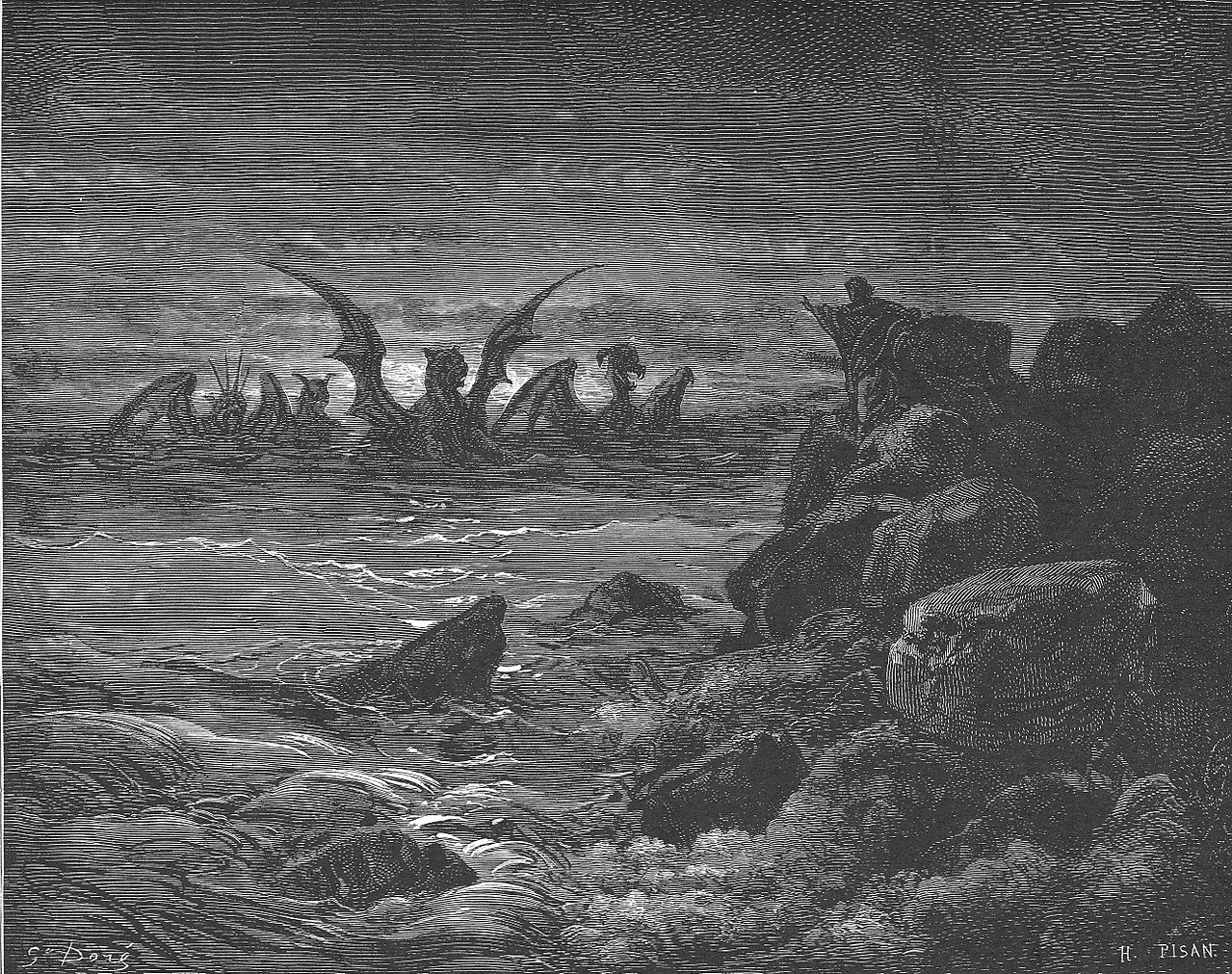
A pagan king dreams of a magnificent man made of metal, and it terrifies him. Fifty years later a Hebrew prophet dreams of four monsters coming up out of a heaving sea, and it terrifies him too. They are the same dream, told twice: once in the currency of empire (gold, silver, brass, iron) and once in the currency of appetite. What the king saw as a statue, God shows His prophet as a menagerie. And in both, the same ending: a stone cut out without hands that grinds it all to chaff and grows into a mountain filling the earth.
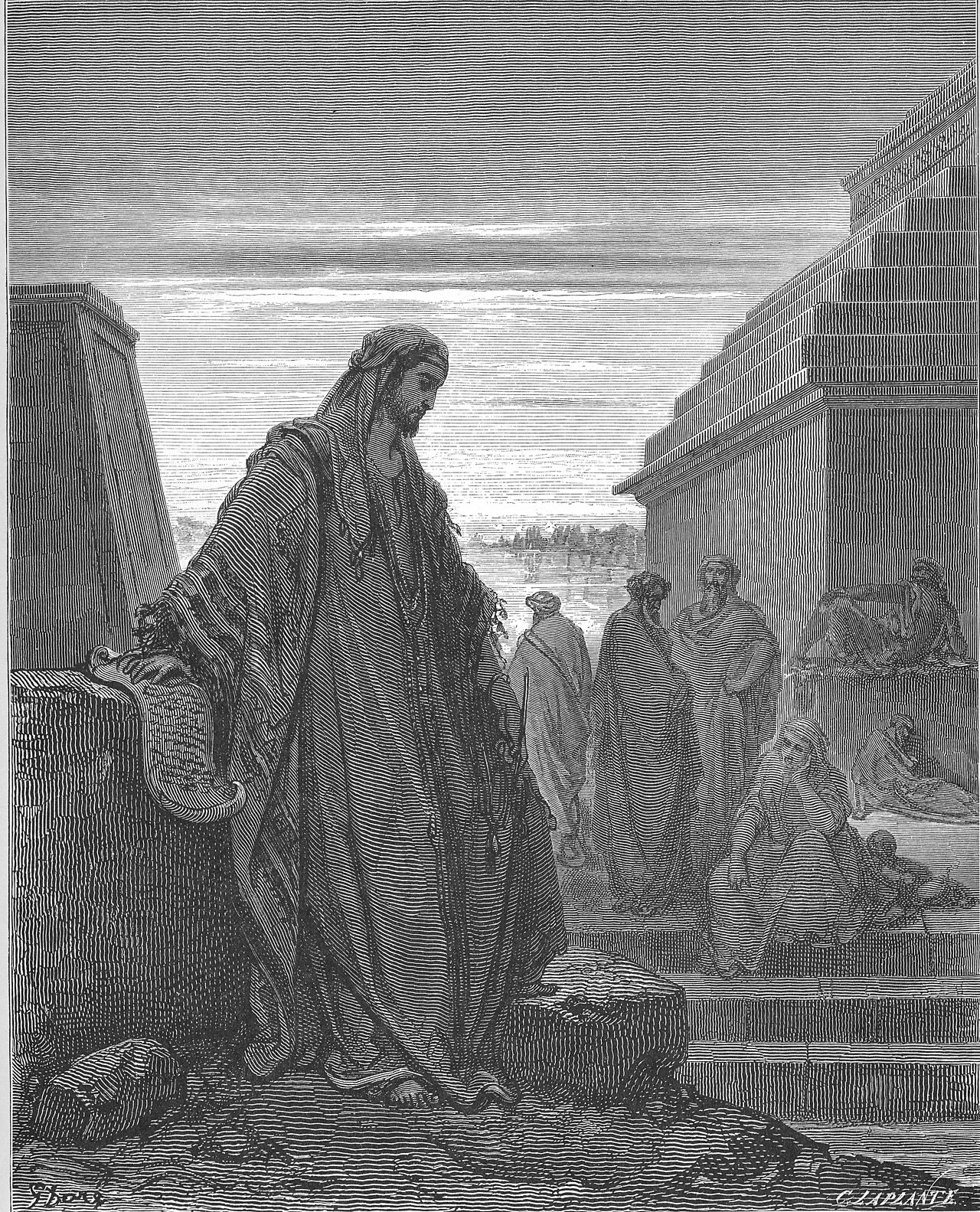
William Blake, Nebuchadnezzar (1795) — Public domain, via Wikimedia Commons
Summary
This page sets Daniel 2's statue and Daniel 7's beasts side by side, kingdom for kingdom, then walks the dream's own story, the fourth-kingdom dispute, and the stone that grows into a mountain.
- Each metal band in the statue is matched to its beast, both naming the same four kingdoms in two idioms
- The dream-frame, chapter 2's own narrative, is told as a story, not just a chart
- The fourth kingdom's identity, Rome or Greece, is given both readings with what rides on each
- The stone cut without hands strikes the statue's feet and grows until it fills the earth, read here as Christ
One Vision, Two Idioms
the metals of chapter 2 set against the beasts of chapter 7
Babylon
Named in the text: "Thou art the head of gold" (2:38).
Its wings plucked, lifted up from the earth, made to stand as a man and given a man's heart: the humbling of chapter 4, told in one image.
Medo-Persia
Named at 8:20: the ram with two horns is the kings of Media and Persia: one beast, two horns.
Three ribs between its teeth, and a word spoken to it: arise, devour much flesh. Lopsided: one partner in the alliance grew dominant.
Greece
Named at 8:21: the rough goat is the king of Greece, its great horn the first king.
Speed on the wings of a bird, and a fourfold division: the empire that conquered fastest and broke into four.
The fourth kingdom
Unnamed in Daniel: the point of the long dispute below.
No animal is adequate to it. Great iron teeth, and it breaks in pieces and stamps the residue, and it has ten horns.
A divided strength
Partly strong and partly brittle: iron does not mingle with clay.
A small horn comes up among the ten, plucks three up by the roots, and has eyes like a man's, and a mouth speaking great things.
Value falls
Gold to silver to brass to iron to fired clay. Read from the top down, the image is a story of decline: each successor kingdom vaster than the last and worth less.
Strength rises, then splits
The metals get harder as they get cheaper, until iron, which breaks all things. Then the base mixes iron with clay, and the hardest kingdom stands on the one joint that cannot hold.
The view depends on the seat
A king sees empire as a colossus of precious metal. A prophet, shown the same thing from heaven, sees animals coming up out of a churning sea. Neither is wrong; the second is truer.
The Dream-Frame
chapter 2 as a story before it is a chart
- 1An impossible demand2:1–11
The king wakes troubled and will not tell the dream. Tell me the dream and its interpretation, he says, and the wise men answer, correctly, that no man on earth can do it.
- 2A death sentence, and a request for time2:12–18
The decree goes out to destroy all the wise men of Babylon. Daniel is caught in it, and answers with counsel and discretion: he asks for time, and asks his three friends for mercy from the God of heaven concerning this secret.
- 3The secret revealed in a night vision2:19–23
The raz, the secret, is uncovered, and Daniel's first act is not to run to the king but to bless God: wisdom and might are His; He changes the times and the seasons; He removes kings and sets up kings; He reveals the deep and secret things.
- 4Credit refused2:24–30
Before the king, Daniel disclaims the gift outright: this secret is not revealed to me for any wisdom that I have more than any living. The interpreter steps aside so the Revealer is unmistakable.
- 5The image, and what strikes it2:31–35
The dream is told: a great image, terrible in brightness, and a stone cut out without hands that strikes the feet, grinds the whole of it to chaff the summer threshing-floors carry off, and becomes a great mountain filling the whole earth.
- 6The king on his face2:46–49
Nebuchadnezzar falls before Daniel and confesses that Daniel's God is a God of gods and a Lord of kings and a revealer of secrets. The empire's head bows to the God of a captive: the book's argument in miniature.
The chapter is not primarily about empires. It is about a God who reveals the deep and secret things, and who does it through a young captive who asks his friends to pray and then refuses the credit.
The Fourth Kingdom
Rome or Greece: the dispute that reorganizes everything else
Daniel names the second and third kingdoms in chapter 8 but never names the fourth. Two serious readings follow, and almost everything else in the book’s interpretation follows from which one you take.
The fourth kingdom is Greece
The reading that goes with a second-century composition
- ▪Split Medo-Persia into two, Media as the silver, Persia as the brass, and Greece becomes the fourth kingdom. Daniel 5:28 does divide the kingdom and give it "to the Medes and Persians," and chapter 6 has a Median ruler before a Persian one.
- ▪The little horn of chapter 8 is uncontroversially Antiochus IV, a Greek ruler; reading the fourth beast of chapter 7 as Greece keeps both horns within one frame instead of assigning them to different ages.
- ▪It requires no figure outside the book's own historical horizon, and pairs naturally with a second-century composition, where chapters 8 and 11 end at the author's present.
- ▪On this reading, the ten horns are the Seleucid line and the little horn Antiochus: a reading with a long and serious pedigree, not an invention of modern skepticism.
The fourth kingdom is Rome
The traditional reading, held by most historic and dispensational interpreters
- ▪Daniel itself treats the Medes and Persians as one kingdom, not two: the ram with two horns is expressly "the kings of Media and Persia" (8:20), a single beast. If Medo-Persia is one, Greece is third and the fourth is what followed Greece.
- ▪The fourth kingdom is described as breaking in pieces and subduing all things, and as having no animal adequate to picture it: a description that fits the reach and durability of Rome rather than the Greek successor states.
- ▪The legs of iron divide into two, and the feet mix iron with something that will not bond to it: read of an empire that survives by absorbing what it cannot assimilate.
- ▪Jesus reads Daniel's abomination as still ahead of Him (Matt 24:15), which requires the fourth kingdom's story to be still running in the first century.
Where the readings meet: historic and dispensational interpreters generally read Rome, chiefly because Daniel 8:20 makes Media and Persia one beast with two horns, which leaves no room to split them across two of the four; interpreters who date the book to the second century generally read Greece instead, keeping both horns of chapter 8 within one age. Note what rides on this: the Greece reading closes the vision in the second century BC; the Rome reading leaves the fourth kingdom’s last act (the ten horns and the little horn among them) still outstanding. The dating question and this one stand or fall together.
The Stone Cut Without Hands
the counter-image, in four moves
- 01Cut out without hands
Quarried by no human agency. Every other kingdom on the image was built; this one arrives.
Daniel 2:34 - 02It strikes the feet
Not the head. The blow lands at the end of the sequence, on the divided base: the whole structure falls at once, from the bottom.
Daniel 2:34 - 03The image becomes chaff
Gold, silver, brass, iron, clay broken together and carried away like threshing-floor dust, with no place found for them.
Daniel 2:35 - 04It becomes a great mountain
The stone does not merely win; it grows, and fills the whole earth. A kingdom that shall never be destroyed, and shall not be left to another people.
Daniel 2:35, 44
Stone to mountain
The other kingdoms in the dream are static: a fixed statue, standing until it is hit. The stone is the only thing in the vision that grows. It is small enough at first to be overlooked by everyone in the room, and it does not stop until it fills the whole earth.
The Kingdom Refrain
what the double vision is finally arguing
Both panels end the same way, and it is the reason both were given. In chapter 2 the God of heaven sets up a kingdom which shall never be destroyed. In chapter 7 the same kingdom arrives with a face: one like a son of man comes with the clouds of heaven and receives an everlasting dominion, which shall not pass away. The stone is a Person.
The New Testament picks the image straight up. Christ is the stone the builders rejected, the stone laid in Zion, and the stone that grinds to powder whatever it falls on, the whole stone-Christology of the Gospels and the epistles reaches back through Psalm 118 and Isaiah 28 to this quarry.
Word studies
The Hebrew and Greek under this study, each word in its own room.
Keep studying
Read it2
By subject
On this page
Places1