
2 Samuel 19:3
in 2 Samuel 19So they returned to the city quietly that day, as people steal away in humiliation after fleeing a battle.
BSB
The same verse in ASV and KJV ▾
ASV
And the people gat them by stealth that day into the city, as people that are ashamed steal away when they flee in battle.
KJV
And the people gat them by stealth that day into the city, as people being ashamed steal away when they flee in battle.
⋯
This verse in 2 Samuel 19
Commentary
5 notes on this verseDavid never more needed the hearts of his subjects than now, nor was ever more concerned to secure his interest in their affections; and therefore whatever tended to disoblige them now was the most impolitic thing he could do, and the greatest wrong imaginable to his friends that adhered to him.
This site's exposition
the king weepeth and mourneth for Absalom
on 2 Samuel 19:1-3
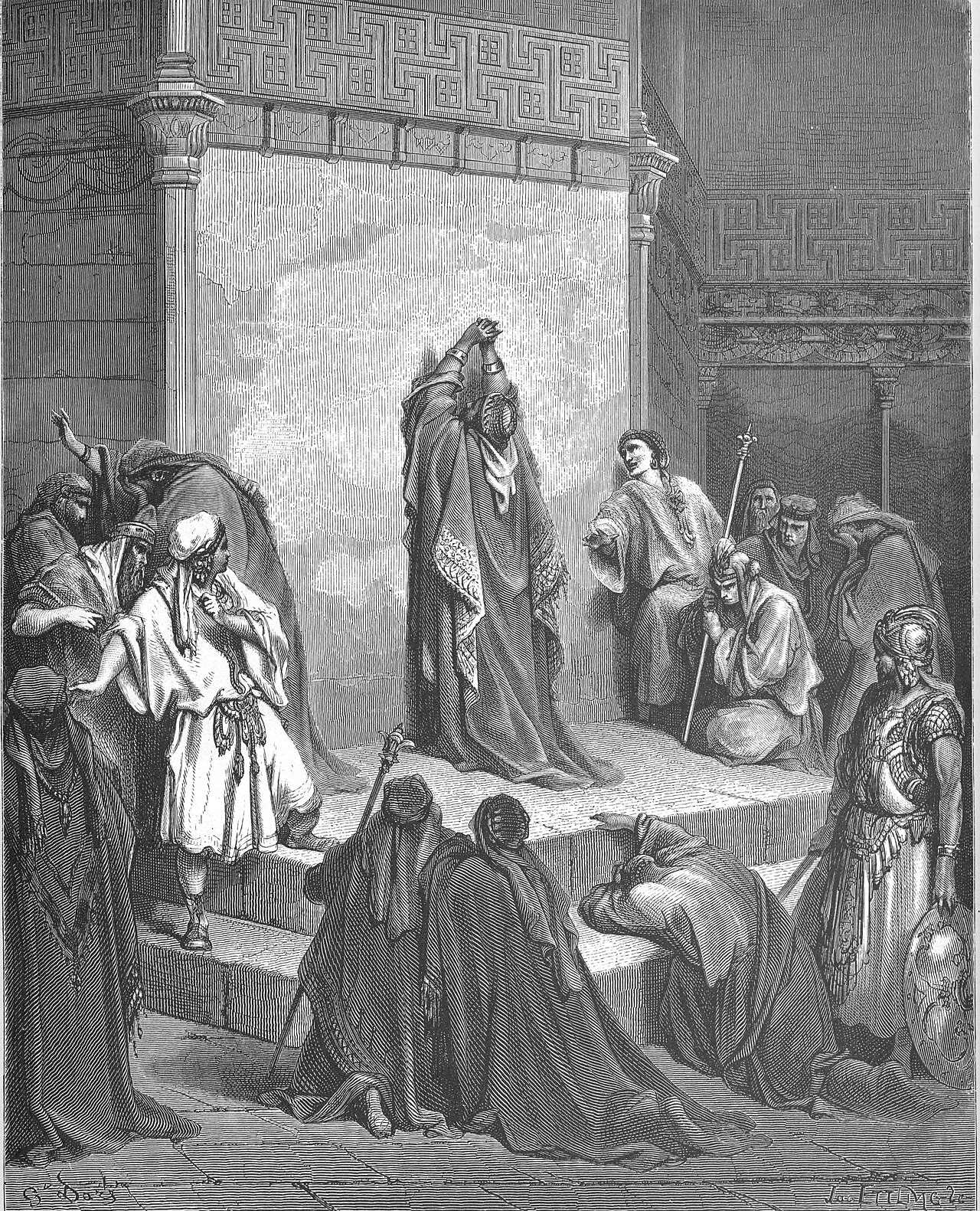
David's grief turns Israel's victory into mourning, and the army that won the battle returns to the city by stealth, as men ashamed after a rout rather than men who had just put down a rebellion. The people's shame at their own king's grief is the ground Joab stands on in the verses that follow. Henry reads the moment as the greatest danger David faced to the loyalty of the men who had just saved his life.
This site's exposition
steal away in humiliation
The troops came back to the city quietly, like people who steal away in humiliation after a battle lost. Jamieson, Fausset and Brown recall that a victorious army was usually met with music and rejoicing, as the women met Saul and David at 1 Samuel 18:6. Matthew Henry judges that David never needed his troops more.
The record, by era
The Puritans and the Awakening1 voice
And the people got them by stealth that day into the city,....
The Nineteenth Century1 voice
A commentator
Jamieson, Fausset & Brown1802–1910
Commentary Critical and Explanatory on the Whole Bible (1871)
proposed
the people gat them by stealth . . . to the city--The rumor of the king's disconsolate condition spread a universal and unseasonable gloom. His troops, instead of being welcomed back (as a victorious army always was) with music and other demonstrations of public joy, slunk secretly and silently into the city, as if ashamed after the commission of some crime.
quarantine:debris (2026-07-29) — starts-lowercase
The words behind it
12 Hebrew wordsEvery Hebrew word of this verse in the order it stands, with what it means and the door to its own study. The last column counts the times a word stands in the whole Bible: the rarer the word, the more the places it appears belong together.
| Hebrew | Sound | Meaning | Word study | In the Bible |
|---|---|---|---|---|
| וַיִּתְגַּנֵּ֥ב | vaiyitganev | and it acted stealthily | H1589 → | 40 times |
| הָעָ֛ם | haam | the people | H5971 → | 1873 times |
| בַּיּ֥וֹם | baiyom | on the day | H3117 → | 2304 times |
| הַה֖וּא | hahu' | <the> that | H1931 → | 1879 times |
| לָב֣וֹא | lavo' | to enter | H935 → | 2568 times |
| הָעִ֑יר | hair | the city | H5892 → | 1090 times |
| כַּאֲשֶׁ֣ר | kaasher | just as | H834 → | 5497 times |
| יִתְגַּנֵּ֗ב | yitganev | it acts stealthily | H1589 → | 40 times |
| הָעָם֙ | haam | <the> people | H5971 → | 1873 times |
| הַנִּכְלָמִ֔ים | hanikhlamim | who are ashamed | H3637 → | |
| בְּנוּסָ֖ם | benusam | when flee they | H5127 → | 159 times |
| בַּמִּלְחָמָֽה׃ | bamilchamah | in <the> battle | H4421 → | 320 times |
וַיִּתְגַּנֵּ֥בand it acted stealthily
vaiyitganevH1589 →40 times
הָעָ֛םthe people
haamH5971 →1873 times
בַּיּ֥וֹםon the day
baiyomH3117 →2304 times
הַה֖וּא<the> that
hahu'H1931 →1879 times
לָב֣וֹאto enter
lavo'H935 →2568 times
הָעִ֑ירthe city
hairH5892 →1090 times
כַּאֲשֶׁ֣רjust as
kaasherH834 →5497 times
יִתְגַּנֵּ֗בit acts stealthily
yitganevH1589 →40 times
הָעָם֙<the> people
haamH5971 →1873 times
הַנִּכְלָמִ֔יםwho are ashamed
hanikhlamimH3637 →
בְּנוּסָ֖םwhen flee they
benusamH5127 →159 times
בַּמִּלְחָמָֽה׃in <the> battle
bamilchamahH4421 →320 times
A shaded row is a word that stands 400 times or fewer in the Bible.
The walk
8 stopsEach card is a verse this one points to, and under it the verses that one points to in turn. Where several paths arrive at the same place, that place is listed first: the text keeps returning to it.
Through
2 Samuel 19:32Barzillai was quite old, eighty years of age, and since he was a very wealthy man, he had provided for the king while he stayed in Mahanaim.
it leads to
- 1 Samuel 25:2
Now there was a man in Maon whose business was in Carmel. He was a very wealthy man with a thousand goats and three thousand sheep, which he was shearing in Carmel.
- Deuteronomy 34:7
Moses was a hundred and twenty years old when he died, yet his eyes were not weak, and his vitality had not diminished.
- Job 1:3
and he owned 7,000 sheep, 3,000 camels, 500 yoke of oxen, 500 female donkeys, and a very large number of servants. Job was the greatest man of all the people of the East.
- Proverbs 16:31
Gray hair is a crown of glory; it is attained along the path of righteousness.
- 1 Samuel 25:2
Through
Genesis 31:27Why did you run away secretly and deceive me, without even telling me? I would have sent you away with joy and singing, with tambourines and harps.
it leads to
- Exodus 15:20
Then Miriam the prophetess, Aaron’s sister, took a tambourine in her hand, and all the women followed her with tambourines and dancing.
- Genesis 31:3–5
Then the LORD said to Jacob, “Go back to the land of your fathers and to your kindred, and I will be with you.”
- Exodus 15:20
Through
2 Samuel 17:24Then David went to Mahanaim, and Absalom crossed the Jordan with all the men of Israel.
it leads to
- Genesis 32:2
When Jacob saw them, he said, “This is the camp of God.” So he named that place Mahanaim.
- 2 Samuel 2:8
Meanwhile, Abner son of Ner, the commander of Saul’s army, took Saul’s son Ish-bosheth, moved him to Mahanaim,
- Genesis 32:2
About 2 Samuel
This page draws on Adam Clarke, Commentary on the Bible; Jamieson, Fausset & Brown, Commentary Critical and Explanatory on the Whole Bible; John Gill, Exposition of the Old Testament (1748-1763) and Matthew Henry, Commentary on the Whole Bible.