
2 Samuel 13:17
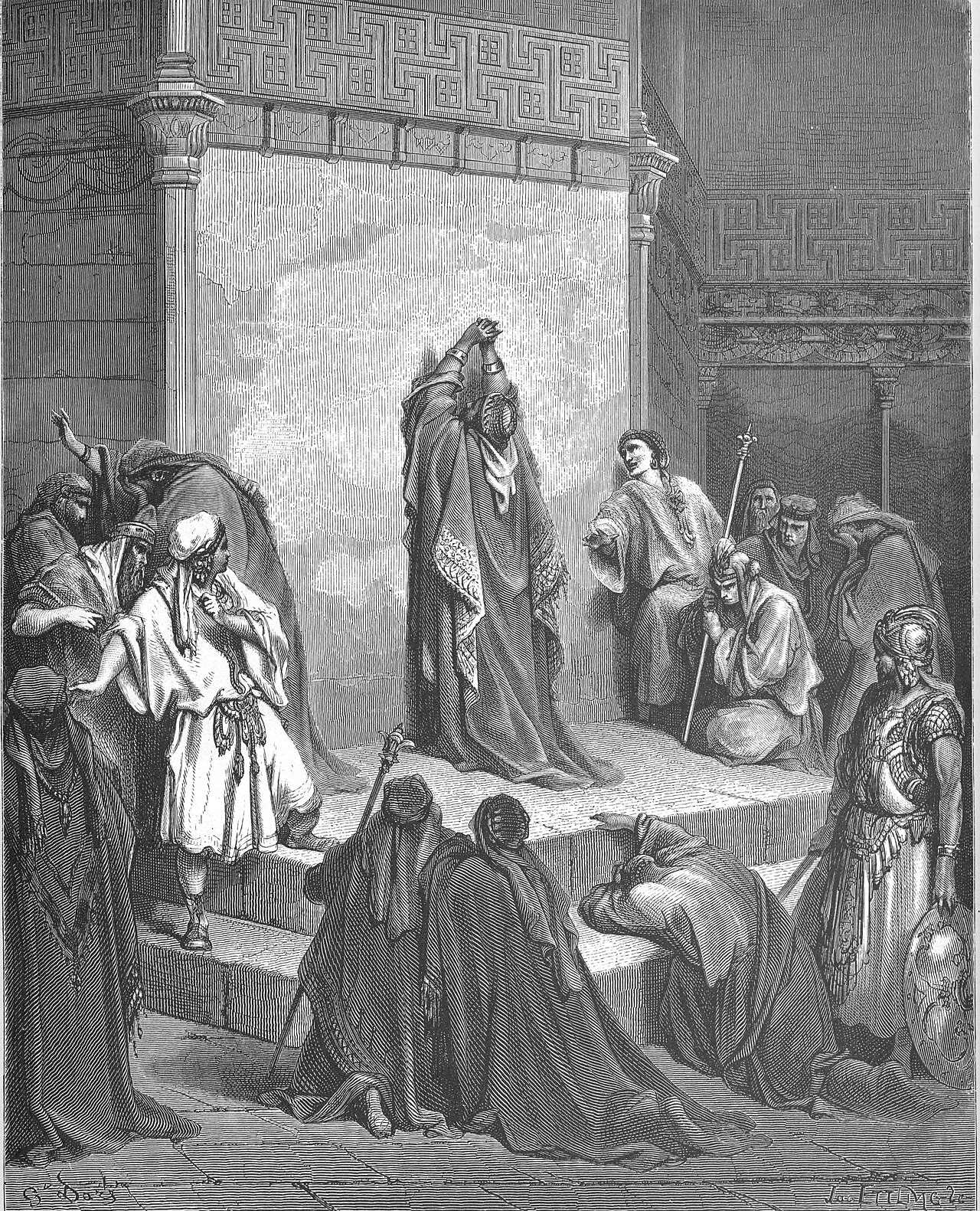
in 2 Samuel 13Instead, he called to his attendant and said, “Throw this woman out and bolt the door behind her!”
BSB
The same verse in ASV and KJV ▾
ASV
Then he called his servant that ministered unto him, and said, Put now this woman out from me, and bolt the door after her.
KJV
Then he called his servant that ministered unto him, and said, Put now this woman out from me, and bolt the door after her.
⋯
This verse in 2 Samuel 13
Commentary
3 notes on this verseThen he called his servants that ministered unto him,.... His domestic servants that waited on him: and said, put now this woman out from me; she not willing to depart at once, he ordered her to be put out immediately by force; using her and speaking of her in a very rude and scandalous manner, calling her this, leaving it to be supplied, as they would understand it, this base woman, this strumpet, &c. and bolt the door after her; that she might not return; this was more disgraceful still.
This site's exposition
hated her exceedingly
on 2 Samuel 13:15-17
The hatred that follows is stranger than the crime, greater than the love had been, and now it is Amnon who wants distance. Tamar answers that sending her away is a wrong worse than what he did to her, since it denies her even the standing of a wife taken by force and casts her out with nothing. Amnon calls a servant rather than face her again, and the order to bolt the door behind her is his last word in the scene.
The record, by era
The Nineteenth Century1 voice
A commentator
Jamieson, Fausset & Brown1802–1910
Commentary Critical and Explanatory on the Whole Bible (1871)
proposed
bolt the door after her--The street door of houses in the East is always kept barred--the bolts being of wood. In the great mansions, where a porter stands at the outside, this precaution is dispensed with; and the circumstance, therefore, of a prince giving an order so unusual shows the vehement perturbation of Ammon's mind.
quarantine:debris (2026-07-29) — starts-lowercase
How the passage was read
What the Jewish commentators add
On the verses either side of this one
Do not do this thing. Do not do this evil thing of sending [me] away which is worse then the other [evil thing] that you did to me. You raped me and then you added on more evil than that by sending me away.
This section is reception history: how the passage was read and kept in the Jewish tradition. Where a reading parts from an essential of the Christian faith, the section says so at that point.
Texts and citation data: Sefaria; each excerpt follows its version’s licence. 5 further sources are cited on this chapter that carry no English text this site may quote or only restate the verse.
The words behind it
14 Hebrew wordsEvery Hebrew word of this verse in the order it stands, with what it means and the door to its own study. The last column counts the times a word stands in the whole Bible: the rarer the word, the more the places it appears belong together.
| Hebrew | Sound | Meaning | Word study | In the Bible |
|---|---|---|---|---|
| וַיִּקְרָ֗א | vaiyikra' | and he summoned | H7121 → | 733 times |
| אֶֽת־ | ʾet- | <obj.> | H853 → | 10935 times |
| נַעֲרוֹ֙ | naaro | young man his | H5288 → | 239 times |
| מְשָׁ֣רְת֔וֹ | meshareto | [who] served him | H8334 → | |
| וַיֹּ֕אמֶר | vaiyomer | and he said | H559 → | 5305 times |
| שִׁלְחוּ־ | shilchu- | send away | H7971 → | 845 times |
| נָ֥א | na' | please | H4994 → | 404 times |
| אֶת־ | ʾet- | <obj.> | H853 → | 10935 times |
| זֹ֛את | zot | this [woman] | H2063 → | 603 times |
| מֵעָלַ֖י | mealai | from with <the> me | H5921 → | 5755 times |
| הַח֑וּצָה | hachutzah | the outside towards | H2351 → | 164 times |
| וּנְעֹ֥ל | uneol | and lock | H5274 → | |
| הַדֶּ֖לֶת | hadelet | the door | H1817 → | |
| אַחֲרֶֽיהָ׃ | ʾachareiha | after her | H310 → | 715 times |
וַיִּקְרָ֗אand he summoned
vaiyikra'H7121 →733 times
אֶֽת־<obj.>
ʾet-H853 →10935 times
נַעֲרוֹ֙young man his
naaroH5288 →239 times
מְשָׁ֣רְת֔וֹ[who] served him
mesharetoH8334 →
וַיֹּ֕אמֶרand he said
vaiyomerH559 →5305 times
שִׁלְחוּ־send away
shilchu-H7971 →845 times
נָ֥אplease
na'H4994 →404 times
אֶת־<obj.>
ʾet-H853 →10935 times
זֹ֛אתthis [woman]
zotH2063 →603 times
מֵעָלַ֖יfrom with <the> me
mealaiH5921 →5755 times
הַח֑וּצָהthe outside towards
hachutzahH2351 →164 times
וּנְעֹ֥לand lock
uneolH5274 →
הַדֶּ֖לֶתthe door
hadeletH1817 →
אַחֲרֶֽיהָ׃after her
ʾachareihaH310 →715 times
A shaded row is a word that stands 400 times or fewer in the Bible.
Where this verse is studied
On this page
About 2 Samuel
This page draws on Adam Clarke, Commentary on the Bible; Jamieson Fausset and Brown, Commentary Critical and Explanatory on the Whole Bible; Jamieson, Fausset & Brown, Commentary Critical and Explanatory on the Whole Bible and John Gill, Exposition of the Old Testament (1748-1763).