
1 Samuel 2:18
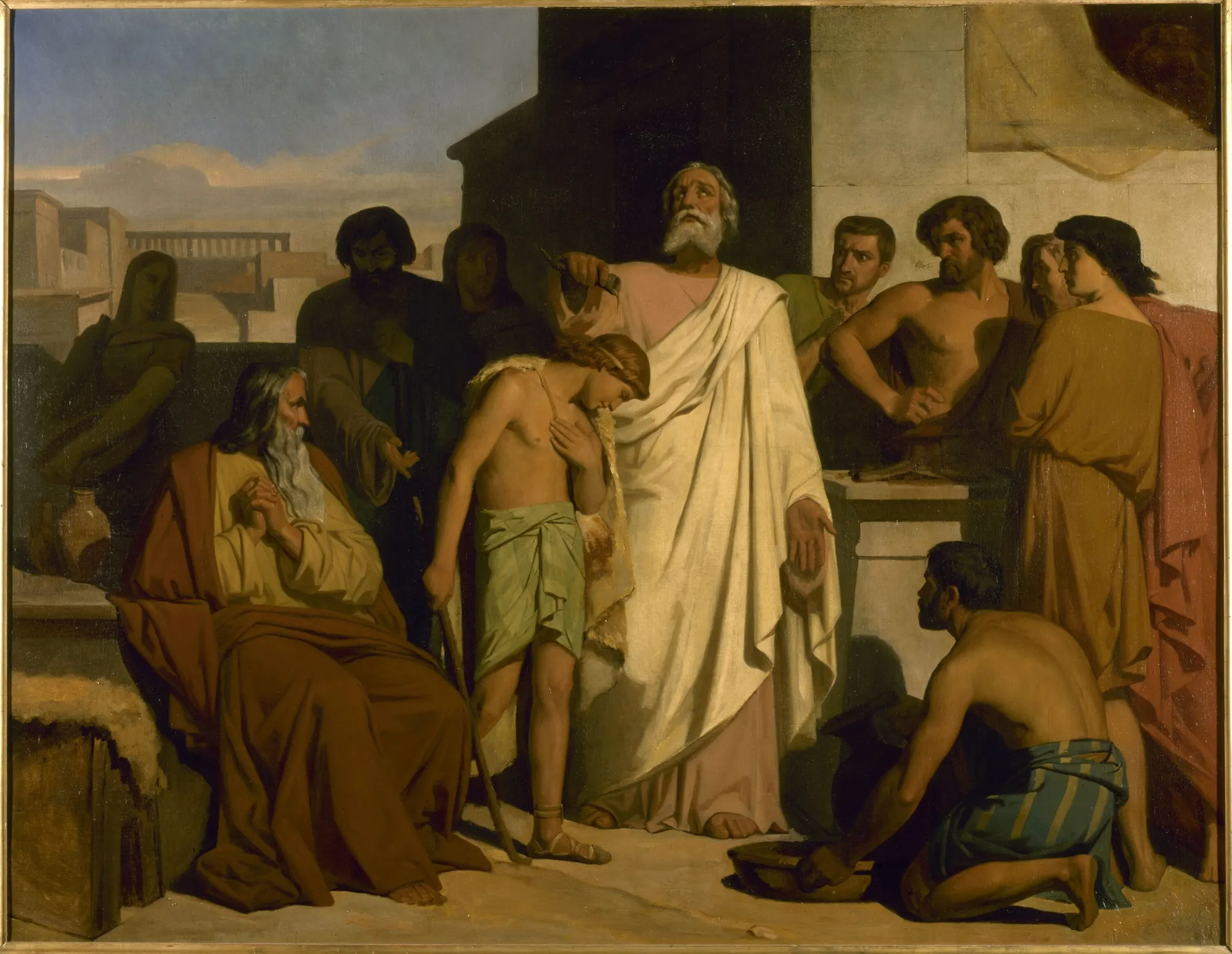
in 1 Samuel 2Now Samuel was ministering before the LORD—a boy wearing a linen ephod.
BSB
The same verse in ASV and KJV ▾
ASV
But Samuel ministered before Jehovah, being a child, girded with a linen ephod.
KJV
But Samuel ministered before the Lord, being a child, girded with a linen ephod.
⋯
This verse in 1 Samuel 2
Commentary
9 notes on this verseGirded with a linen ephod - This the Targum translates אסיר כרדוט דבוץ asir cardut debuts, “Girded with a cardit of byssus, or fine linen.” The word cardut they seem to have borrowed from the Greek χειριδωτος, a tunic, having χειριδας, i.e., sleeves that came down to, or covered, the hands. This was esteemed an effeminate garment among the Romans. See Buxtorf’s Talmudic Lexicon.
This site's exposition
a boy wearing a linen ephod
on 1 Samuel 2:18-21
Samuel serves “wearing a linen ephod”, priestly dress on a child, and his mother's yearly “little robe” measures her love in cloth and years. Eli asks the LORD to repay Hannah for the child she gave, and verse 21 answers at once: “she conceived and gave birth to three sons and two daughters”. The barren woman of verse 5 now bears in fact as well as in song.
The record, by era
The Medieval Church3 voices
A commentator
Gregory the DialogistCommentary on 1 Kings, Book 2, Chapter 2 · Written before 604.
proposed
9. A linen garment is known to be finer than a woolen one. And fittingly Samuel is said to have been clothed with a linen ephod, by whom the order of priests chosen from the nations is designated. For in comparison with the life under the Law, the new manner of life of the Gospel is the fineness of linen. For there something carnal was commanded; there everyone is cursed by whom no seeds of offspring are left in Zion. But in the New Testament, because all things are more refined, whoever follows its precepts is adorned as if with a more delicate linen garment: there indeed abstinence from marriage is condemned, here it is honored with wondrous praises; there priests beget carnally, here they bring forth the fruit of spiritual offspring all the more abundantly, inasmuch as they cannot suffer any loss of chastity even through the good of marriage. And fittingly, when Samuel's garment is described, it is reported to have been linen, so that it might openly show the glory of the new priesthood, which would shine with the splendors of a new chastity. But when Samuel is said to be a minister in the sight of the Lord, he is recorded as girded with a linen ephod, because divine services are then well performed when the person performing them is not defiled by the filth of carnal pleasure; and the gift of ministry is then acceptable to God when, through the purity of holy living, the person of the minister is pleasing to God. And because he was advancing in the beginnings of his newness, there follows further: (Verse 19.) And his mother made him a little tunic, which she brought to him when she went up with her husband to offer the solemn sacrifice to the Lord.
A commentator
Gregory the DialogistCommentary on 1 Kings, Book 2, Chapter 3 · Written before 604.
proposed
But the divine discourse returns to the narrative of the chosen boy, so that in him we may more attentively consider not what is to be condemned, but what is to be imitated. And so he is said to have been girded with a linen ephod and to have been in the sight of the Lord. What then is shown in the linen ephod except the brightness of continence?
Now Samuel was ministering before the face of God, etc. Ephod in Hebrew, in Latin it is called a superhumeral or overgarment; the garment of this name, woven from gold, blue, purple, twice-dyed scarlet, and twisted fine linen, is mentioned in the Scripture of Exodus …
The Puritans and the Awakening2 voices
Ministered - That is, performed his ministration carefully and faithfully. Before the Lord - In God's tabernacle. Ephod - A garment used in God's service, and allowed not only to the inferior priests and Levites but also to eminent persons of the people, and therefore to Samuel, who, though no Levite, was a Nazarite, from his birth.
) according as his capacity was. He learned his catechism and was constant to his devotions, soon learned to read, and took a pleasure in the book of the law, and thus he ministered to the Lord. He ministered before Eli, that is, under his inspection, and as he ordered him, not before Eli's sons; all parties were agreed that they were unfit to be his tutors.
quarantine:debris (2026-07-29) — leading-punctuation+unbalanced-parens
2 more voices on this verse
The Puritans and the Awakening1 voice
But Samuel ministered before the Lord,.... The ministration of Samuel, though a child, is observed both before and after the account of the ill behaviour and wickedness of Eli's sons; partly to the shame and disgrace of them, and as serving to aggravate their sin, and make it appear the more black and heinous; and partly to his honour and reputation, that he was not corrupted and turned aside from God by their evil practices.
The Nineteenth Century1 voice
A commentator
Albert Barnes1798–1870
Notes, Explanatory and Practical, on the Old and New Testaments (1832-1869)
proposed
Girded with a linen ephod - This was the usual dress of the priests. It does not appear whether Levites wore an ephod properly. Possibly it was a mark of Samuel’s special dedication to the Lord’s service that he wore one. (See the marginal reference). The ephod was sometimes used as an idolatrous implement Jdg 8:27.
The words behind it
9 Hebrew wordsEvery Hebrew word of this verse in the order it stands, with what it means and the door to its own study. The last column counts the times a word stands in the whole Bible: the rarer the word, the more the places it appears belong together.
| Hebrew | Sound | Meaning | Word study | In the Bible |
|---|---|---|---|---|
| וּשְׁמוּאֵ֕ל | ushemuel | and Samuel | H8050 → | 141 times |
| מְשָׁרֵ֖ת | mesharet | [was] serving | H8334 → | 97 times |
| אֶת־ | ʾet- | with | H854 → | 929 times |
| פְּנֵ֣י | penei | [the] presence of | H6440 → | 2123 times |
| יְהוָ֑ה | yahweh | Yahweh | H3068 → | 6520 times |
| נַ֕עַר | naar | a lad | H5288 → | 239 times |
| חָג֖וּר | chagur | girded | H2296 → | 44 times |
| אֵפ֥וֹד | ʾefod | an ephod of | H646 → | 49 times |
| בָּֽד׃ | bad | linen | H906 → |
וּשְׁמוּאֵ֕לand Samuel
ushemuelH8050 →141 times
מְשָׁרֵ֖ת[was] serving
mesharetH8334 →97 times
אֶת־with
ʾet-H854 →929 times
פְּנֵ֣י[the] presence of
peneiH6440 →2123 times
יְהוָ֑הYahweh
yahwehH3068 →6520 times
נַ֕עַרa lad
naarH5288 →239 times
חָג֖וּרgirded
chagurH2296 →44 times
אֵפ֥וֹדan ephod of
ʾefodH646 →49 times
בָּֽד׃linen
badH906 →
A shaded row is a word that stands 400 times or fewer in the Bible.
The walk
8 stopsEach card is a verse this one points to, and under it the verses that one points to in turn. Where several paths arrive at the same place, that place is listed first: the text keeps returning to it.
Through
1 Samuel 3:1And the boy Samuel ministered to the LORD before Eli. Now in those days the word of the LORD was rare and visions were scarce.
it leads to
- Amos 8:11–12
Behold, the days are coming, declares the Lord GOD, when I will send a famine on the land—not a famine of bread or a thirst for water, but a famine of hearing the words…
- Psalms 74:9
There are no signs for us to see. There is no longer any prophet. And none of us knows how long this will last.
- 1 Samuel 3:21
And the LORD continued to appear at Shiloh, because there He revealed Himself to Samuel by His word.
- Amos 8:11–12
Through
1 Samuel 2:11Then Elkanah went home to Ramah, but the boy began ministering to the LORD before Eli the priest.
it leads to
- 1 Samuel 3:1
And the boy Samuel ministered to the LORD before Eli. Now in those days the word of the LORD was rare and visions were scarce.
- 1 Samuel 3:1
Through
2 Samuel 6:14And David, wearing a linen ephod, danced with all his might before the LORD,
it leads to
- Exodus 15:20
Then Miriam the prophetess, Aaron’s sister, took a tambourine in her hand, and all the women followed her with tambourines and dancing.
- Psalms 150:4
Praise Him with tambourine and dancing; praise Him with strings and flute.
- Psalms 149:3
Let them praise His name with dancing, and make music to Him with tambourine and harp.
- Judges 11:34
And when Jephthah returned home to Mizpah, there was his daughter coming out to meet him with tambourines and dancing! She was his only child; he had no son or daughter besides her.
- Exodus 15:20
Where this verse is studied
On this page
Studies5
About 1 Samuel
Who and where
1 name in this verse with a page on the site.
This page draws on 9 works. Open the list of works
This page draws on Adam Clarke, Commentary on the Bible; Albert Barnes, Notes, Explanatory and Practical, on the Old and New Testaments (1832-1869); Bede, Commentary on Samuel; Gregory the Dialogist, Commentary on 1 Kings, Book 2, Chapter 2; Gregory the Dialogist, Commentary on 1 Kings, Book 2, Chapter 3; John Gill, Exposition of the Old Testament; John Gill, Exposition of the Old Testament (1748-1763); John Wesley, Explanatory Notes upon the Old Testament and Matthew Henry, Commentary on the Whole Bible.