
1 Samuel 2:23
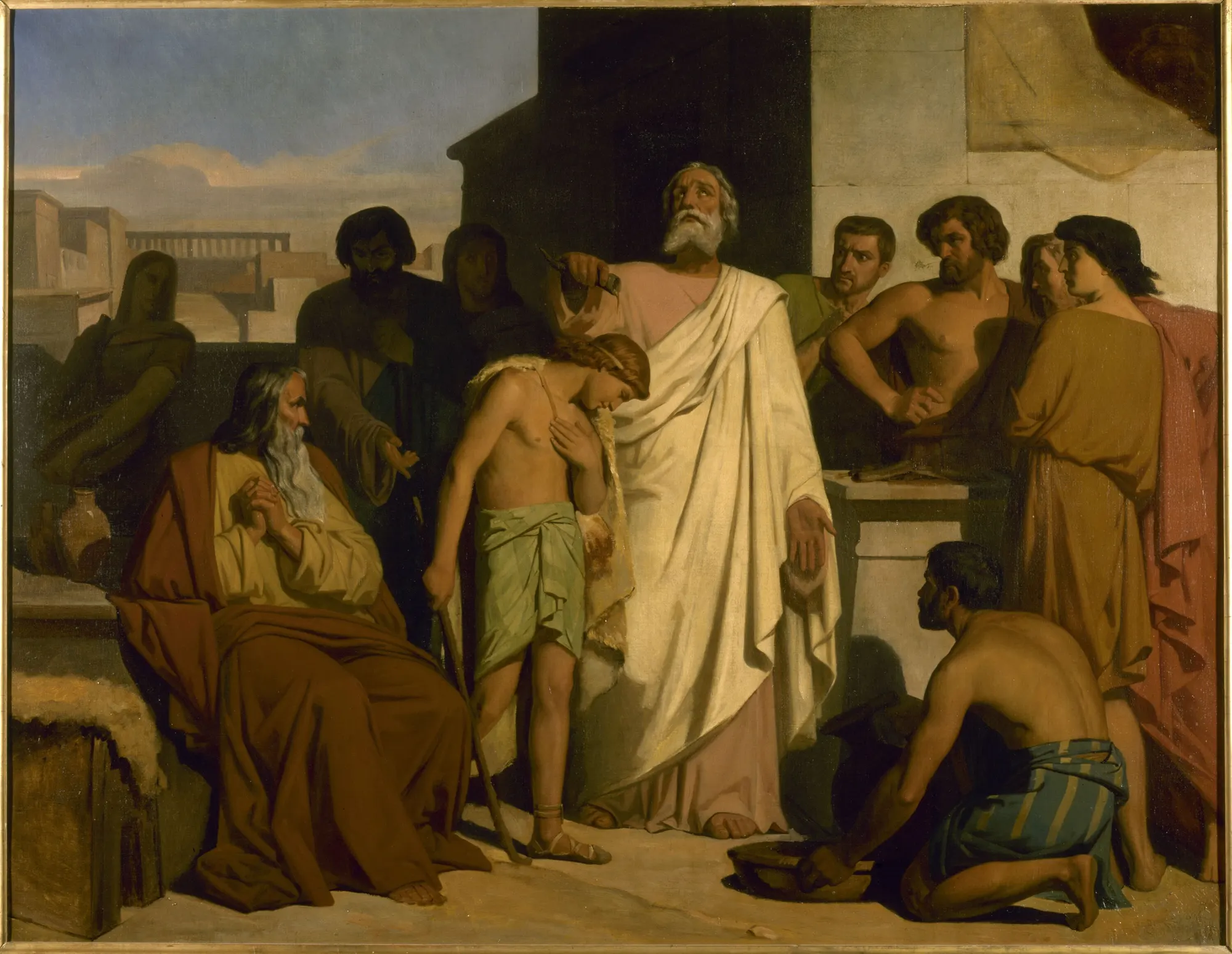
in 1 Samuel 2“Why are you doing these things?” Eli said to his sons. “I hear about your wicked deeds from all these people.
BSB
The same verse in ASV and KJV ▾
ASV
And he said unto them, Why do ye such things? for I hear of your evil dealings from all this people.
KJV
And he said unto them, Why do ye such things? for I hear of your evil dealings by all this people.
⋯
This verse in 1 Samuel 2
Commentary
9 notes on this verseBecause their father [Eli] did not chastise them with enough severity … he moved the forbearance of God to wrath so great that foreign peoples rose up against them and killed those sons of his in war in one day. His entire nation, furthermore, was vanquished, and a considerable number of his people fell.
This site's exposition
Now Eli was very old
on 1 Samuel 2:22-25
Eli hears that his sons “were sleeping with the women who served at the entrance to the Tent of Meeting”. He rebukes them in words and takes no other step. The narrator closes with the verdict, “the LORD intended to put them to death”, judgment settled before it falls.
This site's exposition
“Why are you doing these things?” Eli said to his sons
Eli asks a question where he held the power to act. Adam Clarke calls him a fond and easy father, and John Wesley notes that as judge he could have punished what he only rebuked. His words cost his sons nothing.
The record, by era
The Medieval Church2 voices
A commentator
Gregory the DialogistCommentary on 1 Kings, Book 2, Chapter 2 · Written before 604.
proposed
17. Behold, Eli was an old man, and he spoke sharply, because the power of sacred eloquence, even if it fails in the heart of the reprobate, nevertheless before those who rightly understand, subtly searches out the faults of the Jews. For examining strictly, he says: "Why do you do such things as these, the very worst things that I hear from all the people?" But he who, searching, asks "Why do you do this?" clearly shows that they were plunging into the night of heresy without the discernment of reason.
And he said to them: Why do you do such things? etc. He rebuked the guilty sons of Eli, but they did not listen. And the very institution of the old priesthood orders its ministers to be perfect; but the scribes, Pharisees, and chief priests, …
The Puritans and the Awakening2 voices
He said, &c. - Eli's sin was not only that he reproved them too gently, but that he contented himself with a verbal rebuke, and did not restrain them, and inflict those punishments upon them which such high crimes deserved by God's law, and which he as judge and high-priest ought to have done, without respect of persons.
And he said unto them, why do ye such things?....
The Nineteenth Century1 voice
A commentator
Jamieson, Fausset & Brown1802–1910
Commentary Critical and Explanatory on the Whole Bible (1871)
proposed
the women that assembled at the door of the tabernacle--This was an institution of holy women of a strictly ascetic order, who had relinquished worldly cares and devoted themselves to the Lord; an institution which continued down to the time of Christ (Lu 2:37). Eli was, on the whole, a good man, but lacking in the moral and religious training of his family.
quarantine:debris (2026-07-29) — starts-lowercase
1 more voice on this verse
The Nineteenth Century1 voice
Why do ye such things! - Eli appears to have been a fondly affectionate, easy father, who wished his sons to do well, but did not bring them under proper discipline, and did not use his authority to restrain them. As judge, he had power to cast them immediately out of the vineyard, as wicked and unprofitable servants; this he did not, and his and their ruin was the consequence.
The words behind it
16 Hebrew wordsEvery Hebrew word of this verse in the order it stands, with what it means and the door to its own study. The last column counts the times a word stands in the whole Bible: the rarer the word, the more the places it appears belong together.
| Hebrew | Sound | Meaning | Word study | In the Bible |
|---|---|---|---|---|
| וַיֹּ֣אמֶר | vaiyomer | and he said | H559 → | 5305 times |
| לָהֶ֔ם | lahem | to <the> them | ||
| לָ֥מָּה | lamah | <to> why? | H4100 → | 752 times |
| תַעֲשׂ֖וּן | taasun | are you doing ! | H6213 → | 2628 times |
| כַּדְּבָרִ֣ים | kadevarim | according to the things | H1697 → | 1440 times |
| הָאֵ֑לֶּה | haeleh | <the> these | H428 → | 746 times |
| אֲשֶׁ֨ר | ʾasher | that | H834 → | 5497 times |
| אָנֹכִ֤י | ʾanokhi | I | H595 → | 359 times |
| שֹׁמֵ֙עַ֙ | shomea' | [am] hearing | H8085 → | 1159 times |
| אֶת־ | ʾet- | <obj.> | H853 → | 10935 times |
| דִּבְרֵיכֶ֣ם | divreikhem | things your | H1697 → | 1440 times |
| רָעִ֔ים | raim | wicked | H7451 → | 662 times |
| מֵאֵ֖ת | meet | from with | H854 → | 929 times |
| כָּל־ | kol- | all | H3605 → | 5413 times |
| הָעָ֥ם | haam | the people | H5971 → | 1873 times |
| אֵֽלֶּה׃ | ʾeleh | these | H428 → | 746 times |
וַיֹּ֣אמֶרand he said
vaiyomerH559 →5305 times
לָהֶ֔םto <the> them
lahem
לָ֥מָּה<to> why?
lamahH4100 →752 times
תַעֲשׂ֖וּןare you doing !
taasunH6213 →2628 times
כַּדְּבָרִ֣יםaccording to the things
kadevarimH1697 →1440 times
הָאֵ֑לֶּה<the> these
haelehH428 →746 times
אֲשֶׁ֨רthat
ʾasherH834 →5497 times
אָנֹכִ֤יI
ʾanokhiH595 →359 times
שֹׁמֵ֙עַ֙[am] hearing
shomea'H8085 →1159 times
אֶת־<obj.>
ʾet-H853 →10935 times
דִּבְרֵיכֶ֣םthings your
divreikhemH1697 →1440 times
רָעִ֔יםwicked
raimH7451 →662 times
מֵאֵ֖תfrom with
meetH854 →929 times
כָּל־all
kol-H3605 →5413 times
הָעָ֥םthe people
haamH5971 →1873 times
אֵֽלֶּה׃these
ʾelehH428 →746 times
A shaded row is a word that stands 400 times or fewer in the Bible.
The walk
8 stopsEach card is a verse this one points to, and under it the verses that one points to in turn. Where several paths arrive at the same place, that place is listed first: the text keeps returning to it.
Through
Philippians 3:19Their end is destruction, their god is their belly, and their glory is in their shame. Their minds are set on earthly things.
it leads to
- Romans 16:18
For such people are not serving our Lord Christ, but their own appetites. By smooth talk and flattery they deceive the hearts of the naive.
- Romans 8:5–7
Those who live according to the flesh set their minds on the things of the flesh; but those who live according to the Spirit set their minds on the things of the Spirit.
- 2 Peter 2:3
In their greed, these false teachers will exploit you with deceptive words. The longstanding verdict against them remains in force, and their destruction does not sleep.
- Colossians 3:2
Set your minds on things above, not on earthly things.
- Jude 1:12–13
These men are hidden reefs in your love feasts, shamelessly feasting with you but shepherding only themselves. They are clouds without water, carried along by the wind; fruitless trees in autumn, twice dead after…
- Romans 16:18
Through
Jeremiah 3:3Therefore the showers have been withheld, and no spring rains have fallen. Yet you have the brazen look of a prostitute; you refuse to be ashamed.
it leads to
- Leviticus 26:19
I will break down your stubborn pride and make your sky like iron and your land like bronze,
- Jeremiah 5:24
They have not said in their hearts, ‘Let us fear the LORD our God, who gives the rains, both autumn and spring, in season, who keeps for us the appointed weeks of harvest.’
- Leviticus 26:19
Through
Acts 14:15“Men, why are you doing this? We too are only men, human like you. We are bringing you good news that you should turn from these worthless things to the living God, who made…
it leads to
- 1 Samuel 12:21
Do not turn aside after worthless things that cannot profit you or deliver you, for they are empty.
- 1 Samuel 12:21
Where this verse is studied
About 1 Samuel
Who and where
1 name in this verse with a page on the site.
This page draws on 9 works. Open the list of works
This page draws on Adam Clarke, Commentary on the Bible; Basil of Caesarea, PREFACE ON THE JUDGMENT OF GOD; Bede, Commentary on Samuel; Gregory the Dialogist, Commentary on 1 Kings, Book 2, Chapter 2; Jamieson, Fausset & Brown, Commentary Critical and Explanatory on the Whole Bible; John Gill, Exposition of the Old Testament (1748-1763); John Wesley, Explanatory Notes upon the Old Testament; Keil and Delitzsch, Biblical Commentary on the Books of Samuel and Matthew Henry, Commentary on the Whole Bible.