
1 Kings 22:36
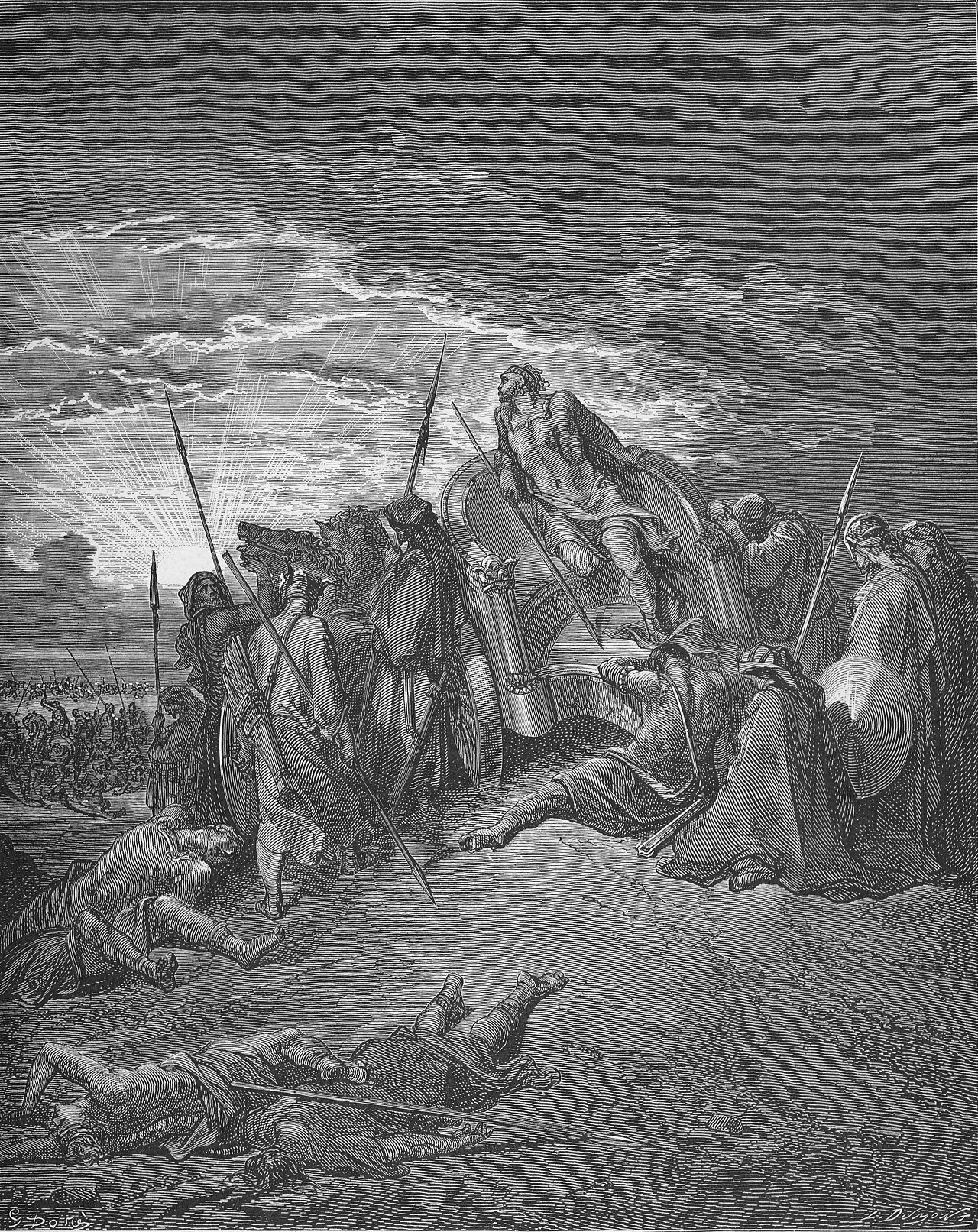
in 1 Kings 22As the sun was setting, the cry rang out in the army: “Every man to his own city, and every man to his own land!”
BSB
The same verse in ASV and KJV ▾
ASV
And there went a cry throughout the host about the going down of the sun, saying, Every man to his city, and every man to his country.
KJV
And there went a proclamation throughout the host about the going down of the sun, saying, Every man to his city, and every man to his own country.
⋯
This verse in 1 Kings 22
Commentary
5 notes on this verseAnd there went a proclamation throughout the host, about the going down of the sun,.... Much about the time that Ahab died; and this proclamation by an herald might be made by his order, as he was dying, or by Jehoshaphat, when he understood he was dead: saying, every man to his city, and every man to his own country; the order was to cease fighting, and make the best of their way as fast as they could to their own homes, since their shepherd and master was dead, which fulfilled the vision of Micaiah, 1Ki 22:
This site's exposition
Every man to his own city
on 1 Kings 22:36-38
At sunset the army breaks up, and Ahab is carried to Samaria and buried. His chariot is washed at the pool of Samaria, and “the dogs licked up Ahab’s blood, according to the word that the LORD had spoken”. The word is Elijah's, spoken in the vineyard at 21:19.
The record, by era
The Nineteenth Century3 voices
A commentator
Jamieson, Fausset & Brown1802–1910
Commentary Critical and Explanatory on the Whole Bible (1871)
proposed
The corpse was conveyed to Samaria; and, as the chariot which brought it was being washed, in a pool near the city, from the blood that had profusely oozed from the wound, the dogs, in conformity with Elijah's prophecy, came and licked it [1Ki 21:19]. Ahab was succeeded by his son Ahaziah [1Ki 22:40].
Every man to his city - It appears that the Israelites and Jews maintained the fight the whole of the day; but when at evening the king died, and this was known, there was a proclamation made, probably with the consent of both Syrians and Israelites, that the war was over. Ahab being dead, his subjects did not choose to contend for Ramoth-gilead; so the Israelites went to their own cities, and the Syrians to their own country.
A commentator
Albert Barnes1798–1870
Notes, Explanatory and Practical, on the Old and New Testaments (1832-1869)
proposed
About the going down of the sun - i. e. as soon as Ahab was dead. The abandonment of the expedition and dispersion of the army on the death of the king is thoroughly Oriental. The Septuagint version reads 1Ki 22:36-37, “Every man to his city, and every man to his own country, for the king is dead: And they came to Samaria,” etc.
The words behind it
12 Hebrew wordsEvery Hebrew word of this verse in the order it stands, with what it means and the door to its own study. The last column counts the times a word stands in the whole Bible: the rarer the word, the more the places it appears belong together.
| Hebrew | Sound | Meaning | Word study | In the Bible |
|---|---|---|---|---|
| וַיַּעֲבֹ֤ר | vaiyaavor | and it passed | H5674 → | 556 times |
| הָרִנָּה֙ | harinah | the cry | H7440 → | |
| בַּֽמַּחֲנֶ֔ה | bamachaneh | in the camp | H4264 → | 215 times |
| כְּבֹ֥א | kevo' | when went | H935 → | 2568 times |
| הַשֶּׁ֖מֶשׁ | hashemesh | the sun | H8121 → | |
| לֵאמֹ֑ר | lemor | <to> saying | H559 → | 5305 times |
| אִ֥ישׁ | ʾish | everyone | H376 → | 1663 times |
| אֶל־ | ʾel- | to | H413 → | 5510 times |
| עִיר֖וֹ | iro | city his | H5892 → | 1090 times |
| וְאִ֥ישׁ | veish | and everyone | H376 → | 1663 times |
| אֶל־ | ʾel- | to | H413 → | 5510 times |
| אַרְצֽוֹ׃ | ʾartzo | land his | H776 → | 2504 times |
וַיַּעֲבֹ֤רand it passed
vaiyaavorH5674 →556 times
הָרִנָּה֙the cry
harinahH7440 →
בַּֽמַּחֲנֶ֔הin the camp
bamachanehH4264 →215 times
כְּבֹ֥אwhen went
kevo'H935 →2568 times
הַשֶּׁ֖מֶשׁthe sun
hashemeshH8121 →
לֵאמֹ֑ר<to> saying
lemorH559 →5305 times
אִ֥ישׁeveryone
ʾishH376 →1663 times
אֶל־to
ʾel-H413 →5510 times
עִיר֖וֹcity his
iroH5892 →1090 times
וְאִ֥ישׁand everyone
veishH376 →1663 times
אֶל־to
ʾel-H413 →5510 times
אַרְצֽוֹ׃land his
ʾartzoH776 →2504 times
A shaded row is a word that stands 400 times or fewer in the Bible.
The walk
8 stopsEach card is a verse this one points to, and under it the verses that one points to in turn. Where several paths arrive at the same place, that place is listed first: the text keeps returning to it.
Through
1 Kings 22:31Now the king of Aram had ordered his thirty-two chariot commanders, “Do not fight with anyone, small or great, except the king of Israel.”
it leads to
- 1 Kings 20:24
So do this: Dismiss all the kings from their positions and replace them with other officers.
- 2 Chronicles 18:30
Now the king of Aram had ordered his chariot commanders, “Do not fight with anyone, small or great, except the king of Israel.”
- Jeremiah 16:6
“Both great and small will die in this land. They will not be buried or mourned, nor will anyone cut himself or shave his head for them.
- Genesis 19:11
And they struck the men at the entrance, young and old, with blindness, so that they wearied themselves trying to find the door.
- 1 Kings 20:24
Through
2 Kings 14:12And Judah was routed before Israel, and every man fled to his home.
it leads to
- 2 Samuel 18:17
They took Absalom, cast him into a large pit in the forest, and piled a huge mound of stones over him. Meanwhile, all the Israelites fled, each to his home.
Reached by 2 separate paths from here.
- 1 Samuel 4:10
So the Philistines fought, and Israel was defeated, and each man fled to his tent. The slaughter was very great—thirty thousand foot soldiers of Israel fell.
- 2 Samuel 18:17
Through
2 Samuel 19:8So the king got up and sat in the gate, and all the people were told: “Behold, the king is sitting in the gate.” So they all came before the king. Meanwhile, the Israelites…
it leads to
- 2 Samuel 18:24
Now David was sitting between the two gates when the watchman went up to the roof of the gateway by the wall, looked out, and saw a man running alone.
- 2 Samuel 18:4
“I will do whatever seems best to you,” the king replied. So he stood beside the gate, while all the troops marched out by hundreds and by thousands.
- 2 Samuel 18:24
Where this verse is studied
About 1 Kings
This page draws on Adam Clarke, Commentary on the Bible; Albert Barnes, Notes, Explanatory and Practical, on the Old and New Testaments (1832-1869); F. W. Farrar, The First Book of Kings (Expositor's Bible); Jamieson, Fausset & Brown, Commentary Critical and Explanatory on the Whole Bible; John Gill, Exposition of the Old Testament (1748-1763) and Keil, The Books of the Kings.