
1 Kings 22:25
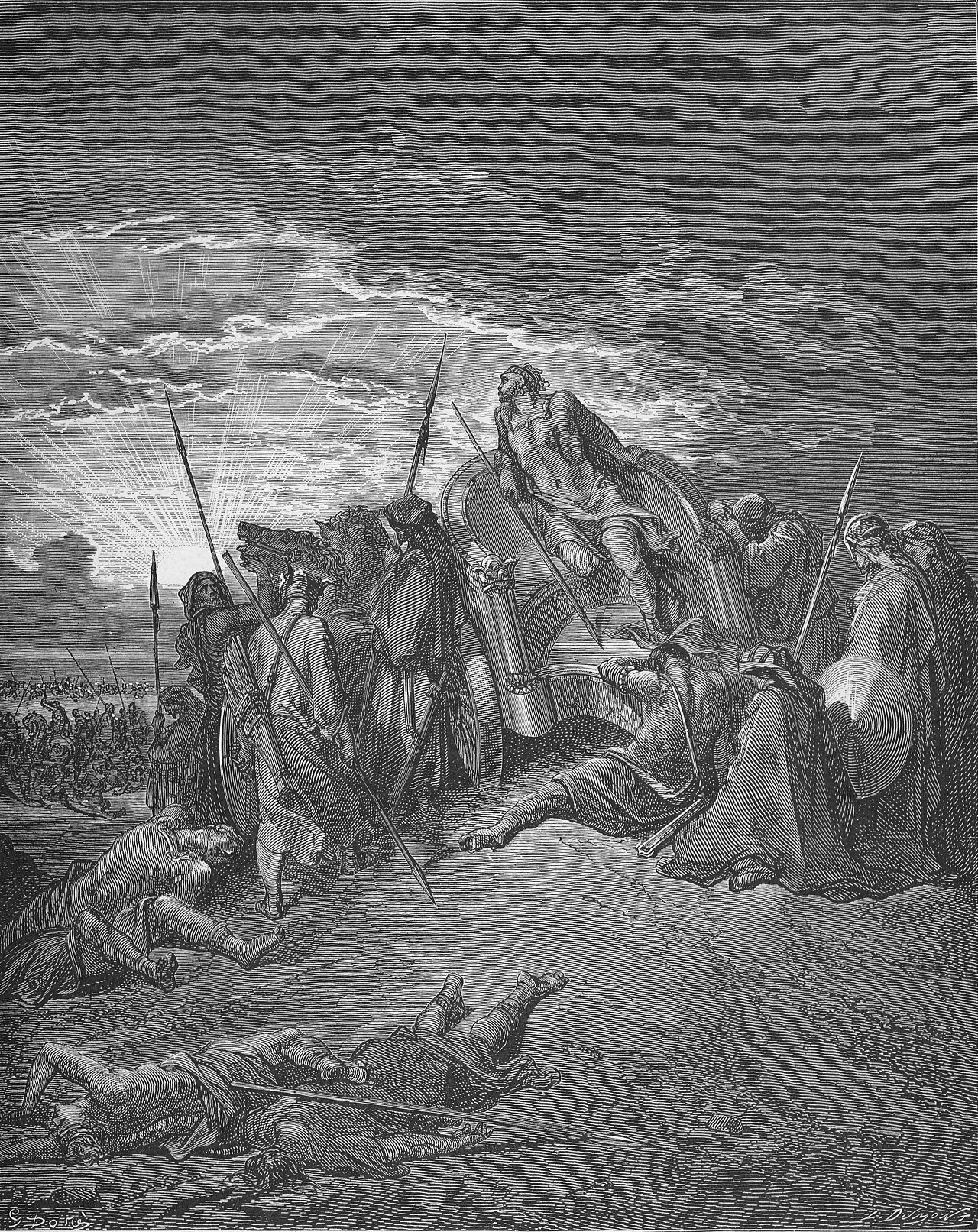
in 1 Kings 22Micaiah replied, “You will soon see, on that day when you go and hide in an inner room.”
BSB
The same verse in ASV and KJV ▾
ASV
And Micaiah said, Behold, thou shalt see on that day, when thou shalt go into an inner chamber to hide thyself.
KJV
And Micaiah said, Behold, thou shalt see in that day, when thou shalt go into an inner chamber to hide thyself.
⋯
This verse in 1 Kings 22
Commentary
5 notes on this verseAnd Micaiah said, behold, thou shalt see in the day when thou shalt go into an inner chamber to hide thyself. Who would either accompany Ahab to the battle, and, upon his being wounded, flee to the first place of secrecy for safety; or, upon the news of his defeat brought to Samaria, would betake himself to a private chamber for security, fearing the enemy would pursue to the very place; or else through fear of the populace, who would attribute the death of the king to the advice of him and the other prophets.
This site's exposition
smote Micaiah on the cheek
on 1 Kings 22:24-25
Zedekiah's blow and his taunt, Which way went the Spirit of the Lord from me to speak unto thee, assumes his own prophesying carried the Spirit and Micaiah's could not. Micaiah does not argue the point; he points forward instead, Behold, thou shalt see in that day, when thou shalt go into an inner chamber to hide thyself, a private reckoning promised for a public lie.
The record, by era
The Puritans and the Awakening1 voice
It is likely Zedekiah went with Ahab to the battle, and took his horns of iron with him to encourage the soldiers, to see with pleasure the accomplishment of his prophecy, and return in triumph with the king; but, the army being routed, he fled among the rest from the sword of the enemy, sheltered himself as Ben-hadad had done in a chamber within a chamber ( ch. xx.
quarantine:debris (2026-07-29) — unbalanced-parens
The Nineteenth Century2 voices
When thou shalt go into an inner chamber - It is probable that this refers to some Divine judgment which fell upon this deceiver. Hearing of the tragical result of the battle, he no doubt went into a secret place to hide himself from the resentment of Jezebel, and the Israelitish courtiers, and there it is probable he perished; but how, when, or where, is not mentioned.
A commentator
Albert Barnes1798–1870
Notes, Explanatory and Practical, on the Old and New Testaments (1832-1869)
proposed
Micaiah addresses himself not so much to Zedekiah’s question, as to the main point which lies in dispute - which of them, namely, is a true prophet. “When the news, i. e., of Ahab’s death, caused by his following thy counsels, reaches Samaria, and thou hast to hide thyself from the vengeance of Ahaziah or Jezebel, then, in that day, thou wilt know whether I or thou be the true prophet.”
The words behind it
11 Hebrew wordsEvery Hebrew word of this verse in the order it stands, with what it means and the door to its own study. The last column counts the times a word stands in the whole Bible: the rarer the word, the more the places it appears belong together.
| Hebrew | Sound | Meaning | Word study | In the Bible |
|---|---|---|---|---|
| וַיֹּ֣אמֶר | vaiyomer | and he said | H559 → | 5305 times |
| מִיכָ֔יְהוּ | mikhayehu | Micaiah | H4321 → | 21 times |
| הִנְּךָ֥ | hinekha | there you | H2005 → | 316 times |
| רֹאֶ֖ה | roeh | [are] about to see | H7200 → | 1300 times |
| בַּיּ֣וֹם | baiyom | on the day | H3117 → | 2304 times |
| הַה֑וּא | hahu' | <the> that | H1931 → | 1879 times |
| אֲשֶׁ֥ר | ʾasher | when | H834 → | 5497 times |
| תָּבֹ֛א | tavo' | you will go | H935 → | 2568 times |
| חֶ֥דֶר | cheder | a room | H2315 → | 38 times |
| בְּחֶ֖דֶר | becheder | in a room | H2315 → | 38 times |
| לְהֵחָבֵֽה׃ | lehechaveh | to hide yourself | H2247 → |
וַיֹּ֣אמֶרand he said
vaiyomerH559 →5305 times
מִיכָ֔יְהוּMicaiah
mikhayehuH4321 →21 times
הִנְּךָ֥there you
hinekhaH2005 →316 times
רֹאֶ֖ה[are] about to see
roehH7200 →1300 times
בַּיּ֣וֹםon the day
baiyomH3117 →2304 times
הַה֑וּא<the> that
hahu'H1931 →1879 times
אֲשֶׁ֥רwhen
ʾasherH834 →5497 times
תָּבֹ֛אyou will go
tavo'H935 →2568 times
חֶ֥דֶרa room
chederH2315 →38 times
בְּחֶ֖דֶרin a room
bechederH2315 →38 times
לְהֵחָבֵֽה׃to hide yourself
lehechavehH2247 →
A shaded row is a word that stands 400 times or fewer in the Bible.
The walk
8 stopsEach card is a verse this one points to, and under it the verses that one points to in turn. Where several paths arrive at the same place, that place is listed first: the text keeps returning to it.
Through
2 Peter 2:1Now there were also false prophets among the people, just as there will be false teachers among you. They will secretly introduce destructive heresies, even denying the Master who bought them—bringing swift destruction on…
it leads to
- Matthew 7:15
Beware of false prophets. They come to you in sheep’s clothing, but inwardly they are ravenous wolves.
- Jude 1:4
For certain men have crept in among you unnoticed—ungodly ones who were designated long ago for condemnation. They turn the grace of our God into a license for immorality, and they deny our only…
- Deuteronomy 13:1–3
If a prophet or dreamer of dreams arises among you and proclaims a sign or wonder to you,
- 2 Timothy 4:3
For the time will come when men will not tolerate sound doctrine, but with itching ears they will gather around themselves teachers to suit their own desires.
- Matthew 24:11
and many false prophets will arise and mislead many.
- Matthew 7:15
Through
Revelation 19:20But the beast was captured along with the false prophet, who on its behalf had performed signs deceiving those who had the mark of the beast and worshiped its image. Both the beast and…
it leads to
- Revelation 20:10
And the devil who had deceived them was thrown into the lake of fire and sulfur, into which the beast and the false prophet had already been thrown. There they will be tormented day…
- Revelation 21:8
But to the cowardly and unbelieving and abominable and murderers and sexually immoral and sorcerers and idolaters and all liars, their place will be in the lake that burns with fire and sulfur. This…
- Revelation 20:14–15
Then Death and Hades were thrown into the lake of fire. This is the second death—the lake of fire.
- Revelation 20:10
Where this verse is studied
On this page
About 1 Kings
This page draws on Adam Clarke, Commentary on the Bible; Albert Barnes, Notes, Explanatory and Practical, on the Old and New Testaments (1832-1869); F. W. Farrar, The First Book of Kings (Expositor's Bible); John Gill, Exposition of the Old Testament (1748-1763); John Gill, Exposition of the Old Testament and Matthew Henry, Commentary on the Whole Bible.