
1 Kings 22:14
in 1 Kings 22But Micaiah said, “As surely as the LORD lives, I will speak whatever the LORD tells me.”
BSB
The same verse in ASV and KJV ▾
ASV
And Micaiah said, As Jehovah liveth, what Jehovah saith unto me, that will I speak.
KJV
And Micaiah said, As the Lord liveth, what the Lord saith unto me, that will I speak.
⋯
This verse in 1 Kings 22
Commentary
5 notes on this verseA commentator
Albert Barnes1798–1870
Notes, Explanatory and Practical, on the Old and New Testaments (1832-1869)
Micaiah, as a true prophet of Yahweh, of course rejected the counsel offered him, which he felt to be at once wicked and foolish. Compare also the resolution of Balaam, marginal reference.
This site's exposition
let thy word, I pray
on 1 Kings 22:13-14
The messenger sent to fetch Micaiah presses him to match the other four hundred before he has even spoken. Micaiah's answer sets the office in one sentence, As the Lord liveth, what the Lord saith unto me, that will I speak, the same oath by which Balaam once bound himself in Num 22:18 and 24:13 against a king's pressure to bless what should not be blessed.
The record, by era
The Puritans and the Awakening2 voices
And Micaiah said, as the Lord liveth,.... He swore by the living God, for the confirmation of what he was about to say: what the Lord saith unto me, that will I speak; truly and faithfully, keeping nothing back, nor adding anything, whether it be good or evil, pleasing or displeasing; it looks as if as yet he had no instruction from the Lord what to say, and yet the vision he later declares seems to have been had by him before, 1Ki 22:17.
And he said, Hearken, O people, every one of you. Here Micaiah does well, but, as is common, suffers ill for so doing. We are told how faithfully he delivered his message, as one that was more solicitous to please God than to humour either the great or the many.
The Nineteenth Century1 voice
A commentator
Jamieson, Fausset & Brown1802–1910
Commentary Critical and Explanatory on the Whole Bible (1871)
proposed
what the Lord saith unto me, that will I speak--On the way the messenger who conducted [Micaiah] to the royal presence informed him of the tenor of the prophecies already given and recommended him to agree with the rest, no doubt from the kindly motive of seeing him released from imprisonment.
quarantine:debris (2026-07-29) — starts-lowercase
How the passage was read
What the Jewish commentators add
On the verses either side of this one
Go up and be successful. He did not say [it] to him in God’s Name. 6 He was merely wishing him good luck, or giving him a blessing that he succeed.—Metzudas Dovid
This section is reception history: how the passage was read and kept in the Jewish tradition. Where a reading parts from an essential of the Christian faith, the section says so at that point.
Texts and citation data: Sefaria; each excerpt follows its version’s licence. 5 further sources are cited on this chapter that carry no English text this site may quote or only restate the verse.
The words behind it
12 Hebrew wordsEvery Hebrew word of this verse in the order it stands, with what it means and the door to its own study. The last column counts the times a word stands in the whole Bible: the rarer the word, the more the places it appears belong together.
| Hebrew | Sound | Meaning | Word study | In the Bible |
|---|---|---|---|---|
| וַיֹּ֖אמֶר | vaiyomer | and he said | H559 → | 5305 times |
| מִיכָ֑יְהוּ | mikhayehu | Micaiah | H4321 → | 21 times |
| חַי־ | chai- | [by] [the] life | H2416 → | 498 times |
| יְהוָ֕ה | yahweh | of Yahweh | H3068 → | 6520 times |
| כִּ֠י | ki | for | H3588 → | 4482 times |
| אֶת־ | ʾet- | <obj.> | H853 → | 10935 times |
| אֲשֶׁ֨ר | ʾasher | [that] which | H834 → | 5497 times |
| יֹאמַ֧ר | yomar | he will say | H559 → | 5305 times |
| יְהוָ֛ה | yahweh | Yahweh | H3068 → | 6520 times |
| אֵלַ֖י | ʾelai | to me | H413 → | 5510 times |
| אֹת֥וֹ | ʾoto | <obj.> it | H853 → | 10935 times |
| אֲדַבֵּֽר׃ | ʾadaber | I will speak | H1696 → | 1141 times |
וַיֹּ֖אמֶרand he said
vaiyomerH559 →5305 times
מִיכָ֑יְהוּMicaiah
mikhayehuH4321 →21 times
חַי־[by] [the] life
chai-H2416 →498 times
יְהוָ֕הof Yahweh
yahwehH3068 →6520 times
כִּ֠יfor
kiH3588 →4482 times
אֶת־<obj.>
ʾet-H853 →10935 times
אֲשֶׁ֨ר[that] which
ʾasherH834 →5497 times
יֹאמַ֧רhe will say
yomarH559 →5305 times
יְהוָ֛הYahweh
yahwehH3068 →6520 times
אֵלַ֖יto me
ʾelaiH413 →5510 times
אֹת֥וֹ<obj.> it
ʾotoH853 →10935 times
אֲדַבֵּֽר׃I will speak
ʾadaberH1696 →1141 times
A shaded row is a word that stands 400 times or fewer in the Bible.
The walk
8 stopsEach card is a verse this one points to, and under it the verses that one points to in turn. Where several paths arrive at the same place, that place is listed first: the text keeps returning to it.
Through
Numbers 22:18But Balaam replied to the servants of Balak, “If Balak were to give me his house full of silver and gold, I could not do anything small or great to go beyond the command…
it leads to
- Numbers 24:13
that even if Balak were to give me his house full of silver and gold, I could not do anything of my own accord, good or bad, to go beyond the command of the…
- 2 Chronicles 18:13
But Micaiah said, “As surely as the LORD lives, I will speak whatever my God tells me.”
- Numbers 23:26
But Balaam replied, “Did I not tell you that whatever the LORD says, I must do?”
- Numbers 22:38
“See, I have come to you,” Balaam replied, “but can I say just anything? I must speak only the word that God puts in my mouth.”
- Titus 1:16
They profess to know God, but by their actions they deny Him. They are detestable, disobedient, and unfit for any good deed.
- Numbers 24:13
Through
Numbers 24:13that even if Balak were to give me his house full of silver and gold, I could not do anything of my own accord, good or bad, to go beyond the command of the…
it leads to
- Numbers 16:28
Then Moses said, “This is how you will know that the LORD has sent me to do all these things, for it was not my own doing:
- Numbers 22:20
That night God came to Balaam and said, “Since these men have come to summon you, get up and go with them, but you must only do what I tell you.”
- Numbers 22:18
But Balaam replied to the servants of Balak, “If Balak were to give me his house full of silver and gold, I could not do anything small or great to go beyond the command…
- Numbers 16:28
Where this verse is studied
On this page
About 1 Kings
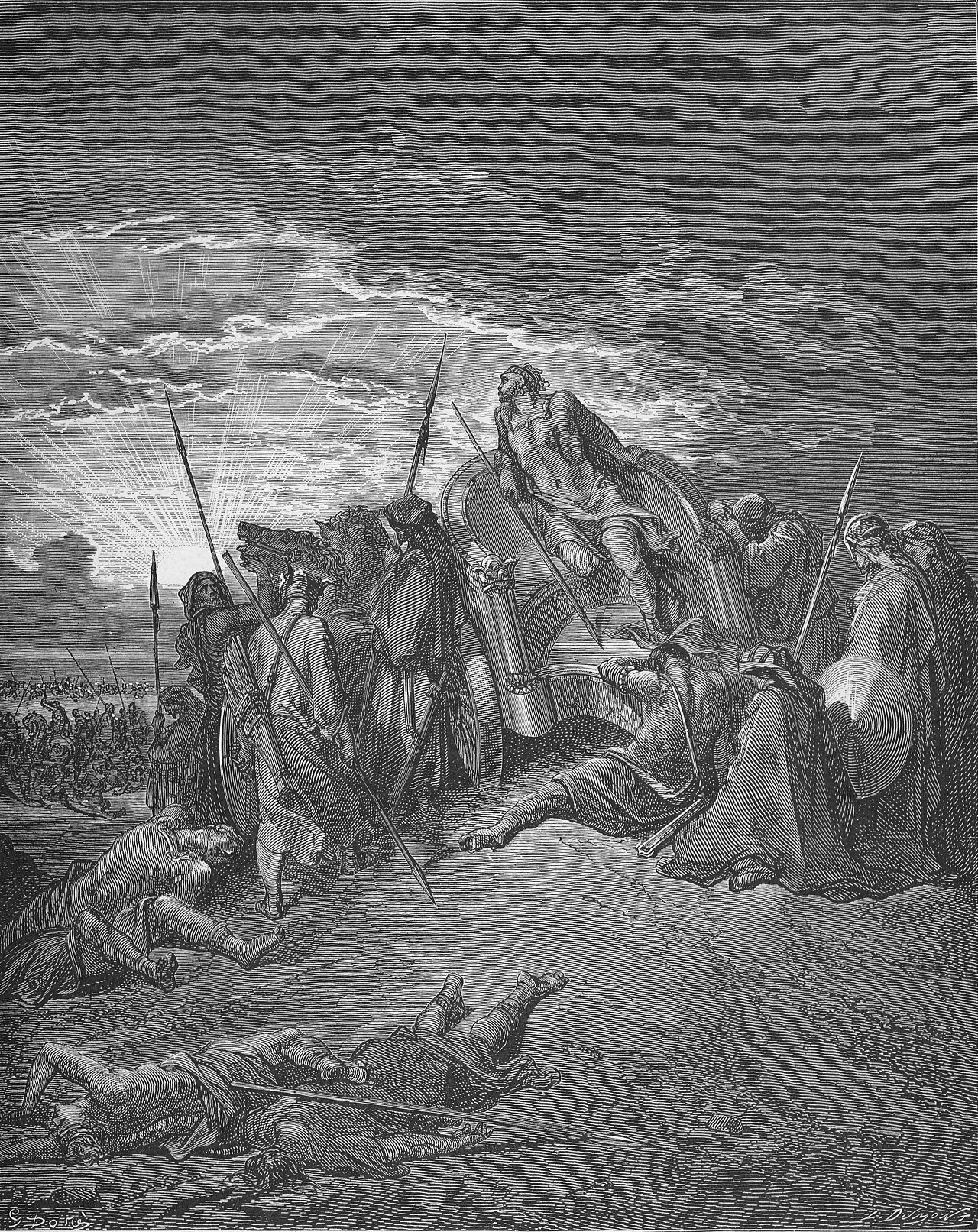
This page draws on Albert Barnes, Notes, Explanatory and Practical, on the Old and New Testaments (1832-1869); Jamieson, Fausset & Brown, Commentary Critical and Explanatory on the Whole Bible; John Gill, Exposition of the Old Testament (1748-1763); Keil, The Books of the Kings and Matthew Henry, Commentary on the Whole Bible.