
1 Kings 20:34
in 1 Kings 20Ben-hadad said to him, “I will restore the cities my father took from your father; you may set up your own marketplaces in Damascus, as my father did in Samaria.” “By this treaty I release you,” Ahab replied. So he made a treaty with him and sent him away.
BSB
The same verse in ASV and KJV ▾
ASV
And Ben-hadad said unto him, The cities which my father took from thy father I will restore; and thou shalt make streets for thee in Damascus, as my father made in Samaria. And I, said Ahab, will let thee go with this covenant. So he made a covenant with him, and let him go.
KJV
And Ben–hadad said unto him, The cities, which my father took from thy father, I will restore; and thou shalt make streets for thee in Damascus, as my father made in Samaria. Then said Ahab, I will send thee away with this covenant. So he made a covenant with him, and sent him away.
⋯
This verse in 1 Kings 20
Commentary
10 notes on this verseThou shalt make streets for thee in Damascus - It appears that it was customary for foreigners to have a place assigned to them, particularly in maritime towns, where they might deposit and vend their merchandise. This was the very origin of European settlements in Asiatic countries: “The people gave an inch to those strangers; and in consequence they took an ell.” Under the pretense of strengthening the place where they kept their wares, to prevent depredations, they built forts, and soon gave laws to their entertainers.
This site's exposition
Is he yet alive? he is my brother
on 1 Kings 20:32-34
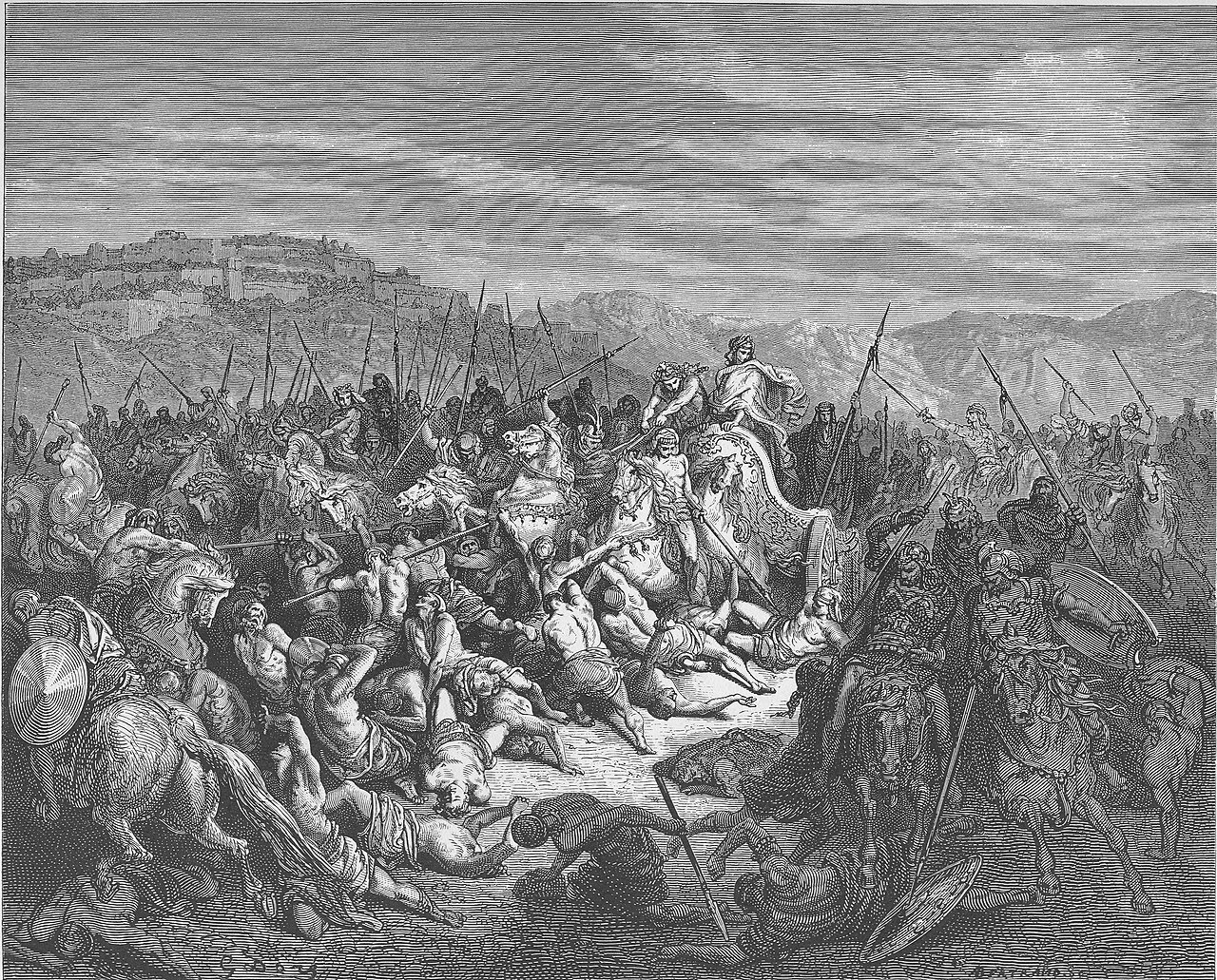
Ben-hadad's servants come in sackcloth and ropes, the posture of men surrendering their lives outright, and Ahab's first question, is he yet alive, gives them the opening they came for. He calls the defeated king his brother and brings him up into his own chariot; Jamieson, Fausset and Brown read Ahab as flattered by the submission and thinking only of the honor of the moment. Ben-hadad is sent away under covenant with cities restored and trading rights in Damascus, sparing exactly the king the Lord had appointed to destruction, the same shape as Saul sparing Agag.
The record, by era
The Puritans and the Awakening3 voices
): he made a covenant with him, not consulting God's prophets, or the elders of the land, or himself, concerning what was fit to be insisted on, but, as if Ben-hadad had been conqueror, he shall make his own terms. He might now have demanded some of Ben-hadad's cities, when all of them lay at the mercy of his victorious army; but was content with the restitution of his own.
quarantine:debris (2026-07-29) — leading-punctuation+unbalanced-parens
Streets - Or, Markets, &c. places where thou mayest either receive the tribute which I promise to pay thee, or exercise judicature upon my subjects in case of their refusal.
And Benhadad said unto him,....
The Nineteenth Century2 voices
ALTHOUGH the manners and customs of warfare were exceedingly rough and cruel in those primitive ages, yet it appears that the kings of Israel gained a name for being merciful. I do not find recorded in Scripture any particularly merciful acts of theirs and I should conclude that the kings of other countries must have been very ferocious, if the kings of Israel were at all merciful.
A commentator
Jamieson, Fausset & Brown1802–1910
Commentary Critical and Explanatory on the Whole Bible (1871)
Their voluntary attitude and language of submission flattered the pride of Ahab, who, little concerned about the dishonor done to the God of Israel by the Syrian king, and thinking of nothing but victory, paraded his clemency, called the vanquished king "his brother," invited him to sit in the royal chariot, and dismissed him with a covenant of peace.
3 more voices on this verse
The Nineteenth Century3 voices
A commentator
Jamieson, Fausset & Brown1802–1910
Commentary Critical and Explanatory on the Whole Bible (1871)
proposed
streets for thee in Damascus--implying that a quarter of that city was to be assigned to Jews, with the free exercise of their religion and laws, under a judge of their own.
quarantine:debris (2026-07-29) — starts-lowercase
ALTHOUGH the manners and customs of warfare were exceedingly rough and cruel in those primitive ages, yet it appears that the kings of Israel gained a name for being merciful. I do not find recorded in Scripture any particularly merciful acts of theirs and I should conclude that the kings of other countries must have been very ferocious, if the kings of Israel were at all merciful. Ancient records and memorial slabs record tortures so horrible that you could not listen— if I were to describe them—although they were the common barbarities with which Assyrian and Babylonian victors concluded their wars. It seems that the kings of the house of Israel did not go to the lengths of savage cruelty usual among their neighbors. Upon which we are led to remark that where the true worship of God does not make men what they should be, yet it betters them in some respects. The kings of Israel were all idolaters, but yet the presence of a little salt, a few of the godly in the land, had an effect upon the State. And the situation of the little kingdom of Judah, close at their elbow, with its Temple and its Prophets, influenced the manners and customs of the people, so that, "the kings of the house of Israel were merciful kings," and this not because they feared God themselves, but because there were others who did and whose influence and example, perhaps, unconsciously, softened public sentiment and mitigated the ruthless ferocity of war. Is this nothing? Is it not a high honor to the seven thousand who bowed not the knee to Baal, that in this respect they made Baal's worshippers bow to them? Little do we know how much of the apparent morality of this country is due to the real religion which we have in our land. There are thousands of men in London who would open their shops tonight if it were not for the influence of those who fear the Lord.
A commentator
Albert Barnes1798–1870
Notes, Explanatory and Practical, on the Old and New Testaments (1832-1869)
proposed
Ben-hadad, secure of his life, suggests terms of peace as the price of his freedom. He will restore to Ahab the Israelite cities taken from Omri by his father, among which Ramoth Gilead was probably the most important 1Ki 22:3; and he will allow Ahab the privilege of making for himself “streets,” or rather squares, in Damascus, a privilege which his own father had possessed with respect to Samaria. Commercial advantages, rather than any other, were probably sought by this arrangement. So he made a covenant with him ... - Ahab, without “inquiring of the Lord,” at once agreed to the terms offered; and, without even taking any security for their due observance, allowed the Syrian monarch to depart. Considered politically, the act was one of culpable carelessness and imprudence. Ben-hadad did not regard himself as bound by the terms of a covenant made when he was a prisoner - as his after conduct shows 1Ki 22:3. Ahab’s conduct was even more unjustifiable in one who held his crown under a theocracy. “Inquiry at the word of the Lord” was still possible in Israel 1Ki 22:5, 1Ki 22:8, and would seem to have been the course that ordinary gratitude might have suggested.
The words behind it
24 Hebrew wordsEvery Hebrew word of this verse in the order it stands, with what it means and the door to its own study. The last column counts the times a word stands in the whole Bible: the rarer the word, the more the places it appears belong together.
| Hebrew | Sound | Meaning | Word study | In the Bible |
|---|---|---|---|---|
| וַיֹּ֣אמֶר | vaiyomer | and he said | H559 → | 5305 times |
| אֵלָ֡יו | ʾelav | to him | H413 → | 5510 times |
| הֶעָרִ֣ים | hearim | the cities | H5892 → | 1090 times |
| אֲשֶׁר־ | ʾasher- | which | H834 → | 5497 times |
| לָֽקַח־ | lakach- | he took | H3947 → | 966 times |
| אָבִי֩ | ʾavi | father my | H1 → | 1212 times |
| מֵאֵ֨ת | meet | from with | H854 → | 929 times |
| אָבִ֜יךָ | ʾavikha | father your | H1 → | 1212 times |
| אָשִׁ֗יב | ʾashiv | I will return | H7725 → | 1056 times |
| וְ֠חוּצוֹת | vechutzot | and streets | H2351 → | 164 times |
| תָּשִׂ֨ים | tasim | you will make | H7760 → | 584 times |
| לְךָ֤ | lekha | for yourself | ||
| בְדַמֶּ֙שֶׂק֙ | vedamesek | in Damascus | H1834 → | 45 times |
| כַּאֲשֶׁר־ | kaasher- | just as | H834 → | 5497 times |
| שָׂ֤ם | sam | he made | H7760 → | 584 times |
| אָבִי֙ | ʾavi | father my | H1 → | 1212 times |
| בְּשֹׁ֣מְר֔וֹן | beshomeron | in Samaria | H8111 → | 109 times |
| וַאֲנִ֖י | vaani | and I | H589 → | 874 times |
| בַּבְּרִ֣ית | baberit | with the covenant | H1285 → | 284 times |
| אֲשַׁלְּחֶ֑ךָּ | ʾashalecheka | I will let go you | H7971 → | 845 times |
| וַיִּכְרָת־ | vaiyikhrot- | and he made | H3772 → | 288 times |
| ל֥וֹ | lo | to him | ||
| בְרִ֖ית | verit | a covenant | H1285 → | 284 times |
| וַֽיְשַׁלְּחֵֽהוּ׃ ס | vayshalechehu | and he let go him | H7971 → | 845 times |
וַיֹּ֣אמֶרand he said
vaiyomerH559 →5305 times
אֵלָ֡יוto him
ʾelavH413 →5510 times
הֶעָרִ֣יםthe cities
hearimH5892 →1090 times
אֲשֶׁר־which
ʾasher-H834 →5497 times
לָֽקַח־he took
lakach-H3947 →966 times
אָבִי֩father my
ʾaviH1 →1212 times
מֵאֵ֨תfrom with
meetH854 →929 times
אָבִ֜יךָfather your
ʾavikhaH1 →1212 times
אָשִׁ֗יבI will return
ʾashivH7725 →1056 times
וְ֠חוּצוֹתand streets
vechutzotH2351 →164 times
תָּשִׂ֨יםyou will make
tasimH7760 →584 times
לְךָ֤for yourself
lekha
בְדַמֶּ֙שֶׂק֙in Damascus
vedamesekH1834 →45 times
כַּאֲשֶׁר־just as
kaasher-H834 →5497 times
שָׂ֤םhe made
samH7760 →584 times
אָבִי֙father my
ʾaviH1 →1212 times
בְּשֹׁ֣מְר֔וֹןin Samaria
beshomeronH8111 →109 times
וַאֲנִ֖יand I
vaaniH589 →874 times
בַּבְּרִ֣יתwith the covenant
baberitH1285 →284 times
אֲשַׁלְּחֶ֑ךָּI will let go you
ʾashalechekaH7971 →845 times
וַיִּכְרָת־and he made
vaiyikhrot-H3772 →288 times
ל֥וֹto him
lo
בְרִ֖יתa covenant
veritH1285 →284 times
וַֽיְשַׁלְּחֵֽהוּ׃ סand he let go him
vayshalechehuH7971 →845 times
A shaded row is a word that stands 400 times or fewer in the Bible.
The walk
8 stopsEach card is a verse this one points to, and under it the verses that one points to in turn. Where several paths arrive at the same place, that place is listed first: the text keeps returning to it.
Through
1 Kings 22:31Now the king of Aram had ordered his thirty-two chariot commanders, “Do not fight with anyone, small or great, except the king of Israel.”
it leads to
- 1 Kings 20:24
So do this: Dismiss all the kings from their positions and replace them with other officers.
- 2 Chronicles 18:30
Now the king of Aram had ordered his chariot commanders, “Do not fight with anyone, small or great, except the king of Israel.”
- Jeremiah 16:6
“Both great and small will die in this land. They will not be buried or mourned, nor will anyone cut himself or shave his head for them.
- 1 Kings 20:24
Through
1 Kings 15:20And Ben-hadad listened to King Asa and sent the commanders of his armies against the cities of Israel, conquering Ijon, Dan, Abel-beth-maacah, and the whole land of Naphtali, including the region of Chinnereth.
it leads to
- 2 Kings 15:29
In the days of Pekah king of Israel, Tiglath-pileser king of Assyria came and captured Ijon, Abel-beth-maacah, Janoah, Kedesh, Hazor, Gilead, and Galilee, including all the land of Naphtali, and he took the people…
- Judges 18:29
They named it Dan, after their forefather Dan, who was born to Israel—though the city was formerly named Laish.
- 2 Kings 15:29
Through
1 Kings 20:42And the prophet said to the king, “This is what the LORD says: ‘Because you have let slip from your hand the man I had devoted to destruction, your life will be exchanged for…
it leads to
- 1 Kings 22:31–37
Now the king of Aram had ordered his thirty-two chariot commanders, “Do not fight with anyone, small or great, except the king of Israel.”
- 1 Kings 22:31–37
Through
Isaiah 26:10Though grace is shown to the wicked man, he does not learn righteousness. In the land of righteousness he acts unjustly and fails to see the majesty of the LORD.
it leads to
- Hosea 11:7
My people are bent on turning from Me. Though they call to the Most High, He will by no means exalt them.
- John 5:37–38
And the Father who sent Me has Himself testified about Me. You have never heard His voice nor seen His form,
- Hosea 11:7
About 1 Kings
Who and where
3 names in this verse with a page on the site.
- PersonDivided kingdomAhabSeventh king of the northern kingdom, son of Omri, who "did evil above all that were before him"; Elijah's chief antagonist, conde…
- PlaceThe northern hill countrySamariaThe hill Omri bought and built his capital on, where Ahab raised a temple to Baal, where the four lepers found the Aramean camp em…
- PlaceSyriaDamascusThe Syrian city Saul was travelling to with letters of arrest when the light stopped him on the road; he entered it blind and left…
This page draws on Adam Clarke, Commentary on the Bible; Albert Barnes, Notes, Explanatory and Practical, on the Old and New Testaments (1832-1869); Charles Spurgeon, The Metropolitan Tabernacle Pulpit, Sermon No. 535: “Ben-Hadad'S Escape—An Encouragement For Sinners” (lightly modernized text, CCEL edition); Jamieson, Fausset & Brown, Commentary Critical and Explanatory on the Whole Bible; John Gill, Exposition of the Old Testament (1748-1763); John Wesley, Explanatory Notes upon the Old Testament and Matthew Henry, Commentary on the Whole Bible.