
1 Kings 20:25
in 1 Kings 20And you must raise an army like the one you have lost—horse for horse and chariot for chariot—so we can fight the Israelites on the plain, where we will surely prevail.” And the king approved their plan and acted accordingly.
BSB
The same verse in ASV and KJV ▾
ASV
and number thee an army, like the army that thou hast lost, horse for horse, and chariot for chariot; and we will fight against them in the plain, and surely we shall be stronger than they. And he hearkened unto their voice, and did so.
KJV
And number thee an army, like the army that thou hast lost, horse for horse, and chariot for chariot: and we will fight against them in the plain, and surely we shall be stronger than they. And he hearkened unto their voice, and did so.
⋯
This verse in 1 Kings 20
Commentary
7 notes on this verseLet every man be employed in that which he is brought up to and used to, and preferred to that which he is fit for. Syria, it seems, was rich and populous, when it could furnish recruits sufficient, after so great a defeat, horse for horse, chariot for chariot.
This site's exposition
Dismiss all the kings from their positions
on 1 Kings 20:24-25
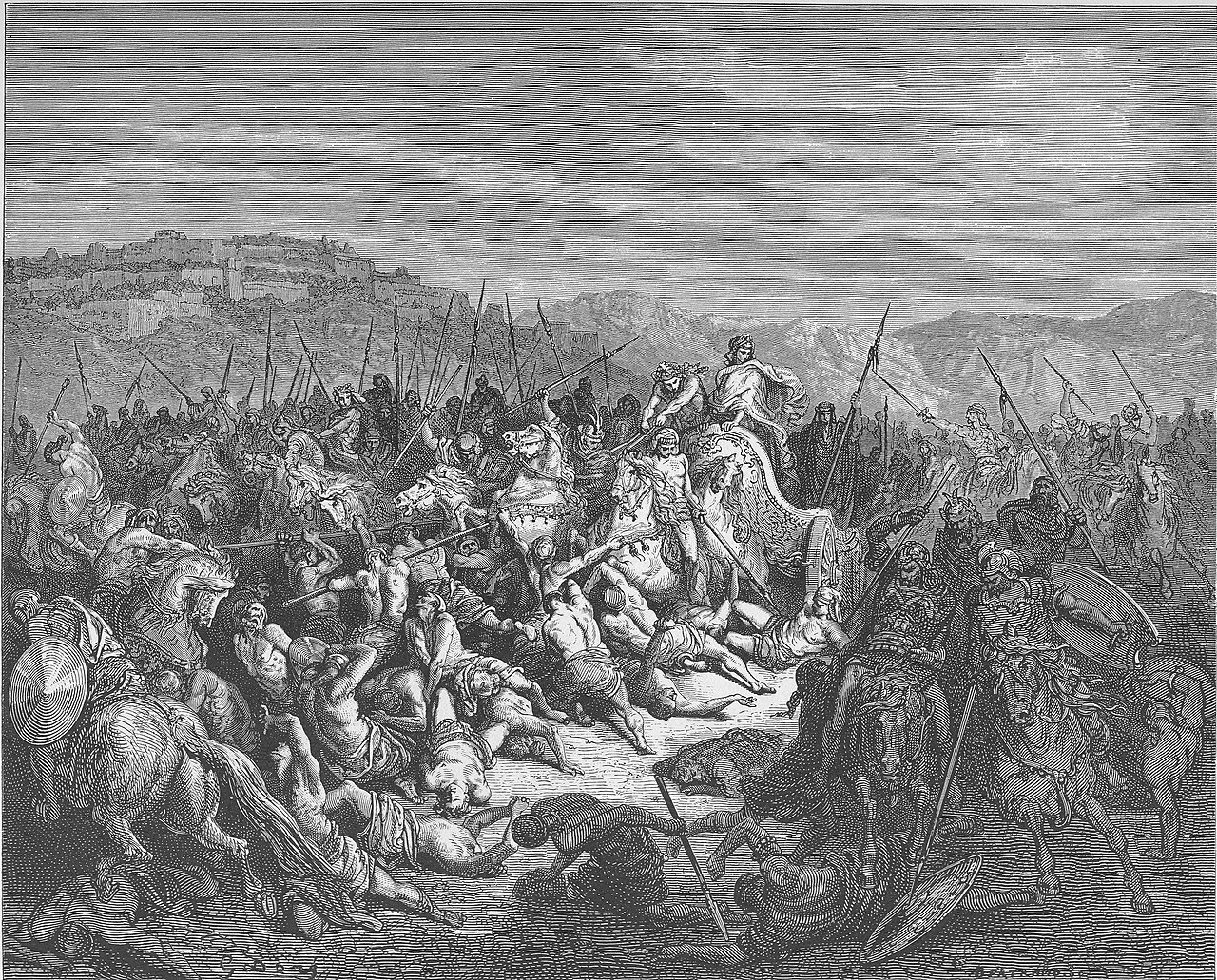
Aram answers with tactics. The servants tell Ben-hadad to “Dismiss all the kings from their positions”, then to rebuild the army “horse for horse and chariot for chariot”. Matthew Henry notes how quickly Aram refits after so great a loss, a sign of how rich and populous the kingdom was.
This site's exposition
horse for horse and chariot for chariot
The new army is built to fight on the ground the servants chose at verse 23. Matthew Henry reads the plan as sound soldiering, each man set to the work he was trained for. At 22:31 Aram still fields thirty-two chariot commanders.
The record, by era
The Church Fathers2 voices
Did not the Lord wish Ben-hadad, king of Syria, whom besides countless thousands of his own people, thirty-two kings and armies of the same number of kings served, to be conquered by a few foot soldiers of the princes in order that he who was …
Here the Scripture relates the two battles of the king of Israel against the Arameans, at which we have already hinted, and the twin slaughters of the Arameans, of which the second caused the death of 127,000 men, as God took his revenge on the …
The Puritans and the Awakening1 voice
And number thee an army like the army that thou hast lost,....
The Nineteenth Century1 voice
A commentator
Jamieson, Fausset & Brown1802–1910
Commentary Critical and Explanatory on the Whole Bible (1871)
proposed
It happened as the prophet had forewarned. Brooding over their late disastrous defeat, the attendants of Ben-hadad ascribed the misfortune to two causes--the one arose from the principles of heathenism which led them to consider the gods of Israel as "gods of the hills"; whereas their power to aid the Israelites would be gone if the battle was maintained on the plains.
The words behind it
22 Hebrew wordsEvery Hebrew word of this verse in the order it stands, with what it means and the door to its own study. The last column counts the times a word stands in the whole Bible: the rarer the word, the more the places it appears belong together.
| Hebrew | Sound | Meaning | Word study | In the Bible |
|---|---|---|---|---|
| וְאַתָּ֣ה | veatah | and you | H859 → | 1094 times |
| תִֽמְנֶה־ | timneh- | you will muster | H4487 → | 28 times |
| לְךָ֣׀ | lekha | for yourself | ||
| חַ֡יִל | chayil | an army | H2428 → | 246 times |
| כַּחַיִל֩ | kachayil | like the army | H2428 → | 246 times |
| הַנֹּפֵ֨ל | hanofel | which fell | H5307 → | 435 times |
| מֵאוֹתָ֜ךְ | meotakh | from <obj.> you | H853 → | 10935 times |
| וְס֣וּס | vesus | and a horse | H5483 → | 140 times |
| כַּסּ֣וּס׀ | kasus | like the horse | H5483 → | 140 times |
| וְרֶ֣כֶב | verekhev | and chariotry | H7393 → | 119 times |
| כָּרֶ֗כֶב | karekhev | like the chariotry | H7393 → | 119 times |
| וְנִֽלָּחֲמָ֤ה | venilachamah | and let us fight | H3898 → | 177 times |
| אוֹתָם֙ | ʾotam | <obj.> them | H853 → | 10935 times |
| בַּמִּישׁ֔וֹר | bamishor | on the level ground | H4334 → | |
| אִם־ | ʾim- | if | H518 → | 1069 times |
| לֹ֥א | lo' | not | H3808 → | 5168 times |
| נֶחֱזַ֖ק | nechezak | we will be strong | H2388 → | 291 times |
| מֵהֶ֑ם | mehem | more than them | ||
| וַיִּשְׁמַ֥ע | vaiyishma' | and he listened | H8085 → | 1159 times |
| לְקֹלָ֖ם | lekolam | to voice their | H6963 → | 506 times |
| וַיַּ֥עַשׂ | vaiyaas | and he did | H6213 → | 2628 times |
| כֵּֽן׃ פ | ken | thus | H3651 → | 771 times |
וְאַתָּ֣הand you
veatahH859 →1094 times
תִֽמְנֶה־you will muster
timneh-H4487 →28 times
לְךָ֣׀for yourself
lekha
חַ֡יִלan army
chayilH2428 →246 times
כַּחַיִל֩like the army
kachayilH2428 →246 times
הַנֹּפֵ֨לwhich fell
hanofelH5307 →435 times
מֵאוֹתָ֜ךְfrom <obj.> you
meotakhH853 →10935 times
וְס֣וּסand a horse
vesusH5483 →140 times
כַּסּ֣וּס׀like the horse
kasusH5483 →140 times
וְרֶ֣כֶבand chariotry
verekhevH7393 →119 times
כָּרֶ֗כֶבlike the chariotry
karekhevH7393 →119 times
וְנִֽלָּחֲמָ֤הand let us fight
venilachamahH3898 →177 times
אוֹתָם֙<obj.> them
ʾotamH853 →10935 times
בַּמִּישׁ֔וֹרon the level ground
bamishorH4334 →
אִם־if
ʾim-H518 →1069 times
לֹ֥אnot
lo'H3808 →5168 times
נֶחֱזַ֖קwe will be strong
nechezakH2388 →291 times
מֵהֶ֑םmore than them
mehem
וַיִּשְׁמַ֥עand he listened
vaiyishma'H8085 →1159 times
לְקֹלָ֖םto voice their
lekolamH6963 →506 times
וַיַּ֥עַשׂand he did
vaiyaasH6213 →2628 times
כֵּֽן׃ פthus
kenH3651 →771 times
A shaded row is a word that stands 400 times or fewer in the Bible.
The walk
5 stopsEach card is a verse this one points to, and under it the verses that one points to in turn. Where several paths arrive at the same place, that place is listed first: the text keeps returning to it.
Through
Psalms 10:3For the wicked man boasts in the cravings of his heart; he blesses the greedy and reviles the LORD.
it leads to
- Psalms 94:4
They pour out arrogant words; all workers of iniquity boast.
- Luke 12:19
Then I will say to myself, “You have plenty of good things laid up for many years. Take it easy. Eat, drink, and be merry!”’
- Zechariah 11:5–8
whose buyers slaughter them without remorse. Those who sell them say, ‘Blessed be the LORD, for I am rich!’ Even their own shepherds have no compassion on them.
- Micah 6:10–12
Can I forget any longer, O house of the wicked, the treasures of wickedness and the short ephah, which is accursed?
- Job 31:24
If I have put my trust in gold or called pure gold my security,
- Psalms 94:4
About 1 Kings
This page draws on Ephrem the Syrian, ON THE FIRST BOOK OF KINGS 20:1; Jamieson, Fausset & Brown, Commentary Critical and Explanatory on the Whole Bible; John Gill, Exposition of the Old Testament (1748-1763); John Wesley, Explanatory Notes upon the Old Testament; Matthew Henry, Commentary on the Whole Bible and Salvian the Presbyter, THE GOVERNANCE OF GOD 7.8.