
1 Kings 20:16
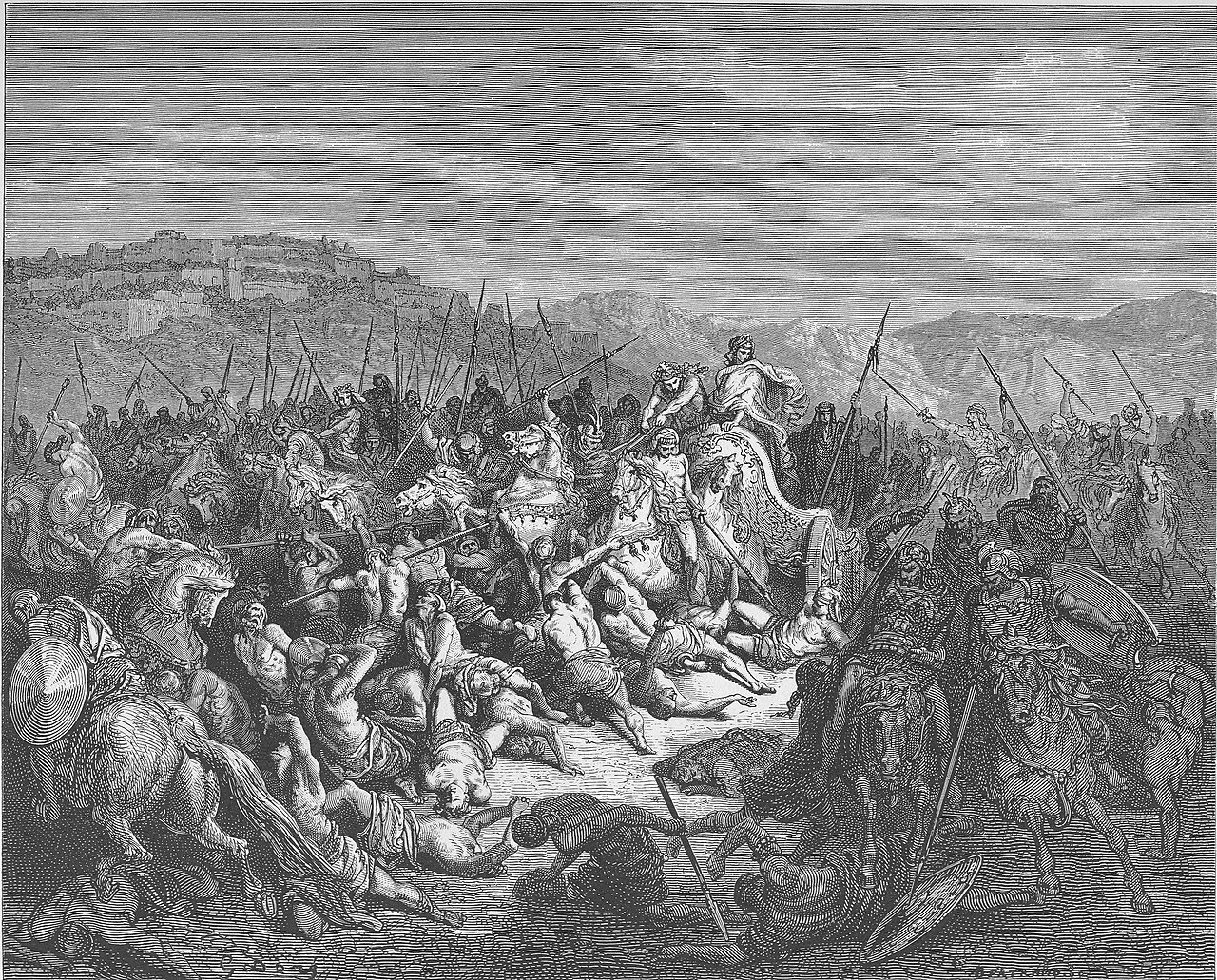
in 1 Kings 20They marched out at noon while Ben-hadad and the 32 kings allied with him were in their tents getting drunk.
BSB
The same verse in ASV and KJV ▾
ASV
And they went out at noon. But Ben-hadad was drinking himself drunk in the pavilions, he and the kings, the thirty and two kings that helped him.
KJV
And they went out at noon. But Ben–hadad was drinking himself drunk in the pavilions, he and the kings, the thirty and two kings that helped him.
⋯
This verse in 1 Kings 20
Commentary
5 notes on this verseA commentator
Albert Barnes1798–1870
Notes, Explanatory and Practical, on the Old and New Testaments (1832-1869)
drinking himself drunk - Ben-hadad meant probably to mark his utter contempt of his foe. Compare the contempt of Belshazzar Dan 5:1-4.
This site's exposition
in their tents getting drunk
on 1 Kings 20:16-18
Ben-hadad and “the 32 kings allied with him were in their tents getting drunk”, a contempt Barnes compares to Belshazzar's feast before Babylon fell. Told that men are coming out of Samaria, Ben-hadad orders them taken alive whether they come for peace or war.
The record, by era
The Puritans and the Awakening2 voices
) with the kings in the pavilions, and this at noon. Drunkenness is a sin which armies and their officers have of old been addicted to. Say not thou then that the former days were, in this respect, better than these, though these are bad enough.
quarantine:debris (2026-07-29) — leading-punctuation+unbalanced-parens
And they went out at noon,....
The Nineteenth Century1 voice
A commentator
Jamieson, Fausset & Brown1802–1910
Commentary Critical and Explanatory on the Whole Bible (1871)
This glorious victory, won so easily, and with such a paltry force opposed to overwhelming numbers, was granted that Ahab and his people might know (1Ki 20:13) that God is the Lord. But we do not read of this acknowledgment being made, or of any sacrifices being offered in token of their national gratitude.
How the passage was read
What the Jewish commentators add
On the verses either side of this one
Seven thousand. I say that they are the ones about whom it is stated, “All those whose knees did not bend to the Baal,” were seven thousand. 12 Above:18.
This section is reception history: how the passage was read and kept in the Jewish tradition. Where a reading parts from an essential of the Christian faith, the section says so at that point.
Texts and citation data: Sefaria; each excerpt follows its version’s licence. 4 further sources are cited on this chapter that carry no English text this site may quote or only restate the verse.
The words behind it
14 Hebrew wordsEvery Hebrew word of this verse in the order it stands, with what it means and the door to its own study. The last column counts the times a word stands in the whole Bible: the rarer the word, the more the places it appears belong together.
| Hebrew | Sound | Meaning | Word study | In the Bible |
|---|---|---|---|---|
| וַיֵּצְא֖וּ | vaiyetzeu | and they went out | H3318 → | 1067 times |
| בַּֽצָּהֳרָ֑יִם | batzohorayim | at the noontide<s> | H6672 → | 24 times |
| וּבֶן־ | uven- | and Ben | H1130 → | 50 times |
| הֲדַד֩ | hadad | Hadad | H1130 → | 50 times |
| שֹׁתֶ֨ה | shoteh | [was] drinking | H8354 → | 217 times |
| שִׁכּ֜וֹר | shikor | drunken | H7910 → | |
| בַּסֻּכּ֗וֹת | basukot | in the booths | H5521 → | |
| ה֧וּא | hu' | he | H1931 → | 1879 times |
| וְהַמְּלָכִ֛ים | vehamelakhim | and the kings | H4428 → | 2525 times |
| שְׁלֹשִֽׁים־ | sheloshim- | thirty | H7970 → | 172 times |
| וּשְׁנַ֥יִם | ushenayim | and two | H8147 → | 768 times |
| מֶ֖לֶךְ | melekh | king[s] | H4428 → | 2525 times |
| עֹזֵ֥ר | ʾozer | [who] was helping | H5826 → | |
| אֹתֽוֹ׃ | ʾoto | <obj.> him | H853 → | 10935 times |
וַיֵּצְא֖וּand they went out
vaiyetzeuH3318 →1067 times
בַּֽצָּהֳרָ֑יִםat the noontide<s>
batzohorayimH6672 →24 times
וּבֶן־and Ben
uven-H1130 →50 times
הֲדַד֩Hadad
hadadH1130 →50 times
שֹׁתֶ֨ה[was] drinking
shotehH8354 →217 times
שִׁכּ֜וֹרdrunken
shikorH7910 →
בַּסֻּכּ֗וֹתin the booths
basukotH5521 →
ה֧וּאhe
hu'H1931 →1879 times
וְהַמְּלָכִ֛יםand the kings
vehamelakhimH4428 →2525 times
שְׁלֹשִֽׁים־thirty
sheloshim-H7970 →172 times
וּשְׁנַ֥יִםand two
ushenayimH8147 →768 times
מֶ֖לֶךְking[s]
melekhH4428 →2525 times
עֹזֵ֥ר[who] was helping
ʾozerH5826 →
אֹתֽוֹ׃<obj.> him
ʾotoH853 →10935 times
A shaded row is a word that stands 400 times or fewer in the Bible.
The walk
8 stopsEach card is a verse this one points to, and under it the verses that one points to in turn. Where several paths arrive at the same place, that place is listed first: the text keeps returning to it.
Through
Isaiah 54:15If anyone attacks you, it is not from Me; whoever assails you will fall before you.
it leads to
- Isaiah 41:11–16
Behold, all who rage against you will be ashamed and disgraced; those who contend with you will be reduced to nothing and will perish.
- Psalms 37:12–13
The wicked scheme against the righteous and gnash their teeth at them,
- Zechariah 12:9
So on that day I will set out to destroy all the nations that come against Jerusalem.
- Zechariah 2:8
For this is what the LORD of Hosts says: “After His Glory has sent Me against the nations that have plundered you—for whoever touches you touches the apple of His eye—
- Isaiah 43:3–4
For I am the LORD your God, the Holy One of Israel, your Savior; I give Egypt for your ransom, Cush and Seba in your place.
- Isaiah 41:11–16
Through
Hosea 4:11Promiscuity, wine, and new wine take away understanding.
it leads to
- Proverbs 20:1
Wine is a mocker, strong drink is a brawler, and whoever is led astray by them is not wise.
- Luke 21:34
But watch yourselves, or your hearts will be weighed down by dissipation, drunkenness, and the worries of life—and that day will spring upon you suddenly like a snare.
- Isaiah 28:7
These also stagger from wine and stumble from strong drink: Priests and prophets reel from strong drink and are befuddled by wine. They stumble because of strong drink, muddled in their visions and stumbling…
- Proverbs 20:1
About 1 Kings
This page draws on Adam Clarke, Commentary on the Bible; Albert Barnes, Notes, Explanatory and Practical, on the Old and New Testaments (1832-1869); Albert Barnes, Notes on the Old Testament; Jamieson, Fausset & Brown, Commentary Critical and Explanatory on the Whole Bible; John Gill, Exposition of the Old Testament (1748-1763) and Matthew Henry, Commentary on the Whole Bible.