
1 Kings 20:33
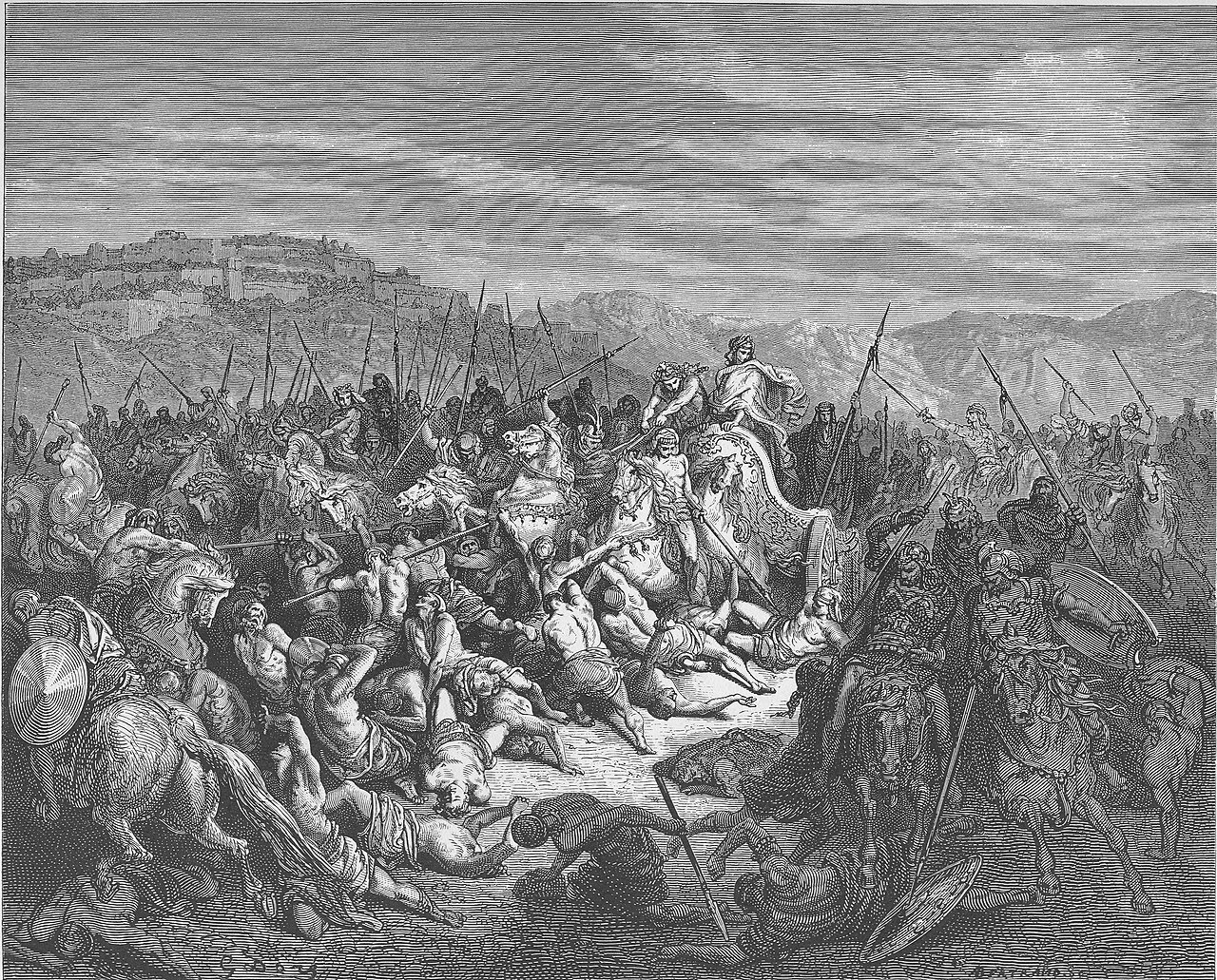
in 1 Kings 20Now the men were looking for a sign of hope, and they quickly grasped at this word and replied, “Yes, your brother Ben-hadad.” “Go and get him!” said the king. Then Ben-hadad came out, and Ahab had him come up into his chariot.
BSB
The same verse in ASV and KJV ▾
ASV
Now the men observed diligently, and hasted to catch whether it were his mind; and they said, Thy brother Ben-hadad. Then he said, Go ye, bring him. Then Ben-hadad came forth to him; and he caused him to come up into the chariot.
KJV
Now the men did diligently observe whether any thing would come from him, and did hastily catch it: and they said, Thy brother Ben–hadad. Then he said, Go ye, bring him. Then Ben–hadad came forth to him; and he caused him to come up into the chariot.
⋯
This verse in 1 Kings 20
Commentary
9 notes on this verseA commentator
Albert Barnes1798–1870
Notes, Explanatory and Practical, on the Old and New Testaments (1832-1869)
The meaning of this verse is that the men from the first moment of their arrival were on the watch to note what Ahab would say; and the moment he let fall the expression “He is my brother,” they caught it up and repeated it, fixing him to it, as it were, and preventing his retreat.
This site's exposition
Is he yet alive? he is my brother
on 1 Kings 20:32-34
Ben-hadad's servants come in sackcloth and ropes, the posture of men surrendering their lives outright, and Ahab's first question, is he yet alive, gives them the opening they came for. He calls the defeated king his brother and brings him up into his own chariot; Jamieson, Fausset and Brown read Ahab as flattered by the submission and thinking only of the honor of the moment. Ben-hadad is sent away under covenant with cities restored and trading rights in Damascus, sparing exactly the king the Lord had appointed to destruction, the same shape as Saul sparing Agag.
The record, by era
The Puritans and the Awakening1 voice
Now the men did diligently observe whether anything would come from him,....
The Nineteenth Century4 voices
ALTHOUGH the manners and customs of warfare were exceedingly rough and cruel in those primitive ages, yet it appears that the kings of Israel gained a name for being merciful. I do not find recorded in Scripture any particularly merciful acts of theirs and I should conclude that the kings of other countries must have been very ferocious, if the kings of Israel were at all merciful.
A commentator
Jamieson, Fausset & Brown1802–1910
Commentary Critical and Explanatory on the Whole Bible (1871)
Their voluntary attitude and language of submission flattered the pride of Ahab, who, little concerned about the dishonor done to the God of Israel by the Syrian king, and thinking of nothing but victory, paraded his clemency, called the vanquished king "his brother," invited him to sit in the royal chariot, and dismissed him with a covenant of peace.
A commentator
Charles Spurgeon1834–1892
The Metropolitan Tabernacle Pulpit, Sermon No. 2853: “Observing the King's Word” (lightly modernized text, CCEL edition) · Written before 1892.
proposed
You know the circumstances to which these words refer. The boastful Syrian king had been utterly defeated and his army destroyed. He himself had fled into an inner chamber in desperate fear of his life, but, being informed that the kings of Israel were merciful, he sent certain of his attendants, in humblest fashion, with sackcloth on their loins and ropes about their necks, to beg that he might be spared.
A commentator
Charles Spurgeon1834–1892
The Metropolitan Tabernacle Pulpit, Sermon No. 2853: “Observing the King's Word” (lightly modernized text, CCEL edition) · Written before 1892.
proposed
You know the circumstances to which these words refer. The boastful Syrian king had been utterly defeated and his army destroyed. He himself had fled into an inner chamber in desperate fear of his life, but, being informed that the kings of Israel were merciful, he sent certain of his attendants, in humblest fashion, with sackcloth on their loins and ropes about their necks, to beg that he might be spared. When they came in before Ahab and began to plead with him for Ben-Hadad, they watched every word that the king uttered—"The men did diligently observe whether anything would come from him." And the moment he said, "He is my brother," they caught at the expression immediately. They were in such anxiety about their king that even half a word that indicated tenderness and mercy brought joy to their hearts! I think that this narrative contains a great deal of instruction for those who desire to be reconciled to God. If, dear Friend, you are conscious of your guilt and are afraid of being destroyed on account of it, the wisest thing that you can do is to come before the Lord in the attitude of submission. These men put sackcloth upon their loins and ropes around their necks to show that they deserved to die. And you must, spiritually, do the same. Go to God and humbly confess your transgressions—acknowledge that you are absolutely in His hands and that if He destroys you, He will be just. If He calls you to account for all your iniquities, and even casts you into Hell, you cannot impugn the justice of His decision. Yet, while you do that, imitate these messengers of Ben-Hadad when they came to Ahab. "The men did diligently observe whether anything would come from him, and did hastily catch it." I. My first observation in turning this incident to a spiritual use, is that IT IS A PITY THAT AWAKENED SINNERS DO NOT COPY THE EXAMPLE OF THESE MEN.
2 more voices on this verse
The Nineteenth Century2 voices
ALTHOUGH the manners and customs of warfare were exceedingly rough and cruel in those primitive ages, yet it appears that the kings of Israel gained a name for being merciful. I do not find recorded in Scripture any particularly merciful acts of theirs and I should conclude that the kings of other countries must have been very ferocious, if the kings of Israel were at all merciful. Ancient records and memorial slabs record tortures so horrible that you could not listen— if I were to describe them—although they were the common barbarities with which Assyrian and Babylonian victors concluded their wars. It seems that the kings of the house of Israel did not go to the lengths of savage cruelty usual among their neighbors. Upon which we are led to remark that where the true worship of God does not make men what they should be, yet it betters them in some respects. The kings of Israel were all idolaters, but yet the presence of a little salt, a few of the godly in the land, had an effect upon the State. And the situation of the little kingdom of Judah, close at their elbow, with its Temple and its Prophets, influenced the manners and customs of the people, so that, "the kings of the house of Israel were merciful kings," and this not because they feared God themselves, but because there were others who did and whose influence and example, perhaps, unconsciously, softened public sentiment and mitigated the ruthless ferocity of war. Is this nothing? Is it not a high honor to the seven thousand who bowed not the knee to Baal, that in this respect they made Baal's worshippers bow to them? Little do we know how much of the apparent morality of this country is due to the real religion which we have in our land. There are thousands of men in London who would open their shops tonight if it were not for the influence of those who fear the Lord.
Did hastily catch it - They were watching to see if any kind word should be spoken by him, from which they might draw a favorable omen; and when they heard him use the word brother, it gave them much encouragement.
The words behind it
19 Hebrew wordsEvery Hebrew word of this verse in the order it stands, with what it means and the door to its own study. The last column counts the times a word stands in the whole Bible: the rarer the word, the more the places it appears belong together.
| Hebrew | Sound | Meaning | Word study | In the Bible |
|---|---|---|---|---|
| וְהָאֲנָשִׁים֩ | vehaanashim | and the men | H582 → | 566 times |
| יְנַחֲשׁ֨וּ | yenachashu | they observed [the] signs | H5172 → | |
| וַֽיְמַהֲר֜וּ | vaymaharu | and they hastened | H4116 → | 68 times |
| וַיַּחְלְט֣וּ | vaiyachletu | and they caught | H2480 → | |
| הֲמִמֶּ֗נּוּ | hamimenu | ¿ from him | H4480 → | 1188 times |
| וַיֹּֽאמְרוּ֙ | vaiyomeru | and they said | H559 → | 5305 times |
| אָחִ֣יךָ | ʾachikha | [is] brother your | H251 → | 630 times |
| בֶן־ | ven- | Ben | H1130 → | 50 times |
| הֲדַ֔ד | hadad | Hadad | H1130 → | 50 times |
| וַיֹּ֖אמֶר | vaiyomer | and he said | H559 → | 5305 times |
| בֹּ֣אוּ | bou | go | H935 → | 2568 times |
| קָחֻ֑הוּ | kachuhu | fetch him | H3947 → | 966 times |
| וַיֵּצֵ֤א | vaiyetze' | and he came out | H3318 → | 1067 times |
| אֵלָיו֙ | ʾelav | to him | H413 → | 5510 times |
| בֶּן־ | ben- | Ben | H1130 → | 50 times |
| הֲדַ֔ד | hadad | Hadad | H1130 → | 50 times |
| וַֽיַּעֲלֵ֖הוּ | vaiyaalehu | and he brought up him | H5927 → | 890 times |
| עַל־ | ʾal- | on | H5921 → | 5755 times |
| הַמֶּרְכָּבָֽה׃ | hamerkavah | the chariot | H4818 → | 44 times |
וְהָאֲנָשִׁים֩and the men
vehaanashimH582 →566 times
יְנַחֲשׁ֨וּthey observed [the] signs
yenachashuH5172 →
וַֽיְמַהֲר֜וּand they hastened
vaymaharuH4116 →68 times
וַיַּחְלְט֣וּand they caught
vaiyachletuH2480 →
הֲמִמֶּ֗נּוּ¿ from him
hamimenuH4480 →1188 times
וַיֹּֽאמְרוּ֙and they said
vaiyomeruH559 →5305 times
אָחִ֣יךָ[is] brother your
ʾachikhaH251 →630 times
בֶן־Ben
ven-H1130 →50 times
הֲדַ֔דHadad
hadadH1130 →50 times
וַיֹּ֖אמֶרand he said
vaiyomerH559 →5305 times
בֹּ֣אוּgo
bouH935 →2568 times
קָחֻ֑הוּfetch him
kachuhuH3947 →966 times
וַיֵּצֵ֤אand he came out
vaiyetze'H3318 →1067 times
אֵלָיו֙to him
ʾelavH413 →5510 times
בֶּן־Ben
ben-H1130 →50 times
הֲדַ֔דHadad
hadadH1130 →50 times
וַֽיַּעֲלֵ֖הוּand he brought up him
vaiyaalehuH5927 →890 times
עַל־on
ʾal-H5921 →5755 times
הַמֶּרְכָּבָֽה׃the chariot
hamerkavahH4818 →44 times
A shaded row is a word that stands 400 times or fewer in the Bible.
The walk
8 stopsEach card is a verse this one points to, and under it the verses that one points to in turn. Where several paths arrive at the same place, that place is listed first: the text keeps returning to it.
Through
Acts 8:31“How can I,” he said, “unless someone guides me?” And he invited Philip to come up and sit with him.
it leads to
- Romans 10:14
How then can they call on the One in whom they have not believed? And how can they believe in the One of whom they have not heard? And how can they hear without…
- Isaiah 29:18–19
On that day the deaf will hear the words of the scroll, and out of the deep darkness the eyes of the blind will see.
- Romans 10:14
Through
Luke 16:8The master commended the dishonest manager because he had acted shrewdly. For the sons of this age are more shrewd in dealing with their own kind than are the sons of light.
it leads to
- 1 Thessalonians 5:5
For you are all sons of the light and sons of the day; we do not belong to the night or to the darkness.
- Ephesians 5:8
For you were once darkness, but now you are light in the Lord. Walk as children of light,
- John 12:36
While you have the Light, believe in the Light, so that you may become sons of light.” After Jesus had spoken these things, He went away and was hidden from them.
- Luke 16:10
Whoever is faithful with very little will also be faithful with much, and whoever is dishonest with very little will also be dishonest with much.
- Proverbs 6:6–8
Walk in the manner of the ant, O slacker; observe its ways and become wise.
- 1 Thessalonians 5:5
Through
Proverbs 25:13Like the cold of snow in the time of harvest is a trustworthy messenger to those who send him; he refreshes the soul of his masters.
it leads to
- Proverbs 13:17
A wicked messenger falls into trouble, but a faithful envoy brings healing.
- Proverbs 13:17
About 1 Kings
Who and where
1 name in this verse with a page on the site.
This page draws on Adam Clarke, Commentary on the Bible; Albert Barnes, Notes, Explanatory and Practical, on the Old and New Testaments (1832-1869); Charles Spurgeon, The Metropolitan Tabernacle Pulpit, Sermon No. 535: “Ben-Hadad'S Escape—An Encouragement For Sinners” (lightly modernized text, CCEL edition); Charles Spurgeon, The Metropolitan Tabernacle Pulpit, Sermon No. 2853: “Observing the King's Word” (lightly modernized text, CCEL edition); Jamieson, Fausset & Brown, Commentary Critical and Explanatory on the Whole Bible and John Gill, Exposition of the Old Testament (1748-1763).