
1 Kings 20:31
in 1 Kings 20Then the servants of Ben-hadad said to him, “Look now, we have heard that the kings of the house of Israel are merciful. Let us go out to the king of Israel with sackcloth around our waists and ropes around our heads. Perhaps he will spare your life.”
BSB
The same verse in ASV and KJV ▾
ASV
And his servants said unto him, Behold now, we have heard that the kings of the house of Israel are merciful kings: let us, we pray thee, put sackcloth on our loins, and ropes upon our heads, and go out to the king of Israel: peradventure he will save thy life.
KJV
And his servants said unto him, Behold now, we have heard that the kings of the house of Israel are merciful kings: let us, I pray thee, put sackcloth on our loins, and ropes upon our heads, and go out to the king of Israel: peradventure he will save thy life.
⋯
This verse in 1 Kings 20
Commentary
7 notes on this verseA commentator
Albert Barnes1798–1870
Notes, Explanatory and Practical, on the Old and New Testaments (1832-1869)
And ropes upon our heads - “Ropes about our necks” is probably meant. They, as it were, put their lives at Ahab’s disposal, who, if he pleased, might hang them at once.
This site's exposition
a wall fell upon
on 1 Kings 20:30-31
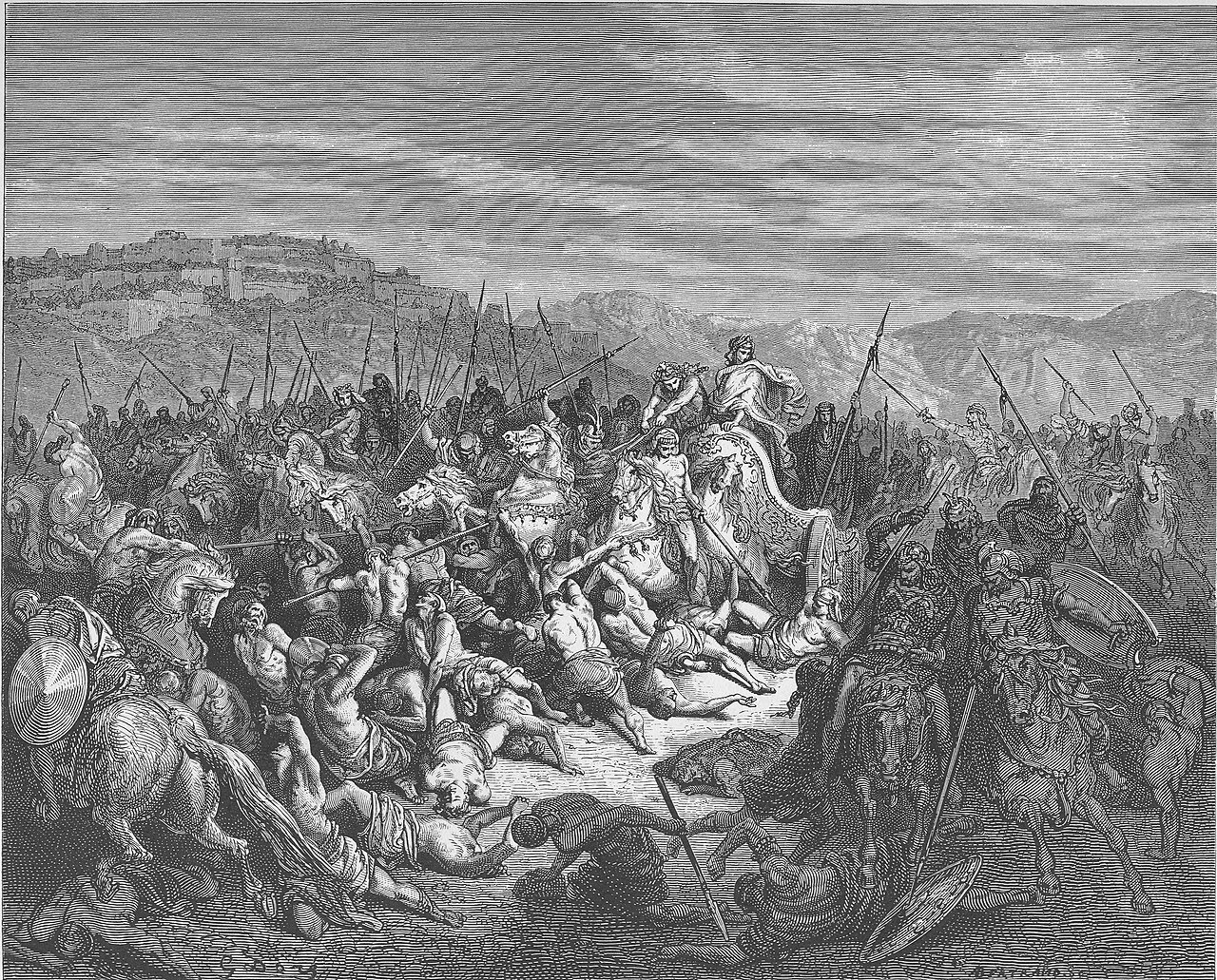
The survivors flee into Aphek where a wall falls on twenty and seven thousand of them; Wesley reads the collapse as possibly the ministry of a storm or earthquake sent by God rather than mere siege damage, while Clarke allows for a more ordinary military cause. Ben-hadad himself hides in an inner chamber, and his servants appeal to Israel's reputation for mercy, a reputation about to be tested in the worst possible circumstance. The plan to beg for the king's life on the strength of that reputation succeeds far better than it should.
The record, by era
The Puritans and the Awakening2 voices
It was an honour to the kings of Israel to be thus represented, as indeed every Israelite is then dressed as becomes him when he puts on bowels of mercies. "They are merciful kings, therefore we may hope to find mercy upon our submission." This encouragement poor sinners have to repent and humble themselves before God.
And his servants said unto him,....
The Nineteenth Century3 voices
ALTHOUGH the manners and customs of warfare were exceedingly rough and cruel in those primitive ages, yet it appears that the kings of Israel gained a name for being merciful. I do not find recorded in Scripture any particularly merciful acts of theirs and I should conclude that the kings of other countries must have been very ferocious, if the kings of Israel were at all merciful.
ALTHOUGH the manners and customs of warfare were exceedingly rough and cruel in those primitive ages, yet it appears that the kings of Israel gained a name for being merciful. I do not find recorded in Scripture any particularly merciful acts of theirs and I should conclude that the kings of other countries must have been very ferocious, if the kings of Israel were at all merciful. Ancient records and memorial slabs record tortures so horrible that you could not listen— if I were to describe them—although they were the common barbarities with which Assyrian and Babylonian victors concluded their wars. It seems that the kings of the house of Israel did not go to the lengths of savage cruelty usual among their neighbors. Upon which we are led to remark that where the true worship of God does not make men what they should be, yet it betters them in some respects. The kings of Israel were all idolaters, but yet the presence of a little salt, a few of the godly in the land, had an effect upon the State. And the situation of the little kingdom of Judah, close at their elbow, with its Temple and its Prophets, influenced the manners and customs of the people, so that, "the kings of the house of Israel were merciful kings," and this not because they feared God themselves, but because there were others who did and whose influence and example, perhaps, unconsciously, softened public sentiment and mitigated the ruthless ferocity of war. Is this nothing? Is it not a high honor to the seven thousand who bowed not the knee to Baal, that in this respect they made Baal's worshippers bow to them? Little do we know how much of the apparent morality of this country is due to the real religion which we have in our land. There are thousands of men in London who would open their shops tonight if it were not for the influence of those who fear the Lord.
Put sackcloth on our loins, and ropes upon our heads - Let us show ourselves humbled in the deepest manner, and let us put ropes about our necks, and go submitting to his mercy, and deprecating his wrath. The citizens of Calais are reported to have acted nearly in the same way when they surrendered their city to Edward III., king of England, in 1346. See at the end, 1Ki 20:43 (note).
The words behind it
28 Hebrew wordsEvery Hebrew word of this verse in the order it stands, with what it means and the door to its own study. The last column counts the times a word stands in the whole Bible: the rarer the word, the more the places it appears belong together.
| Hebrew | Sound | Meaning | Word study | In the Bible |
|---|---|---|---|---|
| וַיֹּאמְר֣וּ | vaiyomeru | and they said | H559 → | 5305 times |
| אֵלָיו֮ | ʾelav | to him | H413 → | 5510 times |
| עֲבָדָיו֒ | ʾavadav | servants his | H5650 → | 799 times |
| הִנֵּֽה־ | hineh- | here! | H2009 → | 843 times |
| נָ֣א | na' | please | H4994 → | 404 times |
| שָׁמַ֔עְנוּ | shama'nu | we have heard | H8085 → | 1159 times |
| כִּ֗י | ki | that | H3588 → | 4482 times |
| מַלְכֵי֙ | malkhei | [the] kings of | H4428 → | 2525 times |
| בֵּ֣ית | beit | [the] house of | H1004 → | 2046 times |
| יִשְׂרָאֵ֔ל | yisrael | Israel | H3478 → | 2507 times |
| כִּֽי־ | ki- | that | H3588 → | 4482 times |
| מַלְכֵ֥י | malkhei | [are] kings of | H4428 → | 2525 times |
| חֶ֖סֶד | chesed | covenant loyalty | H2617 → | 247 times |
| הֵ֑ם | hem | they | H1992 → | 553 times |
| נָשִׂ֣ימָה | nasimah | let us put | H7760 → | 584 times |
| נָּא֩ | na' | please | H4994 → | 404 times |
| שַׂקִּ֨ים | sakim | sackcloth<s> | H8242 → | 49 times |
| בְּמָתְנֵ֜ינוּ | bemateneinu | on loins our | H4975 → | 47 times |
| וַחֲבָלִ֣ים | vachavalim | and ropes | H2256 → | 62 times |
| בְּרֹאשֵׁ֗נוּ | beroshenu | on head our | H7218 → | 599 times |
| וְנֵצֵא֙ | venetze' | and let us go out | H3318 → | 1067 times |
| אֶל־ | ʾel- | to | H413 → | 5510 times |
| מֶ֣לֶךְ | melekh | [the] king of | H4428 → | 2525 times |
| יִשְׂרָאֵ֔ל | yisrael | Israel | H3478 → | 2507 times |
| אוּלַ֖י | ʾulai | perhaps | H194 → | 45 times |
| יְחַיֶּ֥ה | yechaiyeh | he will let live | H2421 → | 282 times |
| אֶת־ | ʾet- | <obj.> | H853 → | 10935 times |
| נַפְשֶֽׁךָ׃ | nafshekha | life your | H5315 → | 754 times |
וַיֹּאמְר֣וּand they said
vaiyomeruH559 →5305 times
אֵלָיו֮to him
ʾelavH413 →5510 times
עֲבָדָיו֒servants his
ʾavadavH5650 →799 times
הִנֵּֽה־here!
hineh-H2009 →843 times
נָ֣אplease
na'H4994 →404 times
שָׁמַ֔עְנוּwe have heard
shama'nuH8085 →1159 times
כִּ֗יthat
kiH3588 →4482 times
מַלְכֵי֙[the] kings of
malkheiH4428 →2525 times
בֵּ֣ית[the] house of
beitH1004 →2046 times
יִשְׂרָאֵ֔לIsrael
yisraelH3478 →2507 times
כִּֽי־that
ki-H3588 →4482 times
מַלְכֵ֥י[are] kings of
malkheiH4428 →2525 times
חֶ֖סֶדcovenant loyalty
chesedH2617 →247 times
הֵ֑םthey
hemH1992 →553 times
נָשִׂ֣ימָהlet us put
nasimahH7760 →584 times
נָּא֩please
na'H4994 →404 times
שַׂקִּ֨יםsackcloth<s>
sakimH8242 →49 times
בְּמָתְנֵ֜ינוּon loins our
bemateneinuH4975 →47 times
וַחֲבָלִ֣יםand ropes
vachavalimH2256 →62 times
בְּרֹאשֵׁ֗נוּon head our
beroshenuH7218 →599 times
וְנֵצֵא֙and let us go out
venetze'H3318 →1067 times
אֶל־to
ʾel-H413 →5510 times
מֶ֣לֶךְ[the] king of
melekhH4428 →2525 times
יִשְׂרָאֵ֔לIsrael
yisraelH3478 →2507 times
אוּלַ֖יperhaps
ʾulaiH194 →45 times
יְחַיֶּ֥הhe will let live
yechaiyehH2421 →282 times
אֶת־<obj.>
ʾet-H853 →10935 times
נַפְשֶֽׁךָ׃life your
nafshekhaH5315 →754 times
A shaded row is a word that stands 400 times or fewer in the Bible.
The walk
8 stopsEach card is a verse this one points to, and under it the verses that one points to in turn. Where several paths arrive at the same place, that place is listed first: the text keeps returning to it.
Through
Esther 4:16“Go and assemble all the Jews who can be found in Susa, and fast for me. Do not eat or drink for three days, night or day, and I and my maidens will fast…
it leads to
- Acts 20:24
But I consider my life of no value to me, if only I may finish my course and complete the ministry I have received from the Lord Jesus—the ministry of testifying to the good…
- 2 Chronicles 20:3
Jehoshaphat was alarmed and set his face to seek the LORD. And he proclaimed a fast throughout Judah.
- Joel 2:12–17
“Yet even now,” declares the LORD, “return to Me with all your heart, with fasting, weeping, and mourning.”
- Luke 9:24
For whoever wants to save his life will lose it, but whoever loses his life for My sake will save it.
- Genesis 18:19
For I have chosen him, so that he will command his children and his household after him to keep the way of the LORD by doing what is right and just, in order that…
- Acts 20:24
Through
2 Samuel 3:31Then David ordered Joab and all the people with him, “Tear your clothes, put on sackcloth, and mourn before Abner.” And King David himself walked behind the funeral bier.
it leads to
- 2 Samuel 1:11
Then David took hold of his own clothes and tore them, and all the men who were with him did the same.
Reached by 2 separate paths from here.
- 2 Samuel 1:11
Through
1 Kings 20:23Meanwhile, the servants of the king of Aram said to him, “Their gods are gods of the hills. That is why they prevailed over us. Instead, we should fight them on the plains; surely…
it leads to
- 1 Kings 14:23
They also built for themselves high places, sacred pillars, and Asherah poles on every high hill and under every green tree.
- 1 Kings 14:23
Through
Genesis 37:34Then Jacob tore his clothes, put sackcloth around his waist, and mourned for his son many days.
it leads to
- Genesis 37:29
When Reuben returned to the pit and saw that Joseph was not there, he tore his clothes,
- Genesis 37:29
About 1 Kings
This page draws on Adam Clarke, Commentary on the Bible; Albert Barnes, Notes, Explanatory and Practical, on the Old and New Testaments (1832-1869); Charles Spurgeon, The Metropolitan Tabernacle Pulpit, Sermon No. 535: “Ben-Hadad'S Escape—An Encouragement For Sinners” (lightly modernized text, CCEL edition); John Gill, Exposition of the Old Testament (1748-1763); John Wesley, Explanatory Notes upon the Old Testament and Matthew Henry, Commentary on the Whole Bible.