
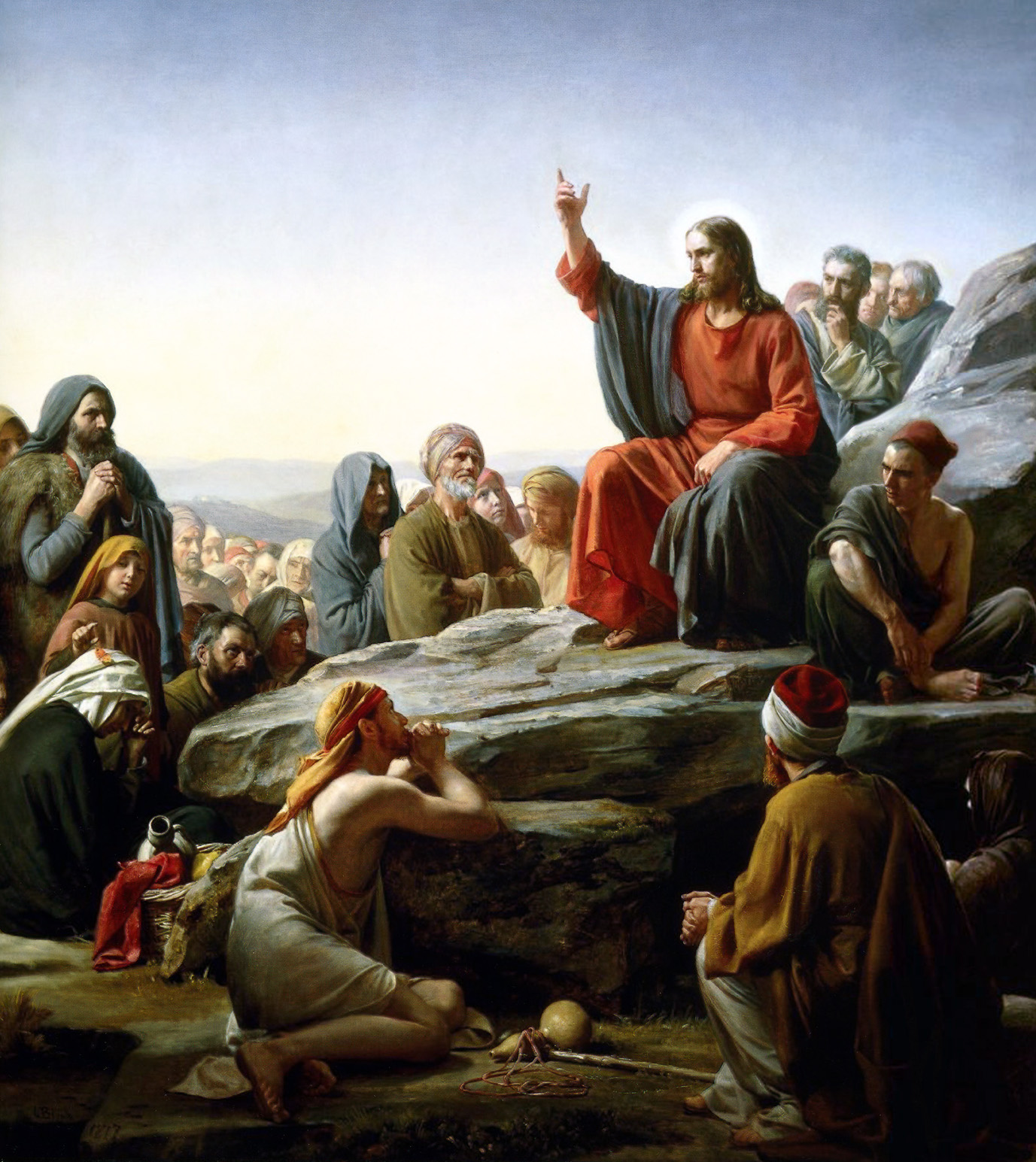
Matthewchapter 12
50 verses · Matthew, by tradition · AD 50 to 65 · The Gospels
Jesus replied, “Have you not read what David did when he and his companions were hungry?
Introduction
Matthew, by tradition, The Gospels, Matthew Overview.
This chapter records the moment when the Pharisees move from questioning Jesus to planning His death. Matthew writes it for readers who kept or knew the Sabbath and would feel the weight of every dispute over it. The quarrel turns on who has the right to say what God's day is for. Listen for the long quotation from Isaiah set in the middle, which shows the reader how to see the quiet healer at the center of the storm. Listen also for the warning about words, and for the question of who counts as family. Read it as the conflict that shapes the rest of the Gospel.
Context
- Who
- Jewish readers whose keeping of the Sabbath was being questioned in both directions
- What
- Disputes over the Sabbath, the charge that Jesus drives out demons by Beelzebul, His warning about blasphemy against the Spirit, the sign of Jonah and His true family.
- Where
- Galilee, in the grainfields and a synagogue and then among the crowds, near Capernaum on the usual reading.
- When
- The Galilean ministry of Jesus, about AD 28 to 29 on the common dating, on a Sabbath in the season when the grain stood ripe.
- Why
- To show that Jesus is Lord of the Sabbath and the Servant of Isaiah, and that calling the Spirit's work in Him evil is the gravest refusal.
Historical context
Walking through a neighbour's field and picking heads of grain by hand was legal, the Law explicitly allowed it, so long as you used no sickle. The dispute is not theft; it is the day. Jewish teachers had worked out a list of thirty-nine kinds of labour forbidden on the Sabbath, and reaping and threshing were on it. Rubbing grain in the palm looked, to a strict eye, like both.
Show the rest of the historical context, 3 more paragraphs
The same logic governed healing. It was widely agreed that a life in danger overrode the Sabbath, but a withered hand had been withered for years and could wait a day. Jesus answers with a case everyone accepted: a man whose only sheep fell into a pit on the Sabbath would pull it out.
Exorcism was not unheard of. Jewish exorcists worked with formulas and names, and Josephus describes such practices. The charge against Jesus is therefore not that he casts out demons but whose power he uses, and Beelzebul was a mocking name built from an old Philistine deity.
The two witnesses called from outside Israel would have stung. Nineveh was Assyria's capital, the empire that destroyed the northern kingdom, and it repented at one reluctant prophet's preaching. The Queen of the South travelled a vast distance to hear Solomon.
Significance
The clash is over authority, not calendar detail. Something greater than the temple, greater than Jonah, greater than Solomon is standing in the grainfield, and the Son of Man is Lord of the Sabbath itself.
Show the rest of the significance, 1 more paragraph
For readers whose Sabbath practice was being examined by former teachers, the chapter both defended them and warned them. The unforgivable thing named here is not a lapse in observance but looking straight at the Spirit's work and calling it demonic.
The heads below are this chapter's scenes. The numbered points under each are its verses.
Grain on the Sabbath; the Lord of the Sabbath
Matthew 12:1-2
Jesus went through the grainfields on the Sabbath: The hungry disciples “began to pick the heads of grain and eat them”, which Deuteronomy 23:25 allowed a traveller to do by hand. The Pharisees’ charge rests on their oral tradition, which classed plucking as reaping and rubbing as threshing. Jesus answers by setting two greater precedents beside that tradition.
Jamieson, Fausset and Brown note that Deuteronomy 23:25 expressly allowed a traveller to pluck grain by hand in a neighbour's field. The Pharisees counted the plucking as servile work forbidden on the Sabbath. Cyril of Alexandria observes that healing and mercy provoked them most.
Matthew 12:3-4
what David did: Jesus sends the Pharisees to 1 Samuel 21:1-6, where David and his companions ate “the consecrated bread”. If human need excused a breach of ceremonial law for Israel’s anointed king, it excused the Son of David’s men far more. Jesus meets them on their own ground, Scripture against tradition.
ate the consecrated bread: The house of God here was the tabernacle, then standing at Nob, as John Gill and John Wesley explain. Wesley describes the bread as the loaves the priest set each Sabbath on the golden table. Matthew Henry notes that Leviticus 24 kept it for the priests.
Matthew 12:5-6
on the Sabbath the priests in the temple break the Sabbath: The priests “break the Sabbath and yet are innocent”, since temple service outranks the day’s rest. Jesus says that “something greater than the temple is here”, a claim the Pharisees could not answer. It is the first link in the chain of greater claims that runs to Jonah and Solomon.
something greater than the temple: The priests worked in the temple on the Sabbath without guilt. Matthew Henry reasons that the service of Christ covers his disciples all the more. Thomas Aquinas takes the greater thing as Christ's own body, which is a temple; for Jerome, that place holds the Lord of the temple.
Matthew 12:7-8
The words “I desire mercy, not sacrifice” repeat Hosea 6:6, already quoted at 9:13. Twice now the Pharisees have condemned “the innocent” for want of the mercy the prophet named. Since “the Son of Man is Lord of the Sabbath”, the day belongs to him who instituted it.
Cross references
Matthew 12:7
- QuotingHosea 6:6“For I desire mercy, not sacrifice, and the knowledge of God rather than burnt offerings.”
'I will have mercy, and not sacrifice', Sabbath grainfield defense
Remigius of Rheims explains that the one they took for a mere man is God. He made the Sabbath law and may order it as he wills. Thomas Aquinas adds that the disciples acted in obedience to him; Aquinas calls him the lawgiver, above his own law.
The Withered Hand Restored; the Chosen Servant
Matthew 12:9-10
Jesus entered their synagogue: Jesus “entered their synagogue”, where a man with a withered hand met him, and they asked “Is it lawful to heal on the Sabbath?” The hand was wasted by disuse, so no emergency forced the timing. The Pharisees staged the test themselves, and Jesus took it up in the open.
Jerome lays out the trap in the question. If Jesus refused, they could charge him with cruelty or weakness, and if he healed, with breaking the Law. Adam Clarke suggests a partial paralysis, and notes that the man still used his feet to come to worship.
Matthew 12:11-13
The sheep in the pit argues from the Pharisees’ own practice. Jesus reasons from that lesser mercy to a greater one, “How much more valuable is a man than a sheep”. The command “Stretch out your hand” asks the man to do what his withered hand could not.
How much more valuable is a man than a sheep!: Jamieson, Fausset and Brown cite Proverbs 12:10, where a righteous man cares for the life of his animal. They draw the stronger claim for a fellow man. Adam Clarke calls the reply an argument on the hearers' own ground; Theophylact says they would set aside the Sabbath for money.
Thomas Aquinas reads the healing as Jesus answering the question with a deed, a cure he would only perform if it were lawful. Theophylact applies the withered hand to the tightfisted, who open their hands to give once the gospel sounds within them. The deed settled the debate.
the Pharisees went out and plotted how they might kill Jesus: After a healing they could not deny, “the Pharisees went out and plotted how they might kill Jesus”. Mark 3:6 names the Herodians joining them, an alliance of religious and political enemies who agreed on nothing else. Within a single chapter the Sabbath question has become a capital matter.
Matthew 12:15-16
Jesus withdrew from that place: Aware of the plot, Jesus “withdrew from that place”, and he healed the crowds that followed, “warning them not to make Him known”. The charge to silence fits the Gospel’s pattern, which keeps popular acclaim from forcing an early crisis. Matthew then explains the withdrawal itself as prophecy fulfilled.
warning them not to make Him known: Matthew Henry reads the warning as prudence, since the public talk about the miracles enraged the Pharisees more than the miracles did. Thomas Aquinas sees an example of shunning human glory. Remigius of Rheims says it kept the Pharisees from sinning worse by persecuting him.
Matthew 12:17-18
This was to fulfill what was spoken through the prophet Isaiah: The words “This was to fulfill what was spoken through the prophet Isaiah” introduce the longest Old Testament quotation in Matthew, Isaiah 42:1-4. It names the Servant “My beloved, in whom My soul delights”. The Servant will “proclaim justice to the nations”, which anticipates the chapter’s turn to Nineveh.
Matthew quotes Isaiah 42, as Jerome notes. Remigius of Rheims explains that Christ is called a servant in respect of the flesh he took. John Wesley notes that the Hebrew word for justice can also mean mercy, so the merciful gospel is published to the nations.
Matthew 12:18
“He shall show judgment to the heathens - That is, he shall publish the merciful Gospel to them also: the Hebrew word signifies either mercy or justice.”
John Wesley · Explanatory Notes upon the New Testament (1755)evangelical
Cross references
Matthew 12:18
- QuotingIsaiah 42:1“Here is My Servant, whom I uphold, My Chosen One, in whom My soul delights. I will put My Spirit on Him, and He will bring justice to the nations.
'Behold my servant, whom I have chosen', Servant fulfillment formula
ConnectionsIsaiah 42:1
Matthew 12:19-21
He will not quarrel or cry out: The line “He will not quarrel or cry out” describes the withdrawal. The words “A bruised reed He will not break, and a smoldering wick He will not extinguish” picture a ministry that spares the weak. The citation closes with “In His name the nations will put their hope”.
A bruised reed He will not break: John Wesley reads the bruised reed as a sinner crushed by the weight of sin, and the smoldering wick as the faintest spark of grace. Jamieson, Fausset and Brown note that where Matthew has victory, the Hebrew and the Septuagint read truth. Theophylact reads it as restraint toward his opponents.
Matthew 12:20
“A bruised reed - A convinced sinner: one that is bruised with the weight of sin: smoking flax - One that has the least good desire, the faintest spark of grace: till he send forth judgment unto victory - That is, till he make righteousness completely victorious over all its enemies.”
John Wesley · Explanatory Notes upon the New Testament (1755)evangelical
Matthew 12:20
“A bruised reed shall he not break - A reed is, in Scripture, the emblem of weakness, Eze 29:6; and a bruised reed must signify that state of weakness that borders on dissolution and death. And smoking flax shall he not quench - Λινον τυφομενον. Λινος means the wick of a lamp, and τυφομενον is intended to point out its expiring state, when the oil has been all burnt away from it, and nothing is left but a mere snuff, emitting smoke.”
Adam Clarke · Commentary on the Bible (1810-1826)evangelical
Matthew 12:20
“A bruised reed shall he not break,.... Various are the thoughts of interpreters, about what is meant by this, and by the smoking flax shall he not quench. Some think the Scribes and Pharisees are designed, whose power Christ could easily crush, and their wrath and fury restrain, but would not, till the time of his vengeance was come. Others that the publicans and sinners are intended, of whose conversion and salvation there were more hope than of the Scribes and Pharisees; and which Christ greatly sought after, and therefore cherished and encouraged them in his ministry and conversation.”
John Gill notes that Matthew leaves out a line of Isaiah 42:4 and closes on the hope of the Gentiles. John Chrysostom reads the verse as a promise that Christ will win the whole world. Augustine saw that promise fulfilled in his own day.
A House Divided and the Sin That Is Not Forgiven
Matthew 12:22-23
a demon-possessed man who was blind and mute: Jesus healed “a demon-possessed man who was blind and mute”. The crowd asked “Could this be the Son of David?”, taking up the title first raised at 9:27. The double affliction left no room to credit natural skill, which drives the Pharisees to the darker explanation that follows.
Son of David was a title for the Messiah, as John Wesley and Adam Clarke explain. Clarke points to Isaiah 35:5, where the eyes of the blind are opened. Hilary of Poitiers observes that the crowd's wonder made the Pharisees more jealous; verse 24 gives their answer.
The Pharisees answer a miracle with the charge, “Only by Beelzebul, the prince of demons, does this man drive out demons”. They credit the plain work of the Spirit to the ruler of demons. That is the edge of the unforgivable sin Jesus names at verses 31 and 32.
Matthew 12:25-26
Knowing their thoughts: “Knowing their thoughts”, Jesus answers the charge, since “Every kingdom divided against itself will be laid waste”. If Satan drives out Satan, “How then can his kingdom stand?”, for no ruler pays for the ruin of his own house. The logic exposes the accusation as self-defeating on its own premise.
divided against himself: Jamieson, Fausset and Brown set out the reasoning: any society at war with itself falls, and the works of Jesus tear down Satan's kingdom. A league with Satan would be suicide for Satan. Matthew Henry adds that the devil guards his kingdom with all his power.
Matthew 12:27-28
by whom do your sons drive them out?: Jesus turns the charge by asking “by whom do your sons drive them out?”, since Jewish exorcists worked in this period. So “they will be your judges”. The positive claim follows, “if I drive out demons by the Spirit of God, then the kingdom of God has come upon you”.
by the Spirit of God: Jerome notes that Luke gives the saying as the finger of God. Adam Clarke sets the Spirit of God against the fumigations and magical washings by which Jewish exorcists claimed to cast out demons. For Theophylact, it marks the Son of God come among them.
how can anyone enter a strong man’s house: Entering “a strong man’s house” to plunder it pictures Satan as a householder disarmed. The plunderer cannot act “unless he first ties up the strong man”. The binding points back to the temptation of chapter 4, and every deliverance since plunders a house whose master no longer holds it unopposed.
He who is not with Me is against Me: The saying closes the argument with no room left for neutrality. Whoever will not confess the Spirit’s work has taken the scattering side by that refusal. The verse is the hinge into the warning that follows, since the crowd has just watched the Spirit’s work called Satan’s.
Matthew 12:31-32
the blasphemy against the Spirit will not be forgiven: The saying has drawn more than one reading. Some hold it names the act committed, calling the Spirit’s work Satan’s, and others read it of hardened unbelief kept until death. A word against the Son of Man, which may come from ignorance of who stands before them, “will be forgiven”.
whoever speaks against the Holy Spirit: The warning answers the Beelzebul charge of verse 24. Augustine identifies blasphemy against the Spirit as unrepentance, the impenitent heart that keeps murmuring against God's free grace. Adam Clarke reads the two ages as the Jewish dispensation and the one that was to follow.
Make a tree good and its fruit will be good: The saying returns to the tree and its fruit at 7:17-20, now aimed at the men who just called good fruit evil. The verse bridges from the unforgivable sin back to ordinary accountability. The Pharisees’ own words in this chapter are about to be weighed on that same scale.
Matthew 12:34-35
You brood of vipers: “You brood of vipers” repeats John the Baptist’s charge at 3:7, now from the greater one he announced. The question presses the tree and its fruit onto speech. The words “out of the overflow of the heart, the mouth speaks” make the heart the source.
good store of treasure: Cyril of Alexandria takes the treasure as the store of motives in the soul, and says people become good or bad by their own choice. Thomas Aquinas compares a word to a gift drawn from that store. Jerome applies the saying to the blasphemy of verse 24.
Matthew 12:36-37
men will give an account on the day of judgment for every careless word: Jesus extends the account to speech that seems weightless. The word rendered “careless”, idle in the King James, means unemployed or unprofitable, words that do no work and bear no fruit. Verse 37 makes speech evidence at the judgment, the fruit by which the tree of verse 33 is read.
by your words you will be acquitted: John Chrysostom notes the fairness of this court, since each person answers for the words he himself has spoken. John Wesley adds that words stand in evidence beside tempers and works. Adam Clarke warns that many count words as nothing.
The Sign of Jonah and the House Swept Empty
Matthew 12:38-39
Scribes and Pharisees say, “Teacher, we want to see a sign from You”, asking for a further sign after refusing the one given. Jesus names the demand itself as the symptom, “A wicked and adulterous generation demands a sign”. The only sign granted is “the sign of the prophet Jonah”.
Jerome and Origen explain adulterous in the prophets' sense: Israel had left her true husband for other lovers, as Ezekiel 16 describes. John Wesley notes that they asked for a sign after signs enough to convince them. The sign of Jonah follows in verse 40.
For as Jonah was three days and three nights in the belly of the great fish: The sign is named directly, since “the Son of Man will be three days and three nights in the heart of the earth”. Most count by Jewish practice. A minority place the crucifixion on a Wednesday, and on either count the sign given is death and resurrection.
Matthew 12:41-42
The men of Nineveh will stand at the judgment with this generation: The men of Nineveh were Gentiles who “repented at the preaching of Jonah”, a foreign prophet’s single sermon. Both are Gentile witnesses against a generation with “One greater than Jonah” and “One greater than Solomon” before it, completing the chain of greater claims.
The Queen of the South: Theophylact contrasts her long road to hear about trees and the things of nature with a generation that had One greater speaking to them. Origen sees the church of the Gentiles in her, bringing faith in place of silver and spices. Augustine notes that foreigners listened where his people refused.
Matthew 12:43-45
When an unclean spirit comes out of a man: The unclean spirit passes through “arid places seeking rest”. It finds the house “vacant, swept clean, and put in order”, a life reformed and left unfilled. The nation had reformed under John’s preaching, yet it stood empty of the greater presence now offered it and faced a worse ruin.
swept clean, and put in order: Rabanus Maurus reads the house as swept of its old vices by baptism, empty of good works, and put in order with feigned virtues. John Wesley has it empty of God, of Christ and of his Spirit. John Gill applies it to the Pharisees' outward reform.
seven other spirits more wicked than itself: John Wesley takes seven as a round number for a great many, and notes that the spirits differ in wickedness. Cyril of Alexandria explains that a person freed from evil who loses self-control falls further than before. Augustine says a cleansed house needs the Spirit to dwell there.
Who Are My Mother and My Brothers?
Matthew 12:46-47
His mother and brothers stood outside, wanting to speak to Him: While Jesus was still speaking to the crowds, “His mother and brothers stood outside, wanting to speak to Him”. The visit carried ordinary family concern, and Mark 3:21 records that his kin went out to restrain him. The interruption sets up the sharpest family saying in the Gospel so far.
Your mother and brothers are standing outside: Luke 8:19 explains the scene, as Thomas Aquinas notes: the crowd was too dense for the family to reach him. Jerome suspects the messenger meant to test whether Jesus would put flesh and blood ahead of his work. Jamieson, Fausset and Brown call it an untimely interruption.
Matthew 12:48-50
Jesus redraws the boundary of his family by pointing to his disciples, “Here are My mother and My brothers”. Entry into his household comes by obedience. The saying answers the Son of David question of verse 23 by widening sonship into a family of the will.
Pointing to His disciples: John Gill counts among the disciples all present who truly believed, women as well as men. Ambrose of Milan adds that Jesus keeps the command to honour father and mother, while owing more to the mysteries of his Father. Jamieson, Fausset and Brown hear an eyewitness in the gesture.
does the will of My Father in heaven: Theodore of Mopsuestia says Jesus values closeness of soul above any tie of blood. Adam Clarke calls those united to him by his Spirit his best acknowledged relatives. Gregory the Dialogist says faith makes a person the Lord's brother.
Keep studying
Studies25
- The Bronze Serpent
- The Giants of 1 Enoch
- Blasphemy Against the Spirit
- Chesed, the Loyalty No Law Compels
- Gleaning and the corner of the field
- It Is Written
Show the next 6 titles
- Jesus on the Holy Spirit
- Jesus on the Scriptures
- Jonah: History or Parable?
- The Words Mishpat and Tsedaqah
- Lord of the Sabbath
- The Gentleness of Christ
Show the next 6 titles
Places1
Words12
Subjects1
Sources for this chapter
The summary
Jamieson, Fausset & Brown, Commentary Critical and Explanatory; John Calvin, Commentaries; John Wesley, Explanatory Notes Upon the New Testament and Matthew Henry, Complete Commentary.
The context
E. B. Pusey, The Minor Prophets: A Commentary.
The exposition
Adam Clarke, Commentary on the Bible; Albert Barnes, Notes, Explanatory and Practical, on the Gospels; Ambrose of Milan, Catena Aurea by Aquinas; Augustine of Hippo; Carl Friedrich Keil, Biblical Commentary on Isaiah, on chapter 42; Cyril of Alexandria; Gregory the Dialogist, Catena Aurea by Aquinas; Hilary of Poitiers, Catena Aurea by Aquinas; Jamieson, Fausset & Brown, Commentary Critical and Explanatory on the Whole Bible; Jerome; John Calvin, Commentary on a Harmony of the Evangelists; John Chrysostom; John Gill; John Lightfoot, Horae Hebraicae et Talmudicae on Matthew; John Wesley, Explanatory Notes upon the New Testament; Matthew Henry, Commentary on the Whole Bible; Origen of Alexandria; Rabanus Maurus, Catena Aurea by Aquinas; Remigius of Rheims, Catena Aurea by Aquinas; Theodore of Mopsuestia, FRAGMENT 71.19; Theophylact of Ohrid, Commentary on Matthew and Thomas Aquinas, Commentary on Matthew.