
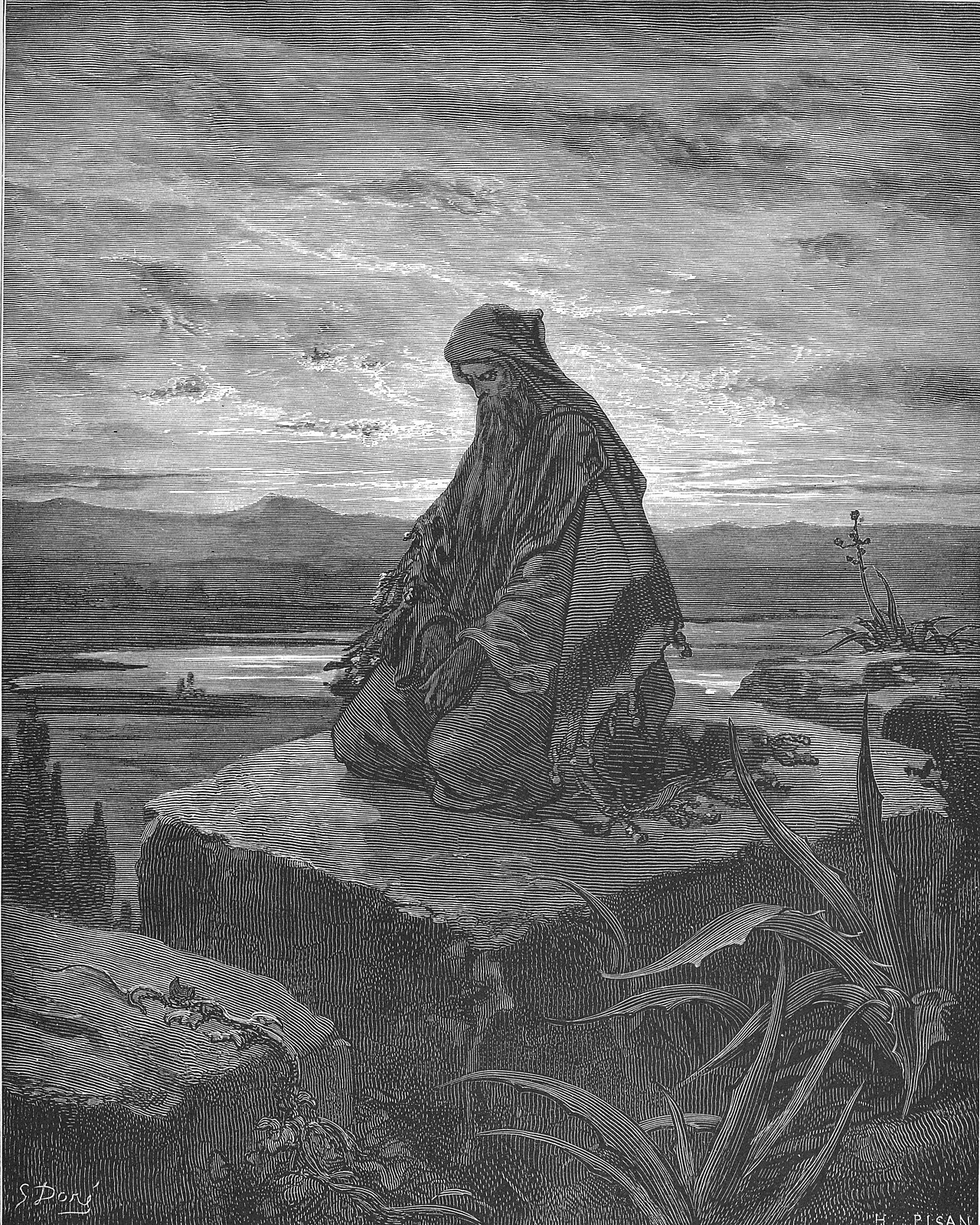
Isaiahchapter 14
32 verses · Isaiah · 8th century BC · The Prophets
you will sing this song of contempt against the king of Babylon: How the oppressor has ceased, and how his fury has ended!
Introduction
Isaiah, The Prophets, Isaiah Overview.
Isaiah son of Amoz spoke this in Jerusalem, a prophet at the court of Judah through the Assyrian years. The chapter belongs to the oracles against the nations and carries three of them. It was written for a people who would one day be captives and would need words for the day their captor fell. Much of it is set in the rhythm of a funeral lament and turned to mockery. Listen for the change of scene from the earth to the world of the dead, and for the dated word at the close. Readers have long asked how far the proud king of this song reaches beyond one man.
Context
- Who
- Judeans who had lived under tyrants and buried a bad king of their own
- What
- A taunt song over the fallen king of Babylon, framed by a promise to Israel and followed by short oracles against Assyria and Philistia.
- Where
- Spoken in Jerusalem, while the song moves from Babylon to the world of the dead, and the last oracle faces the Philistine coast.
- When
- The Philistine oracle is dated to the year King Ahaz died, about 715 BC by the common reckoning, in the years of Assyrian power.
- Why
- To give a people under a tyrant the assurance that the tyrant would fall and that they would be home to see it.
Historical context
The taunt song depends on how kings were buried. A great monarch went into a chambered tomb with his weapons and his ancestors, and the honor of the burial was the last statement of his power. This king gets none of it: he is cast out of his grave like a broken branch, thrown in with the bodies of the battle dead, trampled underfoot. To that world, this was worse than dying.
Show the rest of the historical context, 3 more paragraphs
The boast that gets mocked uses the region's own religious furniture. Everyone around Israel told stories of a god climbing to the mount of assembly in the far north, where the gods were said to meet. Isaiah has the tyrant say the lines, I will ascend above the heights of the clouds, I will be like the Most High, and then drops him to the lowest part of the pit, where the shades of dead kings stand up from their thrones to stare at him.
There is a real disagreement about how far this passage looks. The traditional Christian reading, and the reading of this site, takes the fall of the shining one, son of the dawn, as showing the fall of Satan behind the human king, the pride that first made a rebel out of an angel. Others hold that the whole song is a funeral parody aimed at one arrogant emperor and nothing more. Both are named here; the first is the flag planted.
The last paragraph switches nations and gets a date: in the year King Ahaz died. Philistia was celebrating because the rod that beat them was broken, most likely the death of Tiglath-pileser III in 727 BC or a later Assyrian setback. Isaiah tells them not to throw the party. From the north comes smoke, and the smoke of an army on the coastal highway was the last thing a Philistine city wanted to see.
Significance
The chapter opens with the thing the first hearers most needed: the LORD will have mercy on Jacob, will set them in their own land, and strangers will join them. The taunt only works because the singers are home.
Show the rest of the significance, 1 more paragraph
And it hands a captive people a song to sing about their captor. That is a specific kind of comfort, you will outlive this, and you will have words for it.
This chapter in Jewish lifeWhat this chapter is in Jewish life and reading.
What is done
No part of this chapter is read in the synagogue. Probed for this lane, the site's own table in src/lib/hebraic/readings.ts printed parashot 0 and haftarah uses 0 for Isaiah 14, and no festival reading for the book. Across chapters 1 to 22 of Isaiah the same probe found a Haftarah only in chapters 1, 6, 7 and 9.
How it is read
Every English note the corpus keeps on this chapter is Rashi's, quoted here from The Judaica Press complete Tanach with Rashi, translated by A. J. Rosenberg, which Sefaria reports as CC-BY.
The chapter opens on Israel's return. God will have mercy on Jacob "to keep for them the promise of their redemption from Babylonia" (Rashi on Isaiah 14:1:1). The taunt that follows is the song of the nations at rest: "All the land rested, became tranquil" (Rashi on Isaiah 14:7:1).
On the morning star of the twelfth verse Rashi gives the plain sense. "This is Venus, which gives light as the morning star" (Rashi on Isaiah 14:12:1). The same note reads the lament as "the lamentation over the heavenly prince of Babylon, who will fall from heaven". The stars of God above which he would set his throne are Israel (Rashi on Isaiah 14:13:1). At the twenty-fourth verse Rashi names the king of Babylon himself: "You, Nebuchadnezzar, saw that the words of the prophets of Israel about Sennacherib were fulfilled" (Rashi on Isaiah 14:24:1). A Christian reader who has met the twelfth verse as a word about the fall of Satan should know that Rashi reads it of the heavenly prince of Babylon.
The king in Sheol is cast out of his grave "like a despised sapling" (Rashi on Isaiah 14:19:1). He shall not be "equal to other kings, to rest in your grave" (Rashi on Isaiah 14:20:1).
The corpus carries one note on this chapter without an English text, marked linked. The note of Radak at 14:15:1 stands cited and unquoted because Sefaria holds no English version of the ref.
What the rabbis say
The corpus carries 40 rabbinic locators on the verses of this chapter, 4 in the Talmud and 36 in the Midrash. It carries the text of none, so each is cited by ref here and never quoted or paraphrased. The verse numbers are the Hebrew ones the corpus prints.
On verse 1 it holds Ein Yaakov (Glick Edition), Kiddushin 4:7 and Ein Yaakov (Glick Edition), Yevamot 4:1. On verse 2 it holds Bamidbar Rabbah 14:2 and Bereshit Rabbah 16:5. On verse 3 it holds Midrash Tanchuma Buber, Beshalach 11:2 and Tanna DeBei Eliyahu Rabbah 30:3. On verse 4 it holds Bereshit Rabbah 44:6 and Midrash Aggadah, Leviticus 13:2:11. On verse 5 it holds Bamidbar Rabbah 12:7 and Ein Yaakov (Glick Edition), Shabbat 20:3.
On verse 7 it holds Midrash Tanchuma Buber, Vayigash 11:1 and Shabbat 149b:11. On verse 8 it holds Eikhah Rabbah 1:30 and Shemot Rabbah 28:1. On verse 10 it holds Ein Yaakov, Shabbat 23:2 and Midrash Lekach Tov on Lamentations 2:13:1. On verse 11 it holds Kohelet Rabbah 1:15:1 and Mekhilta DeRabbi Yishmael, Tractate Shirah 8:7. On verse 12 it holds Mekhilta DeRabbi Shimon Ben Yochai 15:1 and Mekhilta DeRabbi Yishmael, Tractate Shirah 2:23.
On verse 13 it holds Aggadat Bereshit 2:2 and Bamidbar Rabbah 9:24. On verse 14 it holds Bamidbar Rabbah 20:1 and Chagigah 13a:2. On verse 15 it holds Midrash Lekach Tov, Deuteronomy 32:22:1 and Midrash Tanchuma Buber, V'Zot HaBerachah 5:1. On verse 17 it holds Bereshit Rabbah 83:2 and Bereshit Rabbati, Parashat Vayeshev 16. On verse 18 it holds Avot DeRabbi Natan, Recension B 17:3 and Otzar Midrashim, Hekhalot, The Seven Palaces of Impurity 9.
On verse 19 it holds Midrash Tanchuma, Beshalach 12:1. On verse 20 it holds Midrash Lekach Tov, Genesis 49:6:2. On verse 21 it holds Esther Rabbah 4:2. On verse 22 it holds Aggadat Bereshit 29:1. On verse 23 it holds Bava Kamma 55a:4.
On verse 24 it holds Ein Yaakov (Glick Edition), Sanhedrin 11:29. On verse 25 it holds Mekhilta DeRabbi Shimon Ben Yochai 14:23. On verse 29 it holds Midrash Lekach Tov, Numbers 21:8:1. On verse 31 it holds Midrash Tehillim 26:2. On verse 32 it holds Midrash Tanchuma Buber, Kedoshim 1:1.
What each of them teaches is a saying of the rabbis, and is reported as theirs wherever this site quotes one. The quotations wait on a fetch that carries the text.
Sources: Rashi, Rashi on Isaiah 14:1:1 to 14:24:1, The Judaica Press complete Tanach with Rashi, translated by A. J. Rosenberg, reported CC-BY; Radak, Radak on Isaiah 14:15:1, cited by ref because the corpus carries no English text; The Sefaria corpus, scripts/data/sources/sefaria/isaiah/14.json, the 40 Talmud and Midrash locators on the verses of this chapter; The site's own files, src/lib/hebraic/readings.ts, probed for Isaiah 14: parashot 0, haftarah uses 0, and no festival reading for the book.
The heads below are this chapter's scenes. The numbered points under each are its verses.
Israel Given Rest, and the Taunt Song Begun
Isaiah 14:1-3
will have compassion on Jacob: The LORD's compassion on Jacob opens the promise before the taunt-song. The foreigner who joins the house of Jacob describes proselytes drawn into Israel's household, and the reversal of verse 2 answers the exile's humiliation. The mercy promised here is bound to a real land and a real people.
Isaiah 14:1
“For the Lord will have mercy on Jacob - That is, he will pity the captive Jews in Babylon. He will not abandon them, but will remember them, and restore them to their own land. And will yet choose Israel - Will show that he regards them as still his chosen people; or will again “choose” them by recovering them from their bondage, and by restoring them to their country as his people. The names ‘Jacob’ and ‘Israel’ here simply denote the Jews.”
4 more voices on this verseWhat preachers and commentators have said about this verse, in their own words.
Isaiah 14:1
“For the proselytes have no need of a covenant, if, since there is one and the same law imposed on all that are circumcised, the Scripture speaks about them thus: 'And the stranger shall also be joined with them, and shall be joined to the house of Jacob.'”
Justin Martyr · written before 165 · Dialogue with Trypho, Chapter CXXIIIpatristic
Isaiah 14:1
“The particular favours he designed them. He would bring them back to their native soil and air again: The Lord will set them in their own land, out of which they were driven. A settlement in the holy land, the land of promise, is a fruit of God's mercy, distinguishing mercy.”
Matthew Henry · Commentary on the Whole Bible (1707-1721)puritan
Isaiah 14:1
“And will yet choose Israel - That is, will still regard Israel as his chosen people; however he may seem to desert them, by giving them up to their enemies, and scattering them among the nations.”
Adam Clarke · Commentary on the Bible (1810-1826)evangelical
Isaiah 14:1
“Truly his will shall be fulfilled swiftly and suddenly, as the Scripture testifies.”
Clement of Rome · written before 99 · 1 CLEMENT 23patristic
The nations will escort Israel: Barnes reads the escort as the help Cyrus gave the exiles, the nations of Babylon bringing Israel back to its own land. Wesley saw the promise kept after the return and more fully in the gospel. The nations that carried Israel off now carry it home.
Isaiah 14:2
“And the people shall take them - That is, the people in Babylon. And bring them to their place - That is, they shall attend them to the land of Judea, and aid in restoring them to their own country. There is reference here, doubtless, to the fact that Cyrus would assist them (compare Ezr 1:1-11), and that many of the inhabitants of Chaldea who would become proselytes, would be willing to accompany them to their own land.”
gives you rest from your pain and torment: The rest promised here ends the captivity in Babylon, which Barnes calls a long pain. The Hebrew for torment is trembling. Jerome hears the song that follows as Israel remembering Nebuchadnezzar's power once the yoke of servitude was cast off.
Isaiah 14:3
“And it shall come to pass - That is, then thou shalt take up a taunting song against the king of Babylon Isa 14:4. That the Lord shall give thee rest - (compare Isa 38:12). The nature of this predicted rest, is more fully described in Eze 28:25-26. From thy sorrow - The long pain of thy captivity in Babylon. And from thy fear - Hebrew, ‘Trembling.’ That is, the apprehension of the ills to which they were continually exposed. Trembling is usually one effect of fear.”
Isaiah 14:4-8
sing this song of contempt: The "song of contempt against the king of Babylon" names the taunt's target, the Hebrew mashal being a form of mocking poetry. The cedars of Lebanon rejoice that no woodcutter comes against them, since Babylon's building consumed Lebanon's timber. The opening line, "How the oppressor has ceased," sets the tone.
Isaiah 14:4
“This proverb “This parable” - משל mashal, I take this to be the general name for poetic style among the Hebrews, including every sort of it, as ranging under one or other, or all of the characters, of sententious, figurative, and sublime; which are all contained in the original notion, or in the use and application of the word mashal. Parables or proverbs, such as those of Solomon, are always expressed in short pointed sentences; frequently figurative, being formed on some comparison; generally forcible and authoritative, both in the matter and the form.”
Adam Clarke · Commentary on the Bible (1810-1826)evangelical
The LORD has broken the staff of the wicked: The verse answers the cry of verse 4 and names who ended the oppressor. Gill notes that Cyrus was the instrument. The breaking was the LORD's own work, and Jamieson, Fausset and Brown read the staff as the rod a tyrant strikes others with.
Isaiah 14:5
“The Lord hath broken the staff of the wicked,.... This is an answer to the above question, how the exactor and his tribute came to cease; this was not by man, but by the Lord himself; for though he made use of Cyrus, the work was his own, he broke the power of the wicked kings of Babylon: and the sceptre of the rulers; that were under the king of Babylon; or of the several kings themselves, Nebuchadnezzar, Evilmerodach, and Belshazzar; so Kimchi interprets it.”
1 more voice on this verse
Isaiah 14:5
“The Lord hath broken - Yahweh, by the hand of Cyrus. The staff of the wicked - That is, the scepter of the king of Babylon. The word rendered ‘staff’ (מטה maṭēh) may mean either a bough, stick, staff, rod, or a scepter. The scepter was the symbol of supreme power. It was in the form of a staff, and was made of wood, ivory, or gold. It here means that Yahweh had taken away the power from Babylon, and destroyed his dominion.”
It struck the peoples in anger: Henry observes that the king who ruled nations in rage lacked any rule over his own temper. His blows gave the peoples no breathing time. Jerome reads the persecution as the king's own work, pursuing even those who fled.
Isaiah 14:6
“He who smote - This may either refer to the king of Babylon, or to the rod or scepter which he had used, and which was now broken. Herder refers it to the scepter, ‘that which smote the nations.’ (On the meaning of the word “smote,” see the notes at Isa 10:20) The people - The nations that were subject to his authority. With a continual stroke - Margin, ‘A stroke without removing.’ Vulgate, Plaga insanabili - ‘With an incurable plague.’ - Septuagint the same - Πληγῇ ἀνιάτῳ Plēgē aniatō.”
All the earth is at peace and at rest: Henry calls the fallen king the great disturber of the peace. His death brings the quiet his wars had taken, and Henry sets beside it Proverbs 11:10, where there are shouts of joy. Barnes notes that Babylon's rule reached nearly the whole pagan world.
Isaiah 14:7
“Now that he is gone the whole earth is at rest and is quiet, for he was the great disturber of the peace; now they all break forth into singing, for when the wicked perish there is shouting ( Prov. xi.”
Matthew Henry · Commentary on the Whole Bible (1707-1721)puritan
2 more voices on this verse
Isaiah 14:7
“The whole earth is at rest - The kingdom of Babylonia, or Chaldea, extended nearly over the whole pagan world. Now that Babylon was fallen, and that those oppressions would cease, the world is represented as in peace and quietness. They break forth into singing - That is, the inhabitants of all the nations that were subject to Babylon now rejoice that they are released from its galling and oppressive yoke.”
Isaiah 14:7
“Second, it contains the ensuing peace: the whole earth is quiet, ceasing from that tumult, and still, ceasing from weeping, it is glad, in your destruction, and has rejoiced, in its liberation: the just shall rejoice when he shall see the revenge (Ps 58:10).”
Thomas Aquinas · written before 1274 · Commentary on Isaiahpatristic
Even the cypresses and cedars of Lebanon: Jerome read the cypresses and cedars as the rulers of the nations whom Nebuchadnezzar had cut down. Aquinas took the tall trees the same way, as men raised high in dignity. The woodcutter is the king himself.
Isaiah 14:8
“This proves, in opposition to WARBURTON [The Divine Legation], that the belief existed among the Jews that there was a Sheol or Hades, in which the "Rephaim" or manes of the departed abode.”
Jamieson, Fausset & Brown · Commentary Critical and Explanatory on the Whole Bible (1871)reformed
How Art Thou Fallen, Day-Star, Son of the Morning
Isaiah 14:9-11
Sheol beneath is eager to meet: Sheol is personified, stirring the dead and raising kings from their thrones to greet the fallen tyrant with mockery. Their words, "You too have become weak, as we are," turn welcome into insult. Maggots for a bed and worms for a blanket replace the pomp and harps of his court.
Isaiah 14:9
“Hell from beneath is moved for thee to meet thee - That is, Nebuchadnezzar. “It (hell) hath raised up from their thrones all the kings of the earth; - the ghosts (rephaim) of all the mighty ones, or goats, (עתודי attudey), of the earth - all the oppressors of mankind.” What a most terrible idea is here! Tyrannical kings who have oppressed and spoiled mankind, are here represented as enthroned in hell; and as taking a Satanic pleasure in seeing others of the same description enter those abodes of misery!”
Adam Clarke · Commentary on the Bible (1810-1826)evangelical
3 more voices on this verse
Isaiah 14:9
“It is what thou thyself didst not expect it would ever come to when thou wast in every thing too hard for us. Thou that didst rank thyself among the immortal gods, art thou come to take thy fate among us poor mortal men? Where is thy pomp now, and where thy mirth?”
Matthew Henry · Commentary on the Whole Bible (1707-1721)puritan
Isaiah 14:9
“Hell from beneath - The scene is now changed. The prophet had represented the people of all the subject nations as rejoicing that the king of Babylon had fallen, and had introduced even the trees of the forest as breaking forth into joy at this event.”
Isaiah 14:9
“MAGEE derives "Rephaim" (English Version, "the dead") from a Hebrew root, "to resolve into first elements"; so "the deceased" (Isa 26:14) "ghosts" (Pr 21:16). These being magnified by the imagination of the living into gigantic stature, gave their name to giants in general (Ge 6:4; "Rephaim," translated in the Septuagint, "giants" (compare see on Job 26:5, 6).”
Jamieson, Fausset & Brown · Commentary Critical and Explanatory on the Whole Bible (1871)reformed
They will all respond to you: Jamieson, Fausset and Brown connect the word weak with Rephaim, the Hebrew name for the dead, which may come from a root meaning feeble. The dead kings take comfort in his fall. Jerome put it plainly: rank divided them on earth, and punishment joins them below.
Isaiah 14:10
“They taunt him and derive from his calamity consolation under their own (Eze 31:16). weak--as a shade bereft of blood and life. Rephaim, "the dead," may come from a Hebrew root, meaning similarly "feeble," "powerless." The speech of the departed closes with Isa 14:11.”
Jamieson, Fausset & Brown · Commentary Critical and Explanatory on the Whole Bible (1871)reformed
Your pomp has been brought down to Sheol: Wesley connects the harps with Belshazzar's feast in Daniel 5. That was the night the city was taken. Henry draws the lesson that vain pomp goes to the grave with the body, while true glory goes up with the soul.
Isaiah 14:11
“Thy pomp - Thy magnificence (see the note at Isa 5:14). The noise of thy viols - Instruments of music were often used in their feasts; and the meaning here is, that instead of being surrounded with splendor, and the instruments of music, the monarch was now brought down to the corruption and stillness of the grave. The instrument referred to by the word ‘viol’ (נבל nēbel, plur. נבלים nebalı̂ym, Greek νάβλα nabla, Latin nablium), was a stringed instrument usually with twelve strings, and played by the pecten or by the hand (see the notes and illustrations on Isa 5:12).”
2 more voices on this verse
Isaiah 14:11
“Thy pomp - All thy glory is buried with thee. Viols - All thy musical instruments, which were much used in Babylon, and were doubtless used in Belshazzar's solemn feasts, Dan. v, 1, at which time the city was taken; to which possibly the prophet here alludes.”
John Wesley · Explanatory Notes upon the Old Testament (1765)evangelical
Isaiah 14:11
“THE JEWS ADDRESS HIM AGAIN AS A FALLEN ONCE-BRIGHT STAR. The language is so framed as to apply to the Babylonian king primarily, and at the same time to shadow forth through him, the great final enemy, the man of sin, Antichrist, of Daniel, St. Paul, and St. John; he alone shall fulfil exhaustively all the lineaments here given.”
Jamieson, Fausset & Brown · Commentary Critical and Explanatory on the Whole Bible (1871)reformed
Isaiah 14:12-15
How you have fallen from heaven: "I will make myself like the Most High" reaches past any mortal throne. With Luke 10:18 and Ezekiel 28 beside it the text bears the fall of Satan behind the king. The name Lucifer is the Vulgate's Latin for the Hebrew helel, "day star," and the text allows both readings.
Isaiah 14:12
“How art thou fallen from heaven,.... This is not to be understood of the fall of Satan, and the apostate angels, from their first estate, when they were cast down from heaven to hell, though there may be an allusion to it; see Luk 10:18 but the words are a continuation of the speech of the dead to the king of Babylon, wondering at it, as a thing almost incredible, that he who seemed to be so established on the throne of his kingdom, which was his heaven, that he should be deposed or fall from it.”
2 more voices on this verse
Isaiah 14:12
“O Lucifer, son of the morning - The Versions in general agree in this translation, and render הילל heilel as signifying Lucifer, Φωσφωρος, the morning star, whether Jupiter or Venus; as these are both bringers of the morning light, or morning stars, annually in their turn. And although the context speaks explicitly concerning Nebuchadnezzar, yet this has been, I know not why, applied to the chief of the fallen angels, who is most incongruously denominated Lucifer, (the bringer of light!) an epithet as common to him as those of Satan and Devil.”
Adam Clarke · Commentary on the Bible (1810-1826)evangelical
Isaiah 14:12
“Fallen - From the height of thy glory. Lucifer - Which properly is a bright star, that ushers in the morning; but is here metaphorically taken for the mighty king of Babylon.”
John Wesley · Explanatory Notes upon the Old Testament (1765)evangelical
You said in your heart: Jamieson, Fausset and Brown place the mount of assembly at the temple, and the far reaches of the north at Mount Moriah, citing Psalm 48:2. Clarke, with the Targum, reads the stars of God as Israel. The boast aims at God's own house.
Isaiah 14:13
“For thou hast said in thine heart,.... Which shows the pride and haughtiness that were in his heart; and were the cause and reason of his fall, for pride goes before a fall; it was the cause of the fall of angels, and of Adam, and of many kings and kingdoms; see Pro 16:18 with this compare Rev 18:7, I will ascend into heaven; be above all men, rule over the whole world; and so the Targum.”
1 more voice on this verse
Isaiah 14:13
"The stars" are often also used to express heavenly principalities (Job 38:7). mount of the congregation--the place of solemn meeting between God and His people in the temple at Jerusalem. In Da 11:37, and 2Th 2:4, this is attributed to Antichrist. sides of the north--namely, the sides of Mount Moriah on which the temple was built; north of Mount Zion (Ps 48:2).
Jamieson, Fausset & Brown · Commentary Critical and Explanatory on the Whole Bible (1871)reformed
I will ascend above the tops of the clouds: Gill hears in the clouds the cloud in which the LORD dwelt, so the king reaches for the seat of God. Barnes sets the boast beside 2 Thessalonians 2:4, where the man of lawlessness seats himself in the temple of God. It is the fifth boast and the highest.
Isaiah 14:14
“I will be like the Most High - There is a remarkable resemblance between this language and that used in 2Th 2:4, in regard to antichrist: ‘He, as God, sitteth in the temple of God, showing himself that he is God.’ And this similarity is the more remarkable, because antichrist is represented, in Rev 17:4-5, as seated in babylon - the spiritual seat of arrogance, oppression, and pride. Probably Paul had the passage in Isaiah in his eye when he penned the description of antichrist.”
But you will be brought down to Sheol: The depths of the Pit and the reaches of the north translate one word, and Jamieson, Fausset and Brown set the two against each other. The king aimed at the heights and lands at the bottom. Jesus spoke the same sentence over Capernaum in Matthew 11:23.
Isaiah 14:15
“Yet thou shalt be brought down to hell - Hebrew, ‘To sheol’ (compare Isa 14:9). To the sides of the pit - The word ‘pit,’ here, is evidently synonymous with “hell” or “hades,” represented as a deep, dark region under ground. The dead were often buried in caves, and the descent was often dark and dreary, to the vaults where they reposed. Hence, it is always represented as going down; or, as the “inferior” regions.”
2 more voices on this verse
Isaiah 14:15
“But yet: here, the frustration of his intention; into the depth of the pit, that is, into the harshest punishments: they spend their days in wealth, and in a moment they go down to hell (Job 21:31).”
Thomas Aquinas · written before 1274 · Commentary on Isaiahpatristic
Isaiah 14:15
"Never was death so great a change to any man as it is to him. Is it possible that a man, who a few hours ago looked so great, so pleasant, and was so splendidly adorned and attended, should now look so ghastly, so despicable, and lie thus naked and neglected? Is this the man that made the earth to tremble and shook kingdoms?
Matthew Henry · Commentary on the Whole Bible (1707-1721)puritan
Isaiah 14:16-19
Those who see you will stare: Other kings lie in state, but this king is cast out of his grave like a rejected branch, denied the burial his rank would guarantee. Ancient Near Eastern culture held a king's burial as dynastic honor, and this king alone is refused what the other kings receive.
Isaiah 14:16
“They that see thee - That is, after thou art dead. The scene here changes, and the prophet introduces those who would contemplate the body of the king of Babylon after he should be slain - the passers-by arrested with astonishment, that one so proud and haughty was at last slain, and cast out among the common dead Isa 14:19. Shall narrowly look upon thee - To be certain that they were not deceived. This denotes great astonishment, as if they could scarcely credit the testimony of their senses. It also expresses insult and contempt.”
who turned the world into a desert: Henry notes that great kings boast of the cities they build, and this king of Babylon boasted of the cities he destroyed. Cyrus set his captives free and sent them home with the temple vessels. Ezra 1 records that release.
Isaiah 14:17
“That made the world a wilderness, exiling men, and destroyed the cities, overturning their governments, that opened not the prison to his prisoners, that they might see light: they spread their terror in the land of the living (Ezek 32:25).”
Thomas Aquinas · written before 1274 · Commentary on Isaiahpatristic
1 more voice on this verse
Isaiah 14:17
“That made the world as a wilderness - That made cities and kingdoms desolate. That opened not the house of his prisoners - This is a description of his oppression and cruelty. Of course many prisoners would be taken in war. Instead of giving them liberty, he threw them into prison and kept them there. This may be rendered, ‘his prisoners he did not release that they might return home’ (see the Margin). The Chaldee renders it, ‘To his prisoners he did not open the door.’ The sense is substantially the same.”
All the kings of the nations lie in state: The Hebrew behind tomb is house, and Henry calls the grave the house appointed for all living. The kings of the nations lay in costly tombs, as Barnes notes. Verse 19 denies the king of Babylon that honour.
Isaiah 14:18
“All the kings of the nations - That is, this is the common way in which the kings are buried. Lie in glory - They lie in a magnificent mausoleum; they are surrounded with splendor even in their tombs. It is well known that vast sums of money were expended to rear magnificent mausoleums as the burial place of kings. With this design, probably, the pyramids of Egypt were reared; and the temple of Bel in Babylon, we are told, was employed for this purpose. Josephus says that vast quantities of money were buried in the sepulchre of David.”
But you are cast out of your grave: Clarke reads the rejected branch as a tree held in horror, like the tree on which a criminal was hanged. The king lies covered by the slain of the sword, clothed in them as in a garment. Barnes sets the scene beside Jeremiah 22:19.
Isaiah 14:19
“But thou art cast out of thy grave - Thou art not buried like other kings in a magnificent sepulchre, but art cast out like the common dead. This was a mark of the highest infamy (see Isa 34:3; Eze 29:5; Jer 22:19). Nothing was considered more disgraceful than to be denied the privileges of an honorable burial (see the note at Isa 53:9). On the fulfillment of this prophecy, see the note at Isa 14:20. As an abominable branch - (נתעב כנצר kenêtser nı̂te'āb).”
1 more voice on this verse
Isaiah 14:19
Rather, "clothed (that is, covered) with the slain"; as in Job 7:5, "My flesh is clothed with worms and clods of dust" [MAURER]. thrust through--that is, "the slain who have been thrust through," &c. stones of . . . pit--whose bodies are buried in sepulchres excavated amidst stones, whereas the king of Babylon is an unburied "carcass trodden under foot."
Jamieson, Fausset & Brown · Commentary Critical and Explanatory on the Whole Bible (1871)reformed
Isaiah 14:20-23
not join them in burial: "The offspring of the wicked will never again be mentioned" closes the reason for the king's denied burial. The slaughter prepared for his sons carries "the iniquities of their forefathers" onto them. Babylon swept "with the broom of destruction" returns to the desolation of the chapter before.
Isaiah 14:20
“Because thou hast destroyed thy land, etc. “Because thou hast destroyed thy country; thou hast slain thy people” - Xenophon gives an instance of this king’s wanton cruelty in killing the son of Gobrias, on no other provocation than that, in hunting, he struck a boar and a lion which the king had missed. Cyrop. 4:309.”
Adam Clarke · Commentary on the Bible (1810-1826)evangelical
1 more voice on this verse
Isaiah 14:20
“To be denied decent burial is a disgrace, which, if it be inflicted for righteousness' sake (as Ps. lxxix. 2 ), may, as other similar reproaches, be rejoiced in ( Matt. v. 12 ); it is the lot of the two witnesses, Rev. xi.”
Matthew Henry · Commentary on the Whole Bible (1707-1721)puritan
Prepare a place to slaughter his sons: Gill takes the command as spoken to the Medes and Persians, and names Belshazzar's house as the sons in view. Henry sets the slaughter beside Psalm 137 and Babylon's little ones. The king who slaughtered his own people loses his own sons.
Isaiah 14:21
“Prepare, &c.--charge to the Medes and Persians, as if they were God's conscious instruments. his children--Belshazzar's (Ex 20:5). rise--to occupy the places of their fathers. fill . . . with cities--MAURER translates, "enemies," as the Hebrew means in 1Sa 28:16; Ps 139:20; namely, lest they inundate the world with their armies.”
Jamieson, Fausset & Brown · Commentary Critical and Explanatory on the Whole Bible (1871)reformed
1 more voice on this verse
Isaiah 14:21
“The little ones of Babylon must be dashed against the stones, Ps. cxxxvii. These orders sound very harshly; but, (1.) They must suffer for the iniquity of their fathers, which is often visited upon the children, to show how much God hates sin and is displeased at it, and to deter sinners from it, which is the end of punishment.”
Matthew Henry · Commentary on the Whole Bible (1707-1721)puritan
The Purpose Purposed Upon the Whole Earth
Barnes reads the name cut off from Babylon as the male line of its king, the sense of Ruth 4:5. Offspring and posterity together leave the king no heir. Henry pictures Babylon proud of its royal house.
Isaiah 14:22
“For I will rise up against them, saith the Lord of hosts - That is, against the family of, the king of Babylon. And cut off from Babylon the name - That is, all the “males” of the royal family, so that the name of the monarch shall become extinct (compare Rth 4:5; Isa 56:5). And remnant - All that is left of them; so that the family shall cease to exist. The son and nephew - Everyone of the family who could claim to be an heir of the throne.”
Barnes reports that the Hebrew for owls was taken by Bochart and Gesenius as the hedgehog. Clarke followed the Septuagint and made the broom of destruction a plunge into a miry gulf. The city of the king becomes swampland.
Isaiah 14:23
“I will also make it a possession for the bittern - The word ‘bittern,’ in English, means a bird with long legs and neck, that stalks among reeds and sedge, feeding upon fish. The Hebrew word (קפד qı̂ppod), occurs but five times Isa 34:11; Zep 2:14. According to Bochart and Gesenius, it means the hedgehog. It has been variously rendered. Some have supposed it to be a land animal; some an aquatic animal; and most have regarded it as a fowl. Bochart has proved that the hedgehog or porcupine is found on the shores of the Euphrates.”
1 more voice on this verse
Isaiah 14:23
“A FRAGMENT AS TO THE DESTRUCTION OF THE ASSYRIANS UNDER SENNACHERIB. This would comfort the Jews when captives in Babylon, being a pledge that God, who had by that time fulfilled the promise concerning Sennacherib (though now still future), would also fulfil His promise as to destroying Babylon, Judah's enemy.”
Jamieson, Fausset & Brown · Commentary Critical and Explanatory on the Whole Bible (1871)reformed
Isaiah 14:24-27
The LORD of Hosts has sworn: The LORD of Hosts swears, "as I have purposed, so will it stand," over a second target, Assyria, the threat of Isaiah's own lifetime. The oracles against Babylon and Assyria sit side by side under one "plan devised for the whole earth," a hand stretched out over the nations.
Isaiah 14:24
“The Lord of hosts - (see the note at Isa 1:9). It is evident that this verse and the three following, is not directly connected with that which goes before, respecting Babylon. This pertains to the Assyrian; that had relation to Babylon. Vitringa says that this is attached to the prophecy respecting Babylon, and is a unique yet not altogether foreign argument, and is a sort of epilogue to the prophecy respecting Babylon. The design, he says, is this.”
I will break Assyria: Aquinas places the breaking where Sennacherib's army fell, on the mountains near Jerusalem in 701 BC. The yoke and burden repeat Isaiah 10:27. Barnes notes that in My land places the scene in Canaan, a turn from Babylon to Assyria.
Isaiah 14:25
“That--My purpose, namely, "that." break . . . yoke-- (Isa 10:27). my mountains--Sennacherib's army was destroyed on the mountains near Jerusalem (Isa 10:33, 34).”
Jamieson, Fausset & Brown · Commentary Critical and Explanatory on the Whole Bible (1871)reformed
This is the plan devised for the whole earth: The hand stretched out recalls the refrain of Isaiah 5:25 and 9:12, where it was raised against Israel. Here it is raised over the nations. Jamieson, Fausset and Brown read Assyria and Babylon as the world power of their day, standing for the world of every age.
The LORD of Hosts has purposed: , and Barnes notes that His plans are formed in full view of every circumstance. Chrysostom applied the verse to the fall of Jerusalem: what God had decreed, no human hand could turn back. The questions expect one answer.
Isaiah 14:27
“For the Lord of hosts - (see the note at Isa 1:9). Who shall disannul it? - Who has power to defeat his purposes? Difficult as they may be in appearance, and incredible as their fulfillment may seem, yet his purposes are formed in full view of all the circumstances; and there is no power to resist his arm, or to turn him aside from the execution of his designs. By this assurance God designed to comfort his people when they should be in Babylon in a long and dreary captivity (compare Psa 137:1-9.)”
Rejoice Not, Philistia: the Rod That Smote Thee Is Broken
Isaiah 14:28-32
the year that King Ahaz died: The Philistia burden is dated plainly, "In the year that King Ahaz died," a shorter burden. Philistia is told not to rejoice, because "a viper will spring from the root of the snake," a worse danger. Zion's poor find safety while smoke comes from the north against Philistia.
Isaiah 14:28
“In the year that King Ahaz died was this burden. The following heavy prophecy, concerning the destruction of the Philistines; whether it was delivered out before or after his death is not certain. Here some begin the "fifteenth" chapter Isa 15:1, and not improperly; henceforward prophecies are delivered out under another reign, as before under Uzziah, Jotham, and Ahaz, now under Hezekiah. This, according to Bishop Usher, was A. M. 3278 and before the Christian era 726.”
Do not rejoice, all you Philistines: The broken rod is read two ways. Henry takes it as Uzziah, and Barnes as Ahaz, whose death dates the oracle. Jamieson, Fausset and Brown name Hezekiah as the viper, and 2 Kings 18:8 records that he struck the Philistines as far as Gaza.
Isaiah 14:29
“Uzziah was doubtless regarded by the Philistines as a biting "serpent." But though the effects of his bite have been got rid of, a more deadly viper, or "cockatrice" (literally, "viper's offspring," as Philistia would regard him), namely, Hezekiah awaits you (2Ki 18:8).”
Jamieson, Fausset & Brown · Commentary Critical and Explanatory on the Whole Bible (1871)reformed
1 more voice on this verse
Isaiah 14:29
“Rejoice not thou - Rejoice not at the death of Ahaz, king of Judah. It shall be no advantage to thee. It shall not be the means of making an invasion on Judah more practicable. Whole Palestina - We apply the name “Palestine” to the whole land of Canaan. Formerly, the name referred only to Philistia, from which we have derived the name Palestine.”
Then the firstborn of the poor will find pasture: Jamieson, Fausset and Brown read the firstborn of the poor as the needy, like the children of the needy in Psalm 72:4, grazing in safety. Aquinas applied the phrase to Israel, called God's firstborn in Exodus 4:22. Clarke reports that the Targum read the verse of the Messiah.
Isaiah 14:30
“And the first-born of the poor, etc. - The Targum goes on applying all to the Messiah. “And the poor of the people shall he feed, and the humble shall dwell securely in his days: and he shall kill thy children with famine, and the remnant of thy people shall he slay.” I will kill “He will slay” - The Septuagint reads המית hemith, to the third person, ανελει; and so the Chaldee. The Vulgate remedies the confusion of persons in the present text, by reading both the verbs in the first person.”
Adam Clarke · Commentary on the Bible (1810-1826)evangelical
1 more voice on this verse
Isaiah 14:30
“Compare Ps 72:4, "Children of the needy," expressing those "needy in condition." feed--image from a flock feeding in safety. root--radical destruction. He shall slay--Jehovah shall. The change of person, "He" after "I," is a common Hebraism.”
Jamieson, Fausset & Brown · Commentary Critical and Explanatory on the Whole Bible (1871)reformed
Wail, O gate!: The gate stands for the crowd at the city gate. Clarke took the smoke from the north as the dust of Hezekiah's army on the march against the Philistines. Jamieson, Fausset and Brown read it as a signal fire.
Isaiah 14:31
“Howl, O gate - That is, ye who throng the gate. The gates of a city were the chief places of concourse. Cry, O city - The prophet here fixes the attention upon some principal city of Philistia, and calls upon it to be alarmed in view of the judgments that were about to come upon the whole land. Art dissolved - The word ‘dissolved’ (מוג mûg) is applied to that which melts, or which wastes away gradually, and then to that which faints or disappears. It means here that the kingdom of Philistia would disappear, or be destroyed.”
What answer will be given to the envoys: Clarke pictures envoys from the neighbouring nations congratulating Hezekiah on his victory, and the king crediting it to the LORD. Philistia falls, and Zion stands. Henry reads the answer as a promise that God will remain a faithful friend to His people.
Isaiah 14:32
“The messengers of the nation “The ambassadors of the nations” - The Septuagint read גוים goyim, εθνων, plural; and so the Chaldee, and one MS. The ambassadors of the neighboring nations, that send to congratulate Hezekiah on his success, which in his answer he will ascribe to the protection of God. See 2Ch 32:23. Or, if גוי goi singular, the reading of the text, be preferred, the ambassadors sent by the Philistines to demand peace. - L.”
Adam Clarke · Commentary on the Bible (1810-1826)evangelical
1 more voice on this verse
Isaiah 14:32
“This burden - This following burdensome prophecy concerning the Philistines, who in Ahaz's time, made an inroad into Judah, and took divers of their cities. Of him - Most understand this of Uzziah, who did then much mischief, 2 Chron. xxvi, 3, 6. But he was dead thirty-two years before this time, and therefore their joy for his death was long since past.”
John Wesley · Explanatory Notes upon the Old Testament (1765)evangelical
Keep studying
Studies7
People and groups1
Sources for this chapter
The summary
Jamieson, Fausset & Brown, Commentary Critical and Explanatory; John Calvin, Commentaries; John Wesley, Notes on the Old Testament and Matthew Henry, Complete Commentary.
The exposition
Adam Clarke, Commentary on the Bible; Albert Barnes; Franz Delitzsch, Biblical Commentary on the Prophecies of Isaiah; George Adam Smith, The Book of Isaiah, Expositor's Bible; Jamieson, Fausset & Brown, Commentary Critical and Explanatory on the Whole Bible; Jerome, Commentary on Isaiah; John Calvin, Commentary on the Book of the Prophet Isaiah; John Chrysostom, Homily 5 Against the Jews; John Gill; John Wesley, Explanatory Notes upon the Old Testament; Joseph Addison Alexander, Commentary on the Prophecies of Isaiah; Matthew Henry, Commentary on the Whole Bible and Thomas Aquinas, Commentary on Isaiah.