
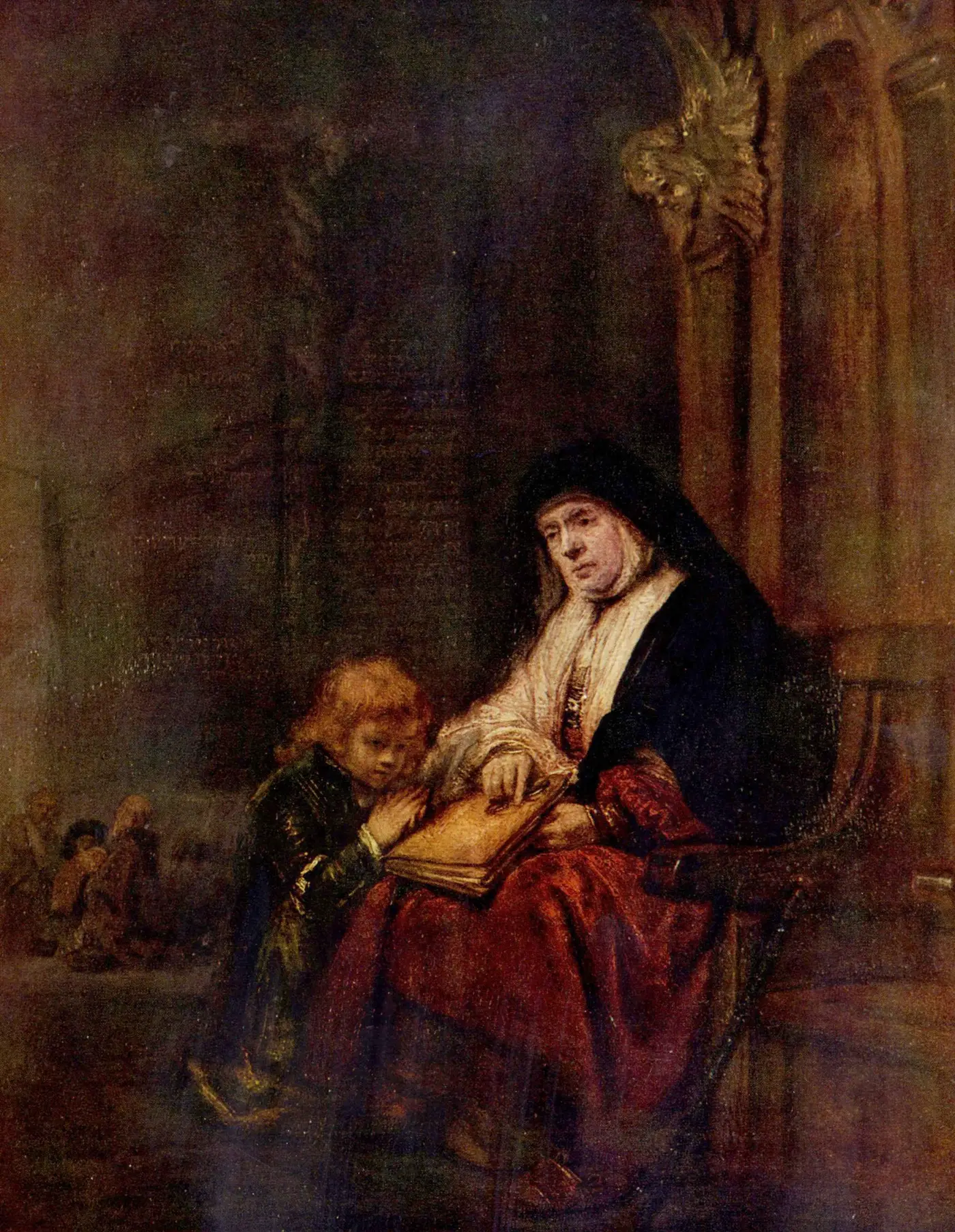
2 Timothychapter 4
22 verses · Paul, by tradition · AD 66 or 67 · Paul's letters
I have fought the good fight, I have finished the race, I have kept the faith.
Introduction
Paul, by tradition, Paul's letters, 2 Timothy Overview.
These are the last words of Paul that we have, written by a prisoner who expected to die soon. He had already faced one hearing in a Roman court. Timothy was far away, and Paul wanted him to come quickly. The chapter moves from a solemn charge to a farewell and then to a list of names, errands and greetings. Listen for the words that day, and for who is with Paul and who has gone. Listen also for the calm of a man who knows his work is finished. Read it as a farewell.
Context
- Who
- One friend being asked to come quickly, and a church that would read the letter after the writer's death
- What
- Paul's final charge to Timothy to preach the word, his farewell before death, and his last requests, news and greetings.
- Where
- Written from prison in Rome after Paul's first defense, to Timothy at Ephesus, with Troas, Corinth and Miletus named.
- When
- About AD 66 or 67 on the traditional dating, shortly before Paul's death under Nero.
- Why
- To pass his work on to Timothy, to call him to Rome before winter, and to leave a witness of the Lord's faithfulness at the end.
Historical context
The drink offering was a real ritual. In both Israel's law and Greek practice, wine was poured out beside a sacrifice, the last act, once the offering was already on the altar. Paul says the wine is already being poured.
Show the rest of the historical context, 3 more paragraphs
The requests are those of a man in a cold cell. He wants the cloak left at Troas, a heavy hooded travel garment, and the books, and especially the parchments, the more expensive animal-skin sheets, likely his Scripture copies or personal notes.
Roman capital trials often ran in two hearings. Paul's mention of a first defense where no one stood with him refers to that opening session; a prisoner normally brought supporters to speak for his character, and he had none.
The urgency about coming before winter is nautical. Sailing across the Mediterranean effectively shut down from roughly November to March because of storms, so if Timothy missed the window he would not arrive until spring, and Paul did not expect to be alive.
Significance
The charge to preach the word in season and out of season is given by a man about to die to a man who will have to keep going without him. That is why it is so blunt.
Show the rest of the significance, 1 more paragraph
The last paragraph names names, who left, who stayed, who did harm, who is coming. The first hearers knew all these people, and the honesty about the ones who abandoned him is part of what made the confidence at the end believable.
The heads below are this chapter's scenes. The numbered points under each are its verses.
Preach the Word: Itching Ears Are Coming
2 Timothy 4:1-2
judge the living and the dead: Five commands share one object, the word: preach it, be prepared in season and out of season, and reprove, rebuke, and encourage. The last clause, with every form of patient instruction, yokes patience and teaching so that urgency never becomes scolding.
in season and out of season: John Wesley reads the phrase as with and without opportunity: when no occasion is given, one must be made. Theodore of Mopsuestia distinguishes the three verbs, reprove for those who persist, rebuke for those in the act, and encourage for the penitent. Patience governs all three.
2 Timothy 4:2
“Preach the word - Κηρυξον τον λογον· Proclaim the doctrine, the doctrine of Christ crucified, for the sins of the whole world; the doctrine, that the Gentiles are invited to be fellow heirs with the Jews, and that for Jews and Gentiles there is no salvation but by faith in Christ. Be instant in season, out of season - Επιστηθι ευκαιρως, ακαιρως. Be urgent whether the times be prosperous or adverse, whenever there is an opportunity; and when there is none, strive to make one. The Judge is at the door, and to every man eternity is at hand!”
Adam Clarke · Commentary on the Bible (1810-1826)evangelical
3 more voices on this verseWhat preachers and commentators have said about this verse, in their own words.
2 Timothy 4:2
Hence the Apostle says, "What will ye, shall I come unto you with a rod, or in love, and in the spirit of meekness." First he speaks of a rod, and as with the rod of an almond tree had smitten the wanderers, that he might afterwards comfort them with the spirit of meekness. Just so did meekness restore the man whom the rod had driven from the Divine sacraments. To his disciple too he gave the same injunctions, "Reprove, beseech, rebuke."
Ambrose of Milan · written before 397 · Letter 41patristic
2 Timothy 4:2
“Be instant - Insist on, urge these things in season, out of season - That is, continually, at all times and places. It might be translated, with and without opportunity - Not only when a fair occasion is given: even when there is none, one must be made.”
John Wesley · Explanatory Notes upon the New Testament (1755)evangelical
2 Timothy 4:2
“Preach--literally, "proclaim as a herald." The term for the discourses in the synagogue was daraschoth; the corresponding Greek term (implying dialectial style, dialogue, and discussion, Ac 17:2, 18; 18:4, 19) is applied in Acts to discourses in the Christian Church.”
Jamieson, Fausset & Brown · Commentary Critical and Explanatory on the Whole Bible (1871)reformed
2 Timothy 4:3-5
with itching ears: The urgency rests on a forecast, men will not tolerate sound doctrine, the healthy teaching of the Pastoral letters. Hearers with itching ears gather teachers to suit their own desires and turn aside to myths, muthoi. The appetite stays and changes its supplier.
2 Timothy 4:3
“Such teachers, and such hearers, seldom are much concerned with what is strict or to the purpose. Heap to themselves - Not enduring sound doctrine, they will reject the sound preachers, and gather together all that suit their own taste. Probably they send out one another as teachers, and so are never at a loss for numbers.”
John Wesley · Explanatory Notes upon the New Testament (1755)evangelical
2 more voices on this verse
2 Timothy 4:3
“For the time will come ... - Probably referring to the time mentioned in 2Ti 3:1, following. When they will not endure sound doctrine - Greek, “healthful doctrine;” i. e., doctrine contributing to the health of the soul, or to salvation. At that time they would seek a kind of instruction more conformable to their wishes and feelings.”
2 Timothy 4:3
“They will turn away their ears from the truth; they will grow weary of the old plain gospel of Christ, and then they will be greedy of fables, and take pleasure in them, and God will give them up to those strong delusions, because they received not the truth in the love of it, 2 Thess. ii.”
Matthew Henry · Commentary on the Whole Bible (1707-1721)puritan
turn aside to myths: Theophylact notes that the turning is willing. Jamieson, Fausset and Brown call it a just result: those who turn from truth are turned to fables, as at Jeremiah 2:19. Adam Clarke explains the motive, that the truth strips away the sins they want to keep.
2 Timothy 4:4
“The ear brooks not what is opposed to the man's lusts. turned--Greek, "turned aside" (1Ti 1:6). It is a righteous retribution, that when men turn away from the truth, they should be turned to fables (Jer 2:19). fables-- (1Ti 1:4).”
Jamieson, Fausset & Brown · Commentary Critical and Explanatory on the Whole Bible (1871)reformed
1 more voice on this verse
2 Timothy 4:4
“And they shall turn away their ears from the truth - The truth strips them of their vices, sacrifices their idols, darts its lightnings against their easily besetting sins, and absolutely requires a conformity to a crucified Christ; therefore they turn their ears away from it.”
Adam Clarke · Commentary on the Bible (1810-1826)evangelical
do the work of an evangelist: Paul sets Timothy against the coming drift with four charges. John Chrysostom reads them as urgent: labour now and fill people's minds before the pestilence arrives. Albert Barnes points to Acts 21:8, where Philip bears the name evangelist.
2 Timothy 4:5
“But watch thou in all things - Be vigilant against error and against sin, and faithful in the performance of duty; See the Mat 25:13 note; 1Co 16:13 note. Endure afflictions - See the notes at 2Ti 2:3. The Greek word here is the same which is there rendered “endure hardness.” Do the work of an evangelist - On the word “evangelist,” see the notes on Act 21:8. The phrase here means, “do the work of preaching the gospel,” or of one appointed to proclaim the glad tidings of salvation.”
1 more voice on this verse
2 Timothy 4:5
“Watch - An earnest, constant, persevering exercise. The scripture watching, or waiting, implies steadfast faith, patient hope, labouring love, unceasing prayer; yea, the mighty exertion of all the affections of the soul that a man is capable of. In all things - Whatever you are doing, yet in that, and in all things, watch.”
John Wesley · Explanatory Notes upon the New Testament (1755)evangelical
I Have Fought the Good Fight: The Crown Awaits
2 Timothy 4:6-8
the time of my departure: I am already being poured out like a drink offering renders spendomai, the offering of Philippians 2:17 now being poured. Departure is analusis, a ship loosed from its moorings or a tent struck.
2 Timothy 4:6
“For I am now ready to be offered - Ηδη σπενδομαι· I am already poured out as a libation. See the note on Php 2:17. He considers himself as on the eve of being sacrificed, and looks upon his blood as the libation which was poured on the sacrificial offering. He could not have spoken thus positively had not the sentence of death been already passed upon him.”
Adam Clarke · Commentary on the Bible (1810-1826)evangelical
3 more voices on this verse
2 Timothy 4:6
“It alludes to the pouring out of the drink-offerings; for the blood of the martyrs, though it was not a sacrifice of atonement, was a sacrifice of acknowledgment to the honour of the grace of God and his truths.”
Matthew Henry · Commentary on the Whole Bible (1707-1721)puritan
2 Timothy 4:6
“Greek, "For I am already being offered"; literally, as a libation; appropriate to the shedding of his blood. Every sacrifice began with an initiatory libation on the victim's head (compare Note, see on Php 2:17). A motive to stimulate Timothy to faithfulness--the departure and final blessedness of Paul; it is the end that crowns the work [BENGEL].”
Jamieson, Fausset & Brown · Commentary Critical and Explanatory on the Whole Bible (1871)reformed
2 Timothy 4:6
SO NEAR, SO VERY NEAR THE CHANGE—his removal from this to another world; and so very conscious of it; yet Paul looked back with calm satisfaction; he looked forward with sweet assurance; and he looked round with deepest interest on the mission that had engaged his life. As you must have noticed while we were reading the chapter, in his case “the ruling passion was strong in death.”
I have kept the faith: Theophylact and Oecumenius read the verse as consolation for Timothy. Paul speaks like a dying father comforting his son. Jamieson, Fausset and Brown note that the Greek word for fight covers any contest, the race included.
2 Timothy 4:7
“I have fought a good fight - The Christian life is often represented as a conflict, or warfare; see the notes on 1Ti 6:12. That noble conflict with sin, the world, the flesh, and the devil, Paul now says he had been able to maintain. I have finished my course - The Christian life, too, is often represented as a “race” to be run; compare the notes at 1Co 9:24-26. I have kept the faith - I have steadfastly maintained the faith of the gospel; or, have lived a life of fidelity to my Master.”
crown of righteousness: Jamieson, Fausset and Brown set the righteous Judge against the unjust judges who condemned Paul. The crown is open to all who long for Christ's appearing, and John Wesley says only a real Christian can love that day. Ambrose of Milan notes that no crown comes before the finish.
2 Timothy 4:8
“Henceforth there is laid up for me a crown - This I can claim as my due; but the crown I expect is not one of fading leaves, but a crown of righteousness; the reward which God, in his kindness, has promised to them who are faithful to the grace he has bestowed upon them. The Lord, the righteous Judge - He alludes here to the brabeus, or umpire in the Grecian games, whose office it was to declare the victor, and to give the crown.”
Adam Clarke · Commentary on the Bible (1810-1826)evangelical
3 more voices on this verse
2 Timothy 4:8
“Many of these St. Paul himself had gained. That have loved his appearing - Which only a real Christian can do. I say a real Christian, to comply with the mode of the times: else they would not understand, although the word Christian necessarily implies whatsoever is holy, as God is holy.”
John Wesley · Explanatory Notes upon the New Testament (1755)evangelical
2 Timothy 4:8
“While we await the fullness of time, the souls await their due reward. Some await punishment and others glory. And yet in the meantime the one group is not without harm nor the other without gain.”
Ambrose of Milan · written before 397 · Death as a Good 10.47patristic
2 Timothy 4:8
“The former, the elect Church who reign with Christ in the millennium, are fewer than the latter. The righteous heavenly Judge stands in contrast to the unrighteous earthly judges who condemned Paul. me--individual appropriation. Greek, "not only to me." them that love--Greek, "have loved, and do love"; habitual love and desire for Christ's appearing, which presupposes faith (compare Heb 9:28).”
Jamieson, Fausset & Brown · Commentary Critical and Explanatory on the Whole Bible (1871)reformed
Demas Left, Luke Stayed: Bring the Cloak and the Parchments
2 Timothy 4:9-12
Make every effort to come to me quickly: The requests turn personal, come to me quickly, for the circle has thinned. Demas, who sent greetings at Colossians 4:14, has left in his love of this world, set against the love of Christ's appearing in 4:8.
2 Timothy 4:9
“Do thy diligence to come shortly unto me - As soon as possible. Timothy had been Paul’s traveling companion, and was his intimate friend. The apostle was now nearly forsaken, and was about to pass through severe trials. It is not certainly known for what purpose he wished him to come to him, but perhaps he desired to give him some parting counsels; perhaps he wished him to be near him when he died.”
Demas: had stood with Paul in the first imprisonment and sent greetings at Colossians 4:14, as Adam Clarke notes. Matthew Henry suggests he left for fear of suffering or for worldly business. John Wesley thinks Crescens went with Paul's consent.
2 Timothy 4:10
As Luke was present at all these occurrences, he carefully noted them down in writing, so that he cannot be convicted of falsehood or boastfulness, because all these [particulars] proved both that he was senior to all those who now teach otherwise, and that he was not ignorant of the truth. That he was not merely a follower, but also a fellow-labourer of the apostles, but especially of Paul, Paul has himself declared also in the Epistles, saying: "Demas hath forsaken me, ... and is departed unto Thessalonica; Crescens to Galatia, Titus to Dalmatia. Only Luke is with me."
Irenaeus · written before 202 · Against Heresies Book 3patristic
4 more voices on this verse
2 Timothy 4:10
“Demas - Once my fellowlabourer, Phil. i, 24. Crescens, probably a preacher also, is gone, with my consent, to Galatia, Titus to Dalmatia, having now left Crete.”
John Wesley · Explanatory Notes upon the New Testament (1755)evangelical
2 Timothy 4:10
“Demas hath forsaken me - This is another proof of the posteriority of this epistle: for Demas was with the apostle in his first imprisonment, and joins in the salutations, see Col 4:14, which were written when Paul was a prisoner at Rome for the first time. Having loved this present world - Αγαπησας τον νυν αιωνα Having preferred Judaism to Christianity; or having loved the Jews, and having sought their welfare in preference to that of the Gentiles.”
Adam Clarke · Commentary on the Bible (1810-1826)evangelical
2 Timothy 4:10
“He quitted Paul and his interest, either for fear of suffering (because Paul was now a prisoner, and he was afraid of coming into trouble upon his account) or being called off from his ministry by secular affairs, in which he entangled himself; his first love to Christ and his gospel was forsaken and forgotten, and he fell in love with the world.”
Matthew Henry · Commentary on the Whole Bible (1707-1721)puritan
2 Timothy 4:10
“Whether he went of his own accord, as is likely, or was sent by Paul, which the expression "is departed" hardly accords with, cannot be positively decided. Paul here speaks only of his personal attendants having forsaken him; he had still friends among the Roman Christians who visited him (2Ti 4:21), though they had been afraid to stand by him at his trial (2Ti 4:16).”
Jamieson, Fausset & Brown · Commentary Critical and Explanatory on the Whole Bible (1871)reformed
Get Mark: Luke stayed to the end, and Irenaeus used his constant company with Paul to show that Luke's record can be trusted. John Chrysostom notes that Paul asks for Mark for the work of the gospel. Paul keeps working to the end.
2 Timothy 4:11
“Only Luke is with me,.... The beloved physician, who wrote the Gospel that bears his name, and "the Acts of the Apostles", and was a constant companion of Paul's in his travels and sufferings: take Mark, and bring him with thee; who might be at Ephesus, or somewhere in Timothy's way as he came to Rome.”
3 more voices on this verse
2 Timothy 4:11
“Only Luke is with me - Luke, the author of the gospel which bears his name, and of the Acts of the Apostles. For a considerable part of the ministry of Paul, he was his traveling companion (compare the notes on Act 16:10), and we know that he went with him to Rome; Act 27:1. Take Mark - John Mark, see the notes at Act 15:37. He was the son of a sister of Barnabas, and had been the traveling companion of Barnabas and Paul.”
2 Timothy 4:11
“Paul did not think it so; he loved the company of his friends. He speaks respectfully concerning Mark: He is profitable to me for the ministry. It is supposed that this Mark was he about whom Paul and Barnabas had contended, Acts xv.”
Matthew Henry · Commentary on the Whole Bible (1707-1721)puritan
2 Timothy 4:11
“Take--Greek, "take up" on thy journey (Ac 20:13, 14). John Mark was probably in, or near, Colosse, as in the Epistle to the Colossians (Col 4:10), written two years before this, he is mentioned as about to visit them.”
Jamieson, Fausset & Brown · Commentary Critical and Explanatory on the Whole Bible (1871)reformed
Tychicus: Jamieson, Fausset and Brown think Tychicus was sent to take Timothy's place at Ephesus while he travelled, as Paul once planned at Titus 3:12. John Gill reads it as care that the church should not lack the ministry of the word. Paul keeps the church supplied even from prison.
2 Timothy 4:12
“And Tychicus have I sent to Ephesus. To supply the place of Timothy, while he came to Rome, and continued there: so careful was the apostle of the church there, that they might not be without the ministry of the word during his absence; see Eph 6:20.”
1 more voice on this verse
2 Timothy 4:12
“Tychicus have I sent to Ephesus - For this person, see Act 20:4; Eph 6:21; Col 4:7. It is rather strange that the apostle should say, I have sent Tychicus to Ephesus, if Timothy was at Ephesus at this time; but it is probable that Tychicus had been sent to Ephesus some time before this, and therefore the apostle might say, though writing now to Ephesus, Tychicus have I sent, etc.”
Adam Clarke · Commentary on the Bible (1810-1826)evangelical
2 Timothy 4:13-15
the cloak that I left with Carpus at Troas: The list is a prisoner's: the cloak that I left with Carpus at Troas against the cold, and my scrolls, especially the parchments. Most readers since antiquity take the parchments, membranai, for copies of Scripture.
2 Timothy 4:13
“The cloak that I left at Troas with Carpus,.... About the word here rendered a "cloak", interpreters are not agreed: some take it for a garment, and about this they differ; some would have it to be a dignified robe, such as the Roman consuls and senators of Rome wore; which is not likely, this being not suitable to the apostle's character, state, and circumstances.”
4 more voices on this verse
2 Timothy 4:13
“The cloak that I left at Troas - On the situation of Troas, see the notes on Act 16:8. It was not on the most direct route from Ephesus to Rome, but was a route frequently taken. See also the introduction, section 2. In regard to what the “cloak” here mentioned was, there has been considerable difference of opinion. The Greek word used (φελόνης phelonēs, - variously written φαιλόνης phailonēs, φελόνης phelonēs, and φελώνης phelōnēs), occurs nowhere else in the New Testament.”
2 Timothy 4:13
“The cloak - Either the toga, which belonged to him as a Roman citizen, or an upper garment, which might be needful as winter came on. Which I left at Troas with Carpus - Who was probably his host there.”
John Wesley · Explanatory Notes upon the New Testament (1755)evangelical
2 Timothy 4:13
“It is probable that it was the habit Paul usually wore, a plain dress. Some read it, the roll of parchment I left at Troas; others, the desk that I left. Paul was guided by divine inspiration, and yet he would have his books with him.”
Matthew Henry · Commentary on the Whole Bible (1707-1721)puritan
2 Timothy 4:13
“So the inner vesture and outer garment of Jesus, Paul's master, are suggestive of most instructive thought (Joh 19:2). books--He was anxious respecting these that he might transmit them to the faithful, so that they might have the teaching of his writings when he should be gone. especially the parchments--containing perhaps some of his inspired Epistles themselves.”
Jamieson, Fausset & Brown · Commentary Critical and Explanatory on the Whole Bible (1871)reformed
Alexander the coppersmith: Albert Barnes and John Gill link him with the Alexander handed over at 1 Timothy 1:20, and perhaps the one at Acts 19:33. Jamieson, Fausset and Brown suggest he accused Paul before the Roman judges. Paul leaves the repayment to the Lord.
2 Timothy 4:14
“Alexander the coppersmith--or "smith" in general. Perhaps the same as the Alexander (see on 1Ti 1:20) at Ephesus. Excommunicated then he subsequently was restored, and now vented his personal malice because of his excommunication in accusing Paul before the Roman judges, whether of incendiarism or of introducing a new religion.”
Jamieson, Fausset & Brown · Commentary Critical and Explanatory on the Whole Bible (1871)reformed
1 more voice on this verse
2 Timothy 4:14
“This is he who is spoken of Acts xix. It should seem, he had been a professor of the Christian religion, a forward professor, for he was there particularly maligned by the worshippers of Diana, and yet he did Paul much evil.”
Matthew Henry · Commentary on the Whole Bible (1707-1721)puritan
beware of him: Albert Barnes infers that Alexander was still teaching in public, and teaching with skill. Theophylact notes that Paul leaves punishment to God. Believers share one cause, as Jamieson, Fausset and Brown read the word our.
2 Timothy 4:15
“Of whom be thou ware also - It would seem from this that Alexander was still a public teacher, and that his discourses were plausible and artful. The best and the wisest of men need to be on their guard against the efforts of the advocates of error. For he hath greatly withstood our words - Margin, “preachings.” The Greek is, “words;” but the reference is doubtless to the public teachings of Paul.”
2 Timothy 4:16-18
At my first defense: , the prima actio before Nero's court, no one stood with me. Paul prays May it not be charged against them, echoing the Lord's words from the cross. Yet the Lord stood by me and strengthened me.
2 Timothy 4:16
“At my first answer - Εν τῃ τρωτῃ μου απολογιᾳ· At my first apology; this word properly signifies a defense or vindication. To his is the meaning of what we call the apologies of the primitive fathers; they were vindications or defences of Christianity. It is generally allowed that, when St. Paul had been taken this second time by the Romans, he was examined immediately, and required to account for his conduct; and that, so odious was Christianity through the tyranny of Nero, he could procure no person to plead for him.”
Adam Clarke · Commentary on the Bible (1810-1826)evangelical
2 more voices on this verse
2 Timothy 4:16
“This was strange, that so good a man as Paul should have nobody to own him, even at Rome, where there were many Christians, whose faith was spoken of throughout the world, Rom. i. The Christians at Rome were forward to go and meet him ( Acts xxviii. ); but when it came to the pinch, and they would be in danger of suffering with him, then they all forsook him.”
Matthew Henry · Commentary on the Whole Bible (1707-1721)puritan
2 Timothy 4:16
"May it not be laid to THEIR charge," for they were intimidated; their drawing back from me was not from bad disposition so much as from fear; it is sure to be laid to the charge of those who intimidated them. Still Paul, like Stephen, would doubtless have offered the same prayer for his persecutors themselves (Ac 7:60).
Jamieson, Fausset & Brown · Commentary Critical and Explanatory on the Whole Bible (1871)reformed
the mouth of the lion: Eusebius records the tradition that Paul made his defense, was released to preach again, and died under Nero on a second stay in Rome. Adam Clarke reads the defense itself as preaching, so the Gentiles in the court heard the gospel. The Lord stood where men had failed.
2 Timothy 4:17
“Notwithstanding the Lord stood with me - Though all “men” forsook me, yet “God” did not. This expresses a universal truth in regard to the faithfulness of God; see Psa 27:10; compare Job 5:17-19; Isa 14:1-2. That by me the preaching might be fully known - The word “preaching,” here probably means “the gospel as preached by him.” The word rendered “might be fully known” - πληροφορηθῃ plērophorē̄thē - means “might obtain full credence;” that is, might be fully confirmed, so that others might be assured of its truth.”
1 more voice on this verse
2 Timothy 4:17
“Story has it that the apostle, after defending himself, was again sent upon the ministry of preaching and coming a second time to the same city met death by martyrdom under Nero. While he was being held in prison, he composed the second epistle to Timothy, at the same time indicating that his first defense had taken place and that martyrdom was at hand.”
Eusebius of Caesarea · written before 339 · Ecclesiastical History 2.22patristic
bring me safely into His heavenly kingdom: Paul expects death, as verse 6 said, so the rescue he hopes for is of another kind. Albert Barnes reads it as being kept from shrinking back or falling away at the end. John Wesley sets the heavenly kingdom against Nero's.
2 Timothy 4:18
“And the Lord shall deliver me from every evil work - None of the evil designs formed against me to make me unfaithful or unsteady, to cause me to save my life at the expense of faith and a good conscience, shall succeed; my life may go, but he will preserve me unto his heavenly kingdom. A continuance on earth the apostle expects not; but he has glory full in view, and therefore he gives God glory for what he had done, and for what he had promised to do.”
Adam Clarke · Commentary on the Bible (1810-1826)evangelical
2 more voices on this verse
2 Timothy 4:18
“And the Lord will deliver me from every evil work - Which is far more than delivering me from death. Yea, and, over and above, preserve me unto his heavenly kingdom - Far better than that of Nero.”
John Wesley · Explanatory Notes upon the New Testament (1755)evangelical
2 Timothy 4:18
“For then, he says, the threat had vanished. But because the Gospel became sufficient, he will rescue me from all: that is to say, he will not leave me and the threat will disappear.”
John Damascene · written before 749 · Commentary (church-history corpus)patristic
Last Greetings From a Cold Roman Cell
2 Timothy 4:19-22
Greet Prisca and Aquila: The last greetings are history, Prisca and Aquila, the tentmaking couple of Corinth and Ephesus, and the household of Onesiphorus, as at 1:16. Trophimus I left sick in Miletus records a companion left ill without embarrassment.
2 Timothy 4:19
“Salute Prisca and Aquila,.... The same with Priscilla and Aquila: and so the Complutensian edition, and some copies, read here; who were of the same occupation with the apostle, and with whom he wrought at Corinth, and whom he left at Ephesus; and who seem by this salutation to have continued there, Act 18:2. And the household of Onesiphorus: who also lived at Ephesus, and whose kindness to the apostle, when he was at Rome, is before mentioned, 2Ti 1:16.”
2 more voices on this verse
2 Timothy 4:19
“Salute Prisca and Aquila - Prisca, or Priscilla, was the wife of Aquila, though her name is sometimes mentioned first. In regard to their history, see the notes at Rom 16:3. They were at Rome when Paul wrote his Epistle to the Romans, but afterward went into Asia Minor, which was the native place of Aquila Act 18:2, and where they probably died. And the household of Onesiphorus; - see the notes on 2Ti 1:16.”
2 Timothy 4:19
“Prisca and Aquila-- (Ac 18:2, 3; 1Co 16:19, written from Ephesus, where therefore Aquila and Priscilla must then have been). household of Onesiphorus--If he were dead at the time, the "household" would not have been called "the household of Onesiphorus." He was probably absent (see on 2Ti 1:16).”
Jamieson, Fausset & Brown · Commentary Critical and Explanatory on the Whole Bible (1871)reformed
Trophimus I left sick: Trophimus of Ephesus had travelled with Paul, as Acts 20:4 records. John Chrysostom asks why Paul did not heal him, and answers that the apostles could not do everything. Adam Clarke adds that the power to heal was given only at times.
2 Timothy 4:20
“Erastus abode at Corinth,.... He was chamberlain of that city, Rom 16:23 who being sent along with Timothy into Macedonia, Act 19:22 very probably went from thence into Achaia, to Corinth, his native place, where he stayed. But Trophimus have I left at Miletum sick. Trophimus was an Asian, of the city of Ephesus, the same that is spoken of in Act 20:4. Some say he suffered martyrdom the same day the Apostle Paul did; but others say, that after that time he was bishop of Arles in France.”
2 more voices on this verse
2 Timothy 4:20
“Erastus abode at Corinth - He was treasurer of that city, as we learn from Rom 16:23 (note). The apostle had sent him and Timothy on a mission to Macedonia, Act 19:22, whence it is probable he returned to Corinth, and there became finally settled. Trophimus have I left at Miletum sick - Even the apostles could not work miracles when they pleased; that power was but rarely given, and that for very special purposes. Trophimus was an Ephesian. See Act 20:4, and the note there.”
Adam Clarke · Commentary on the Bible (1810-1826)evangelical
2 Timothy 4:20
“As Miletus was near Ephesus, there is a presumption that Timothy was not at Ephesus when Paul wrote, or he would not need to inform Timothy of Trophimus lying sick in his immediate neighborhood.”
Jamieson, Fausset & Brown · Commentary Critical and Explanatory on the Whole Bible (1871)reformed
before winter: Travel by sea was dangerous in winter, as Adam Clarke and Albert Barnes note, and Paul's time was short. John Chrysostom records that some said Linus became the second bishop of Rome after Peter. Of Eubulus, Pudens and Claudia nothing certain is known.
2 Timothy 4:21
“Do thy diligence to come before winter,.... When travelling would not be so safe and comfortable: the apostle consults Timothy's good, as well as his own advantage. Eubulus greeteth thee. Eusebius (k) makes mention of one of this name of Manganaea, who suffered martyrdom with one Adrian at Caesarea; but he cannot be thought to be the same with this, since he suffered in the times of Dioclesian.”
2 more voices on this verse
2 Timothy 4:21
“Do thy diligence; - 2Ti 4:9. To come before winter - Probably because of the dangers of the navigation then, and because the circumstances of the apostle were such as to demand the presence of a friend. Eubulus, ... - These names are of common occurrence in the works of the classic writers, but of the persons here referred to we know nothing.”
2 Timothy 4:21
“57 [TACITUS, Annals, 3.32], probably Christianity. She probably was the instrument of converting Claudia, who took the name Rufina from her, that being a cognomen of the Pomponian gens (compare Ro 16:13, Rufus, a Christian). Pudens in MARTIAL and in the Chichester inscription, appears as a pagan; but perhaps he or his friends concealed his Christianity through fear.”
Jamieson, Fausset & Brown · Commentary Critical and Explanatory on the Whole Bible (1871)reformed
The Lord be with your spirit: The first blessing is for Timothy alone and the second is plural, as Jamieson, Fausset and Brown note from the oldest manuscripts. Adam Clarke reads the first line as a prayer to Christ. Albert Barnes adds that the subscription printed after this verse in older Bibles was a later addition.
2 Timothy 4:22
“The Lord Jesus Christ be with thy spirit,.... To counsel and advise in every difficult matter; to comfort under every distress; to supply with all grace in every time of need; and to strengthen and fit for every part and branch of duty. Grace be with you, Amen: which is the apostle's common salutation in all epistles. The Syriac version renders it, "grace be with thee"; but the Greek copies read in the plural, "with you"; which shows that the epistle was designed for the use of the whole church, as well as of Timothy.”
3 more voices on this verse
2 Timothy 4:22
“The Lord Jesus Christ be with thy spirit - This is a prayer addressed to Christ by one of the most eminent of his apostles; another proof of the untruth of the assertion, that prayer is never offered to Christ in the New Testament. He prays that Christ may be with his spirit, enlightening, strengthening, and confirming it to the end. Grace be with you - These words show that the epistle was addressed to the whole Church, and that it is not to be considered of a private nature. Amen - Omitted by ACFG and some others.”
Adam Clarke · Commentary on the Bible (1810-1826)evangelical
2 Timothy 4:22
“And if grace be with us here to convert and change us, to make us holy, to keep us humble, and to enable us to persevere to the end, glory will crown us hereafter: for the Lord is a sun, and a shield; the Lord will give grace and glory, and no good thing will he withhold from those that walk uprightly. O Lord of hosts, blessed is the man that trusteth in thee, Ps. lxxxiv.”
Matthew Henry · Commentary on the Whole Bible (1707-1721)puritan
2 Timothy 4:22
“Grace be with you--plural in oldest manuscripts, "with YOU," that is, thee and the members of the Ephesian and neighboring churches.”
Jamieson, Fausset & Brown · Commentary Critical and Explanatory on the Whole Bible (1871)reformed
How this psalm is built
The form: A final charge in verses 1 to 5, a farewell in verses 6 to 8, and the requests, news and greetings that close the letter in verses 9 to 22, as page classes it.
The patterns in this chapter
| Device | What it does | Where to see it |
|---|---|---|
| Three things done | Verse 7 gives three short clauses, each opening with I have in the Berean text: the good fight fought, the race finished, the faith kept. Verse 8 answers them with the crown laid up for Paul and for all who long for Christ's appearing. Jamieson, Fausset and Brown note that the word for fight covers any contest, the race included.Jamieson, Fausset and Brown, Commentary Critical and Explanatory on the Whole Bible, on 2 Timothy 4:7. | 2 Timothy 4:7, 2 Timothy 4:8 |
| His appearing, first and last | The word appearing stands three times in the Berean text of the letter. It names Christ's first coming at 2 Timothy 1:10 and His coming as Judge at 4:1 and 4:8. The site's book page reads the one word as a frame around the letter, bracketing both comings.This site's 2 Timothy book page, src/components/book/guides/2-timothy/Book2TimothyGuide.tsx, the block "Where 2 Timothy Points to Christ", the entry "The righteous Judge and the crown". | 2 Timothy 1:10, 2 Timothy 4:1, 2 Timothy 4:8 |
| Everyone left, but the Lord stood by | Verse 16 says that at Paul's first defense no one stood with him and everyone deserted him. Verse 17 answers that the Lord stood by him and strengthened him. The same turn from human desertion to the Lord's help runs from Demas in verse 10 to the doxology of verse 18.Albert Barnes, Notes, Explanatory and Practical, on 2 Timothy 4:17. | 2 Timothy 4:10, 2 Timothy 4:16, 2 Timothy 4:17, 2 Timothy 4:18 |
How the chapter is built
5 more paragraphs on the patterns
Verses 1 to 5 give the charge, sworn before God and Christ Jesus the Judge: five commands in verse 2 and four more in verse 5. Verses 6 to 8 give Paul's farewell, a drink offering poured out, three things done and a crown laid up. Verses 9 to 22 turn to the people around him, those who left, those who were sent and those he asks for, with the first defense told in verses 16 to 18. The site's book page names this chapter's charge Preach, the last of four.
The debated reading: the mouth of the lion
Verse 17 says Paul was rescued from the lion's mouth, and readers differ on what the lion is. John Damascene reads it as Nero (Commentary, on 2 Timothy 4:17). Jamieson, Fausset and Brown read it as Satan, the roaring lion, and tie it to the evil of verse 18 (Commentary Critical and Explanatory, on 2 Timothy 4:17). The site's published exposition of verses 16 to 18 names a third reading, the arena itself. The page states each reading with its holder and settles none.
The note at the end
Older Bibles print a note after verse 22 saying the letter was written from Rome when Paul stood before Nero the second time. Albert Barnes explains that Paul did not add this note and that it carries no authority (Notes, Explanatory and Practical, on 2 Timothy 4:22).
Keep studying
Studies17
Sources for this chapter
The summary
Jamieson, Fausset & Brown, Commentary Critical and Explanatory; John Calvin, Commentaries; John Wesley, Explanatory Notes Upon the New Testament and Matthew Henry, Complete Commentary.
The context
Jamieson, Fausset and Brown, Commentary Critical and Explanatory on the Whole Bible and Matthew Henry, Commentary on the Whole Bible.
The form and classifications
Eusebius of Caesarea, Ecclesiastical History 2.22; Matthew Henry, Commentary on the Whole Bible, on 2 Timothy 4:7 and This site's 2 Timothy book page, src/components/book/guides/2-timothy/Book2TimothyGuide.tsx, the CHARGES table, the entry for chapter 4, "Preach the word, in season and out", 4:1 to 8.
The exposition
Adam Clarke, Commentary on the Bible; Albert Barnes; Ambrose of Milan, On the Duties of the Clergy 1.15.58; Eusebius of Caesarea, ECCLESIASTICAL HISTORY 2.22; Irenaeus, Against Heresies Book 3; Jamieson, Fausset & Brown, Commentary Critical and Explanatory on the Whole Bible; John Chrysostom; John Gill; John Wesley, Explanatory Notes upon the New Testament; Matthew Henry, Commentary on the Whole Bible; Oecumenius, COMMENTARY ON 2 TIMOTHY; Theodore of Mopsuestia, COMMENTARY ON 2 TIMOTHY and Theophylact of Ohrid, Commentary on 2 Timothy.