
1 Samuel 12:3
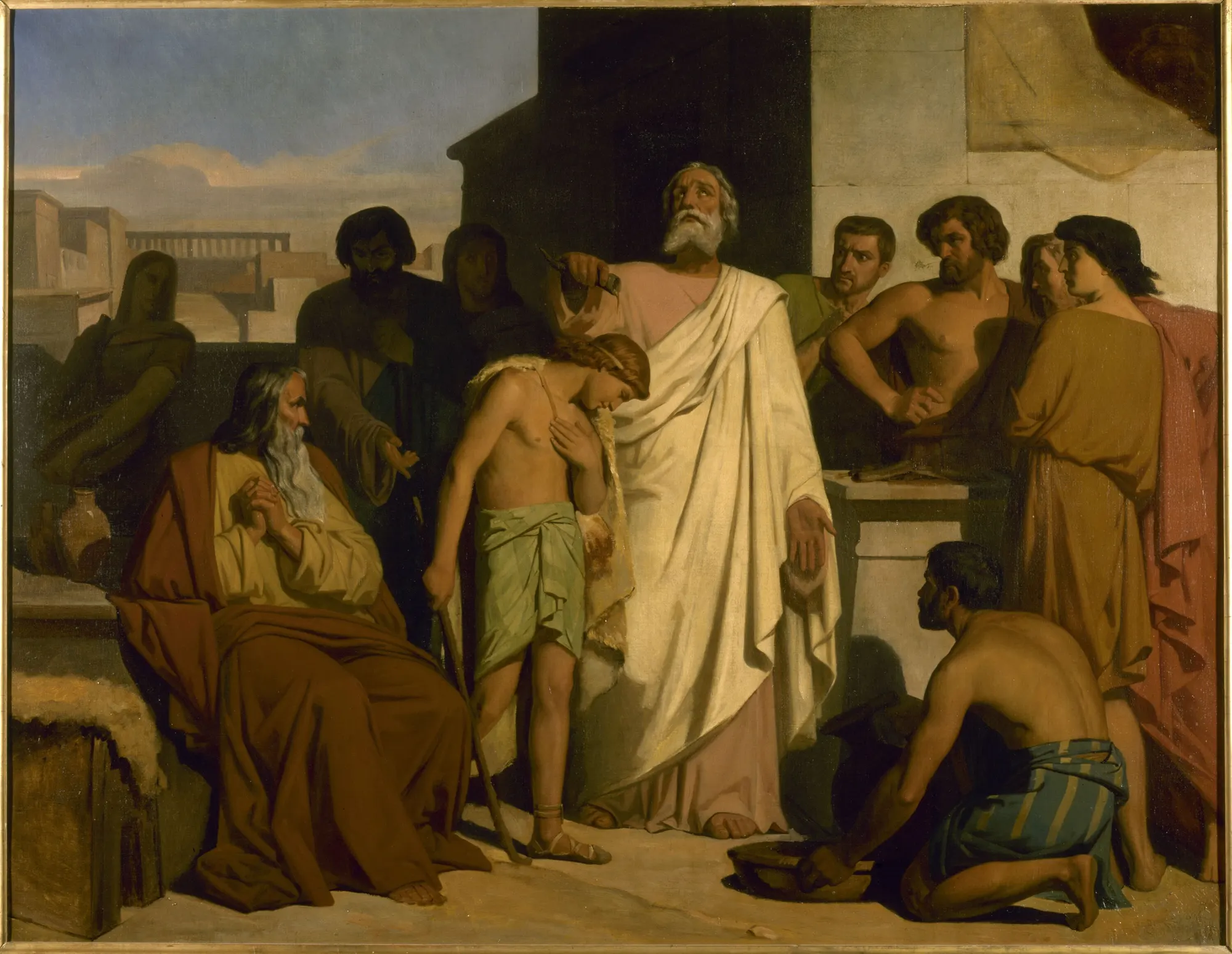
in 1 Samuel 12Here I am. Bear witness against me before the LORD and before His anointed: Whose ox or donkey have I taken? Whom have I cheated or oppressed? From whose hand have I accepted a bribe and closed my eyes? Tell me, and I will restore it to you.”
BSB
The same verse in ASV and KJV ▾
ASV
Here I am: witness against me before Jehovah, and before his anointed: whose ox have I taken? or whose ass have I taken? or whom have I defrauded? whom have I oppressed? or of whose hand have I taken a ransom to blind mine eyes therewith? and I will restore it you.
KJV
Behold, here I am: witness against me before the Lord, and before his anointed: whose ox have I taken? or whose ass have I taken? or whom have I defrauded? whom have I oppressed? or of whose hand have I received any bribe to blind mine eyes therewith? and I will restore it you.
⋯
This verse in 1 Samuel 12
Commentary
10 notes on this verseIn this way, too, Samuel, who judged the people so many years, and bore rule over Israel without any pride, in the end cleared himself, saying, "I have walked before you from my childhood even unto this day: answer me in the sight of God, and before His anointed; whose ox or whose ass of yours have I taken, or over whom have I tyrannized, or whom have I oppressed? or if I have received from the hand of any a bribe or [so much as] a shoe, speak out against me, and I will restore it to you."
This site's exposition
Bear witness against me before the LORD and before His anointed
Samuel puts his own conduct on trial before the LORD and His anointed. His list runs opposite to the list he gave at 8:11 to 18 of what a king takes. The judge took nothing, while the king they asked for will take what Deuteronomy 17 forbade him to multiply.
The record, by era
The Church Fathers2 voices
That a priest must avoid covetousness even Samuel teaches when he proves before all the people that he has taken nothing from any one.
For Samuel also put together a high panegyric upon himself, when he anointed Saul, saying, "Whose ass have I taken, or calf, or shoes? or have I oppressed any of you?" And yet no one finds fault with him. And the reason is because he did not say it by way of setting off himself; but because he was going to appoint a king, he wishes under the form of a defence [of himself] to instruct him to be meek and gentle. And observe the wisdom of the prophet, or rather the loving kindness of God. For because he wished to turn them from [their design,] bringing together a number of grievous things he asserted them of their future king, as, for instance, that he would make their wives grind at the mill, the men shepherds and muleteers; for he went through all the service appertaining to the kingdom with minuteness. But when he saw that they would not be hindered by any of these things, but were incurably distempered; he thus both spareth them and composeth their king to gentleness. Therefore he also takes him to witness. For indeed no one was then bringing suit or charge against him that he needed to defend himself, but he said those things in order to make him better. And therefore also he added, to take down his pride, "If ye will hearken, ye and your king," such and such good things shall be yours; "but if ye will not hearken, then the reverse of all."
The Medieval Church1 voice
A commentator
Gregory the DialogistCommentary on 1 Kings, Book 5, Chapter 2 · Written before 604.
proposed
When wicked pastors are in charge, their principal aim is the plundering of their subjects. For because they know not how to look upon the abundance of eternal goods, the more ardently they desire present things, the more greedily they receive what is offered, and what is not offered they seize by violence. They lay snares for the innocent, oppress the weak, accept bribes, and pervert justice. Concerning these pastors, the Lord reproaches Judea through the prophet, saying: "Your pastors are evening wolves, leaving nothing for the morning" (Zeph. 3:3). He likewise strikes the slanderers of the innocent and the oppressors of the weak, saying: "If anyone does not put something into their mouths, they declare holy war against him. Therefore night shall be to them instead of vision, and darkness instead of divination" (Mic. 3:5–6). For while they recognize the iniquity they commit, through the audacity of their most wicked work they fall into blindness of heart, so that through love of present things they no longer see the light of truth, by which they might recover from their wickedness. Likewise Isaiah rebukes the acceptance of bribes, saying: "They all love bribes, they pursue rewards" (Isa. 1:23). The holy man therefore, while he shows the simplicity of his innocence, appeared exalted by the height of his merits. This commendation of virtue is indeed shown in him alone, so that the same conformity of goodness may be shown to all chosen teachers. But he who so peacefully leaves the summit of office shows what kind of man he was while he remained at that same height. […]
The Puritans and the Awakening2 voices
Behold, here I am,....
There is a just debt which every man owes to his own good name, especially men in public stations, which is to guard it against unjust aspersions and suspicions, that we may finish our course with honour as well as joy.
3 more voices on this verse
The Nineteenth Century3 voices
A commentator
Albert Barnes1798–1870
Notes, Explanatory and Practical, on the Old and New Testaments (1832-1869)
His anointed - i. e., king Saul. The title Messiah, Χριστὸς Christos, unctus, or anointed, had been given to the High Priests (Lev 4:3: compare also 1Sa 2:10, 1Sa 2:35); but this is the earliest instance of an actual king of Israel bearing the title of God’s Christ, and thus typifying the true Messiah or Christ of God. Any bribe - literally, a “ransom,” the fine paid by a criminal in lieu of bonds or death Exo 21:30, applied to the bribe paid to an unjust judge to induce him to acquit the guilty. (Compare Amo 5:12.)
A commentator
Jamieson, Fausset & Brown1802–1910
Commentary Critical and Explanatory on the Whole Bible (1871)
Samuel said unto all Israel--This public address was made after the solemn re-instalment of Saul, and before the convention at Gilgal separated. Samuel, having challenged a review of his public life, received a unanimous testimony to the unsullied honor of his personal character, as well as the justice and integrity of his public administration.
Witness against me - Did ever a minister of state, in any part of the world, resign his office with so much self-consciousness of integrity, backed with the universal approbation of the public? No man was oppressed under his government, no man defrauded! He had accumulated no riches for himself; he had procured none for his friends; nor had one needy dependant been provided for out of the public purse. He might have pardoned his own sons, who had acted improperly, before he quitted the government; but though he was the most tender of parents, he would not, but abandoned them to national justice, with only a tacit solicitation of mercy: Behold, my sons are with you! They have acted improperly; I deprived them of their authority; they are amenable to you for their past conduct; I have walked uprightly and disinterestedly among you; they have not followed my steps: but can you forgive them for their father’s sake? As a minister of justice, he abandons them to their fate; as a tender father, he indirectly and modestly pleads for them on the ground of his own services. Had he not acted thus in both these relations, he would have been unworthy of that character which he so deservedly bears.
The words behind it
29 Hebrew wordsEvery Hebrew word of this verse in the order it stands, with what it means and the door to its own study. The last column counts the times a word stands in the whole Bible: the rarer the word, the more the places it appears belong together.
| Hebrew | Sound | Meaning | Word study | In the Bible |
|---|---|---|---|---|
| הִנְנִ֣י | hini | here [am] I | H2005 → | 316 times |
| עֲנ֣וּ | ʾanu | testify | H6030 → | 331 times |
| בִי֩ | vi | against <the> me | ||
| נֶ֨גֶד | neged | before | H5048 → | 151 times |
| יְהוָ֜ה | yahweh | Yahweh | H3068 → | 6520 times |
| וְנֶ֣גֶד | veneged | and before | H5048 → | 151 times |
| מְשִׁיח֗וֹ | meshicho | anointed his | H4899 → | 39 times |
| אֶת־ | ʾet- | <obj.> | H853 → | 10935 times |
| שׁוֹר֩׀ | shor | [the] ox of | H7794 → | 79 times |
| מִ֨י | mi | whom? | H4310 → | 423 times |
| לָקַ֜חְתִּי | lakachti | have I taken | H3947 → | 966 times |
| וַחֲמ֧וֹר | vachamor | and [the] donkey of | H2543 → | 96 times |
| מִ֣י | mi | whom? | H4310 → | 423 times |
| לָקַ֗חְתִּי | lakachti | have I taken | H3947 → | 966 times |
| וְאֶת־ | veet | and <obj.> | H853 → | 10935 times |
| מִ֤י | mi | whom? | H4310 → | 423 times |
| עָשַׁ֙קְתִּי֙ | ʾashakti | have I oppressed | H6231 → | |
| אֶת־ | ʾet- | <obj.> | H853 → | 10935 times |
| מִ֣י | mi | whom? | H4310 → | 423 times |
| רַצּ֔וֹתִי | ratzoti | have I crushed | H7533 → | |
| וּמִיַּד־ | umiyad- | and from [the] hand of | H3027 → | 1618 times |
| מִי֙ | mi | whom? | H4310 → | 423 times |
| לָקַ֣חְתִּי | lakachti | have I taken | H3947 → | 966 times |
| כֹ֔פֶר | khofer | a ransom | H3724 → | |
| וְאַעְלִ֥ים | vea'lim | so I may hide | H5956 → | |
| עֵינַ֖י | ʾeinai | eyes my | H5869 → | 887 times |
| בּ֑וֹ | bo | by <the> it | ||
| וְאָשִׁ֖יב | veashiv | so I may restore [it] | H7725 → | 1056 times |
| לָכֶֽם׃ | lakhem | to <the> you |
הִנְנִ֣יhere [am] I
hiniH2005 →316 times
עֲנ֣וּtestify
ʾanuH6030 →331 times
בִי֩against <the> me
vi
נֶ֨גֶדbefore
negedH5048 →151 times
יְהוָ֜הYahweh
yahwehH3068 →6520 times
וְנֶ֣גֶדand before
venegedH5048 →151 times
מְשִׁיח֗וֹanointed his
meshichoH4899 →39 times
אֶת־<obj.>
ʾet-H853 →10935 times
שׁוֹר֩׀[the] ox of
shorH7794 →79 times
מִ֨יwhom?
miH4310 →423 times
לָקַ֜חְתִּיhave I taken
lakachtiH3947 →966 times
וַחֲמ֧וֹרand [the] donkey of
vachamorH2543 →96 times
מִ֣יwhom?
miH4310 →423 times
לָקַ֗חְתִּיhave I taken
lakachtiH3947 →966 times
וְאֶת־and <obj.>
veetH853 →10935 times
מִ֤יwhom?
miH4310 →423 times
עָשַׁ֙קְתִּי֙have I oppressed
ʾashaktiH6231 →
אֶת־<obj.>
ʾet-H853 →10935 times
מִ֣יwhom?
miH4310 →423 times
רַצּ֔וֹתִיhave I crushed
ratzotiH7533 →
וּמִיַּד־and from [the] hand of
umiyad-H3027 →1618 times
מִי֙whom?
miH4310 →423 times
לָקַ֣חְתִּיhave I taken
lakachtiH3947 →966 times
כֹ֔פֶרa ransom
khoferH3724 →
וְאַעְלִ֥יםso I may hide
vea'limH5956 →
עֵינַ֖יeyes my
ʾeinaiH5869 →887 times
בּ֑וֹby <the> it
bo
וְאָשִׁ֖יבso I may restore [it]
veashivH7725 →1056 times
לָכֶֽם׃to <the> you
lakhem
A shaded row is a word that stands 400 times or fewer in the Bible.
The walk
8 stopsEach card is a verse this one points to, and under it the verses that one points to in turn. Where several paths arrive at the same place, that place is listed first: the text keeps returning to it.
Through
1 Peter 5:2Be shepherds of God’s flock that is among you, watching over them not out of compulsion, but because it is God’s will; not out of greed, but out of eagerness;
it leads to
- Titus 1:7
As God’s steward, an overseer must be above reproach—not self-absorbed, not quick-tempered, not given to drunkenness, not violent, not greedy for money.
- 1 Timothy 3:8
Deacons likewise must be dignified, not double-tongued or given to much wine or greedy for money.
- Titus 3:1
Remind the believers to submit to rulers and authorities, to be obedient and ready for every good work,
- Acts 20:26–28
Therefore I testify to you this day that I am innocent of the blood of all men.
- Titus 1:7
Through
Deuteronomy 16:19Do not deny justice or show partiality. Do not accept a bribe, for a bribe blinds the eyes of the wise and twists the words of the righteous.
it leads to
- Leviticus 19:15
You must not pervert justice; you must not show partiality to the poor or favoritism to the rich; you are to judge your neighbor fairly.
- Exodus 23:2
You shall not follow the crowd in wrongdoing. When you testify in a lawsuit, do not pervert justice by siding with the crowd.
- Proverbs 17:23
A wicked man takes a covert bribe to subvert the course of justice.
- Leviticus 19:15
Through
Acts 20:33I have not coveted anyone’s silver or gold or clothing.
it leads to
- 2 Corinthians 11:9
And when I was with you and in need, I was not a burden to anyone; for the brothers who came from Macedonia supplied my needs. I have refrained from being a burden to…
- 2 Corinthians 11:9
Where this verse is studied
On this page
About 1 Samuel
This page draws on 10 works. Open the list of works
This page draws on Adam Clarke, Commentary on the Bible; Albert Barnes, Notes, Explanatory and Practical, on the Old and New Testaments (1832-1869); Gregory the Dialogist, Commentary on 1 Kings, Book 5, Chapter 2; Irenaeus, AGAINST HERESIES 4.26.4; Jamieson, Fausset & Brown, Commentary Critical and Explanatory on the Whole Bible; Jerome, LETTER 69.9; John Chrysostom, HOMILIES ON 2 CORINTHIANS 24.3; John Gill, Exposition of the Old Testament (1748-1763); Keil and Delitzsch, Biblical Commentary on the Books of Samuel and Matthew Henry, Commentary on the Whole Bible.