
Matthew 3:7
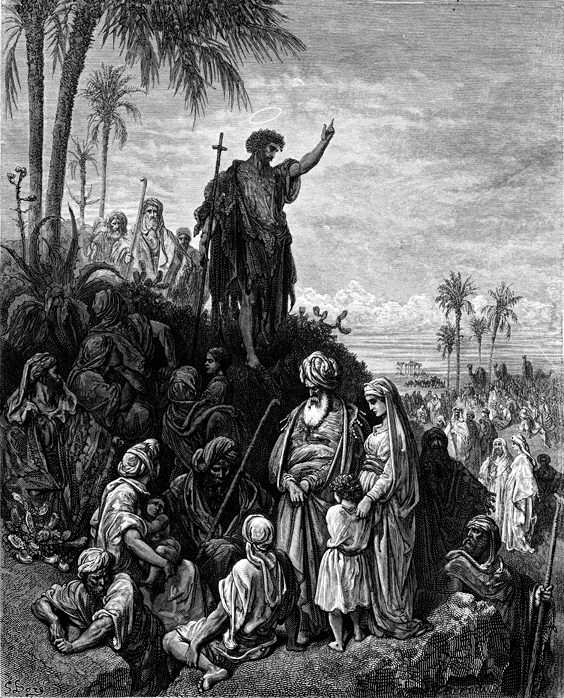
in Matthew 3But when John saw many of the Pharisees and Sadducees coming to his place of baptism, he said to them, “You brood of vipers, who warned you to flee from the coming wrath?
BSB
The same verse in ASV and KJV ▾
ASV
But when he saw many of the Pharisees and Sadducees coming to his baptism, he said unto them, Ye offspring of vipers, who warned you to flee from the wrath to come?
KJV
But when he saw many of the Pharisees and Sadducees come to his baptism, he said unto them, O generation of vipers, who hath warned you to flee from the wrath to come?
⋯
This verse in Matthew 3
Commentary
28 notes on this verseA commentator
Albert Barnes1798–1870
Notes, Explanatory and Practical, on the Old and New Testaments (1832-1869)
Pharisees and Sadducees - The Jews were divided into three great sects - the Pharisees, the Sadducees, and the Essenes. In addition to these, some smaller sects are mentioned in the New Testament and by Josephus: the Herodians, probably political friends of Herod; the Galileans, a branch of the Pharisees; and the Therapeutae, a branch of the Essenes, but converts from the Greeks. The three principal sects are supposed to have originated about 150 years before Christ, as they are mentioned by Josephus at that time in his history.
This site's exposition
O generation of vipers
on Matthew 3:7-10
Generation of vipers is John's own name for two parties usually opposed to each other, Pharisees and Sadducees, united here only by a common presumption on descent, we have Abraham to our father. John answers that God is able of these stones to raise up children unto Abraham, a claim the bench reads as already opening the door Jesus will walk through with Gentile faith later in the book, since sonship runs on fruit rather than blood. The axe already laid unto the root and the fire already ready name a judgment poised rather than merely threatened, and bring forth fruits meet for repentance demands a changed life, not water alone.
The record, by era
The Church Fathers5 voices
(De Civ. Dei, ix. 5.) God is described in Scripture, from some likeness of effects, not from being subject to such weakness, as being angry, and yet is He never moved by any passion. The word 'wrath' is applied to the effects of his vengeance, not that God suffers any disturbing affection.
John put it clearly to the Pharisees and Sadducees who had come to him for baptism when he said, "Brood of vipers! Who has shown you how to flee from the wrath to come? Therefore, produce fruit that matches genuine repentance." Those who for a …
The manner of Scripture is to give names from the imitation of deeds, according to that of Ezekiel, Thy father was an Amorite; (Ezek. 16:3.) so these from following vipers are called generation of vipers. When then he asks, who will show you to flee from the wrath to come,—'except God' must be understood. But if we read, shall show, in the future, this is the meaning, 'What teacher, what preacher, shall be able to give you such counsel, as that ye may escape the wrath of everlasting damnation?'
In fact, the doctors of the law and the Pharisees, who were unwilling to "believe," did not "repent" either. But if repentance is a thing human, its baptism must necessarily be of the same nature: else, if it had been celestial, it would have given both the Holy Spirit and remission of sins.
As a skilful physician from the colour of the skin infers the sick man's disease, so John understood the evil thoughts of the Pharisees who came to him. They thought perhaps, We go, and confess our sins; he imposes no burden on us, we will be baptized, and get indulgence for sin. Fools! if ye have eaten of impurity, must ye not needs take physic? So after confession and baptism, a man needs much diligence to heal the wound of sin; therefore he says, Generation of vipers. It is the nature of the viper as soon as it has bit a man to fly to the water, which, if it cannot find, it straightway dies; so this progeny of vipers, after having committed deadly sin, ran to baptism, that, like vipers, they might escape death by means of water. Moreover it is the nature of vipers to burst the insides of their mothers, and so to be born. The Jews then are therefore called progeny of vipers, because by continual persecution of the prophets they had corrupted their mother the Synagogue. Also vipers have a beautiful and speckled outside, but are filled with poison within. So these men's countenances wore a holy appearance. Or who hath showed you? Was it Esaias? Surely no; had he taught you, you would not put your trust in water only, but also in good works; he thus speaks, Wash you, and be clean; put your wickedness away from your souls, learn to do well. (Is. 1:16.) Was it then David? who says, Thou shall wash me, and I shall he whiter than snow; (Ps. 51:7.) surely not, for he adds immediately, The sacrifice of God is a broken spirit. If then ye had been the disciples of David, ye would have come to baptism with mournings.
21 more voices on this verse
The Church Fathers5 voices
A commentator
John ChrysostomHomily on the Gospel of Matthew 11 · Written in the 5th century.
proposed
How then doth Christ say, that they did not believe John? Because this was not believing, to decline receiving Him whom he preached. For so they thought they regarded their prophets and their lawgiver, nevertheless He said they had not regarded them, forasmuch as they received not Him, that was foretold by them. "For if ye had believed Moses," saith He, "ye would have believed Me." And after this again, being asked by Christ, "The baptism of John, whence is it?" they said, "If we shall say, Of earth, we fear the people; if we shall say, From heaven, He will say unto us, How then did ye not believe him?" So that from all these things it is manifest that they came indeed and were baptized, yet they did not abide in the belief of that which was preached. For John also points out their wickedness, by their sending unto the Baptist, and saying, "Art thou Elias? Art thou Christ?" wherefore he also added, "they which were sent were of the Pharisees."
A commentator
John ChrysostomHomily on the Gospel of Matthew 11 · Written in the 5th century.
proposed
And to convince thee that the Pharisees came with one mind, and the people with another, hear how the evangelist hath declared this too; saying of the people, "that they came and were baptized of him, confessing their sins;" but concerning the Pharisees, no longer like that, but that "when he saw many of the Pharisees and Sadducees coming, he said, O generation of vipers, who hath warned you to flee from the wrath to come?" O greatness of mind! How doth he discourse unto men ever thirsting after the blood of the prophets, and in disposition no better than serpents! how doth he disparage both themselves and their progenitors with all plainness! "Yea," saith one; "he speaks plainly enough, but the question is if there be any reason in this plainness. For he did not see them sinning, but in the act of change; wherefore they did not deserve blame, but rather praise and approbation, for having left city and houses, and making haste to hear his preaching." What then shall we say? That he had not things present, and even now doing, in his view, but he knew the secrets of their mind, God having revealed this. Since then they were priding themselves on their forefathers, and this was like to prove the cause of their destruction, and was casting them into a state of carelessness, he cuts away the roots of their pride. For this cause Isaiah also calls them, "rulers of Sodom," and "people of Gomorrah;" and another prophet saith, "Are ye not as children of the Ethiopians;" and all withdraw them from this way of thinking, bringing down their pride, which had caused them unnumbered evils.
A commentator
John ChrysostomHomily on the Gospel of Matthew 11 · Written in the 5th century.
proposed
But if one accurately mark his words, he hath also tempered his rebuke with commendation. For he spake these things, as marveling at them, that they were become able, however late, to do what seemed almost an impossibility for them. His rebuke, you see, is rather that of one bringing them over, and working upon them to arouse themselves. For in that he appears amazed, he implies both their former wickedness to be great, and their conversion marvellous and beyond expectation. Thus, "what hath come to pass," saith he, "that being children of those men, and brought up so badly, they have repented? Whence hath come so great a change? Who hath softened down the harshness of their spirit? Who corrected that which was incurable?" And see how straightway from the beginning he alarmed them, by laying first, for a foundation, his words concerning hell. For he spake not of the usual topics: "Who hath warned you to flee from wars, from the inroads of the barbarians, from captivities, from famines, from pestilences?" but concerning another sort of punishment, never before made manifest to them, he was striking the first preparatory note, saying thus, "Who hath warned you to flee from the wrath to come?"
A commentator
John ChrysostomHomily on the Gospel of Matthew 11 · Written in the 5th century.
proposed
And full well did he likewise call them, "generation of vipers." For that animal too is said to destroy the mother that is in travail with her, and eating through her belly, thus to come forth unto light; which kind of thing these men also did being "murderers of fathers, and murderers of mothers," and destroying their instructors with their own hands.
If so, then "God will not be able any longer to raise up from the stones children unto Abraham; nor to make a generation of vipers bring forth fruits of repentance." And if so, the apostle too was in error when he said in his epistle, "Ye were at one time darkness, (but now are ye light in the Lord: )" and, "We also were by nature children of wrath; " and, "Such were some of you, but ye are washed.
The Medieval Church7 voices
But when he saw many of the Pharisees. "Pharisee" means "one who is set apart," for they appeared to be set apart by their life and knowledge, and to be superior to others. And Sadducees. These believed neither in the resurrection, nor in angels, nor …
For because this statement aims at this—that He will be seen by all flesh at the final examination—it is rightly added: "He said therefore to the crowds that went out to be baptized by him: You offspring of vipers, who has shown you to flee from the wrath to come?" For the wrath to come is the punishment of final vengeance, which the sinner cannot then escape who does not now have recourse to the laments of penance. And it should be noted that evil offspring, imitating the actions of evil parents, are called offspring of vipers, because by envying the good and persecuting them, by returning evil to some, by seeking injuries against their neighbors—since in all these things they follow the ways of their carnal forebears—they are as if venomous children born from venomous parents.
(De Cur. Past. iii. in prol.) The words of the teachers should be fitted to the quality of the hearers, that in each particular it should agree with itself and yet never depart from the fortress of general edification.
(Orig. viii. 4.) The Pharisees and Sadducees opposed to one another; Pharisee in the Hebrew signifies 'divided;' because choosing the justification of traditions and observances they were 'divided' or 'separated' from the people by this righteousness. Sadducee in the Hebrew means 'just;' for these laid claim to be what they were not, denied the resurrection of the body, and taught that the soul perished with the body; they only received the Pentateuch, and rejected the Prophets.
Rightly are they who are to be baptized said to go out to the Prophet; for unless one depart from sin, and renounce the pomp of the Devil, and the temptations of the world, he cannot receive a healing baptism. Rightly also in Jordan, which means their descent, because they descended from the pride of life to the humility of an honest confession. Thus early was an example given to them that are to be baptized of confessing their sins and professing amendment.
(non occ.) It was necessary that after the teaching which he used to the common people, the Evangelist should give an example of the doctrine he delivered to the more advanced; therefore he says, Seeing many of the Pharisees, &c. (non occ.) When John saw those who seemed to be of great consideration among the Jews come to his baptism, he said to them, O generation of vipers, &c.
"But when he saw many..." Having showed that many were baptized by John, he now deals with their instruction. In regard to this he does two things: first, he mentions the ones instructed; secondly, their instruction. He says, therefore: "But when he saw many of …
The Puritans and the Awakening3 voices
The Pharisees were a very ancient sect among the Jews. They took their name from a Hebrew word, which signifies to separate, because they separated themselves from all other men. They were outwardly strict observers of the law, fasted often, made long prayers, rigorously kept the Sabbath, and paid all tithe, even of mint, anise, and cummin.
They were a viperous gang, they were all alike; though enemies to one another, yet confederate in mischief. Note, A wicked generation is a generation of vipers, and they ought to be told so; it becomes the ministers of Christ to be bold in showing sinners their true character. The alarm he gives them is, Who has warned you to flee from the wrath to come?
But when he saw many of the Pharisees,.... This being the first place in which mention is made of the Pharisees and Sadducees, it may not be amiss to give some account of them once for all, and to begin with the Pharisees, and first with their name.
The Nineteenth Century6 voices
These verses describe the ministry of John the Baptist, the forerunner of our Lord Jesus Christ: it is a ministry that deserves close attention. Few preachers ever produced such effects as John the Baptist: “There went out to him Jerusalem and all Judea and all the region round about Jordan.”None ever received such praise from the great head of the church: Jesus called him “a burning and a shining light” ( John 5:35 ); the great Bishop of souls Himself declared, that “among them that are born of women there hath not risen a greater than John the Baptist.”
A commentator
Jamieson, Fausset & Brown1802–1910
Commentary Critical and Explanatory on the Whole Bible (1871)
What an expression is this, "The wrath to come!" God's "wrath," in Scripture, is His righteous displeasure against sin, and consequently against all in whose skirts sin is found, arising out of the essential and eternal opposition of His nature to all moral evil.
A commentator
Charles Spurgeon1834–1892
The Metropolitan Tabernacle Pulpit, Sermon No. 2704: “'Flee From the Wrath to Come'” (lightly modernized text, CCEL edition) · Written before 1892.
proposed
WE will first consider the question of John the Baptist. "When he saw many of the Pharisees and Sadducees come to his baptism, he said unto them, O generation of vipers, who has warned you to flee from the wrath to come?" I have no doubt that the Pharisees and Sadducees were very much surprised to hear John addressing them in that way, for men who wish to win disciples ordinarily adopt milder language than that—and choose more attractive themes—for they fear that they will drive their hearers from them if they are too personal and speak too sharply.
These verses describe the ministry of John the Baptist, the forerunner of our Lord Jesus Christ: it is a ministry that deserves close attention. Few preachers ever produced such effects as John the Baptist: “There went out to him Jerusalem and all Judea and all the region round about Jordan.”None ever received such praise from the great head of the church: Jesus called him “a burning and a shining light” ( John 5:35 ); the great Bishop of souls Himself declared, that “among them that are born of women there hath not risen a greater than John the Baptist.” Let us then study the leading features of his ministry. John the Baptist spoke plainly about sin . He taught the absolute necessity of repentance before anyone can be saved; he preached that repentance must be proved by its “fruits”he warned men not to rest on outward privileges, or outward union with the church. This is just the teaching that we all need. We are naturally dead, and blind, and asleep in spiritual things; we are ready to content ourselves with a mere formal religion and to flatter ourselves that if we go to church we shall be saved: we need to be told that, except we “repent and are converted” we shall all perish. John the Baptist spoke plainly about our Lord Jesus Christ . He taught people that one “mightier than himself” was coming among them. He was nothing more than a servant: the coming one was the King. He himself could only baptize with water: the coming one could “baptize with the Holy Ghost,” take away sins, and would one day judge the world. This again is the very teaching that human nature requires. We need to be sent direct to Christ: we are all ready to stop short of this; we want to rest in our union with the church, our regular use of the sacraments, and our diligent attendance on an established ministry. We need to be told the absolute necessity of union with Christ himself by faith.
A commentator
Charles Spurgeon1834–1892
The Metropolitan Tabernacle Pulpit, Sermon No. 2704: “'Flee From the Wrath to Come'” (lightly modernized text, CCEL edition) · Written before 1892.
proposed
WE will first consider the question of John the Baptist. "When he saw many of the Pharisees and Sadducees come to his baptism, he said unto them, O generation of vipers, who has warned you to flee from the wrath to come?" I have no doubt that the Pharisees and Sadducees were very much surprised to hear John addressing them in that way, for men who wish to win disciples ordinarily adopt milder language than that—and choose more attractive themes—for they fear that they will drive their hearers from them if they are too personal and speak too sharply. There is not much danger of that, nowadays, for the current notion now abroad is that Gospel ministers can sew with silk without using a sharp needle and that, instead of piercing men with the sword of the Spirit, they should show them only the hilt of it—let them see the bright diamonds on the scabbard, but never let them feel the sharpness of the two-edged blade! They should always comfort, console and cheer, but never allude to the terror of the Lord. That appears to be the common interpretation of our commission. But John the Baptist was of quite another mind. There came to a him a Pharisee, a very religious man, one who observed all the details of external worship and was very careful even about trifles. He was a firm Believer in the resurrection, and in angels and spirits, and in all that was written in the Book of the Law, and also in all the traditions of his fathers.
Pharisees - A very numerous sect among the Jews, who, in their origin, were, very probably, a pure and holy people. It is likely that they got the name of Pharisees, i.e. Separatists, (from פרש pharash, to separate), from their separating themselves from the pollution of the Jewish national worship; and hence, the word in the Anglo-saxon version is, holy persons who stand apart, or by themselves: but, in process of time, like all religious sects and parties, they degenerated: they lost the spirit of their institution, they ceased to recur to first principles, and had only the form of godliness, when Jesus Christ preached in Judea; for he bore witness, that they did make the outside of the cup and platter clean - they observed the rules of their institution, but the spirit was gone. Sadducees - A sect who denied the existence of angels and spirits, consequently all Divine influence and inspiration, and also the resurrection of the dead. The Sadducees of that time were the Materialists and Deists of the Jewish nation. When the sect of the Pharisees arose cannot be distinctly ascertained; but it is supposed to have been some time after the Babylonish captivity. The sect of the Sadducees were the followers of one Sadok, a disciple of Antigonus Sochaeus, who flourished about three centuries before Christ. There was a third sect among the Jews, called the Essenes or Essenians, of whom I shall have occasion to speak on Mat 19:12. Come to his baptism - The Ethiopic version adds the word privately here, the translator probably having read λαθρα in his copy, which gives a very remarkable turn to the passage. The multitudes, who had no worldly interest to support, no character to maintain by living in their usual way, came publicly, and openly acknowledged that they were Sinners; and stood in need of mercy. […]
How the passage was read
On Matthew 3:7-10On Matthew 3:7-10
Who the Pharisees and Sadducees were
Their first appearance in the New Testament is the place to say plainly who they were. The Pharisees were a lay renewal movement, about six thousand strong in the historian Josephus's count (Antiquities of the Jews, book 17, written about AD 93), whose program was to extend the Temple's holiness into ordinary life: the ordinary table kept as carefully as a priest's, the whole Torah kept in detail by the whole people. They held that alongside the written Torah an oral Torah had come down from Sinai teacher to teacher; the Mishnah's ethics tractate opens with that chain: “Moses received the Torah at Sinai and transmitted it to Joshua, Joshua to the elders...” (Pirkei Avot 1:1). The Sadducees were the priestly aristocracy centered on the Temple: they accepted the written Torah but rejected the oral tradition and denied the resurrection of the dead (Acts 23:8 says so directly). After the Temple fell in AD 70 the Sadducees vanished; the rabbinic Judaism that survives to this day descends from the Pharisaic side.
Two cautions keep the reader honest for every scene that follows. “Pharisee” is not a synonym for hypocrite: the movement's aim was devotion, its ranks included honest seekers (Nicodemus, Gamaliel, and Paul, who says “I am a Pharisee” in the present tense, Acts 23:6), and on the resurrection its doctrine stands with Christian confession against the Sadducees. And the Gospel collisions are arguments WITHIN first-century Judaism about how the Torah is rightly kept, not a contest between Jesus and Judaism.
This section is reception history: how the passage was read and kept in the Jewish tradition. Where a reading parts from an essential of the Christian faith, the section says so at that point.
Sources: Pirkei Avot 1:1 (the chain of tradition) · Mishnah Sanhedrin 10:1 (the resurrection affirmed as core doctrine)
The words behind it
24 Greek wordsEvery Greek word of this verse in the order it stands, with what it means and the door to its own study. The last column counts the times a word stands in the whole Bible: the rarer the word, the more the places it appears belong together.
| Greek | Sound | Meaning | Word study | In the Bible |
|---|---|---|---|---|
| Ἰδὼν | idon | Having seen | G1492 → | 374 times |
| δὲ | de | now | G1161 → | 2765 times |
| πολλοὺς | pollous | many | G4183 → | 367 times |
| τῶν | ton | of the | G3588 → | 19766 times |
| Φαρισαίων | pharisaion | Pharisees | G5330 → | 97 times |
| καὶ | kai | and | G2532 → | 9120 times |
| Σαδδουκαίων | saddoukaion | Sadducees | G4523 → | 14 times |
| ἐρχομένους | erchomenous | coming | G2064 → | 628 times |
| ἐπὶ | epi | to | G1909 → | 883 times |
| τὸ | to | the | G3588 → | 19766 times |
| βάπτισμα | baptisma | baptism | G908 → | |
| αὐτοῦ | autou | of him | G846 → | 5565 times |
| εἶπεν | eipen | he said | G2036 → | 925 times |
| αὐτοῖς· | autois | to them; | G846 → | 5565 times |
| γεννήματα | gennemata | Brood | G1081 → | 4 times |
| ἐχιδνῶν, | echidnon | of vipers, | G2191 → | 5 times |
| τίς | tis | who | G5101 → | 563 times |
| ὑπέδειξεν | hupedeixen | forewarned | G5263 → | |
| ὑμῖν | humin | you | G4771 → | 2973 times |
| φυγεῖν | phugein | to flee | G5343 → | 29 times |
| ἀπὸ | apo | from | G575 → | 640 times |
| τῆς | tes | the | G3588 → | 19766 times |
| μελλούσης | mellouses | coming | G3195 → | 109 times |
| ὀργῆς; | orges | wrath? | G3709 → |
ἸδὼνHaving seen
idonG1492 →374 times
δὲnow
deG1161 →2765 times
πολλοὺςmany
pollousG4183 →367 times
τῶνof the
tonG3588 →19766 times
ΦαρισαίωνPharisees
pharisaionG5330 →97 times
καὶand
kaiG2532 →9120 times
ΣαδδουκαίωνSadducees
saddoukaionG4523 →14 times
ἐρχομένουςcoming
erchomenousG2064 →628 times
ἐπὶto
epiG1909 →883 times
τὸthe
toG3588 →19766 times
βάπτισμαbaptism
baptismaG908 →
αὐτοῦof him
autouG846 →5565 times
εἶπενhe said
eipenG2036 →925 times
αὐτοῖς·to them;
autoisG846 →5565 times
γεννήματαBrood
gennemataG1081 →4 times
ἐχιδνῶν,of vipers,
echidnonG2191 →5 times
τίςwho
tisG5101 →563 times
ὑπέδειξενforewarned
hupedeixenG5263 →
ὑμῖνyou
huminG4771 →2973 times
φυγεῖνto flee
phugeinG5343 →29 times
ἀπὸfrom
apoG575 →640 times
τῆςthe
tesG3588 →19766 times
μελλούσηςcoming
mellousesG3195 →109 times
ὀργῆς;wrath?
orgesG3709 →
A shaded row is a word that stands 400 times or fewer in the Bible.
The walk
8 stopsEach card is a verse this one points to, and under it the verses that one points to in turn. Where several paths arrive at the same place, that place is listed first: the text keeps returning to it.
Through
Matthew 12:34You brood of vipers, how can you who are evil say anything good? For out of the overflow of the heart, the mouth speaks.
it leads to
- Luke 6:45
The good man brings good things out of the good treasure of his heart, and the evil man brings evil things out of the evil treasure of his heart. For out of the overflow…
- Matthew 15:18
But the things that come out of the mouth come from the heart, and these things defile a man.
- Ephesians 4:29
Let no unwholesome talk come out of your mouths, but only what is helpful for building up the one in need and bringing grace to those who listen.
- Luke 6:45
Through
1 Thessalonians 1:10and to await His Son from heaven, whom He raised from the dead—Jesus our deliverer from the coming wrath.
it leads to
- 1 Thessalonians 5:9
For God has not appointed us to suffer wrath, but to obtain salvation through our Lord Jesus Christ.
- 1 Thessalonians 5:9
Through
Romans 5:9Therefore, since we have now been justified by His blood, how much more shall we be saved from wrath through Him!
it leads to
- 1 Thessalonians 1:10
and to await His Son from heaven, whom He raised from the dead—Jesus our deliverer from the coming wrath.
- Romans 8:1
Therefore, there is now no condemnation for those who are in Christ Jesus.
- Ephesians 2:13
But now in Christ Jesus you who once were far away have been brought near through the blood of Christ.
- Romans 3:24–26
and are justified freely by His grace through the redemption that is in Christ Jesus.
- 1 Thessalonians 1:10
Where this verse is studied
About Matthew
This page draws on 22 works. Open the list of works
This page draws on Adam Clarke, Commentary on the Bible; Albert Barnes, Notes, Explanatory and Practical, on the Old and New Testaments (1832-1869); Augustine of Hippo, Catena Aurea by Aquinas; Charles Spurgeon, The Metropolitan Tabernacle Pulpit, Sermon No. 2704: “'Flee From the Wrath to Come'” (lightly modernized text, CCEL edition); Chromatius of Aquileia, TRACTATE ON MATTHEW 10.2; Glossa Ordinaria, Catena Aurea by Aquinas; Gregory the Dialogist, Forty Gospel Homilies, Homily 20; Gregory the Dialogist, Catena Aurea by Aquinas; Isidore of Seville, Catena Aurea by Aquinas; J.C. Ryle, Expository Thoughts on the Gospels: Matthew; Jamieson, Fausset & Brown, Commentary Critical and Explanatory on the Whole Bible; John Chrysostom, Homily on the Gospel of Matthew 11; John Gill, Exposition of the New Testament (1746-1748); John Wesley, Explanatory Notes upon the New Testament; Matthew Henry, Commentary on the Whole Bible; Pseudo-Chrysostom, Catena Aurea by Aquinas; Rabanus Maurus, Catena Aurea by Aquinas; Remigius of Rheims, Catena Aurea by Aquinas; Tertullian, On Baptism; Tertullian, A Treatise on the Soul; Theophylact of Ohrid, Commentary on Matthew and Thomas Aquinas, Commentary on Matthew.