
Jeremiah 49:24
in Jeremiah 49Damascus has become feeble; she has turned to flee. Panic has gripped her; anguish and pain have seized her like a woman in labor.
BSB
The same verse in ASV and KJV ▾
ASV
Damascus is waxed feeble, she turneth herself to flee, and trembling hath seized on her: anguish and sorrows have taken hold of her, as of a woman in travail.
KJV
Damascus is waxed feeble, and turneth herself to flee, and fear hath seized on her: anguish and sorrows have taken her, as a woman in travail.
⋯
This verse in Jeremiah 49
Commentary
4 notes on this verseA commentator
Albert Barnes1798–1870
Notes, Explanatory and Practical, on the Old and New Testaments (1832-1869)
And turneth - Omit and. The original is a rapid sequence of unconnected sentences. “Damascus is unnerved; she turned to flee, and a trembling seized her; anguish and writhings took hold of her etc.”
This site's exposition
Concerning Damascus. Hamath is confounded, and Arpad
on Jeremiah 49:23-27
Damascus's lament, how is the city of praise not left, the city of my joy, mourns one of the oldest continuously inhabited cities in the region, a capital Assyria had already broken once under Tiglath-pileser (2 Kings 16:9) and now faces Babylon's hand in turn. The city's fear is described in the same terms used elsewhere in these oracles for a woman in travail, panic that cannot be composed or reasoned with. The fire kindled against the palaces of Ben-hadad strikes a dynastic title borne by more than one Syrian king in Scripture (1 Kings 15:18, 2 Kings 13:3), the office rather than a single named ruler.
The record, by era
The Puritans and the Awakening2 voices
), a city that thought she could look the most formidable enemy in the face now turns herself to flee, and owns it is to no more purpose to think of contending with her fate than for a woman in labour to contend with her pains, which she cannot escape, but must yield to. It was a city of praise (
quarantine:debris (2026-07-29) — leading-punctuation
Damascus is waxed feeble,....
The words behind it
10 Hebrew wordsEvery Hebrew word of this verse in the order it stands, with what it means and the door to its own study. The last column counts the times a word stands in the whole Bible: the rarer the word, the more the places it appears belong together.
| Hebrew | Sound | Meaning | Word study | In the Bible |
|---|---|---|---|---|
| רָפְתָ֥ה | rafetah | it will be disheartened | H7503 → | 46 times |
| דַמֶּ֛שֶׂק | damesek | Damascus | H1834 → | 45 times |
| הִפְנְתָ֥ה | hifnetah | it will turn back | H6437 → | 135 times |
| לָנ֖וּס | lanus | to flee | H5127 → | 159 times |
| וְרֶ֣טֶט׀ | veretet | and panic | H7374 → | |
| הֶחֱזִ֑יקָה | hechezikah | it will take hold | H2388 → | 291 times |
| צָרָ֧ה | tzarah | distress | H6869 → | 73 times |
| וַחֲבָלִ֛ים | vachavalim | and pains | H2256 → | 62 times |
| אֲחָזַ֖תָּה | ʾachazatah | it will seize it | H270 → | |
| כַּיּוֹלֵדָֽה׃ | kaiyoledah | like <the> [woman] giving birth | H3205 → | 496 times |
רָפְתָ֥הit will be disheartened
rafetahH7503 →46 times
דַמֶּ֛שֶׂקDamascus
damesekH1834 →45 times
הִפְנְתָ֥הit will turn back
hifnetahH6437 →135 times
לָנ֖וּסto flee
lanusH5127 →159 times
וְרֶ֣טֶט׀and panic
veretetH7374 →
הֶחֱזִ֑יקָהit will take hold
hechezikahH2388 →291 times
צָרָ֧הdistress
tzarahH6869 →73 times
וַחֲבָלִ֛יםand pains
vachavalimH2256 →62 times
אֲחָזַ֖תָּהit will seize it
ʾachazatahH270 →
כַּיּוֹלֵדָֽה׃like <the> [woman] giving birth
kaiyoledahH3205 →496 times
A shaded row is a word that stands 400 times or fewer in the Bible.
About Jeremiah
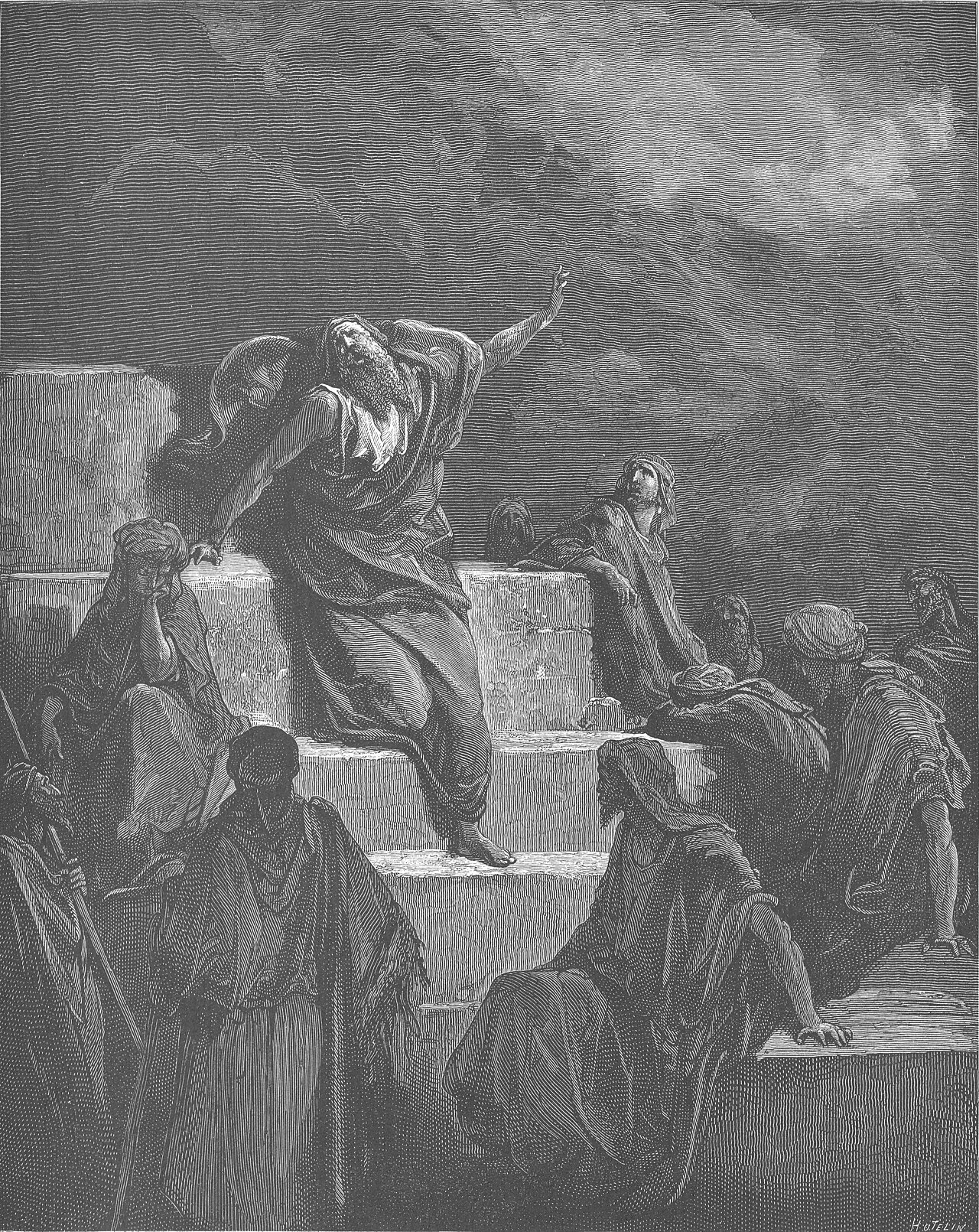
Who and where
1 name in this verse with a page on the site.
This page draws on Albert Barnes, Notes, Explanatory and Practical, on the Old and New Testaments (1832-1869); Albert Barnes, Notes on the Old Testament; Carl Friedrich Keil, The Prophecies of Jeremiah; John Gill, Exposition of the Old Testament (1748-1763) and Matthew Henry, Commentary on the Whole Bible.