
Jeremiah 49:11
in Jeremiah 49Abandon your orphans; I will preserve their lives. Let your widows trust in Me.”
BSB
The same verse in ASV and KJV ▾
ASV
Leave thy fatherless children, I will preserve them alive; and let thy widows trust in me.
KJV
Leave thy fatherless children, I will preserve them alive; and let thy widows trust in me.
⋯
This verse in Jeremiah 49
Commentary
5 notes on this verseA commentator
Jamieson, Fausset & Brown1802–1910
Commentary Critical and Explanatory on the Whole Bible (1871)
Thy fatherless and widows must rest their hope in God alone, as none of the adult males shall be left alive, so desperate will be the affairs of Edom. The verse also, besides this threat, implies a promise of mercy to Esau in God's good time, as there was to Moab and Ammon (Jer 49:6; Jer 48:47); the extinction of the adult males is the prominent idea (compare Jer 49:12).
This site's exposition
Is wisdom no more in Teman?
on Jeremiah 49:7-11
Teman was proverbial for wisdom, the home region of Eliphaz in Job and the same reputation Obadiah 8 names when it asks whether the Lord will destroy the wise men out of Edom, so the taunt strikes at Edom's own claim to fame. The judgment described is total, Esau made bare, his hiding places uncovered, his seed and neighbors gone. Inside that same unrelieved sentence stands verse 11's plain exception, leave thy fatherless children, I will preserve them alive, and let thy widows trust in me, mercy toward the helpless left open even where the nation itself stands condemned.
The record, by era
The Puritans and the Awakening2 voices
), Leave thy fatherless children, I will preserve them alive. When they are flying, or dying, there shall be none left, no relation, no friend, no, not so much as any parish officers to take care of their wives and children that they leave behind. Edom is not, he is cut off and gone; nor is there any to say, Leave me thy orphans.
quarantine:debris (2026-07-29) — leading-punctuation+unbalanced-parens
Leave thy fatherless children, I will preserve them alive,.... Leave them with me; commit them to my care; I will provide for them; they shall have food and raiment, and want nothing to make them comfortable: to have such a friend or friends, promising such things to a man, when he is obliged to flee and leave his family, or is at the point of death, serves to make him easy; but there would be none left of the Edomites to say such kind words, or do such a friendly part.
The Nineteenth Century1 voice
Leave thy fatherless children - The connection of this with the context is not easy to be discerned; but, as a general maxim, it is of great importance. Widows and orphans are the peculiar care of God. He is as the best of fathers to the one, and the most loving of husbands to the other. Even the widows and orphans of Esau, who escape the general destruction, shall be taken care of by the Lord.
How the passage was read
What the Jewish commentators add
On the verses either side of this one
those who do not deserve to drink For they were not brothers to Israel, and if they harmed them, they do not deserve the death sentence like you.
This section is reception history: how the passage was read and kept in the Jewish tradition. Where a reading parts from an essential of the Christian faith, the section says so at that point.
Texts and citation data: Sefaria; each excerpt follows its version’s licence. 5 further sources are cited on this chapter that carry no English text this site may quote or only restate the verse.
The words behind it
7 Hebrew wordsEvery Hebrew word of this verse in the order it stands, with what it means and the door to its own study. The last column counts the times a word stands in the whole Bible: the rarer the word, the more the places it appears belong together.
| Hebrew | Sound | Meaning | Word study | In the Bible |
|---|---|---|---|---|
| עָזְבָ֥ה | ʾazevah | leave ! | H5800 → | 215 times |
| יְתֹמֶ֖יךָ | yetomeikha | fatherless your | H3490 → | 42 times |
| אֲנִ֣י | ʾani | I | H589 → | 874 times |
| אֲחַיֶּ֑ה | ʾachaiyeh | I will preserve [them] alive | H2421 → | 282 times |
| וְאַלְמְנֹתֶ֖יךָ | vealmenoteikha | and widows your | H490 → | 56 times |
| עָלַ֥י | ʾalai | on me | H5921 → | 5755 times |
| תִּבְטָֽחוּ׃ ס | tivtachu | let them rely | H982 → | 120 times |
עָזְבָ֥הleave !
ʾazevahH5800 →215 times
יְתֹמֶ֖יךָfatherless your
yetomeikhaH3490 →42 times
אֲנִ֣יI
ʾaniH589 →874 times
אֲחַיֶּ֑הI will preserve [them] alive
ʾachaiyehH2421 →282 times
וְאַלְמְנֹתֶ֖יךָand widows your
vealmenoteikhaH490 →56 times
עָלַ֥יon me
ʾalaiH5921 →5755 times
תִּבְטָֽחוּ׃ סlet them rely
tivtachuH982 →120 times
A shaded row is a word that stands 400 times or fewer in the Bible.
The walk
8 stopsEach card is a verse this one points to, and under it the verses that one points to in turn. Where several paths arrive at the same place, that place is listed first: the text keeps returning to it.
Through
James 1:27Pure and undefiled religion before our God and Father is this: to care for orphans and widows in their distress, and to keep oneself from being polluted by the world.
it leads to
- Isaiah 1:16–17
Wash and cleanse yourselves. Remove your evil deeds from My sight. Stop doing evil!
- 1 John 3:17–19
If anyone with earthly possessions sees his brother in need, but withholds his compassion from him, how can the love of God abide in him?
- Galatians 6:9–10
Let us not grow weary in well-doing, for in due time we will reap a harvest if we do not give up.
- Romans 12:2
Do not be conformed to this world, but be transformed by the renewing of your mind. Then you will be able to test and approve what is the good, pleasing, and perfect will of…
- Matthew 25:34–46
Then the King will say to those on His right, ‘Come, you who are blessed by My Father, inherit the kingdom prepared for you from the foundation of the world.
- Isaiah 1:16–17
Through
Psalms 68:5A father of the fatherless, and a defender of the widows, is God in His holy habitation.
it leads to
- Psalms 10:14
But You have regarded trouble and grief; You see to repay it by Your hand. The victim entrusts himself to You; You are the helper of the fatherless.
Reached by 2 separate paths from here.
- Deuteronomy 10:18
He executes justice for the fatherless and widow, and He loves the foreigner, giving him food and clothing.
- Psalms 82:3–4
Defend the cause of the weak and fatherless; uphold the rights of the afflicted and oppressed.
- Psalms 10:14
About Jeremiah
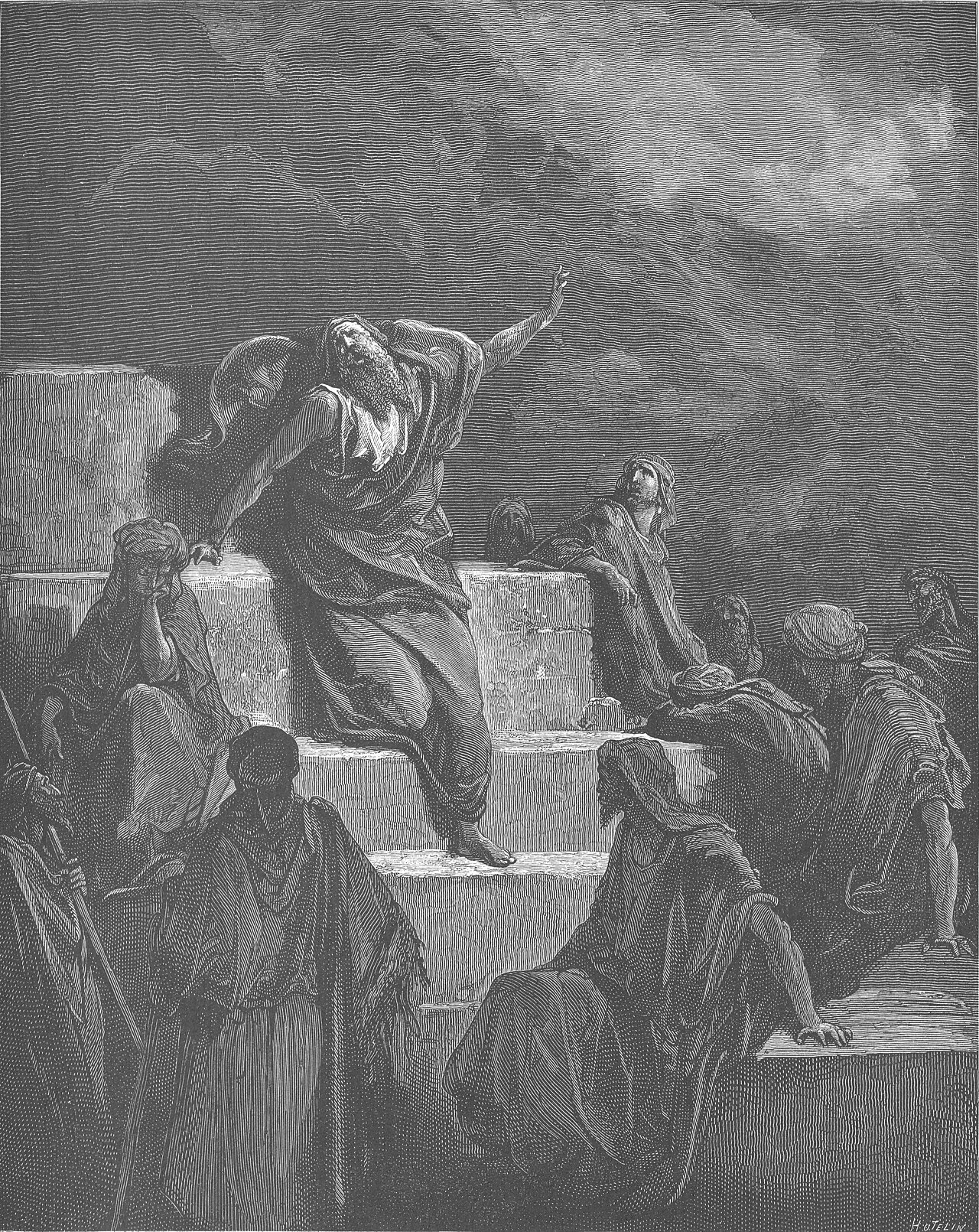
This page draws on Adam Clarke, Commentary on the Bible; Albert Barnes, Notes on the Old Testament; Jamieson, Fausset & Brown, Commentary Critical and Explanatory on the Whole Bible; John Gill, Exposition of the Old Testament (1748-1763) and Matthew Henry, Commentary on the Whole Bible.