
Genesis 6:17
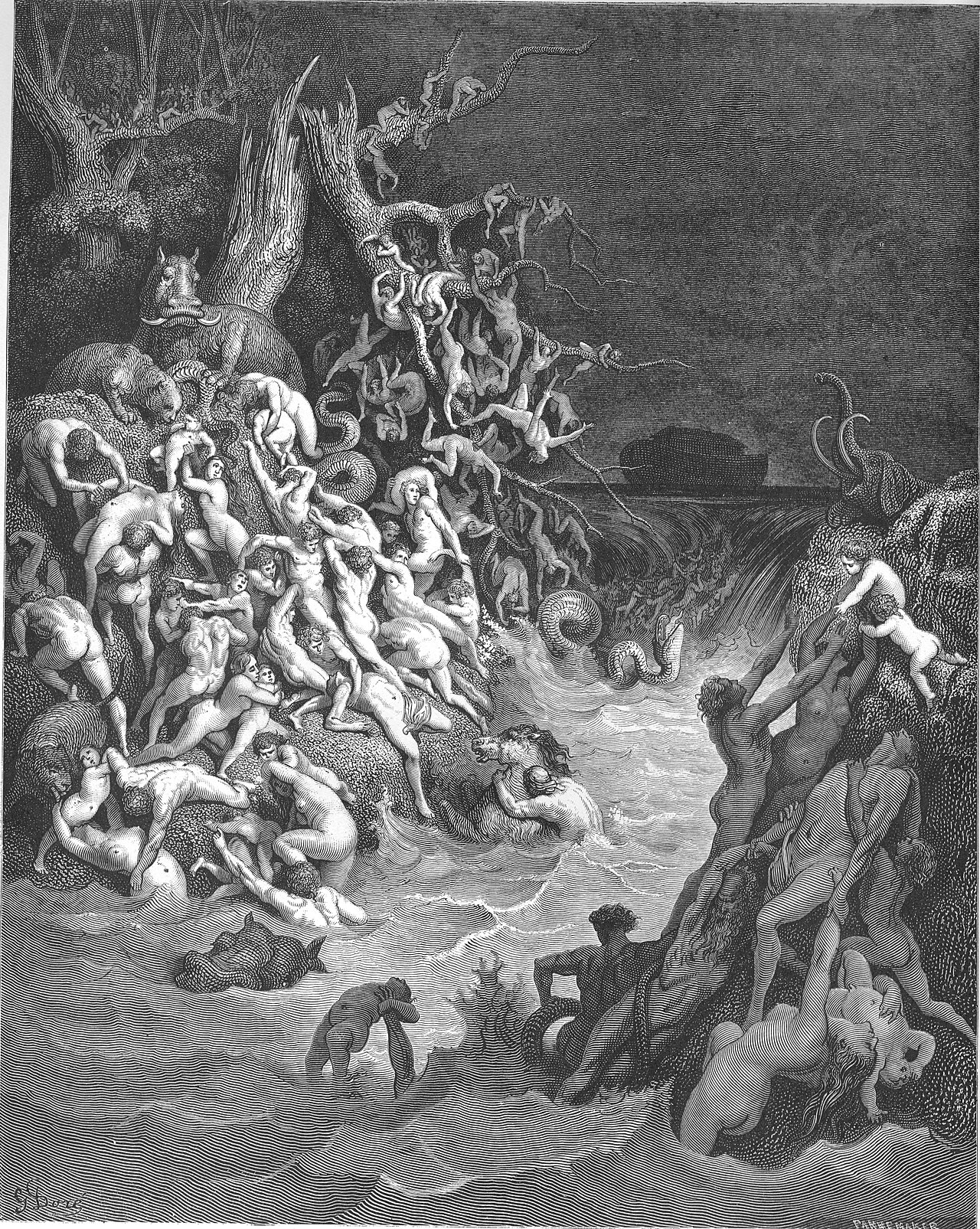
in Genesis 6And behold, I will bring floodwaters upon the earth to destroy every creature under the heavens that has the breath of life. Everything on the earth will perish.
BSB
The same verse in ASV and KJV ▾
ASV
And I, behold, I do bring the flood of waters upon the earth, to destroy all flesh, wherein is the breath of life, from under heaven; everything that is in the earth shall die.
KJV
And, behold, I, even I, do bring a flood of waters upon the earth, to destroy all flesh, wherein is the breath of life, from under heaven; and every thing that is in the earth shall die.
⋯
This verse in Genesis 6
Commentary
8 notes on this verseAnd, behold, I, even I, do bring a flood of waters upon the earth,.... That there was such a flood of waters brought upon the earth, is confirmed by the testimonies of Heathen writers of all nations; only instead of Noah they put some person of great antiquity in their nation, as the Chaldeans, Sisithrus or Xisuthrus; the Grecians and Romans, Prometheus or Deucalion, or Ogyges.
This site's exposition
I will bring floodwaters upon the earth
The LORD says the floodwaters will come upon the earth, and every creature with the breath of life will perish. The King James doubles the pronoun at the head of the verse, and Jamieson, Fausset and Brown read the doubling as a mark of certainty. A doubled dream is established by God at Genesis 41:32. The word for flood here is mabbul, and Scripture uses it of this event only.
The record, by era
The Medieval Church2 voices
From the beginning "the spirit of God moved over the waters," and over and again Scripture testifies to the fact that water is purifying. It was with water that God washed away the sin of the world in the time of Noah.
Behold, I will bring the waters of a flood upon the earth, to destroy all flesh in which there is the breath of life under heaven.
The Puritans and the Awakening1 voice
Thus he will be magnified and exalted in the earth, and all the world shall be made to know that he is the God to whom vengeance belongs; methinks the expression here is somewhat like that, Isa. i. 24 , Ah, I will ease me of mine adversaries.
quarantine:debris (2026-07-29) — unbalanced-parens
The Nineteenth Century2 voices
I-do bring a flood - מבול; mabbul; a word used only to designate the general deluge, being never applied to signify any other kind of inundation; and does not the Holy Spirit intend to show by this that no other flood was ever like this, and that it should continue to be the sole one of the kind? There have been many partial inundations in various countries, but never more than One general deluge; and we have God’s promise, Gen 9:15, that there shall never be another.
A commentator
Jamieson, Fausset & Brown1802–1910
Commentary Critical and Explanatory on the Whole Bible (1871)
And, behold, I, even I, do bring a flood--The repetition of the announcement was to establish its certainty (Ge 41:32). Whatever opinion may be entertained as to the operation of natural laws and agencies in the deluge, it was brought on the world by God as a punishment for the enormous wickedness of its inhabitants.
1 more voice on this verse
The Nineteenth Century1 voice
A commentator
Jamieson, Fausset & Brown1802–1910
Commentary Critical and Explanatory on the Whole Bible (1871)
proposed
And, behold, I, even I, do bring a flood--The repetition of the announcement was to establish its certainty (Ge 41:32). Whatever opinion may be entertained as to the operation of natural laws and agencies in the deluge, it was brought on the world by God as a punishment for the enormous wickedness of its inhabitants.
The words behind it
21 Hebrew wordsEvery Hebrew word of this verse in the order it stands, with what it means and the door to its own study. The last column counts the times a word stands in the whole Bible: the rarer the word, the more the places it appears belong together.
| Hebrew | Sound | Meaning | Word study | In the Bible |
|---|---|---|---|---|
| וַאֲנִ֗י | vaani | and I | H589 → | 874 times |
| הִנְנִי֩ | hini | here I | H2009 → | 843 times |
| מֵבִ֨יא | mevi' | [am] about to bring | H935 → | 2568 times |
| אֶת־ | ʾet- | <obj.> | H853 → | 10935 times |
| הַמַּבּ֥וּל | hamabul | the flood | H3999 → | 13 times |
| מַ֙יִם֙ | mayim | water | H4325 → | 581 times |
| עַל־ | ʾal- | on | H5921 → | 5755 times |
| הָאָ֔רֶץ | haaretz | the earth | H776 → | 2504 times |
| לְשַׁחֵ֣ת | leshachet | to destroy | H7843 → | 146 times |
| כָּל־ | kol- | all | H3605 → | 5413 times |
| בָּשָׂ֗ר | basar | flesh | H1320 → | 270 times |
| אֲשֶׁר־ | ʾasher- | which | H834 → | 5497 times |
| בּוֹ֙ | bo | [is] in <the> it | ||
| ר֣וּחַ | ruach | [the] breath of | H7307 → | 378 times |
| חַיִּ֔ים | chaiyim | life | H2416 → | 498 times |
| מִתַּ֖חַת | mitachat | from under | H8478 → | 505 times |
| הַשָּׁמָ֑יִם | hashamayim | the heavens | H8064 → | 421 times |
| כֹּ֥ל | kol | all | H3605 → | 5413 times |
| אֲשֶׁר־ | ʾasher- | that | H834 → | 5497 times |
| בָּאָ֖רֶץ | baaretz | [is] on the earth | H776 → | 2504 times |
| יִגְוָֽע׃ | yigva' | <it> will die | H1478 → | 24 times |
וַאֲנִ֗יand I
vaaniH589 →874 times
הִנְנִי֩here I
hiniH2009 →843 times
מֵבִ֨יא[am] about to bring
mevi'H935 →2568 times
אֶת־<obj.>
ʾet-H853 →10935 times
הַמַּבּ֥וּלthe flood
hamabulH3999 →13 times
מַ֙יִם֙water
mayimH4325 →581 times
עַל־on
ʾal-H5921 →5755 times
הָאָ֔רֶץthe earth
haaretzH776 →2504 times
לְשַׁחֵ֣תto destroy
leshachetH7843 →146 times
כָּל־all
kol-H3605 →5413 times
בָּשָׂ֗רflesh
basarH1320 →270 times
אֲשֶׁר־which
ʾasher-H834 →5497 times
בּוֹ֙[is] in <the> it
bo
ר֣וּחַ[the] breath of
ruachH7307 →378 times
חַיִּ֔יםlife
chaiyimH2416 →498 times
מִתַּ֖חַתfrom under
mitachatH8478 →505 times
הַשָּׁמָ֑יִםthe heavens
hashamayimH8064 →421 times
כֹּ֥לall
kolH3605 →5413 times
אֲשֶׁר־that
ʾasher-H834 →5497 times
בָּאָ֖רֶץ[is] on the earth
baaretzH776 →2504 times
יִגְוָֽע׃<it> will die
yigva'H1478 →24 times
A shaded row is a word that stands 400 times or fewer in the Bible.
The walk
8 stopsEach card is a verse this one points to, and under it the verses that one points to in turn. Where several paths arrive at the same place, that place is listed first: the text keeps returning to it.
Through
Hebrews 11:7By faith Noah, when warned about things not yet seen, in godly fear built an ark to save his family. By faith he condemned the world and became heir of the righteousness that comes…
it leads to
- Genesis 6:13
Then God said to Noah, “The end of all living creatures has come before Me, because through them the earth is full of violence. Now behold, I will destroy both them and the earth.
Reached by 2 separate paths from here.
- 1 Peter 3:20
who disobeyed long ago when God waited patiently in the days of Noah while the ark was being built. In the ark a few people, only eight souls, were saved through water.
- Ezekiel 14:14
then even if these three men—Noah, Daniel, and Job—were in it, their righteousness could deliver only themselves, declares the Lord GOD.
- Romans 4:13
For the promise to Abraham and his offspring that he would be heir of the world was not given through the law, but through the righteousness that comes by faith.
- Luke 17:26
Just as it was in the days of Noah, so also will it be in the days of the Son of Man:
- Genesis 6:13
Through
1 Peter 3:20who disobeyed long ago when God waited patiently in the days of Noah while the ark was being built. In the ark a few people, only eight souls, were saved through water.
it leads to
- Hebrews 11:7
By faith Noah, when warned about things not yet seen, in godly fear built an ark to save his family. By faith he condemned the world and became heir of the righteousness that comes…
Reached by 2 separate paths from here.
- 2 Peter 2:5
if He did not spare the ancient world when He brought the flood on its ungodly people, but preserved Noah, a preacher of righteousness, among the eight;
- Hebrews 11:7
Through
2 Peter 2:5if He did not spare the ancient world when He brought the flood on its ungodly people, but preserved Noah, a preacher of righteousness, among the eight;
it leads to
- 2 Peter 3:6
through which the world of that time perished in the flood.
- 2 Peter 3:6
Where this verse is studied
On this page
Studies11
On this verse
About Genesis
This page draws on Adam Clarke, Commentary on the Bible; Bede, Commentary on Genesis (Hexaemeron); Jamieson, Fausset & Brown, Commentary Critical and Explanatory on the Whole Bible; John Damascene, ORTHODOX FAITH 4.9; John Gill, Exposition of the Old Testament (1748-1763) and Matthew Henry, Commentary on the Whole Bible.