
Genesis 45:5
in Genesis 45And now, do not be distressed or angry with yourselves that you sold me into this place, because it was to save lives that God sent me before you.
BSB
The same verse in ASV and KJV ▾
ASV
And now be not grieved, nor angry with yourselves, that ye sold me hither: for God did send me before you to preserve life.
KJV
Now therefore be not grieved, nor angry with yourselves, that ye sold me hither: for God did send me before you to preserve life.
⋯
This verse in Genesis 45
Commentary
9 notes on this verseGod's Israel is the particular care of God's providence. Joseph reckoned that his advancement was not so much designed to save a whole kingdom of Egyptians as to preserve a small family of Israelites: for the Lord's portion is his people; whatever becomes of others, they shall be secured.
This site's exposition
it was to save lives that God sent me before you
on Genesis 45:5-6
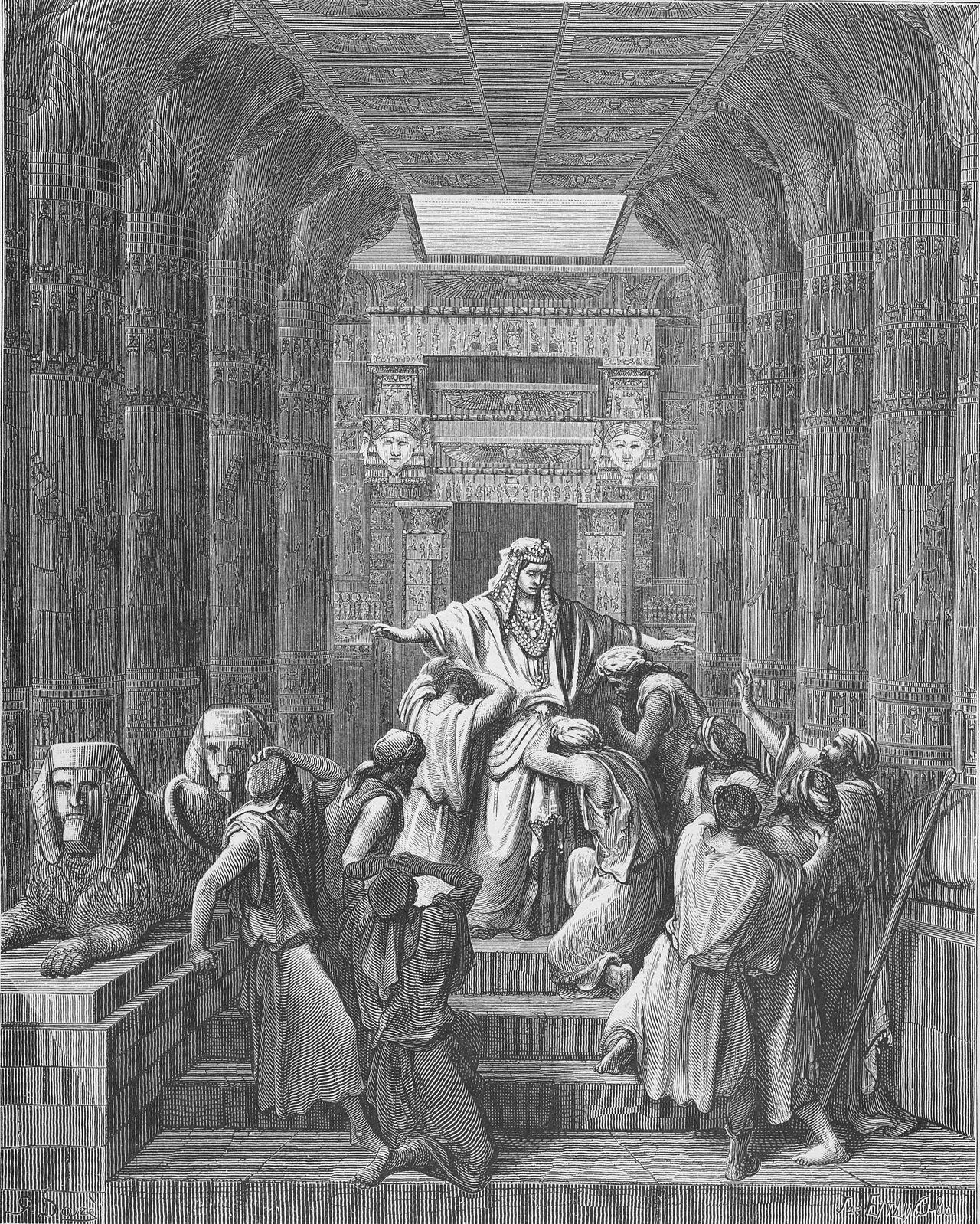
The comfort and the crime stand in one sentence, do not be distressed, and you sold me into this place. Three times in four verses he says that God sent him before them to save lives. He fixes the clock as well. Two years of the famine are gone and five more come without plowing or harvesting.
The record, by era
The Puritans and the Awakening2 voices
): Be not grieved, nor angry with yourselves. Sinners must grieve, and be angry with themselves, for their sins; yea, though God by his power brings good out of them, for no thanks are due to the sinner for this: but true penitents should be greatly affected when they see God thus bringing good out of evil, meat out of the eater.
quarantine:debris (2026-07-29) — leading-punctuation+unbalanced-parens
Now therefore be not grieved,....
The Nineteenth Century3 voices
JOSEPH is a very eminent type of Christ. When he was hated of his brothers because he protested against their sins, and when they sold him for twenty pieces of silver, he was doubtlessly a portrait of the despised and rejected of men whom His disciple betrayed. Afterwards in his temptations in the house of Potiphar, in the slander and consequent imprisonment in the round house of Pharaoh's prison, in his after advancement, till he became lord over all the land of Egypt, we clearly see our blessed Lord right well portrayed.
JOSEPH is a very eminent type of Christ. When he was hated of his brothers because he protested against their sins, and when they sold him for twenty pieces of silver, he was doubtlessly a portrait of the despised and rejected of men whom His disciple betrayed. Afterwards in his temptations in the house of Potiphar, in the slander and consequent imprisonment in the round house of Pharaoh's prison, in his after advancement, till he became lord over all the land of Egypt, we clearly see our blessed Lord right well portrayed. Indeed, so well is the picture drawn, that there is scarcely a stroke even though it should seem to be a mere accidental incident of the picture which has not its symbolic meaning. You shall read the history of Joseph through twenty times and yet you shall not have exhausted the type. You shall begin again, and find still some fresh likeness between this despised son of Rachel and the Son of Mary who is also God over all, blessed forever. Amen. It is not, however, my business this morning to enter into a full description of Joseph as the type of Christ. I have a rather more practical object in hand. I shall endeavor, in the Lord's strength, to deal with tried and troubled consciences, and if it shall be my happy lot to be the means of cheering some sorrowing heart and opening some blind eye to see the personal beauties and the intense affection of the Lord Jesus, I shall be but too glad to have been God's messenger to your hearts. To tarry no longer, but to proceed at once to so good an errand, hopeful that God will help us to accomplish it, I shall direct your attention to the picture before us as being a representation of the way in which the Lord Jesus Christ deals with His erring Brethren, those whom His Father has given Him and whom He has purchased with His blood.
A commentator
Charles Spurgeon1834–1892
The Metropolitan Tabernacle Pulpit, Sermon No. 2516: “Jesus and His Brethren” (lightly modernized text, CCEL edition) · Written before 1892.
proposed
I NEED not say to you, Beloved, who are conversant with Scripture, that there is scarcely any personal type in the Old Testament which is more clearly and fully a portrait of our Lord Jesus Christ than is the type of Joseph. You may run the parallel between Joseph and Jesus in very many directions, yet you need never strain the narrative so even much as once. I am not about to attempt that task on the present occasion, but I am going to take this memorable portion of the biography of Joseph and show you how, in making himself known to his brethren, he was a type of our Lord revealing himself to us. It seems that, at last, Joseph could bear the suspense no longer. He knew who his brethren were, he knew which was Benjamin and which was Reuben, Simeon, Levi, Judah and the rest, and he remembered all the story of their early days together. But they did not know him. They thought him some mysterious potentate, some great ruler of the land of Egypt—as indeed he was—but they did not know so much about him as he knew about them. Consequently, there was a distance between him and them and his loving heart ached to bridge that gulf by manifesting himself to them. It is the way of love to desire to make itself known. Now, in a still higher sense, the Lord Jesus Christ knows all about those in this place whom He has redeemed with His precious blood. The Father gave them to Him from before the foundation of the world and He took them into Covenant relationship with Himself before the earth was. Often has He thought of these as His beloved ones. His delights have been with the sons of men and He has looked forward and foreseen all that would happen to them.
2 more voices on this verse
The Nineteenth Century2 voices
A commentator
Charles Spurgeon1834–1892
The Metropolitan Tabernacle Pulpit, Sermon No. 2516: “Jesus and His Brethren” (lightly modernized text, CCEL edition) · Written before 1892.
proposed
I NEED not say to you, Beloved, who are conversant with Scripture, that there is scarcely any personal type in the Old Testament which is more clearly and fully a portrait of our Lord Jesus Christ than is the type of Joseph. You may run the parallel between Joseph and Jesus in very many directions, yet you need never strain the narrative so even much as once.
Be not grieved, nor angry with yourselves - This discovers a truly noble mind: he not only forgives and forgets, but he wishes even those who had wronged him to forget the injury they had done, that they might not suffer distress on the account; and with deep piety he attributes the whole to the providence of God; for, says he, God did send me before you to preserve life. On every word here a strong emphasis may be laid.
The words behind it
15 Hebrew wordsEvery Hebrew word of this verse in the order it stands, with what it means and the door to its own study. The last column counts the times a word stands in the whole Bible: the rarer the word, the more the places it appears belong together.
| Hebrew | Sound | Meaning | Word study | In the Bible |
|---|---|---|---|---|
| וְעַתָּ֣ה׀ | veatah | and now | H6258 → | 433 times |
| אַל־ | ʾal- | may not | H408 → | 724 times |
| תֵּעָ֣צְב֗וּ | teatzevu | you be grieved | H6087 → | 17 times |
| וְאַל־ | veal- | and may not | H408 → | 724 times |
| יִ֙חַר֙ | yichar | it burn | H2734 → | 91 times |
| בְּעֵ֣ינֵיכֶ֔ם | beeineikhem | in view your | H5869 → | 887 times |
| כִּֽי־ | ki- | that | H3588 → | 4482 times |
| מְכַרְתֶּ֥ם | mekhartem | you sold | H4376 → | 80 times |
| אֹתִ֖י | ʾoti | <obj.> me | H853 → | 10935 times |
| הֵ֑נָּה | henah | hither | H2008 → | 49 times |
| כִּ֣י | ki | for | H3588 → | 4482 times |
| לְמִֽחְיָ֔ה | lemichyah | for preservation of life | H4241 → | |
| שְׁלָחַ֥נִי | shelachani | he sent me | H7971 → | 845 times |
| אֱלֹהִ֖ים | ʾelohim | God | H430 → | 2601 times |
| לִפְנֵיכֶֽם׃ | lifneikhem | <to> before you | H6440 → | 2123 times |
וְעַתָּ֣ה׀and now
veatahH6258 →433 times
אַל־may not
ʾal-H408 →724 times
תֵּעָ֣צְב֗וּyou be grieved
teatzevuH6087 →17 times
וְאַל־and may not
veal-H408 →724 times
יִ֙חַר֙it burn
yicharH2734 →91 times
בְּעֵ֣ינֵיכֶ֔םin view your
beeineikhemH5869 →887 times
כִּֽי־that
ki-H3588 →4482 times
מְכַרְתֶּ֥םyou sold
mekhartemH4376 →80 times
אֹתִ֖י<obj.> me
ʾotiH853 →10935 times
הֵ֑נָּהhither
henahH2008 →49 times
כִּ֣יfor
kiH3588 →4482 times
לְמִֽחְיָ֔הfor preservation of life
lemichyahH4241 →
שְׁלָחַ֥נִיhe sent me
shelachaniH7971 →845 times
אֱלֹהִ֖יםGod
ʾelohimH430 →2601 times
לִפְנֵיכֶֽם׃<to> before you
lifneikhemH6440 →2123 times
A shaded row is a word that stands 400 times or fewer in the Bible.
The walk
8 stopsEach card is a verse this one points to, and under it the verses that one points to in turn. Where several paths arrive at the same place, that place is listed first: the text keeps returning to it.
Through
Genesis 50:20As for you, what you intended against me for evil, God intended for good, in order to accomplish a day like this—to preserve the lives of many people.
it leads to
- Romans 8:28
And we know that God works all things together for the good of those who love Him, who are called according to His purpose.
- Psalms 119:71
It was good for me to be afflicted, that I might learn Your statutes.
- Genesis 45:5–8
And now, do not be distressed or angry with yourselves that you sold me into this place, because it was to save lives that God sent me before you.
- Genesis 37:18–20
Now Joseph’s brothers saw him in the distance, and before he arrived, they plotted to kill him.
- Acts 2:23
He was delivered up by God’s set plan and foreknowledge, and you, by the hands of the lawless, put Him to death by nailing Him to the cross.
- Romans 8:28
Through
Job 1:21saying: “Naked I came from my mother’s womb, and naked I will return. The LORD gave, and the LORD has taken away. Blessed be the name of the LORD.”
it leads to
- Ecclesiastes 5:15
As a man came from his mother’s womb, so he will depart again, naked as he arrived. He takes nothing for his labor to carry in his hands.
- 1 Timothy 6:7
For we brought nothing into the world, so we cannot carry anything out of it.
- 1 Thessalonians 5:18
Give thanks in every circumstance, for this is God’s will for you in Christ Jesus.
- Ecclesiastes 5:15
About Genesis
This page draws on Adam Clarke, Commentary on the Bible; Charles Spurgeon, The Metropolitan Tabernacle Pulpit, Sermon No. 449: “Joseph And His Brothers” (lightly modernized text, CCEL edition); Charles Spurgeon, The Metropolitan Tabernacle Pulpit, Sermon No. 2516: “Jesus and His Brethren” (lightly modernized text, CCEL edition); John Calvin, Commentary on Genesis; John Gill, Exposition of the Old Testament (1748-1763) and Matthew Henry, Commentary on the Whole Bible.