
Genesis 45:1
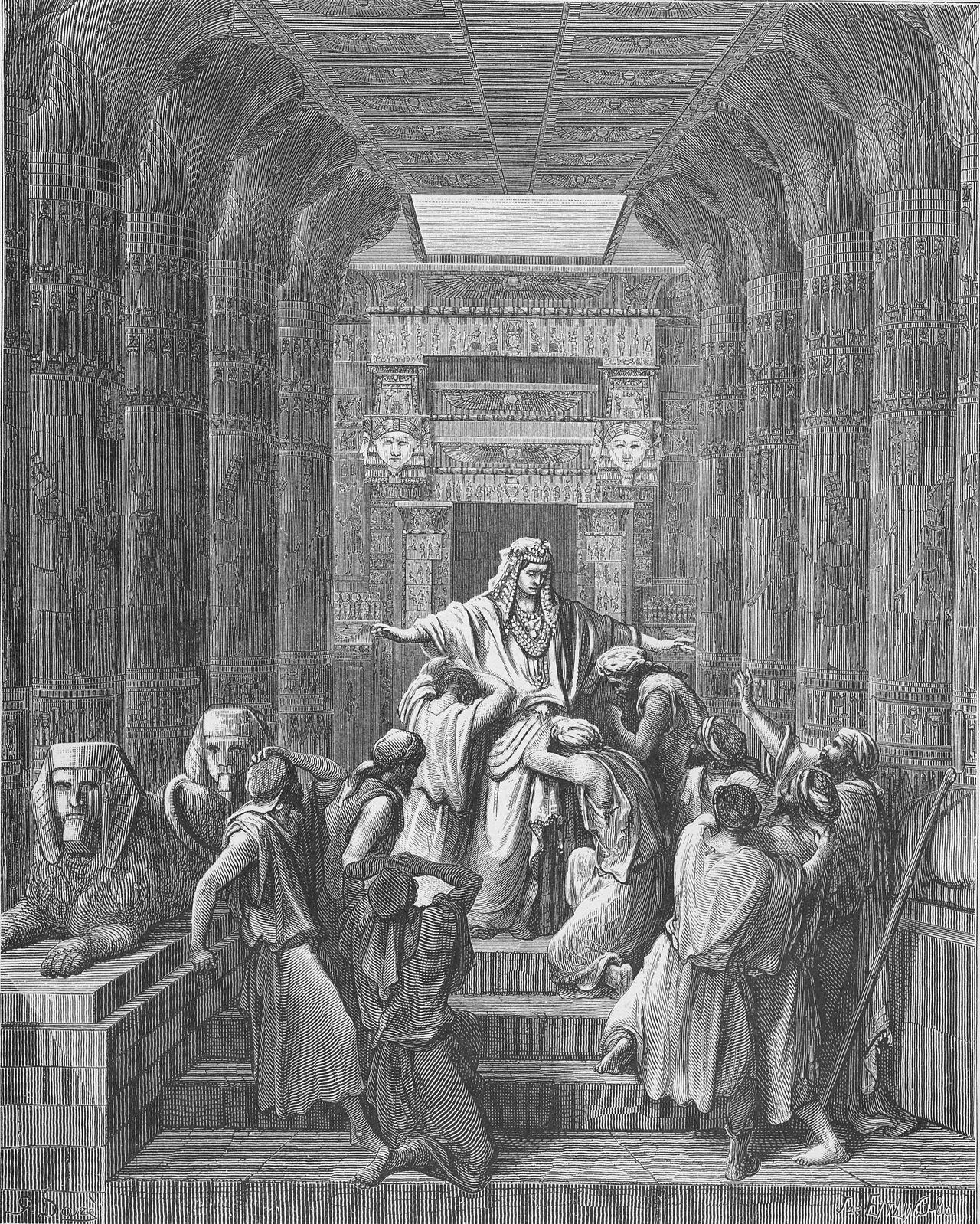
in Genesis 45Then Joseph could no longer control himself before all his attendants, and he cried out, “Send everyone away from me!” So none of them were with Joseph when he made himself known to his brothers.
BSB
The same verse in ASV and KJV ▾
ASV
Then Joseph could not refrain himself before all them that stood by him; and he cried, Cause every man to go out from me. And there stood no man with him, while Joseph made himself known unto his brethren.
KJV
Then Joseph could not refrain himself before all them that stood by him; and he cried, Cause every man to go out from me. And there stood no man with him, while Joseph made himself known unto his brethren.
⋯
This verse in Genesis 45
Commentary
9 notes on this verseAnd whereas it thus bursts forth in tears, this softness or tenderness is more deserving of praise than if he had maintained an equable temper. Therefore the stoics speak foolishly when they say, that it is an heroic virtue not to be touched with compassion.
This site's exposition
Send everyone away from me
on Genesis 45:1-2
Joseph sends every attendant away before he speaks, and he makes himself known to his brothers alone. He wept loudly enough for the Egyptians to hear, and the news reached Pharaoh's household. The privacy is for the brothers. The sound that escaped it starts the rest of the chapter at verse sixteen.
The record, by era
The Puritans and the Awakening2 voices
The private conversations of friends are the most free. When Joseph would put on love he puts off state, and it was not fit his servants should be witnesses of this. Thus Christ graciously manifests himself and his loving-kindness to his people, out of the sight and hearing of the world.
Then Joseph could not refrain himself,....
The Nineteenth Century3 voices
A commentator
Jamieson, Fausset & Brown1802–1910
Commentary Critical and Explanatory on the Whole Bible (1871)
proposed
He saw a satisfactory proof, in the return of all his brethren on such an occasion, that they were affectionately united to one another; he had heard enough to convince him that time, reflection, or grace had made a happy improvement on their characters; and he would probably have proceeded in a calm and leisurely manner to reveal himself as prudence might have dictated.
A commentator
Charles Spurgeon1834–1892
The Metropolitan Tabernacle Pulpit, Sermon No. 2516: “Jesus and His Brethren” (lightly modernized text, CCEL edition) · Written before 1892.
proposed
I NEED not say to you, Beloved, who are conversant with Scripture, that there is scarcely any personal type in the Old Testament which is more clearly and fully a portrait of our Lord Jesus Christ than is the type of Joseph. You may run the parallel between Joseph and Jesus in very many directions, yet you need never strain the narrative so even much as once. I am not about to attempt that task on the present occasion, but I am going to take this memorable portion of the biography of Joseph and show you how, in making himself known to his brethren, he was a type of our Lord revealing himself to us. It seems that, at last, Joseph could bear the suspense no longer. He knew who his brethren were, he knew which was Benjamin and which was Reuben, Simeon, Levi, Judah and the rest, and he remembered all the story of their early days together. But they did not know him. They thought him some mysterious potentate, some great ruler of the land of Egypt—as indeed he was—but they did not know so much about him as he knew about them. Consequently, there was a distance between him and them and his loving heart ached to bridge that gulf by manifesting himself to them. It is the way of love to desire to make itself known. Now, in a still higher sense, the Lord Jesus Christ knows all about those in this place whom He has redeemed with His precious blood. The Father gave them to Him from before the foundation of the world and He took them into Covenant relationship with Himself before the earth was. Often has He thought of these as His beloved ones. His delights have been with the sons of men and He has looked forward and foreseen all that would happen to them.
A commentator
Charles Spurgeon1834–1892
The Metropolitan Tabernacle Pulpit, Sermon No. 2516: “Jesus and His Brethren” (lightly modernized text, CCEL edition) · Written before 1892.
proposed
I NEED not say to you, Beloved, who are conversant with Scripture, that there is scarcely any personal type in the Old Testament which is more clearly and fully a portrait of our Lord Jesus Christ than is the type of Joseph. You may run the parallel between Joseph and Jesus in very many directions, yet you need never strain the narrative so even much as once.
2 more voices on this verse
The Nineteenth Century2 voices
Joseph could not refrain himself - The word התאפק hithappek is very emphatic; it signifies to force one’s self, to do something against nature, to do violence to one’s self. Joseph could no longer constrain himself to act a feigned part - all the brother and the son rose up in him at once, and overpowered all his resolutions; he felt for his father, he realized his disappointment and agony; and he felt for his brethren, “now at his feet submissive in distress;” and, that he’ might give free and full scope to his feelings, and the most ample play of the workings of his affectionate heart, he ordered all his attendants to go out, while he made himself known to his brethren. “The beauties of this chapter,” says Dr. Dodd, “are so striking, that it would be an indignity to the reader’s judgment to point them out; all who can read and feel must be sensible of them, as there is perhaps nothing in sacred or profane history more highly wrought up, more interesting or affecting.”
A commentator
Albert Barnes1798–1870
Notes, Explanatory and Practical, on the Old and New Testaments (1832-1869)
proposed
- Joseph Made Himself Known to His Brethren 10. גשׁן gôshen, Goshen, Gesem (Arabias related perhaps to גשׁם geshem “rain, shower”), a region on the borders of Egypt and Arabia, near the gulf of Suez. The appeal of Judah is to Joseph irresistible. The repentance of his brothers, and their attachment to Benjamin, have been demonstrated in the most satisfactory manner. This is all that Joseph sought. It is evident, throughout the whole narrative, that he never aimed at exercising any supremacy over his brothers.
How the passage was read
What the Jewish commentators add
THEN JOSEPH COULD NOT ‘L’HITHAPEIK’ (REFRAIN HIMSELF) BEFORE ALL THEM THAT STOOD BY HIM. He could not bear that the Egyptians should stand by him witnessing how his brothers would be put to shame when he makes himself known to them. This is the language of Rashi.
1 more on this passage, in their own words ▾
Yoseif could not contain his emotions in the presence of all who stood before him, and he cried out Let everyone leave my presence.
This section is reception history: how the passage was read and kept in the Jewish tradition. Where a reading parts from an essential of the Christian faith, the section says so at that point.
Texts and citation data: Sefaria; each excerpt follows its version’s licence. 2 further sources are cited on this chapter that carry no English text this site may quote or only restate the verse.
The words behind it
20 Hebrew wordsEvery Hebrew word of this verse in the order it stands, with what it means and the door to its own study. The last column counts the times a word stands in the whole Bible: the rarer the word, the more the places it appears belong together.
| Hebrew | Sound | Meaning | Word study | In the Bible |
|---|---|---|---|---|
| וְלֹֽא־ | velo'- | and not | H3808 → | 5168 times |
| יָכֹ֨ל | yakhol | he was able | H3201 → | 194 times |
| יוֹסֵ֜ף | yosef | Joseph | H3130 → | 213 times |
| לְהִתְאַפֵּ֗ק | lehitapek | to restrain himself | H662 → | |
| לְכֹ֤ל | lekhol | to all | H3605 → | 5413 times |
| הַנִּצָּבִים֙ | hanitzavim | those standing | H5324 → | 75 times |
| עָלָ֔יו | ʾalav | with him | H5921 → | 5755 times |
| וַיִּקְרָ֕א | vaiyikra' | and he called out | H7121 → | 733 times |
| הוֹצִ֥יאוּ | hotziu | send out | H3318 → | 1067 times |
| כָל־ | khol- | every | H3605 → | 5413 times |
| אִ֖ישׁ | ʾish | man | H376 → | 1663 times |
| מֵעָלָ֑י | mealai | from with <the> me | H5921 → | 5755 times |
| וְלֹא־ | velo'- | and not | H3808 → | 5168 times |
| עָ֤מַד | ʾamad | he stood | H5975 → | 521 times |
| אִישׁ֙ | ʾish | anyone | H376 → | 1663 times |
| אִתּ֔וֹ | ʾito | with him | H854 → | 929 times |
| בְּהִתְוַדַּ֥ע | behitvada' | when made himself known | H3045 → | 945 times |
| יוֹסֵ֖ף | yosef | Joseph | H3130 → | 213 times |
| אֶל־ | ʾel- | to | H413 → | 5510 times |
| אֶחָֽיו׃ | ʾechav | brothers his | H251 → | 630 times |
וְלֹֽא־and not
velo'-H3808 →5168 times
יָכֹ֨לhe was able
yakholH3201 →194 times
יוֹסֵ֜ףJoseph
yosefH3130 →213 times
לְהִתְאַפֵּ֗קto restrain himself
lehitapekH662 →
לְכֹ֤לto all
lekholH3605 →5413 times
הַנִּצָּבִים֙those standing
hanitzavimH5324 →75 times
עָלָ֔יוwith him
ʾalavH5921 →5755 times
וַיִּקְרָ֕אand he called out
vaiyikra'H7121 →733 times
הוֹצִ֥יאוּsend out
hotziuH3318 →1067 times
כָל־every
khol-H3605 →5413 times
אִ֖ישׁman
ʾishH376 →1663 times
מֵעָלָ֑יfrom with <the> me
mealaiH5921 →5755 times
וְלֹא־and not
velo'-H3808 →5168 times
עָ֤מַדhe stood
ʾamadH5975 →521 times
אִישׁ֙anyone
ʾishH376 →1663 times
אִתּ֔וֹwith him
ʾitoH854 →929 times
בְּהִתְוַדַּ֥עwhen made himself known
behitvada'H3045 →945 times
יוֹסֵ֖ףJoseph
yosefH3130 →213 times
אֶל־to
ʾel-H413 →5510 times
אֶחָֽיו׃brothers his
ʾechavH251 →630 times
A shaded row is a word that stands 400 times or fewer in the Bible.
The walk
8 stopsEach card is a verse this one points to, and under it the verses that one points to in turn. Where several paths arrive at the same place, that place is listed first: the text keeps returning to it.
Through
Matthew 18:15If your brother sins against you, go and confront him privately. If he listens to you, you have won your brother over.
it leads to
- Leviticus 19:17
You must not harbor hatred against your brother in your heart. Directly rebuke your neighbor, so that you will not incur guilt on account of him.
- Galatians 6:1
Brothers, if someone is caught in a trespass, you who are spiritual should restore him with a spirit of gentleness. But watch yourself, or you also may be tempted.
- Luke 17:3–4
Watch yourselves. If your brother sins, rebuke him; and if he repents, forgive him.
- 2 Thessalonians 3:15
Yet do not regard him as an enemy, but warn him as a brother.
- Colossians 3:13
Bear with one another and forgive any complaint you may have against someone else. Forgive as the Lord forgave you.
- Leviticus 19:17
Through
Jeremiah 20:9If I say, “I will not mention Him or speak any more in His name,” His message becomes a fire burning in my heart, shut up in my bones, and I become weary of…
it leads to
- Psalms 39:3
My heart grew hot within me; as I mused, the fire burned. Then I spoke with my tongue:
- Job 32:18–20
For I am full of words, and my spirit within me compels me.
- Acts 4:20
For we cannot stop speaking about what we have seen and heard.”
- Psalms 39:3
About Genesis
Who and where
1 name in this verse with a page on the site.
This page draws on Adam Clarke, Commentary on the Bible; Albert Barnes, Notes, Explanatory and Practical, on the Old and New Testaments (1832-1869); Charles Spurgeon, The Metropolitan Tabernacle Pulpit, Sermon No. 2516: “Jesus and His Brethren” (lightly modernized text, CCEL edition); Jamieson, Fausset & Brown, Commentary Critical and Explanatory on the Whole Bible; John Calvin, Commentaries; John Gill, Exposition of the Old Testament; John Gill, Exposition of the Old Testament (1748-1763) and Matthew Henry, Commentary on the Whole Bible.