
Genesis 11:3
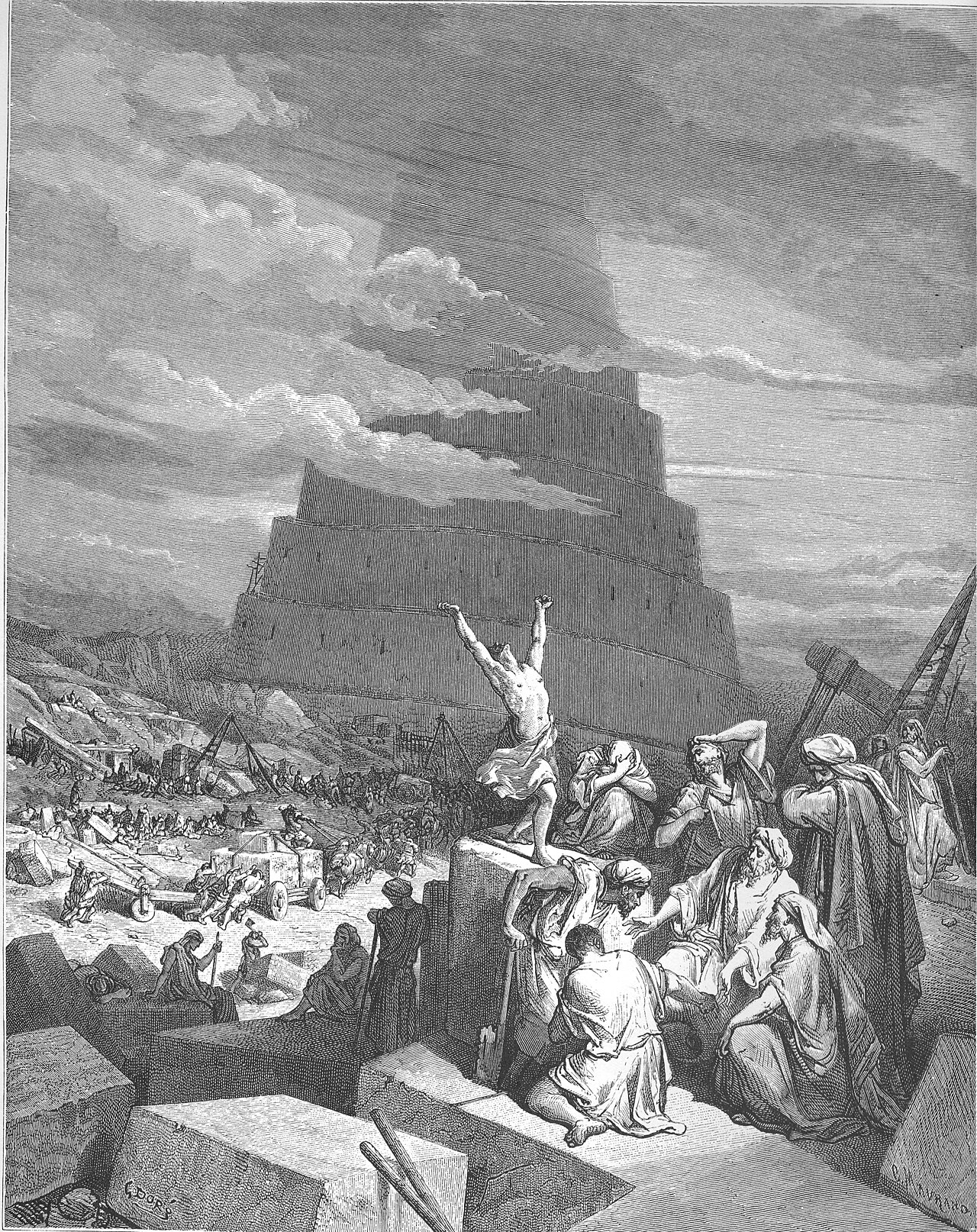
in Genesis 11And they said to one another, “Come, let us make bricks and bake them thoroughly.” So they used brick instead of stone, and tar instead of mortar.
BSB
The same verse in ASV and KJV ▾
ASV
And they said one to another, Come, let us make brick, and burn them thoroughly. And they had brick for stone, and slime had they for mortar.
KJV
And they said one to another, Go to, let us make brick, and burn them throughly. And they had brick for stone, and slime had they for morter.
⋯
This verse in Genesis 11
Commentary
17 notes on this verseLet us make brick - It appears they were obliged to make use of brick, as there was an utter scarcity of stones in that district; and on the same account they were obliged to use slime, that is, bitumen, (Vulg). ασφαλτος, (Septuagint) for mortar: so it appears they had neither common stone nor lime-stone; hence they had brick for stone, and asphaltus or bitumen instead of mortar.
This site's exposition
Come, let us make bricks
on Genesis 11:3-4
Brick stands in for stone and tar for mortar, so nothing in the tower came out of the ground they stood on. Their stated aim was to make a name for themselves. God gives that name to Abram at 12:2, and their other aim was to keep from being scattered, though 9:1 had told them to fill the earth.
The record, by era
The Church Fathers5 voices
A commentator
Book of Biblical AntiquitiesBook of Biblical Antiquities by Pseudo-Philo, Sections 1-18 · Written before 100.
proposed
VI. Then all they that had been divided and dwelt upon the earth gathered together there after, and dwelt together; and they set forth from the East and found a plain in the land of Babylon: and there they dwelt, and they said every man …
A commentator
JosephusAntiquities of the Jews - Book I, Chapter 4, Sections 1-3 · Written before 100.
proposed
1. Now the sons of Noah were three, - Shem, Japhet, and Ham, born one hundred years before the Deluge. These first of all descended from the mountains into the plains, and fixed their habitation there; and persuaded others who were greatly afraid of the …
A commentator
Eusebius of CaesareaPreparation for the Gospel, BOOK IX, CHAPTER XIV · Written before 339.
proposed
AGAIN, whereas Moses wrote an account of the building of the tower, and how from one language men passed into the confusion of many dialects, the author just before mentioned, in his work entitled Of Assyrian History, bears the like testimony, speaking as follows: [ABYDENUS] 'But there are some who say that the men who first arose out of the earth, being puffed up by their strength and great stature, and proudly thinking that they were better than the gods, raised a huge tower, where Babylon now stands: and when they were already nearer to heaven, the winds came to the help of the gods, and overthrew their structure upon them, the ruins of which were called Babylon. And being up to that time of one tongue, they received from the gods a confused language; and afterwards war arose between Cronos and Titan. [JOSEPHUS] 'And the place in which they built the tower is now called Babylon, because of the confusion of what at first was clear in their language. For the Hebrews call confusion "Babel."
A commentator
Gregory of NyssaAnswer to Eunomius' Second Book, Section 276 · Written before 395.
proposed
And if any one cites the confusion of tongues that took place at the building of the tower, as contradicting what I have said, not even there is God spoken of as creating men's languages, but as confounding the existing one, that all might not hear all. For when all lived together and were not as yet divided by various differences of race, the aggregate of men dwelt together with one language among them; but when by the Divine will it was decreed that all the earth should be replenished by mankind, then, their community of tongue being broken up, men were dispersed in various directions and adopted this and that form of speech and language, possessing a certain bond of union in similarity of tongue, not indeed disagreeing from others in their knowledge of things, but differing in the character of their names. For a stone or a stick does not seem one thing to one man and another to another, but the different peoples call them by different names. So that our position remains unshaken, that human language is the invention of the human mind or understanding. For from the beginning, as long as all men had the same language, we see from Holy Scripture that men received no teaching of God's words, nor, when men were separated into various differences of language, did a Divine enactment prescribe how each man should talk. But God, willing that men should speak different languages, gave human nature full liberty to formulate arbitrary sounds, so as to render their meaning more intelligible.
But I do not understand how he can imagine the overturning of the tower (of Babel) to have happened with a similar object to that of the deluge, which effected a purification of the earth, according to the accounts both of Jews and Christians. For, in order that the narrative contained in Genesis respecting the tower may be held to convey no secret meaning, but, as Celsus supposes, may be taken as true to the letter, the event does not on such a view appear to have taken place for the purpose of purifying the earth; unless, indeed, he imagines that the so-called confusion of tongues is such a purificatory process. But on this point, he who has the opportunity will treat more seasonably when his object is to show not only what is the meaning of the narrative in its historical connection, but what metaphorical meaning may be deduced from it. Seeing that he imagines, however, that Moses, who wrote the account of the tower, and the confusion of tongues, has perverted the story of the sons of Aloeus, and referred it to the tower, we must remark that I do not think any one prior to the time of Homer has mentioned the sons of Aloeus, while I am persuaded that what is related about the tower has been recorded by Moses as being much older not only than Homer, but even than the invention of letters among the Greeks. Who, then, are the perverters of each other's narratives? Whether do they who relate the story of the Aloadæ pervert the history of the time, or he who wrote the account of the tower and the confusion of tongues the story of the Aloadæ? Now to impartial hearers Moses appears to be more ancient than Homer.
10 more voices on this verse
The Church Fathers1 voice
A commentator
Book of JubileesBook of Jubilees Chapter 10, sections 18-27, Charles' 1913 translation · Written before -100.
proposed
And in the three and thirtieth jubilee, in the first year in the second week, Peleg took to himself a wife, whose name was Lomna the daughter of Sina'ar, and she bare him a son in the fourth year of this week, and he called …
The Medieval Church4 voices
But when the threatenings of the mighty God Are fulfilled, which he threatened mortals once, When in Assyrian land they built a tower;-- 120 (And they all spoke one language, and resolved To mount aloft into the starry heaven; But on the air the Immortal …
They baked the bricks they had made with fire. Indeed, that fire of which it is said: "all adulterers, their hearts are like an oven" (Hosea 7:4), and about which Isaiah says: "Behold, all you who kindle a fire, encircled with flames, walk in the …
And one said to his neighbor: Come, let us make bricks and bake them with fire, and they had bricks for stones and bitumen for mortar.
But as they mold clay into bricks, which are usually made with equal square sides, hence also taking their name, it shows the composition and ornamentation of secular eloquence, through which the proud city of the devil, either in deceptive philosophy or heretical craftiness, seems …
The Puritans and the Awakening4 voices
No, say they, we will live and die together. In order hereunto they engage themselves and one another in this vast undertaking. That they might unite in one glorious empire, they resolve to build this city and tower, to be the metropolis of their kingdom, and the center of their unity.
No, say they, we will live and die together. In order hereunto they engage themselves and one another in this vast undertaking. That they might unite in one glorious empire, they resolve to build this city and tower, to be the metropolis of their kingdom, and the center of their unity.
And they said one to another, go to,....
The righteous judgment of God upon them in disappointing their design, by confounding their language, and so scattering them,
The Nineteenth Century1 voice
A commentator
Jamieson, Fausset & Brown1802–1910
Commentary Critical and Explanatory on the Whole Bible (1871)
proposed
brick--There being no stone in that quarter, brick is, and was, the only material used for building, as appears in the mass of ruins which at the Birs Nimroud may have been the very town formed by those ancient rebels.
quarantine:debris (2026-07-29) — starts-lowercase
How the passage was read
What the Jewish commentators add
On the verses either side of this one
Rashi comments: “They journeyed from where they were then dwelling, as it is written above, And their dwelling was from Mesha, as thou goest toward Sephar, unto the mountain of the east. 333 Above,:30.
This section is reception history: how the passage was read and kept in the Jewish tradition. Where a reading parts from an essential of the Christian faith, the section says so at that point.
Texts and citation data: Sefaria; each excerpt follows its version’s licence. 5 further sources are cited on this chapter that carry no English text this site may quote or only restate the verse.
The words behind it
17 Hebrew wordsEvery Hebrew word of this verse in the order it stands, with what it means and the door to its own study. The last column counts the times a word stands in the whole Bible: the rarer the word, the more the places it appears belong together.
| Hebrew | Sound | Meaning | Word study | In the Bible |
|---|---|---|---|---|
| וַיֹּאמְר֞וּ | vaiyomeru | and they said | H559 → | 5305 times |
| אִ֣ישׁ | ʾish | each | H376 → | 1663 times |
| אֶל־ | ʾel- | to | H413 → | 5510 times |
| רֵעֵ֗הוּ | reehu | neighbor his | H7453 → | 188 times |
| הָ֚בָה | havah | give ! | H3051 → | 34 times |
| נִלְבְּנָ֣ה | nilbenah | let us make bricks | H3835 → | |
| לְבֵנִ֔ים | levenim | bricks | H3843 → | |
| וְנִשְׂרְפָ֖ה | venisrefah | and let us burn [them] | H8313 → | |
| לִשְׂרֵפָ֑ה | lisrefah | to burning | H8316 → | |
| וַתְּהִ֨י | vatehi | and <it> became | H1961 → | 3559 times |
| לָהֶ֤ם | lahem | for <the> them | ||
| הַלְּבֵנָה֙ | halevenah | <the> brick | H3843 → | |
| לְאָ֔בֶן | leaven | to stone | H68 → | 273 times |
| וְהַ֣חֵמָ֔ר | vehachemar | and <the> bitumen | H2564 → | |
| הָיָ֥ה | hayah | <it> became | H1961 → | 3559 times |
| לָהֶ֖ם | lahem | for <the> them | ||
| לַחֹֽמֶר׃ | lachomer | to <the> mortar | H2563 → |
וַיֹּאמְר֞וּand they said
vaiyomeruH559 →5305 times
אִ֣ישׁeach
ʾishH376 →1663 times
אֶל־to
ʾel-H413 →5510 times
רֵעֵ֗הוּneighbor his
reehuH7453 →188 times
הָ֚בָהgive !
havahH3051 →34 times
נִלְבְּנָ֣הlet us make bricks
nilbenahH3835 →
לְבֵנִ֔יםbricks
levenimH3843 →
וְנִשְׂרְפָ֖הand let us burn [them]
venisrefahH8313 →
לִשְׂרֵפָ֑הto burning
lisrefahH8316 →
וַתְּהִ֨יand <it> became
vatehiH1961 →3559 times
לָהֶ֤םfor <the> them
lahem
הַלְּבֵנָה֙<the> brick
halevenahH3843 →
לְאָ֔בֶןto stone
leavenH68 →273 times
וְהַ֣חֵמָ֔רand <the> bitumen
vehachemarH2564 →
הָיָ֥ה<it> became
hayahH1961 →3559 times
לָהֶ֖םfor <the> them
lahem
לַחֹֽמֶר׃to <the> mortar
lachomerH2563 →
A shaded row is a word that stands 400 times or fewer in the Bible.
The walk
8 stopsEach card is a verse this one points to, and under it the verses that one points to in turn. Where several paths arrive at the same place, that place is listed first: the text keeps returning to it.
Through
Hebrews 10:24And let us consider how to spur one another on to love and good deeds.
it leads to
- 1 Thessalonians 5:11
Therefore encourage and build one another up, just as you are already doing.
- 1 John 3:18
Little children, let us love not in word and speech, but in action and truth.
- Hebrews 13:1
Continue in brotherly love.
- Galatians 5:13
For you, brothers, were called to freedom; but do not use your freedom as an opportunity for the flesh. Rather, serve one another in love.
- Colossians 3:16
Let the word of Christ richly dwell within you as you teach and admonish one another with all wisdom, and as you sing psalms, hymns, and spiritual songs with gratitude in your hearts to…
- 1 Thessalonians 5:11
Through
James 5:1Come now, you who are rich, weep and wail over the misery to come upon you.
it leads to
- Proverbs 11:28
He who trusts in his riches will fall, but the righteous will thrive like foliage.
- 1 Timothy 6:9–10
Those who want to be rich, however, fall into temptation and become ensnared by many foolish and harmful desires that plunge them into ruin and destruction.
- Proverbs 11:28
Through
Exodus 1:14and made their lives bitter with hard labor in brick and mortar, and with all kinds of work in the fields. Every service they imposed was harsh.
it leads to
- Acts 7:19
He exploited our people and oppressed our fathers, forcing them to abandon their infants so they would die.
Reached by 2 separate paths from here.
- Acts 7:19
Where this verse is studied
On this page
Studies7
About Genesis
This page draws on 14 works. Open the list of works
This page draws on Adam Clarke, Commentary on the Bible; Bede, Commentary on Genesis (Hexaemeron); Book of Biblical Antiquities, Book of Biblical Antiquities by Pseudo-Philo, Sections 1-18; Book of Jubilees, Book of Jubilees Chapter 10, sections 18-27, Charles' 1913 translation; Eusebius of Caesarea, Preparation for the Gospel, BOOK IX, CHAPTER XIV; Gregory of Nyssa, Answer to Eunomius' Second Book, Section 276; Jamieson, Fausset & Brown, Commentary Critical and Explanatory on the Whole Bible; John Calvin, Commentary on Genesis; John Gill, Exposition of the Old Testament (1748-1763); John Wesley, Explanatory Notes upon the Old Testament; Josephus, Antiquities of the Jews - Book I, Chapter 4, Sections 1-3; Matthew Henry, Commentary on the Whole Bible; Origen of Alexandria, Contra Celsum, Book IV, Chapter 21 and Sibylline Oracles, Sibylline Oracles Book III: 117-129.