
Exodus 7:22
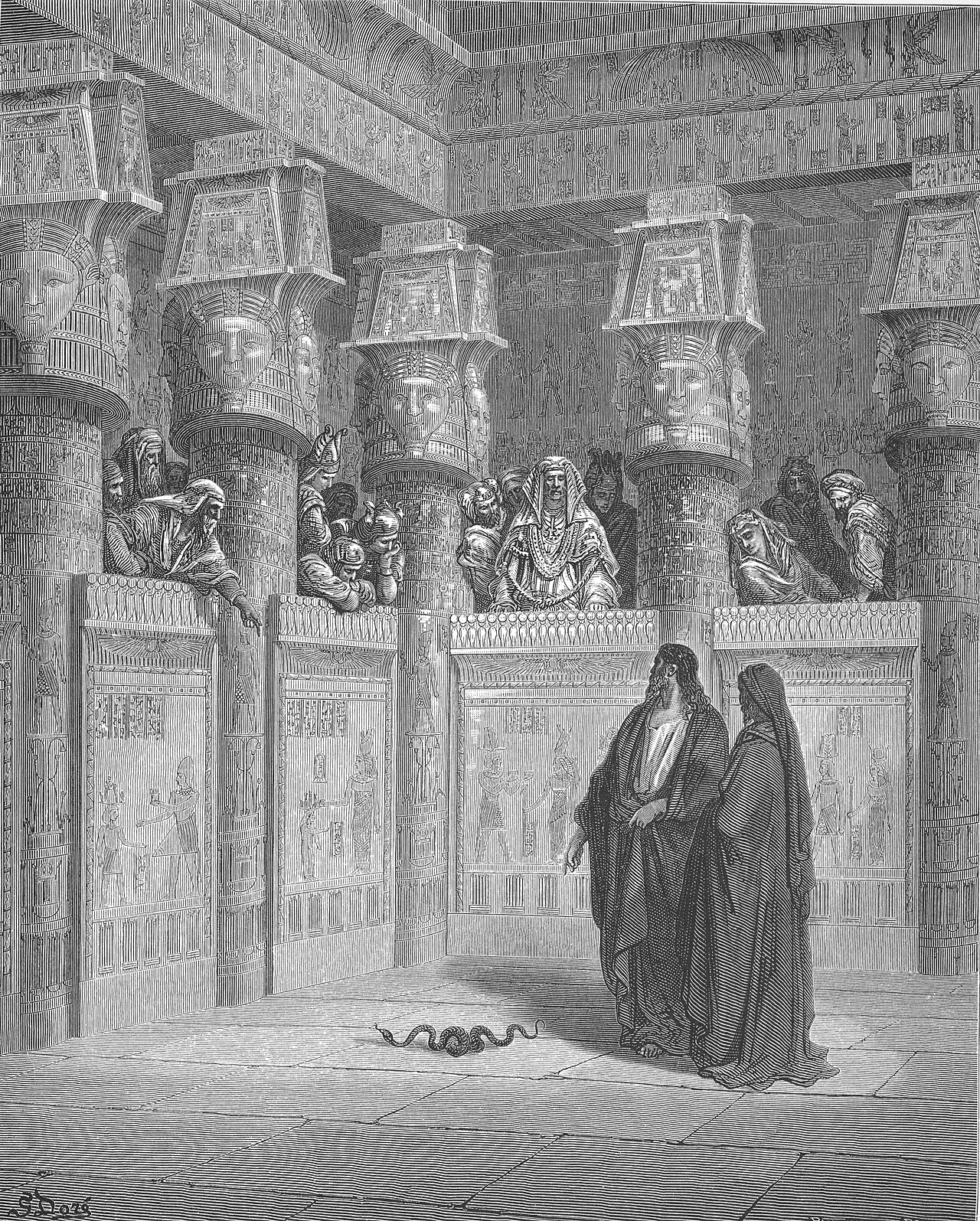
in Exodus 7But the magicians of Egypt did the same things by their magic arts. So Pharaoh’s heart was hardened, and he would not listen to Moses and Aaron, just as the LORD had said.
BSB
The same verse in ASV and KJV ▾
ASV
And the magicians of Egypt did in like manner with their enchantments: and Pharaoh’s heart was hardened, and he hearkened not unto them; as Jehovah had spoken.
KJV
And the magicians of Egypt did so with their enchantments: and Pharaoh’s heart was hardened, neither did he hearken unto them; as the Lord had said.
⋯
This verse in Exodus 7
Commentary
3 notes on this verseAnd the magicians - did so - But if all the water in Egypt was turned into blood by Moses, where did the magicians get the water which they changed into blood? This question is answered in Exo 7:24. The Egyptians dug round about the river for water to drink, and it seems that the water obtained by this means was not bloody like that in the river: on this water therefore the magicians might operate.
This site's exposition
And the magicians of Egypt did so
on Exodus 7:22-23
The magicians match the plague, and Wesley notes what the match costs Egypt, since turning more water into blood while water is scarce helps nobody and proves only that they can do it. Undoing the plague would have answered Moses, and they do not undo it. The hardening is put in the plain passive here, Pharaoh's heart was hardened, and verse 23 adds that he turned and went into his house and did not set his heart to this also.
The record, by era
The Puritans and the Awakening1 voice
And the magicians did so - By God's permission with their enchantments; and this served Pharaoh for an excuse not to set his heart to this also, (ver. 23,) and a poor excuse it was. Could they have turned the river of blood into water again, it had been something; then they had proved their power, and Pharaoh had been obliged to them as his benefactors.
The words behind it
14 Hebrew wordsEvery Hebrew word of this verse in the order it stands, with what it means and the door to its own study. The last column counts the times a word stands in the whole Bible: the rarer the word, the more the places it appears belong together.
| Hebrew | Sound | Meaning | Word study | In the Bible |
|---|---|---|---|---|
| וַיַּֽעֲשׂוּ־ | vaiyaasu- | and they did | H6213 → | 2628 times |
| כֵ֛ן | khen | thus | H3651 → | 771 times |
| חַרְטֻמֵּ֥י | chartumei | [the] magicians of | H2748 → | 11 times |
| מִצְרַ֖יִם | mitzrayim | Egypt | H4714 → | 641 times |
| בְּלָטֵיהֶ֑ם | belateihem | by enchantments their | H3909 → | 6 times |
| וַיֶּחֱזַ֤ק | vaiyechezak | and it was strong | H2388 → | 291 times |
| לֵב־ | lev- | [the] heart of | H3820 → | 595 times |
| פַּרְעֹה֙ | paroh | Pharaoh | H6547 → | 274 times |
| וְלֹא־ | velo'- | and not | H3808 → | 5168 times |
| שָׁמַ֣ע | shama' | he listened | H8085 → | 1159 times |
| אֲלֵהֶ֔ם | ʾalehem | to them | H413 → | 5510 times |
| כַּאֲשֶׁ֖ר | kaasher | just as | H834 → | 5497 times |
| דִּבֶּ֥ר | diber | he had said | H1696 → | 1141 times |
| יְהוָֽה׃ | yahweh | Yahweh | H3068 → | 6520 times |
וַיַּֽעֲשׂוּ־and they did
vaiyaasu-H6213 →2628 times
כֵ֛ןthus
khenH3651 →771 times
חַרְטֻמֵּ֥י[the] magicians of
chartumeiH2748 →11 times
מִצְרַ֖יִםEgypt
mitzrayimH4714 →641 times
בְּלָטֵיהֶ֑םby enchantments their
belateihemH3909 →6 times
וַיֶּחֱזַ֤קand it was strong
vaiyechezakH2388 →291 times
לֵב־[the] heart of
lev-H3820 →595 times
פַּרְעֹה֙Pharaoh
parohH6547 →274 times
וְלֹא־and not
velo'-H3808 →5168 times
שָׁמַ֣עhe listened
shama'H8085 →1159 times
אֲלֵהֶ֔םto them
ʾalehemH413 →5510 times
כַּאֲשֶׁ֖רjust as
kaasherH834 →5497 times
דִּבֶּ֥רhe had said
diberH1696 →1141 times
יְהוָֽה׃Yahweh
yahwehH3068 →6520 times
A shaded row is a word that stands 400 times or fewer in the Bible.
The walk
8 stopsEach card is a verse this one points to, and under it the verses that one points to in turn. Where several paths arrive at the same place, that place is listed first: the text keeps returning to it.
Through
2 Timothy 3:8Just as Jannes and Jambres opposed Moses, so also these men oppose the truth. They are depraved in mind and disqualified from the faith.
it leads to
- Acts 13:8–11
But Elymas the sorcerer (for that is what his name means) opposed them and tried to turn the proconsul from the faith.
- Exodus 7:11
But Pharaoh called the wise men and sorcerers and magicians of Egypt, and they also did the same things by their magic arts.
- Revelation 2:20
But I have this against you: You tolerate that woman Jezebel, who calls herself a prophetess. By her teaching she misleads My servants to be sexually immoral and to eat food sacrificed to idols.
- 1 Timothy 6:5
and constant friction between men of depraved mind who are devoid of the truth. These men regard godliness as a means of gain.
- Titus 1:16
They profess to know God, but by their actions they deny Him. They are detestable, disobedient, and unfit for any good deed.
- Acts 13:8–11
Through
Exodus 7:11But Pharaoh called the wise men and sorcerers and magicians of Egypt, and they also did the same things by their magic arts.
it leads to
- Exodus 8:18
The magicians tried to produce gnats using their magic arts, but they could not. And the gnats remained on man and beast.
- 2 Timothy 3:8
Just as Jannes and Jambres opposed Moses, so also these men oppose the truth. They are depraved in mind and disqualified from the faith.
- Exodus 8:7
But the magicians did the same thing by their magic arts, and they also brought frogs up onto the land of Egypt.
- Exodus 8:18
Where this verse is studied
On this page
Studies1
About Exodus
Who and where
3 names in this verse with a page on the site.
- PersonExodus and Wilderness PeriodMosesIsrael's deliverer from Egyptian slavery, covenant mediator, and lawgiver.
- PersonExodus eraAaronBrother of Moses and Israel's first high priest; his rod budded, his garments were for glory and beauty, and his line carried the…
- PlaceThe NileEgyptThe land where Joseph rose, where Israel grew into a nation in bondage, where the Passover lamb was slain and the sea opened, and…
This page draws on Adam Clarke, Commentary on the Bible; John Wesley, Explanatory Notes upon the Old Testament and Matthew Henry, Commentary on the Whole Bible.