
Exodus 7:19
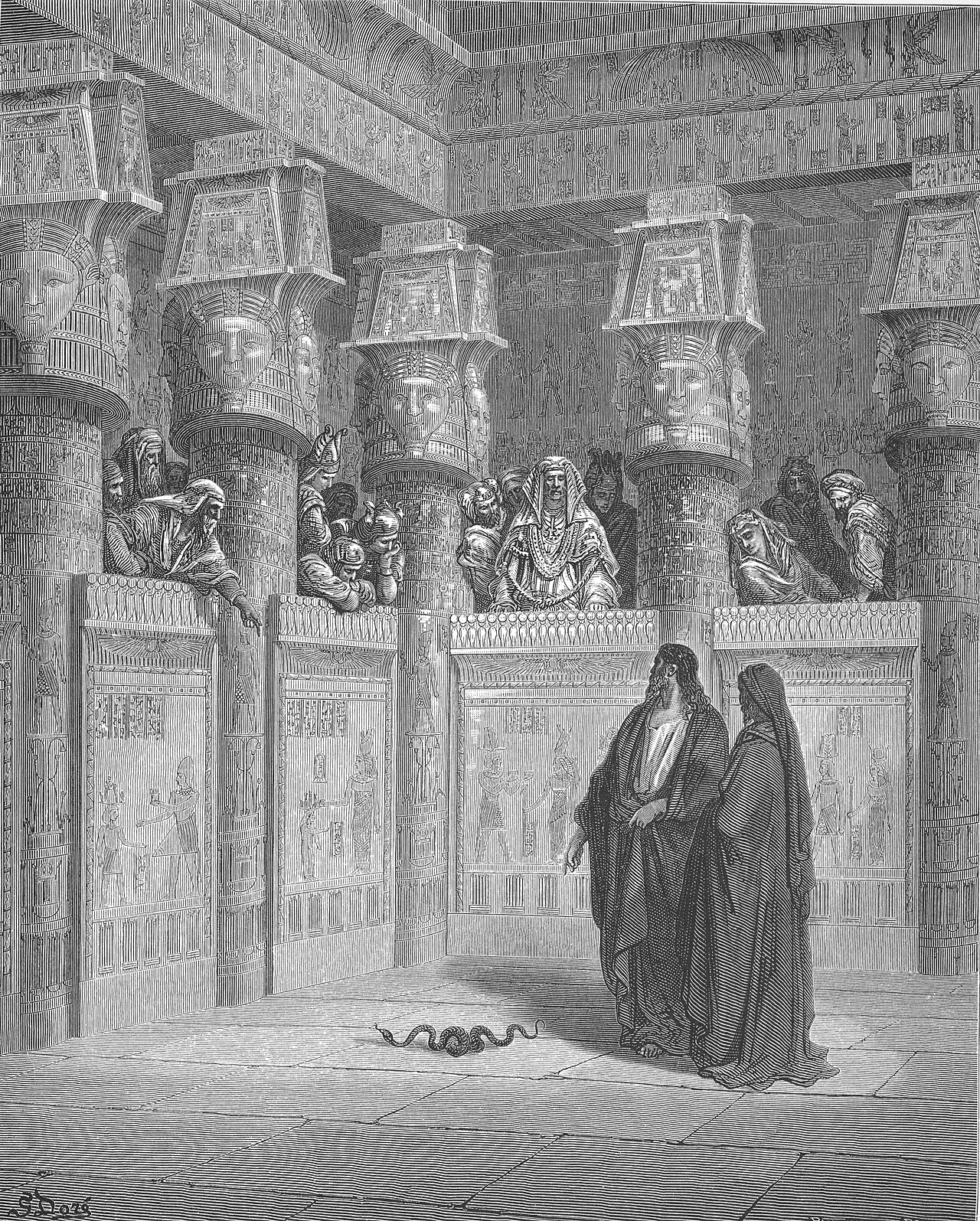
in Exodus 7And the LORD said to Moses, “Tell Aaron, ‘Take your staff and stretch out your hand over the waters of Egypt—over their rivers and canals and ponds and reservoirs—that they may become blood.’ There will be blood throughout the land of Egypt, even in the vessels of wood and stone.”
BSB
The same verse in ASV and KJV ▾
ASV
And Jehovah said unto Moses, Say unto Aaron, Take thy rod, and stretch out thy hand over the waters of Egypt, over their rivers, over their streams, and over their pools, and over all their ponds of water, that they may become blood; and there shall be blood throughout all the land of Egypt, both in vessels of wood and in vessels of stone.
KJV
And the Lord spake unto Moses, Say unto Aaron, Take thy rod, and stretch out thine hand upon the waters of Egypt, upon their streams, upon their rivers, and upon their ponds, and upon all their pools of water, that they may become blood; and that there may be blood throughout all the land of Egypt, both in vessels of wood, and in vessels of stone.
⋯
This verse in Exodus 7
Commentary
5 notes on this verseA commentator
Albert Barnes1798–1870
Notes, Explanatory and Practical, on the Old and New Testaments (1832-1869)
The “streams” mean the natural branches of the Nile in Lower Egypt. The word “rivers” should rather be “canals”; they were of great extent, running parallel to the Nile, and communicating with it by sluices, which were opened at the rise, and closed at the subsidence of the inundation. The word rendered “ponds” refers either to natural fountains, or more probably to cisterns or tanks found in every town and village. The “pools”, literally “gathering of waters,” were the reservoirs, always large and some of enormous extent, containing sufficient water to irrigate the country in the dry season.
This site's exposition
Take thy rod, and stretch out thine hand
The stroke is widened past the river to the streams, the rivers, the ponds and the pools, and then to the blood standing in vessels of wood and vessels of stone. Aaron holds the rod through the first three plagues as he held it for the serpent, and from the boils at 9:10 onward Moses acts himself. Egypt lived on that water, and the verse leaves nothing holding water untouched.
The record, by era
The Puritans and the Awakening2 voices
And the Lord spake unto Moses,....
That which is water to-day may be blood to-morrow; what is always vain may soon become vexatious. A river, at the best, is transient; but divine justice can quickly make it malignant. See what mischievous work sin makes. if the things that have been our comforts prove our crosses, we must thank ourselves: it is sin that turns our waters into blood.
The Nineteenth Century1 voice
That there may be blood - both in vessels of wood, and in vessels of stone - Not only the Nile itself was to be thus changed into blood in all its branches, and the canals issuing from it, but all the water of lakes, ponds, and reservoirs, was to undergo a similar change. And this was to extend even to the water already brought into their houses for culinary and other domestic purposes. As the water of the Nile is known to be very thick and muddy, and the Egyptians are obliged to filter it through pots of a kind of white earth, and sometimes through a paste made of almonds, Mr. Harmer supposes that the vessels of wood and stone mentioned above may refer to the process of filtration, which no doubt has been practiced among them from the remotest period. The meaning given above I think to be more natural.
The words behind it
33 Hebrew wordsEvery Hebrew word of this verse in the order it stands, with what it means and the door to its own study. The last column counts the times a word stands in the whole Bible: the rarer the word, the more the places it appears belong together.
| Hebrew | Sound | Meaning | Word study | In the Bible |
|---|---|---|---|---|
| וַיֹּ֨אמֶר | vaiyomer | and he said | H559 → | 5305 times |
| יְהוָ֜ה | yahweh | Yahweh | H3068 → | 6520 times |
| אֶל־ | ʾel- | to | H413 → | 5510 times |
| מֹשֶׁ֗ה | mosheh | Moses | H4872 → | 765 times |
| אֱמֹ֣ר | ʾemor | say | H559 → | 5305 times |
| אֶֽל־ | ʾel- | to | H413 → | 5510 times |
| אַהֲרֹ֡ן | ʾaharon | Aaron | H175 → | 347 times |
| קַ֣ח | kach | take | H3947 → | 966 times |
| מַטְּךָ֣ | matekha | staff your | H4294 → | 252 times |
| וּנְטֵֽה־ | uneteh- | and stretch out | H5186 → | 214 times |
| יָדְךָ֩ | yadekha | hand your | H3027 → | 1618 times |
| עַל־ | ʾal- | over | H5921 → | 5755 times |
| מֵימֵ֨י | meimei | [the] waters of | H4325 → | 581 times |
| מִצְרַ֜יִם | mitzrayim | Egypt | H4714 → | 641 times |
| עַֽל־ | ʾal- | over | H5921 → | 5755 times |
| נַהֲרֹתָ֣ם׀ | naharotam | rivers their | H5104 → | 119 times |
| עַל־ | ʾal- | over | H5921 → | 5755 times |
| יְאֹרֵיהֶ֣ם | yeoreihem | canals their | H2975 → | 65 times |
| וְעַל־ | veal- | and over | H5921 → | 5755 times |
| אַגְמֵיהֶ֗ם | ʾagmeihem | ponds their | H98 → | |
| וְעַ֛ל | veal | and over | H5921 → | 5755 times |
| כָּל־ | kol- | every | H3605 → | 5413 times |
| מִקְוֵ֥ה | mikveh | <the> reservoir of | H4723 → | |
| מֵימֵיהֶ֖ם | meimeihem | water their | H4325 → | 581 times |
| וְיִֽהְיוּ־ | veyihyu- | so they may become | H1961 → | 3559 times |
| דָ֑ם | dam | blood | H1818 → | 360 times |
| וְהָ֤יָה | vehayah | and it will be | H1961 → | 3559 times |
| דָם֙ | dam | blood | H1818 → | 360 times |
| בְּכָל־ | bekhol | in all | H3605 → | 5413 times |
| אֶ֣רֶץ | ʾeretz | [the] land of | H776 → | 2504 times |
| מִצְרַ֔יִם | mitzrayim | Egypt | H4714 → | 641 times |
| וּבָעֵצִ֖ים | uvaetzim | and in the wood<s> | H6086 → | 328 times |
| וּבָאֲבָנִֽים׃ | uvaavanim | and in the stone<s> | H68 → | 273 times |
וַיֹּ֨אמֶרand he said
vaiyomerH559 →5305 times
יְהוָ֜הYahweh
yahwehH3068 →6520 times
אֶל־to
ʾel-H413 →5510 times
מֹשֶׁ֗הMoses
moshehH4872 →765 times
אֱמֹ֣רsay
ʾemorH559 →5305 times
אֶֽל־to
ʾel-H413 →5510 times
אַהֲרֹ֡ןAaron
ʾaharonH175 →347 times
קַ֣חtake
kachH3947 →966 times
מַטְּךָ֣staff your
matekhaH4294 →252 times
וּנְטֵֽה־and stretch out
uneteh-H5186 →214 times
יָדְךָ֩hand your
yadekhaH3027 →1618 times
עַל־over
ʾal-H5921 →5755 times
מֵימֵ֨י[the] waters of
meimeiH4325 →581 times
מִצְרַ֜יִםEgypt
mitzrayimH4714 →641 times
עַֽל־over
ʾal-H5921 →5755 times
נַהֲרֹתָ֣ם׀rivers their
naharotamH5104 →119 times
עַל־over
ʾal-H5921 →5755 times
יְאֹרֵיהֶ֣םcanals their
yeoreihemH2975 →65 times
וְעַל־and over
veal-H5921 →5755 times
אַגְמֵיהֶ֗םponds their
ʾagmeihemH98 →
וְעַ֛לand over
vealH5921 →5755 times
כָּל־every
kol-H3605 →5413 times
מִקְוֵ֥ה<the> reservoir of
mikvehH4723 →
מֵימֵיהֶ֖םwater their
meimeihemH4325 →581 times
וְיִֽהְיוּ־so they may become
veyihyu-H1961 →3559 times
דָ֑םblood
damH1818 →360 times
וְהָ֤יָהand it will be
vehayahH1961 →3559 times
דָם֙blood
damH1818 →360 times
בְּכָל־in all
bekholH3605 →5413 times
אֶ֣רֶץ[the] land of
ʾeretzH776 →2504 times
מִצְרַ֔יִםEgypt
mitzrayimH4714 →641 times
וּבָעֵצִ֖יםand in the wood<s>
uvaetzimH6086 →328 times
וּבָאֲבָנִֽים׃and in the stone<s>
uvaavanimH68 →273 times
A shaded row is a word that stands 400 times or fewer in the Bible.
The walk
8 stopsEach card is a verse this one points to, and under it the verses that one points to in turn. Where several paths arrive at the same place, that place is listed first: the text keeps returning to it.
Through
Exodus 14:21Then Moses stretched out his hand over the sea, and all that night the LORD drove back the sea with a strong east wind that turned it into dry land. So the waters were…
it leads to
- Isaiah 63:12
who sent His glorious arm to lead them by the right hand of Moses, who divided the waters before them to gain for Himself everlasting renown,
- Exodus 15:8
At the blast of Your nostrils the waters piled up; like a wall the currents stood firm; the depths congealed in the heart of the sea.
- Psalms 66:6
He turned the sea into dry land; they passed through the waters on foot; there we rejoiced in Him.
- Nehemiah 9:11
You divided the sea before them, and they crossed through it on dry ground. You hurled their pursuers into the depths like a stone into raging waters.
- Psalms 78:13
He split the sea and brought them through; He set the waters upright like a wall.
- Isaiah 63:12
Through
Exodus 8:16Then the LORD said to Moses, “Tell Aaron, ‘Stretch out your staff and strike the dust of the earth, that it may turn into swarms of gnats throughout the land of Egypt.’”
it leads to
- Exodus 8:5
And the LORD said to Moses, “Tell Aaron, ‘Stretch out your hand with your staff over the rivers and canals and ponds, and cause the frogs to come up onto the land of Egypt.’”
- Exodus 8:5
Through
Exodus 10:21Then the LORD said to Moses, “Stretch out your hand toward heaven, so that darkness may spread over the land of Egypt—a palpable darkness.”
it leads to
- 2 Peter 2:4
For if God did not spare the angels when they sinned, but cast them deep into hell, placing them in chains of darkness to be held for judgment;
- 2 Peter 2:17
These men are springs without water and mists driven by a storm. Blackest darkness is reserved for them.
- 2 Peter 2:4
Where this verse is studied
On this page
Studies1
About Exodus
Who and where
3 names in this verse with a page on the site.
- PersonExodus and Wilderness PeriodMosesIsrael's deliverer from Egyptian slavery, covenant mediator, and lawgiver.
- PersonExodus eraAaronBrother of Moses and Israel's first high priest; his rod budded, his garments were for glory and beauty, and his line carried the…
- PlaceThe NileEgyptThe land where Joseph rose, where Israel grew into a nation in bondage, where the Passover lamb was slain and the sea opened, and…
This page draws on Adam Clarke, Commentary on the Bible; Albert Barnes, Notes, Explanatory and Practical, on the Old and New Testaments (1832-1869); John Gill, Exposition of the Old Testament; John Gill, Exposition of the Old Testament (1748-1763) and Matthew Henry, Commentary on the Whole Bible.