
Exodus 2:3
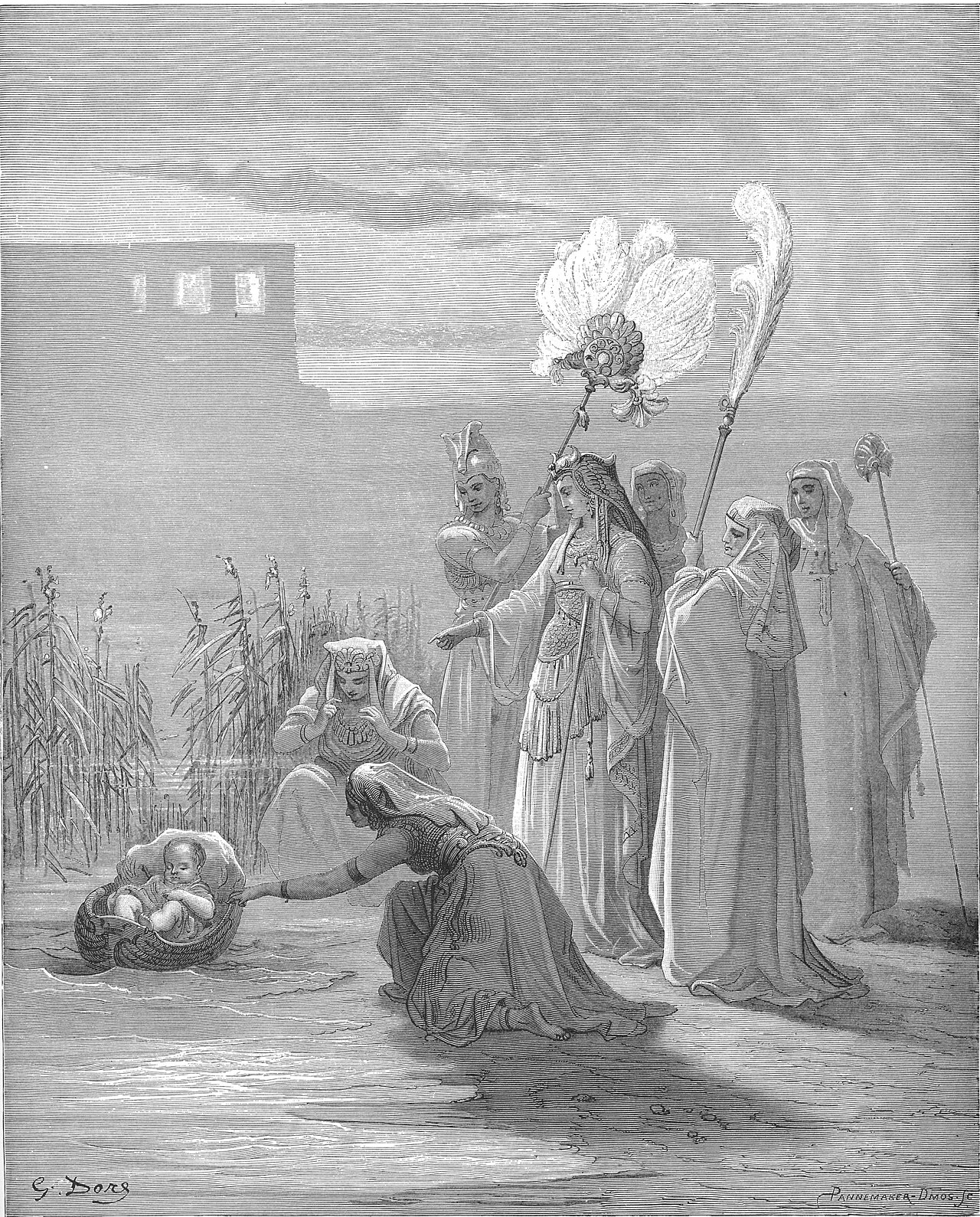
in Exodus 2But when she could no longer hide him, she got him a papyrus basket and coated it with tar and pitch. Then she placed the child in the basket and set it among the reeds along the bank of the Nile.
BSB
The same verse in ASV and KJV ▾
ASV
And when she could not longer hide him, she took for him an ark of bulrushes, and daubed it with slime and with pitch; and she put the child therein, and laid it in the flags by the river’s brink.
KJV
And when she could not longer hide him, she took for him an ark of bulrushes, and daubed it with slime and with pitch, and put the child therein; and she laid it in the flags by the river’s brink.
⋯
This verse in Exodus 2
Commentary
7 notes on this verseThus Moses in a former age Escaped proud Pharaoh's foolish law, And as the savior of his race Prefigured Christ who was to come. A cruel edict had been passed Forbidding Hebrew mothers all, When sons were born to them, to rear These virile pledges …
This site's exposition
she took for him an ark of bulrushes
The basket is called an ark, and the Hebrew word is tebah, the word used of Noah's vessel through Genesis 6 to 9. Those are the only two places the word occurs in the Old Testament, and both vessels are sealed with pitch, at Genesis 6:14 and here. Each one carries life through water while a whole generation is being destroyed in it. Pharaoh's decree at Exodus 1:22 was that every son be cast into the river, and the mother puts her son into the river inside an ark.
The record, by era
The Puritans and the Awakening2 voices
And when she could no longer hide him, she put him in an ark of bulrushes - By the river side. God put it into their hearts to do this, to bring about his own purposes: that Moses might by this means be brought into the hands of Pharaoh's daughter, and that by his deliverance, a specimen might be given of the deliverance of God's church.
And when she could no longer hide him,....
The Nineteenth Century3 voices
A commentator
Albert Barnes1798–1870
Notes, Explanatory and Practical, on the Old and New Testaments (1832-1869)
The ark was made of the papyrus which was commonly used by the Egyptians for light and swift boats. The species is no longer found in the Nile below Nubia. It is a strong rush, like the bamboo, about the thickness of a finger, three cornered, and attains the height of 10 to 15 feet. It is represented with great accuracy on the most ancient monuments of Egypt.
A commentator
Jamieson, Fausset & Brown1802–1910
Commentary Critical and Explanatory on the Whole Bible (1871)
Boats of this description are seen daily floating on the surface of the river, with no other caulking than Nile mud (compare Isa 18:2), and they are perfectly watertight, unless the coating is forced off by stormy weather. flags--a general term for sea or river weed.
An ark of bulrushes - תבת גמא tebath gome, a small boat or basket made of the Egyptian reed called papyrus, so famous in all antiquity. This plant grows on the banks of the Nile, and in marshy grounds; the stalk rises to the height of six or seven cubits above the water, is triangular, and terminates in a crown of small filaments resembling hair, which the ancients used to compare to a thyrsus. This reed was of the greatest use to the inhabitants of Egypt, the pith contained in the stalk serving them for food, and the woody part to build vessels with; which vessels frequently appear on engraved stones and other monuments of Egyptian antiquity. For this purpose they made it up like rushes into bundles, and by tying them together gave their vessels the necessary figure and solidity. “The vessels of bulrushes or papyrus,” says Dr. Shaw, “were no other than large fabrics of the same kind with that of Moses, Exo 2:3, which from the late introduction of planks and stronger materials are now laid aside.” Thus Pliny, lib. vi., cap. 16, takes notice of the naves papyraceas armamentaque Nili, “ships made of papyrus and the equipments of the Nile:” and lib. xiii., cap. 11, he observes, Exodus ipsa quidem papyro navigia texunt: “Of the papyrus itself they construct sailing vessels.” Herodotus and Diodorus have recorded the same fact; and among the poets, Lucan, lib. iv., ver. 136: Conseritur bibula Memphitis cymba papyro, “The Memphian or Egyptian boat is constructed from the soaking papyrus.” The epithet bibula is particularly remarkable, as corresponding with great exactness to the nature of the plant, and to its Hebrew name גמא gome, which signifies to soak, to drink up. […]
The words behind it
20 Hebrew wordsEvery Hebrew word of this verse in the order it stands, with what it means and the door to its own study. The last column counts the times a word stands in the whole Bible: the rarer the word, the more the places it appears belong together.
| Hebrew | Sound | Meaning | Word study | In the Bible |
|---|---|---|---|---|
| וְלֹא־ | velo'- | and not | H3808 → | 5168 times |
| יָכְלָ֣ה | yakhelah | she was able | H3201 → | 194 times |
| עוֹד֮ | ʾod | still | H5750 → | 490 times |
| הַצְּפִינוֹ֒ | hatzefino | to hide him | H6845 → | |
| וַתִּֽקַּֽח־ | vatikach- | and she took | H3947 → | 966 times |
| לוֹ֙ | lo | for <the> him | ||
| תֵּ֣בַת | tevat | a basket of | H8392 → | |
| גֹּ֔מֶא | gome' | papyrus | H1573 → | |
| וַתַּחְמְרָ֥ה | vatachmerah | and sealed it she | H2560 → | |
| בַחֵמָ֖ר | vachemar | with <the> bitumen | H2564 → | |
| וּבַזָּ֑פֶת | uvazafet | and with <the> pitch | H2203 → | |
| וַתָּ֤שֶׂם | vatasem | and she put | H7760 → | 584 times |
| בָּהּ֙ | bah | in <the> it | ||
| אֶת־ | ʾet- | <obj.> | H853 → | 10935 times |
| הַיֶּ֔לֶד | haiyeled | the child | H3206 → | 89 times |
| וַתָּ֥שֶׂם | vatasem | and she put [it] | H7760 → | 584 times |
| בַּסּ֖וּף | basuf | among the rush[es] | H5488 → | 28 times |
| עַל־ | ʾal- | at | H5921 → | 5755 times |
| שְׂפַ֥ת | sefat | [the] bank of | H8193 → | 176 times |
| הַיְאֹֽר׃ | hayor | the River | H2975 → | 65 times |
וְלֹא־and not
velo'-H3808 →5168 times
יָכְלָ֣הshe was able
yakhelahH3201 →194 times
עוֹד֮still
ʾodH5750 →490 times
הַצְּפִינוֹ֒to hide him
hatzefinoH6845 →
וַתִּֽקַּֽח־and she took
vatikach-H3947 →966 times
לוֹ֙for <the> him
lo
תֵּ֣בַתa basket of
tevatH8392 →
גֹּ֔מֶאpapyrus
gome'H1573 →
וַתַּחְמְרָ֥הand sealed it she
vatachmerahH2560 →
בַחֵמָ֖רwith <the> bitumen
vachemarH2564 →
וּבַזָּ֑פֶתand with <the> pitch
uvazafetH2203 →
וַתָּ֤שֶׂםand she put
vatasemH7760 →584 times
בָּהּ֙in <the> it
bah
אֶת־<obj.>
ʾet-H853 →10935 times
הַיֶּ֔לֶדthe child
haiyeledH3206 →89 times
וַתָּ֥שֶׂםand she put [it]
vatasemH7760 →584 times
בַּסּ֖וּףamong the rush[es]
basufH5488 →28 times
עַל־at
ʾal-H5921 →5755 times
שְׂפַ֥ת[the] bank of
sefatH8193 →176 times
הַיְאֹֽר׃the River
hayorH2975 →65 times
A shaded row is a word that stands 400 times or fewer in the Bible.
The walk
8 stopsEach card is a verse this one points to, and under it the verses that one points to in turn. Where several paths arrive at the same place, that place is listed first: the text keeps returning to it.
Through
Acts 7:19He exploited our people and oppressed our fathers, forcing them to abandon their infants so they would die.
it leads to
- Psalms 105:25
whose hearts He turned to hate His people, to conspire against His servants.
Reached by 2 separate paths from here.
- Psalms 105:25
Through
Exodus 1:22Then Pharaoh commanded all his people: “Every son born to the Hebrews you must throw into the Nile, but every daughter you may allow to live.”
it leads to
- Acts 7:19
He exploited our people and oppressed our fathers, forcing them to abandon their infants so they would die.
- Acts 7:19
Through
Genesis 6:14Make for yourself an ark of gopher wood; make rooms in the ark and coat it with pitch inside and out.
it leads to
- 1 Peter 3:20
who disobeyed long ago when God waited patiently in the days of Noah while the ark was being built. In the ark a few people, only eight souls, were saved through water.
- Luke 17:27
People were eating and drinking, marrying and being given in marriage, up to the day Noah entered the ark. Then the flood came and destroyed them all.
- Matthew 24:38
For in the days before the flood, people were eating and drinking, marrying and giving in marriage, up to the day Noah entered the ark.
- 1 Peter 3:20
Through
Matthew 2:16When Herod saw that he had been outwitted by the Magi, he was filled with rage. Sending orders, he put to death all the boys in Bethlehem and its vicinity who were two years…
it leads to
- Isaiah 59:7
Their feet run to evil; they are swift to shed innocent blood. Their thoughts are sinful thoughts; ruin and destruction lie in their wake.
- Proverbs 28:15
Like a roaring lion or a charging bear is a wicked ruler over a helpless people.
- Revelation 17:6
I could see that the woman was drunk with the blood of the saints and witnesses for Jesus. And I was utterly amazed at the sight of her.
- Isaiah 59:7
Where this verse is studied
On this page
Studies4
About Exodus
This page draws on Adam Clarke, Commentary on the Bible; Albert Barnes, Notes, Explanatory and Practical, on the Old and New Testaments (1832-1869); Jamieson, Fausset & Brown, Commentary Critical and Explanatory on the Whole Bible; John Gill, Exposition of the Old Testament; John Gill, Exposition of the Old Testament (1748-1763); John Wesley, Explanatory Notes upon the Old Testament; Keil and Delitzsch, Biblical Commentary on the Old Testament: The Pentateuch and Prudentius, HYMNS FOR EVERY DAY 12.141-52.