
2 Samuel 6:14
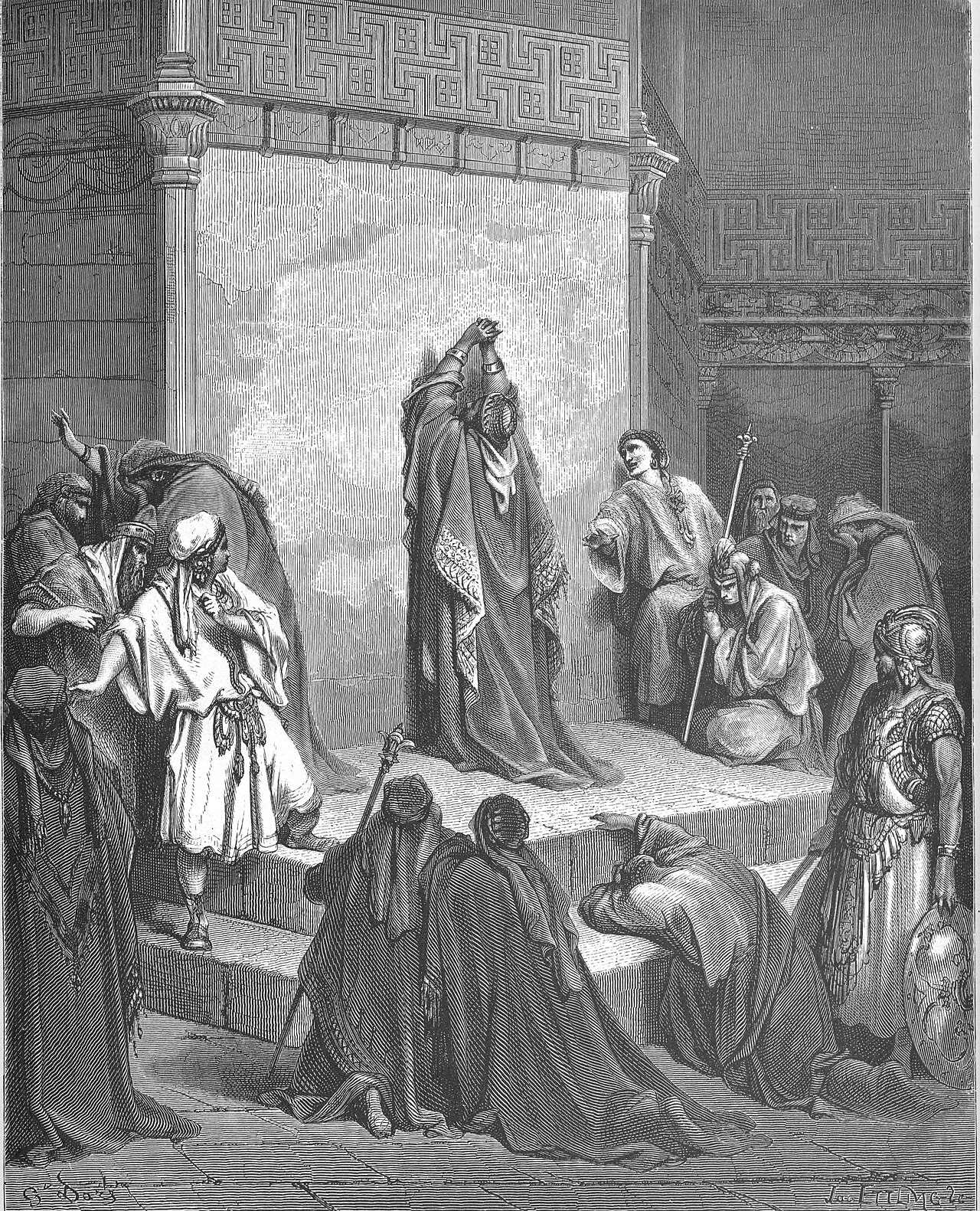
in 2 Samuel 6And David, wearing a linen ephod, danced with all his might before the LORD,
BSB
The same verse in ASV and KJV ▾
ASV
And David danced before Jehovah with all his might; and David was girded with a linen ephod.
KJV
And David danced before the Lord with all his might; and David was girded with a linen ephod.
⋯
This verse in 2 Samuel 6
Commentary
11 notes on this verseA commentator
Jamieson, Fausset & Brown1802–1910
Commentary Critical and Explanatory on the Whole Bible (1871)
But it was unquestionably done as an act of religious homage, his attitudes and dress being symbolic, as they have always been in Oriental countries, of penitence, joy, thankfulness, and devotion. [See on 1Ch 15:27.]
This site's exposition
girded with a linen ephod
on 2 Samuel 6:14-15
A linen ephod is not royal dress but the garment of consecrated service: the child Samuel wore one at Shiloh, 1 Samuel 2:18, and the eighty-five priests Doeg killed at Nob wore it too, 1 Samuel 22:18, and now the king wears it before the ark. David dances with all his might, and the older writers read the phrase as a king setting aside the dignity of a throne he has worn barely a year for the sake of the ark's homecoming. The whole house of Israel brings it up with shouting and the sound of the trumpet, the public and unrestrained counterpart to the fear that turned the first procession back.
The record, by era
The Church Fathers1 voice
For our vows are celebrated when the church is united to Christ, as John says: "The one who has the bride is the bridegroom." Because of this marriage, therefore, it behooves us to dance, for David, at once king and prophet, is also said to …
The Medieval Church1 voice
A commentator
Gregory the DialogistMorals on the Book of Job, Book 27.77 · Written before 604.
proposed
But because secret pride of heart is reproved by this, which Eliu says, "All who seem to themselves to be wise will not dare to contemplate Him"; it seems good to observe what great gifts of virtues David had obtained, and in all these with how firm a humility he maintained himself.
The Puritans and the Awakening3 voices
Linen ephod - The usual habit of the priests and Levites, in their sacred ministrations yet sometimes worn by others, as it was by the young child Samuel; and so David, who laid by his royal robes, and put on this robe to declare, that although he was king of Israel, yet he willingly owned himself to be the Lord's minister and servant.
It is a pleasure to a good man to see his errors rectified and himself in the way of his duty. His dancing, I suppose, was not artificial, by any certain rule or measure, nor do we find that any danced with him; but it was a natural expression of his great joy and exultation of mind.
And David danced before the Lord with all his might,....
4 more voices on this verse
The Nineteenth Century2 voices
And David danced before the Lord - Dancing is a religious ceremony among the Hindoos, and they consider it an act of devotion to their idols. It is evident that David considered it in the same light. What connection dancing can have with devotion I cannot tell. This I know, that unpremeditated and involuntary skipping may be the effect of sudden mental elation.
A commentator
Albert Barnes1798–1870
Notes, Explanatory and Practical, on the Old and New Testaments (1832-1869)
proposed
Danced - The Hebrew word is found only here and in 2Sa 6:16. It means “to dance in a circle,” hence, simply to dance. The parallel passage in 1Ch 15:27 gives a widely different sense.
Modern Voices2 voices
Their methods are the methods of all intense and hearty religions; they are popular like all religion, military like all religion, public and sensational like all religion. They are not reverent any more than Roman Catholics are reverent, for reverence in the sad and delicate …
A commentator
GK ChestertonHeretics, Ch. 16: On Mr. McCabe and a Divine Frivolity (1905) (1905)
proposed
But let us ask ourselves (in a spirit of love, as Mr. Chadband would say), what are the ballets of the Alhambra? The ballets of the Alhambra are institutions in which a particular selected row of persons in pink go through an operation known as …
The words behind it
10 Hebrew wordsEvery Hebrew word of this verse in the order it stands, with what it means and the door to its own study. The last column counts the times a word stands in the whole Bible: the rarer the word, the more the places it appears belong together.
| Hebrew | Sound | Meaning | Word study | In the Bible |
|---|---|---|---|---|
| וְדָוִ֛ד | vedavid | and David | H1732 → | 999 times |
| מְכַרְכֵּ֥ר | mekharker | [was] dancing | H3769 → | |
| בְּכָל־ | bekhol | with all | H3605 → | 5413 times |
| עֹ֖ז | ʾoz | strength | H5797 → | |
| לִפְנֵ֣י | lifnei | <to> before | H6440 → | 2123 times |
| יְהוָ֑ה | yahweh | Yahweh | H3068 → | 6520 times |
| וְדָוִ֕ד | vedavid | and David | H1732 → | 999 times |
| חָג֖וּר | chagur | [was] girded | H2296 → | 44 times |
| אֵפ֥וֹד | ʾefod | an ephod of | H646 → | |
| בָּֽד׃ | bad | linen | H906 → |
וְדָוִ֛דand David
vedavidH1732 →999 times
מְכַרְכֵּ֥ר[was] dancing
mekharkerH3769 →
בְּכָל־with all
bekholH3605 →5413 times
עֹ֖זstrength
ʾozH5797 →
לִפְנֵ֣י<to> before
lifneiH6440 →2123 times
יְהוָ֑הYahweh
yahwehH3068 →6520 times
וְדָוִ֕דand David
vedavidH1732 →999 times
חָג֖וּר[was] girded
chagurH2296 →44 times
אֵפ֥וֹדan ephod of
ʾefodH646 →
בָּֽד׃linen
badH906 →
A shaded row is a word that stands 400 times or fewer in the Bible.
The walk
8 stopsEach card is a verse this one points to, and under it the verses that one points to in turn. Where several paths arrive at the same place, that place is listed first: the text keeps returning to it.
Through
Psalms 150:4Praise Him with tambourine and dancing; praise Him with strings and flute.
it leads to
- Exodus 15:20
Then Miriam the prophetess, Aaron’s sister, took a tambourine in her hand, and all the women followed her with tambourines and dancing.
Reached by 3 separate paths from here.
- Psalms 149:3
Let them praise His name with dancing, and make music to Him with tambourine and harp.
Reached by 2 separate paths from here.
- Isaiah 38:20
The LORD will save me; we will play songs on stringed instruments all the days of our lives in the house of the LORD.
- Exodus 15:20
Through
Exodus 15:20Then Miriam the prophetess, Aaron’s sister, took a tambourine in her hand, and all the women followed her with tambourines and dancing.
it leads to
- Psalms 68:25
The singers lead the way, the musicians follow after, among the maidens playing tambourines.
Reached by 2 separate paths from here.
- Psalms 150:4
Praise Him with tambourine and dancing; praise Him with strings and flute.
- 1 Samuel 18:6
As the troops were returning home after David had killed the Philistine, the women came out of all the cities of Israel to meet King Saul with singing and dancing, with joyful songs, and…
- Judges 11:34
And when Jephthah returned home to Mizpah, there was his daughter coming out to meet him with tambourines and dancing! She was his only child; he had no son or daughter besides her.
- Psalms 68:25
Through
Psalms 149:3Let them praise His name with dancing, and make music to Him with tambourine and harp.
it leads to
- Jeremiah 31:13
Then the maidens will rejoice with dancing, young men and old as well. I will turn their mourning into joy, and give them comfort and joy for their sorrow.
- Jeremiah 31:13
Where this verse is studied
On this page
Studies1
About 2 Samuel
Who and where
1 name in this verse with a page on the site.
This page draws on 10 works. Open the list of works
This page draws on Adam Clarke, Commentary on the Bible; Albert Barnes, Notes, Explanatory and Practical, on the Old and New Testaments (1832-1869); GK Chesterton, Heretics, Ch. 6: Christmas and the Aesthetes (1905); GK Chesterton, Heretics, Ch. 16: On Mr. McCabe and a Divine Frivolity (1905); Gregory the Dialogist, Morals on the Book of Job, Book 27.77; Jamieson, Fausset & Brown, Commentary Critical and Explanatory on the Whole Bible; John Gill, Exposition of the Old Testament (1748-1763); John Wesley, Explanatory Notes upon the Old Testament; Matthew Henry, Commentary on the Whole Bible and Maximus of Turin, SERMON 42.5.