
2 Samuel 24:17
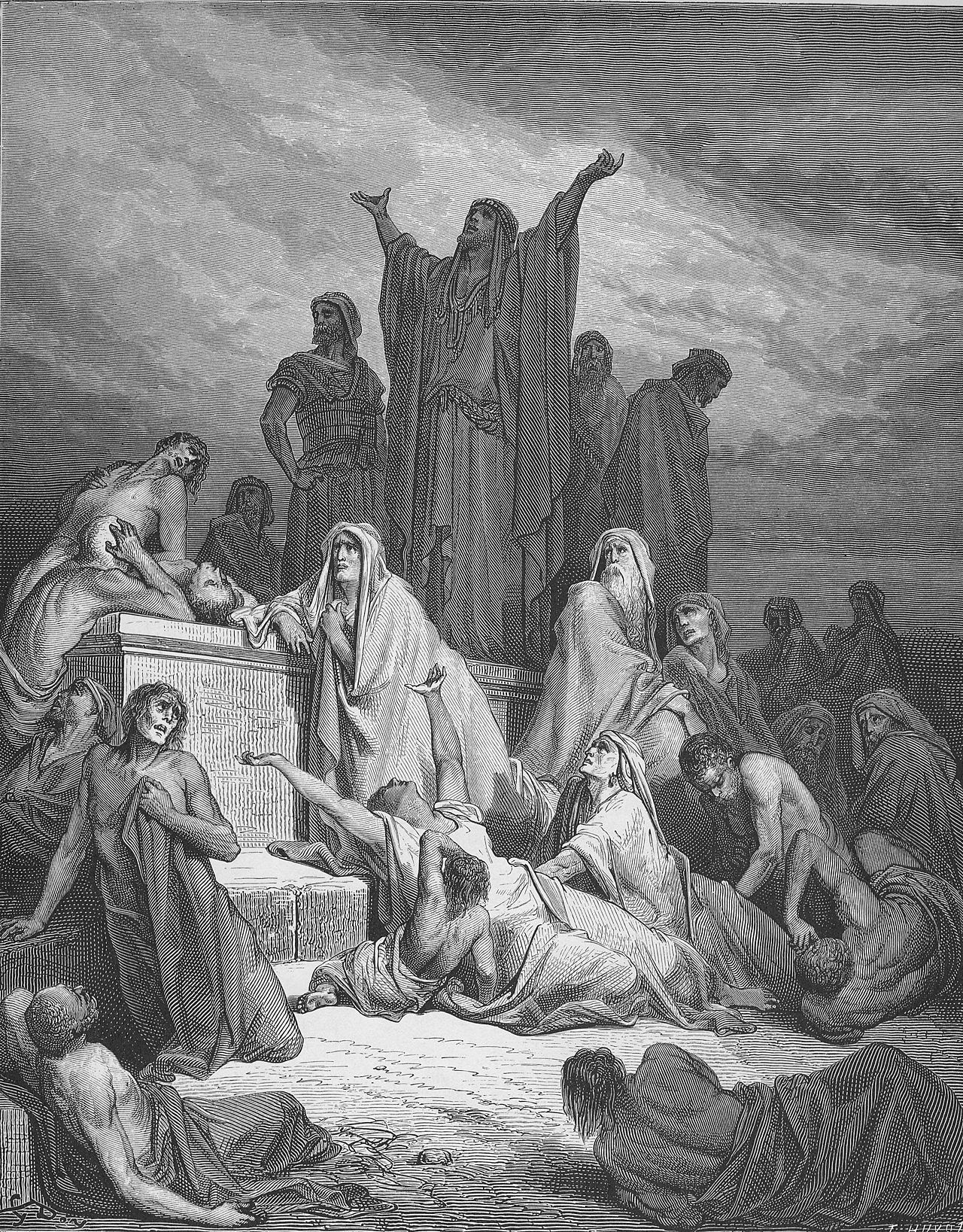
in 2 Samuel 24When David saw the angel striking down the people, he said to the LORD, “Surely I, the shepherd, have sinned and acted wickedly. But these sheep, what have they done? Please, let Your hand fall upon me and my father’s house.”
BSB
The same verse in ASV and KJV ▾
ASV
And David spake unto Jehovah when he saw the angel that smote the people, and said, Lo, I have sinned, and I have done perversely; but these sheep, what have they done? let thy hand, I pray thee, be against me, and against my father’s house.
KJV
And David spake unto the Lord when he saw the angel that smote the people, and said, Lo, I have sinned, and I have done wickedly: but these sheep, what have they done? let thine hand, I pray thee, be against me, and against my father’s house.
⋯
This verse in 2 Samuel 24
Commentary
10 notes on this verseA commentator
Albert Barnes1798–1870
Notes, Explanatory and Practical, on the Old and New Testaments (1832-1869)
Compare the passage in Chronicles. The account here is abridged; and 2Sa 24:18 has the appearance of being the original statement.
This site's exposition
these sheep, what have they done
David sees the angel and asks to bear the judgment alone, offering himself and his father's house in the people's place and calling them sheep, the same word once used of the flock he kept at Bethlehem. Matthew Henry reads the plea as a shadow of Christ, who gave himself so that God's hand fell on him rather than on the sheep. The king who numbered the flock out of his own vanity now asks to be counted for it instead.
The record, by era
The Church Fathers4 voices
Therefore since the apostle taught that a person who has passed out of this body will be with Christ, provided he deserves it, let us consider the nature of life and of death. We know from the teaching of Scripture that death is a freeing of the soul from the body, a kind of separation in man.
And how is it possible (you say) that one should so love his neighbor as himself? If others had not done this, you might well think it impossible: but if they have done it, it is plain that from indolence it is not done by ourselves. And besides, Christ enjoins nothing impossible, seeing that many have even gone beyond His commands. Who has done this? Paul, Peter, all the company of the Saints. Nay, indeed if I say that they loved their neighbors, I say no great matter: they so loved their enemies as no man would love those who were likeminded with himself. For who would choose for the sake of those likeminded, to go away into Hell, when he was about to depart unto a kingdom? No man. But Paul chose this for the sake of his enemies, for those who stoned him, those who scourged him. What pardon then will there be for us, what excuse, if we shall not show towards our friends even the very smallest portion of that love which Paul showed towards his enemies? And before him too, the blessed Moses was willing to be blotted out of God's book for the sake of his enemies who had stoned him. David also when he saw those who had stood up against him slain, saith, "I, the shepherd, have sinned, but these, what have they done?" And when he had Saul in his hands, he would not slay him, but saved him; and this when he himself would be in danger. But if these things were done under the Old [Covenant] what excuse shall we have who live under the New, and do not attain even to the same measure with them? For if, "unless our righteousness exceed that of the Scribes and Pharisees, we shall not enter into the kingdom of Heaven," how shall we enter in when we have even less than they?
He is a most diligent pastor who delivered over himself on behalf of his sheep. He is an excellent leader who gave himself in behalf of his sheep.… And when David numbered the flock of his sheep, wrath came upon them, and they began to be destroyed. Then David delivered himself over on behalf of his sheep, when he prayed, saying, "O Lord God, I have sinned in that I have numbered Israel. Let your hand be on me and on my father's house. These innocent sheep, how have they sinned?" So also [in this way] all the diligent pastors used to give themselves on behalf of their sheep.But those pastors who did not care for the sheep, those were hirelings who used to feed themselves alone.
Good, therefore, is humility. It delivers those who are in danger and raises those who have fallen. This humility was known to him who said, "Behold, it is I that have sinned, and I the shepherd have acted wickedly; and these in this flock, what have they done? Let your hand be against me." Well does David say this who made his kingdom subject to God and did penance and, having confessed his sin, asked pardon. He attained salvation through humility. Christ humbled himself to raise up all, and whoever follows the humility of Christ attains the rest of Christ.
The Puritans and the Awakening1 voice
Most people, when God's judgments are abroad, charge others with being the cause of them, and care not who falls by them, so they can escape. But David's penitent and public spirit was otherwise affected. Let this remind us of the grace of our Lord Jesus, who gave himself for our sins and was willing that God's hand should be against him, that we might escape.
3 more voices on this verse
The Puritans and the Awakening1 voice
And David spake unto the Lord,....
The Nineteenth Century2 voices
A commentator
Jamieson, Fausset & Brown1802–1910
Commentary Critical and Explanatory on the Whole Bible (1871)
But in the body politic as well as natural, when the head suffers, all the members suffer along with it; and, besides, although David's sin was the immediate cause, the great increase of national offenses at this time had (2Sa 24:1) kindled the anger of the Lord.
But these sheep, what have they done? - It seems that in the order of Providence there is no way of punishing kings in their regal capacity, but by afflictions on their land, in which the people must necessarily suffer. If the king, therefore, by his own personal offenses, in which the people can have no part, bring down God’s judgments upon his people, (though they suffer innocently), grievous will be the account that he must give to God. The people generally suffer for the miscarriages of their governors: this has been observed in every age. Quicquid delirant reges, plectuntur Achivi. - “When doting monarchs urge Unsound resolves, their subjects feel the scourge.” Hor. Ep. lib. i., ep. 2, ver. 14. Against my father’s house - That is, against his own family; even to cut it off from the face of the earth.
The words behind it
26 Hebrew wordsEvery Hebrew word of this verse in the order it stands, with what it means and the door to its own study. The last column counts the times a word stands in the whole Bible: the rarer the word, the more the places it appears belong together.
| Hebrew | Sound | Meaning | Word study | In the Bible |
|---|---|---|---|---|
| וַיֹּאמֶר֩ | vaiyomer | and he said | H559 → | 5305 times |
| דָּוִ֨ד | david | David | H1732 → | 999 times |
| אֶל־ | ʾel- | to | H413 → | 5510 times |
| יְהוָ֜ה | yahweh | Yahweh | H3068 → | 6520 times |
| בִּרְאֹת֣וֹ׀ | biroto | when saw he | H7200 → | 1300 times |
| אֶֽת־ | ʾet- | <obj.> | H853 → | 10935 times |
| הַמַּלְאָ֣ךְ׀ | hamalakh | the angel | H4397 → | 213 times |
| הַמַּכֶּ֣ה | hamakeh | who was striking down | H5221 → | 499 times |
| בָעָ֗ם | vaam | <on> the people | H5971 → | 1873 times |
| וַיֹּ֙אמֶר֙ | vaiyomer | and he said | H559 → | 5305 times |
| הִנֵּ֨ה | hineh | here! | H2009 → | 843 times |
| אָנֹכִ֤י | ʾanokhi | I | H595 → | 359 times |
| חָטָ֙אתִי֙ | chatati | I have sinned | H2398 → | 238 times |
| וְאָנֹכִ֣י | veanokhi | and I | H595 → | 359 times |
| הֶעֱוֵ֔יתִי | heeveiti | I have done wrong | H5753 → | 17 times |
| וְאֵ֥לֶּה | veeleh | and these | H428 → | 746 times |
| הַצֹּ֖אן | hatzon | the sheep | H6629 → | 274 times |
| מֶ֣ה | meh | what? | H4100 → | 752 times |
| עָשׂ֑וּ | ʾasu | have they done | H6213 → | 2628 times |
| תְּהִ֨י | tehi | let it be | H1961 → | 3559 times |
| נָ֥א | na' | please | H4994 → | 404 times |
| יָדְךָ֛ | yadekha | hand your | H3027 → | 1618 times |
| בִּ֖י | bi | on me | ||
| וּבְבֵ֥ית | uveveit | and on [the] house of | H1004 → | 2046 times |
| אָבִֽי׃ פ | ʾavi | father my | H1 → | 1212 times |
| הָֽרֹעֶה | haroeh | the shepherd | H7462 → | 177 times |
וַיֹּאמֶר֩and he said
vaiyomerH559 →5305 times
דָּוִ֨דDavid
davidH1732 →999 times
אֶל־to
ʾel-H413 →5510 times
יְהוָ֜הYahweh
yahwehH3068 →6520 times
בִּרְאֹת֣וֹ׀when saw he
birotoH7200 →1300 times
אֶֽת־<obj.>
ʾet-H853 →10935 times
הַמַּלְאָ֣ךְ׀the angel
hamalakhH4397 →213 times
הַמַּכֶּ֣הwho was striking down
hamakehH5221 →499 times
בָעָ֗ם<on> the people
vaamH5971 →1873 times
וַיֹּ֙אמֶר֙and he said
vaiyomerH559 →5305 times
הִנֵּ֨הhere!
hinehH2009 →843 times
אָנֹכִ֤יI
ʾanokhiH595 →359 times
חָטָ֙אתִי֙I have sinned
chatatiH2398 →238 times
וְאָנֹכִ֣יand I
veanokhiH595 →359 times
הֶעֱוֵ֔יתִיI have done wrong
heeveitiH5753 →17 times
וְאֵ֥לֶּהand these
veelehH428 →746 times
הַצֹּ֖אןthe sheep
hatzonH6629 →274 times
מֶ֣הwhat?
mehH4100 →752 times
עָשׂ֑וּhave they done
ʾasuH6213 →2628 times
תְּהִ֨יlet it be
tehiH1961 →3559 times
נָ֥אplease
na'H4994 →404 times
יָדְךָ֛hand your
yadekhaH3027 →1618 times
בִּ֖יon me
bi
וּבְבֵ֥יתand on [the] house of
uveveitH1004 →2046 times
אָבִֽי׃ פfather my
ʾaviH1 →1212 times
הָֽרֹעֶהthe shepherd
haroehH7462 →177 times
A shaded row is a word that stands 400 times or fewer in the Bible.
The walk
8 stopsEach card is a verse this one points to, and under it the verses that one points to in turn. Where several paths arrive at the same place, that place is listed first: the text keeps returning to it.
Through
Psalms 74:1Why have You rejected us forever, O God? Why does Your anger smolder against the sheep of Your pasture?
it leads to
- Deuteronomy 29:20
The LORD will never be willing to forgive him. Instead, His anger and jealousy will burn against that man, and every curse written in this book will fall upon him. The LORD will blot…
- Psalms 79:13
Then we Your people, the sheep of Your pasture, will thank You forever; from generation to generation we will declare Your praise.
- Psalms 100:3
Know that the LORD is God. It is He who made us, and we are His; we are His people, and the sheep of His pasture.
- John 10:26–30
But because you are not My sheep, you refuse to believe.
- Deuteronomy 29:20
Through
2 Samuel 24:10After David had numbered the troops, his conscience was stricken and he said to the LORD, “I have sinned greatly in what I have done. Now, O LORD, I beg You to take away…
it leads to
- 2 Samuel 12:13
Then David said to Nathan, “I have sinned against the LORD.” “The LORD has taken away your sin,” Nathan replied. “You will not die.
- 2 Samuel 12:13
Through
Job 42:6Therefore I retract my words, and I repent in dust and ashes.”
it leads to
- Ezra 9:6
and said: “O my God, I am ashamed and embarrassed to lift up my face to You, my God, because our iniquities are higher than our heads, and our guilt has reached the heavens.
- James 4:7–10
Submit yourselves, then, to God. Resist the devil, and he will flee from you.
- 1 Timothy 1:13–16
I was formerly a blasphemer, a persecutor, and a violent man; yet because I had acted in ignorance and unbelief, I was shown mercy.
- Ezra 9:6
Where this verse is studied
On this page
About 2 Samuel
Who and where
1 name in this verse with a page on the site.
This page draws on 10 works. Open the list of works
This page draws on Adam Clarke, Commentary on the Bible; Albert Barnes, Notes, Explanatory and Practical, on the Old and New Testaments (1832-1869); Ambrose of Milan, DEATH AS A GOOD 3.8; Ambrose of Milan, ON THE DEATH OF THEODOSIUS 27; Aphrahat the Persian Sage, DEMONSTRATION 10.2-3; Jamieson Fausset and Brown, Commentary Critical and Explanatory on the Whole Bible; Jamieson, Fausset & Brown, Commentary Critical and Explanatory on the Whole Bible; John Chrysostom, Homily on Hebrews 19; John Gill, Exposition of the Old Testament (1748-1763) and Matthew Henry, Commentary on the Whole Bible.