
2 Kings 9:21
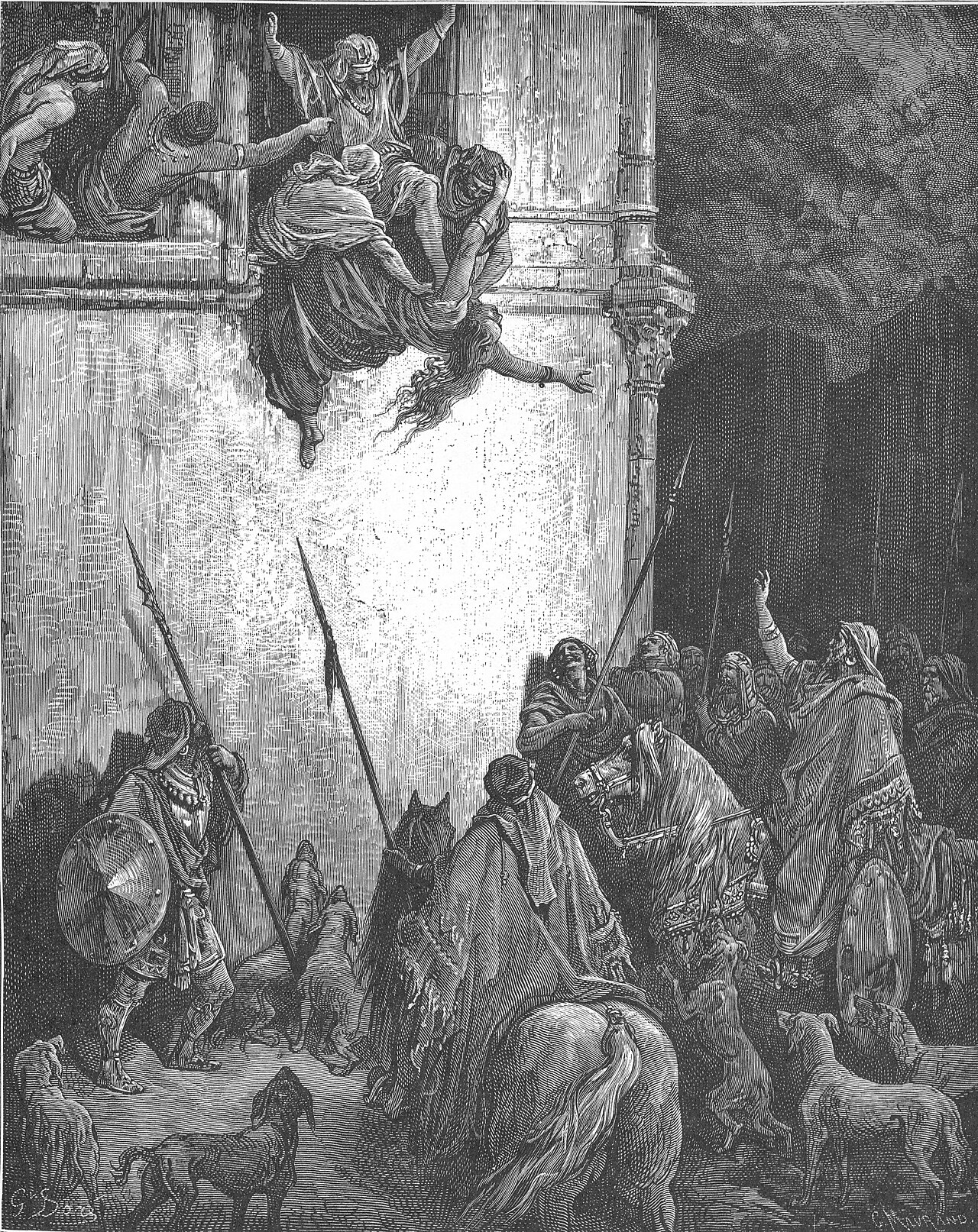
in 2 Kings 9“Harness!” Joram shouted, and they harnessed his chariot. Then Joram king of Israel and Ahaziah king of Judah set out, each in his own chariot, and met Jehu on the property of Naboth the Jezreelite.
BSB
The same verse in ASV and KJV ▾
ASV
And Joram said, Make ready. And they made ready his chariot. And Joram king of Israel and Ahaziah king of Judah went out, each in his chariot, and they went out to meet Jehu, and found him in the portion of Naboth the Jezreelite.
KJV
And Joram said, Make ready. And his chariot was made ready. And Joram king of Israel and Ahaziah king of Judah went out, each in his chariot, and they went out against Jehu, and met him in the portion of Naboth the Jezreelite.
⋯
This verse in 2 Kings 9
Commentary
8 notes on this verseA commentator
Albert Barnes1798–1870
Notes, Explanatory and Practical, on the Old and New Testaments (1832-1869)
Make ready - literally, (as in margin) “Blind,” i. e., “Harness the horses to the chariot.” The king had no suspicion of Jehu’s treason. Probably he imagined that he was bringing him important news from the seat of war. Ahaziah’s accompanying him is significant of the close friendship which united the uncle and the nephew.
This site's exposition
in the portion of Naboth
Joram and Ahaziah ride out together and meet Jehu in the portion of Naboth the Jezreelite, the exact ground Ahab took by false witness and murder in the chapter where Elijah once stood on this same soil to condemn him. Wesley calls the coincidence of ground itself a kind of preaching, the circumstances of providence making the punishment answer the sin as face answers face in a glass. Nothing in the text says the location was chosen on purpose; the narrator simply names it and lets a reader who remembers that earlier chapter supply the rest.
The record, by era
The Church Fathers1 voice
So he went out with a group of select men. But he met Joram, king of Israel, in the course of his journey, and little later Ahaziah, king of Judah. He was able to defeat them after the first attack and killed them both.
The Puritans and the Awakening3 voices
Portion of Naboth - The very sight of that ground was enough to make Jehu triumph and Joram tremble. The circumstances of events are sometimes so ordered by Divine providence, as to make the punishment answer the sin, as face answers face in a glass.
And Joram said, make ready,....
What peace can sinners have with God, what peace with their own consciences, what good, what comfort, can they expect in life, in death, or after death, who go on still in their trespasses? No peace so long as sin is persisted in; but, as soon as it is repented of and forsaken, there is peace.
The Nineteenth Century1 voice
A commentator
Jamieson, Fausset & Brown1802–1910
Commentary Critical and Explanatory on the Whole Bible (1871)
A report was made to Joram in his palace below. A messenger on horseback was quickly despatched down into the plain to meet the ambiguous host and to question the object of their approach. "Is it peace?" We may safely assume that this messenger would meet Jehu at the distance of three miles or more.
1 more voice on this verse
The Nineteenth Century1 voice
Joram - and Ahaziah - went out - They had no suspicion of what was done at Ramoth-gilead; else they would not have ventured their persons as they now did.
The words behind it
21 Hebrew wordsEvery Hebrew word of this verse in the order it stands, with what it means and the door to its own study. The last column counts the times a word stands in the whole Bible: the rarer the word, the more the places it appears belong together.
| Hebrew | Sound | Meaning | Word study | In the Bible |
|---|---|---|---|---|
| וַיֹּ֤אמֶר | vaiyomer | and he said | H559 → | 5305 times |
| יְהוֹרָם֙ | yehoram | Jehoram | H3088 → | 29 times |
| אֱסֹ֔ר | ʾesor | harness | H631 → | 72 times |
| וַיֶּאְסֹ֖ר | vaiye'sor | and someone harnessed | H631 → | 72 times |
| רִכְבּ֑וֹ | rikhbo | chariot his | H7393 → | 119 times |
| וַיֵּצֵ֣א | vaiyetze' | and he went out | H3318 → | 1067 times |
| יְהוֹרָ֣ם | yehoram | Jehoram | H3088 → | 29 times |
| מֶֽלֶךְ־ | melekh- | [the] king of | H4428 → | 2525 times |
| יִ֠שְׂרָאֵל | yisrael | Israel | H3478 → | 2507 times |
| וַאֲחַזְיָ֨הוּ | vaachazyahu | and Ahaziah | H274 → | 37 times |
| מֶֽלֶךְ־ | melekh- | [the] king of | H4428 → | 2525 times |
| יְהוּדָ֜ה | yehudah | Judah | H3063 → | 819 times |
| אִ֣ישׁ | ʾish | each | H376 → | 1663 times |
| בְּרִכְבּ֗וֹ | berikhbo | in chariot his | H7393 → | 119 times |
| וַיֵּֽצְאוּ֙ | vaiyetzeu | and they went out | H3318 → | 1067 times |
| לִקְרַ֣את | likrat | to meet | H7122 → | 139 times |
| יֵה֔וּא | yehu' | Jehu | H3058 → | 58 times |
| וַיִּמְצָאֻ֔הוּ | vaiyimtzauhu | and they found him | H4672 → | 455 times |
| בְּחֶלְקַ֖ת | bechelkat | in [the] portion of land of | H2513 → | 29 times |
| נָב֥וֹת | navot | Naboth | H5022 → | 22 times |
| הַיִּזְרְעֵאלִֽי׃ | haiyizreeli | the Jezreelite | H3158 → |
וַיֹּ֤אמֶרand he said
vaiyomerH559 →5305 times
יְהוֹרָם֙Jehoram
yehoramH3088 →29 times
אֱסֹ֔רharness
ʾesorH631 →72 times
וַיֶּאְסֹ֖רand someone harnessed
vaiye'sorH631 →72 times
רִכְבּ֑וֹchariot his
rikhboH7393 →119 times
וַיֵּצֵ֣אand he went out
vaiyetze'H3318 →1067 times
יְהוֹרָ֣םJehoram
yehoramH3088 →29 times
מֶֽלֶךְ־[the] king of
melekh-H4428 →2525 times
יִ֠שְׂרָאֵלIsrael
yisraelH3478 →2507 times
וַאֲחַזְיָ֨הוּand Ahaziah
vaachazyahuH274 →37 times
מֶֽלֶךְ־[the] king of
melekh-H4428 →2525 times
יְהוּדָ֜הJudah
yehudahH3063 →819 times
אִ֣ישׁeach
ʾishH376 →1663 times
בְּרִכְבּ֗וֹin chariot his
berikhboH7393 →119 times
וַיֵּֽצְאוּ֙and they went out
vaiyetzeuH3318 →1067 times
לִקְרַ֣אתto meet
likratH7122 →139 times
יֵה֔וּאJehu
yehu'H3058 →58 times
וַיִּמְצָאֻ֔הוּand they found him
vaiyimtzauhuH4672 →455 times
בְּחֶלְקַ֖תin [the] portion of land of
bechelkatH2513 →29 times
נָב֥וֹתNaboth
navotH5022 →22 times
הַיִּזְרְעֵאלִֽי׃the Jezreelite
haiyizreeliH3158 →
A shaded row is a word that stands 400 times or fewer in the Bible.
The walk
8 stopsEach card is a verse this one points to, and under it the verses that one points to in turn. Where several paths arrive at the same place, that place is listed first: the text keeps returning to it.
Through
2 Chronicles 22:7Ahaziah’s downfall came from God when he went to visit Joram. When Ahaziah arrived, he went out with Joram to meet Jehu son of Nimshi, whom the LORD had anointed to destroy the house…
it leads to
- 2 Chronicles 10:15
So the king did not listen to the people, and indeed this turn of events was from God, in order that the LORD might fulfill the word that He had spoken through Ahijah the…
- Psalms 9:16
The LORD is known by the justice He brings; the wicked are ensnared by the work of their hands. Higgaion Selah
- Isaiah 46:10
I declare the end from the beginning, and ancient times from what is still to come. I say, ‘My purpose will stand, and all My good pleasure I will accomplish.’
- 2 Chronicles 10:15
Through
Micah 1:13Harness your chariot horses, O dweller of Lachish. You were the beginning of sin to the Daughter of Zion, for the transgressions of Israel were found in you.
it leads to
- 2 Kings 18:17
Nevertheless, the king of Assyria sent the Tartan, the Rabsaris, and the Rabshakeh, along with a great army, from Lachish to King Hezekiah at Jerusalem. They advanced up to Jerusalem and stationed themselves by…
- Joshua 10:3
Therefore Adoni-zedek king of Jerusalem sent word to Hoham king of Hebron, Piram king of Jarmuth, Japhia king of Lachish, and Debir king of Eglon, saying,
- 2 Chronicles 32:9
Later, as Sennacherib king of Assyria and all his forces besieged Lachish, he sent his servants to Jerusalem with a message for King Hezekiah of Judah and all the people of Judah who were…
- 2 Kings 18:17
Through
Numbers 20:14From Kadesh, Moses sent messengers to tell the king of Edom, “This is what your brother Israel says: You know all the hardship that has befallen us,
it leads to
- Judges 11:16–17
But when Israel came up out of Egypt, they traveled through the wilderness to the Red Sea and came to Kadesh.
- Deuteronomy 23:7
Do not despise an Edomite, for he is your brother. Do not despise an Egyptian, because you lived as a foreigner in his land.
- Judges 11:16–17
Where this verse is studied
On this page
About 2 Kings
Who and where
3 names in this verse with a page on the site.
- PersonPatriarchsJudahJacob's fourth son who pledges himself for Benjamin; the tribe that carries the scepter to Shiloh (49:10) and the line to Christ (…
- PersonDivided kingdomNabothThe Jezreelite who refused to sell the inheritance of his fathers to Ahab; framed by Jezebel's letters and stoned — the vineyard w…
- PersonDivided kingdomJehuThe furious-driving commander anointed at Elisha's order who purged the house of Ahab and Baal from Israel — zealous for the LORD,…
This page draws on Adam Clarke, Commentary on the Bible; Albert Barnes, Notes, Explanatory and Practical, on the Old and New Testaments (1832-1869); Ephrem the Syrian, ON THE SECOND BOOK OF KINGS 9:1-24; Jamieson, Fausset & Brown, Commentary Critical and Explanatory on the Whole Bible; John Gill, Exposition of the Old Testament (1748-1763); John Wesley, Explanatory Notes upon the Old Testament and Matthew Henry, Commentary on the Whole Bible.