
1 Samuel 23:10
in 1 Samuel 23And David said, “O LORD, God of Israel, Your servant has heard that Saul intends to come to Keilah and destroy the city on my account.
BSB
The same verse in ASV and KJV ▾
ASV
Then said David, O Jehovah, the God of Israel, thy servant hath surely heard that Saul seeketh to come to Keilah, to destroy the city for my sake.
KJV
Then said David, O Lord God of Israel, thy servant hath certainly heard that Saul seeketh to come to Keilah, to destroy the city for my sake.
⋯
This verse in 1 Samuel 23
Commentary
5 notes on this verseThis site's exposition
Bring hither the ephod
on 1 Samuel 23:9-11
David's habit of enquiry, already shown twice in this chapter, now stands under direct mortal threat, and Abiathar's ephod becomes his warning system while Saul mobilizes an army against him. Adam Clarke reads the conditional answers, whether Saul will come down and whether Keilah will hand him over, as real contingency, God's foreknowledge poising outcomes on the choices of men rather than overriding them. John Wesley notes the answer came as a voice or suggestion to the high priest, not by any change in the stones of the breastplate.
This site's exposition
Your servant has heard that Saul intends
David speaks through the priest, as Gill explains, and calls himself Your servant three times in two verses. Henry hears concern for Keilah in on my account. Gill reads the title God of Israel as an appeal to the covenant God of His people.
The record, by era
The Puritans and the Awakening3 voices
Those that address God must know their distance, and who they are speaking to. (2.) Very particular and express. His representation of the case is so (
quarantine:debris (2026-07-29) — unbalanced-parens
Then said David,.... By the priest, for it was he that put the questions for and in the name of the inquirer: O Lord God of Israel; the great Jehovah, the covenant God of his people, who always has a merciful regard unto them: thy servant hath certainly heard; had good information of it, on which he could depend: that Saul seeketh to come to Keilah; that was his intention and resolution: to destroy the city for my sake; to besiege it, and demolish it, if that was necessary, in order to take him.
Generous souls are thus minded. His queries upon the case are likewise very particular. God allows us to be so in our addresses to him: "Lord, direct me in this matter, about which I am now at a loss." He does indeed invert the due order of his queries, but God in his answer puts him into method.
How the passage was read
What the Jewish commentators add
On the verses either side of this one
Will Keilah's residents hand me over… This teaches us that one who consults regarding two matters, receives a reply concerning only one, and that reply concerns the first one.
This section is reception history: how the passage was read and kept in the Jewish tradition. Where a reading parts from an essential of the Christian faith, the section says so at that point.
Texts and citation data: Sefaria; each excerpt follows its version’s licence. 6 further sources are cited on this chapter that carry no English text this site may quote or only restate the verse.
The words behind it
17 Hebrew wordsEvery Hebrew word of this verse in the order it stands, with what it means and the door to its own study. The last column counts the times a word stands in the whole Bible: the rarer the word, the more the places it appears belong together.
| Hebrew | Sound | Meaning | Word study | In the Bible |
|---|---|---|---|---|
| וַיֹּאמֶר֮ | vaiyomer | and he said | H559 → | 5305 times |
| דָּוִד֒ | david | David | H1732 → | 999 times |
| יְהוָה֙ | yahweh | O Yahweh | H3068 → | 6520 times |
| אֱלֹהֵ֣י | ʾelohei | [the] God of | H430 → | 2601 times |
| יִשְׂרָאֵ֔ל | yisrael | Israel | H3478 → | 2507 times |
| שָׁמֹ֤עַ | shamoa' | certainly <to hear> | H8085 → | 1159 times |
| שָׁמַע֙ | shama' | he has heard | H8085 → | 1159 times |
| עַבְדְּךָ֔ | ʾavdekha | servant your | H5650 → | 799 times |
| כִּֽי־ | ki- | that | H3588 → | 4482 times |
| מְבַקֵּ֥שׁ | mevakesh | [is] seeking | H1245 → | 225 times |
| שָׁא֖וּל | shaul | Saul | H7586 → | 402 times |
| לָב֣וֹא | lavo' | to come | H935 → | 2568 times |
| אֶל־ | ʾel- | to | H413 → | 5510 times |
| קְעִילָ֑ה | keilah | Keilah | H7084 → | 18 times |
| לְשַׁחֵ֥ת | leshachet | to destroy | H7843 → | 146 times |
| לָעִ֖יר | lair | <to> the city | H5892 → | 1090 times |
| בַּעֲבוּרִֽי׃ | baavuri | because of me | H5668 → | 49 times |
וַיֹּאמֶר֮and he said
vaiyomerH559 →5305 times
דָּוִד֒David
davidH1732 →999 times
יְהוָה֙O Yahweh
yahwehH3068 →6520 times
אֱלֹהֵ֣י[the] God of
ʾeloheiH430 →2601 times
יִשְׂרָאֵ֔לIsrael
yisraelH3478 →2507 times
שָׁמֹ֤עַcertainly <to hear>
shamoa'H8085 →1159 times
שָׁמַע֙he has heard
shama'H8085 →1159 times
עַבְדְּךָ֔servant your
ʾavdekhaH5650 →799 times
כִּֽי־that
ki-H3588 →4482 times
מְבַקֵּ֥שׁ[is] seeking
mevakeshH1245 →225 times
שָׁא֖וּלSaul
shaulH7586 →402 times
לָב֣וֹאto come
lavo'H935 →2568 times
אֶל־to
ʾel-H413 →5510 times
קְעִילָ֑הKeilah
keilahH7084 →18 times
לְשַׁחֵ֥תto destroy
leshachetH7843 →146 times
לָעִ֖יר<to> the city
lairH5892 →1090 times
בַּעֲבוּרִֽי׃because of me
baavuriH5668 →49 times
A shaded row is a word that stands 400 times or fewer in the Bible.
The walk
8 stopsEach card is a verse this one points to, and under it the verses that one points to in turn. Where several paths arrive at the same place, that place is listed first: the text keeps returning to it.
Through
Genesis 18:24What if there are fifty righteous ones in the city? Will You really sweep it away and not spare the place for the sake of the fifty righteous ones who are there?
it leads to
- Jeremiah 5:1
“Go up and down the streets of Jerusalem. Look now and take note; search her squares. If you can find a single person, anyone who acts justly, anyone who seeks the truth, then I…
- Isaiah 1:9
Unless the LORD of Hosts had left us a few survivors, we would have become like Sodom, we would have resembled Gomorrah.
- Genesis 18:32
Finally, Abraham said, “May the Lord not be angry, but let me speak once more. Suppose ten are found there?” And He answered, “On account of the ten, I will not destroy it.”
- Matthew 7:13–14
Enter through the narrow gate. For wide is the gate and broad is the way that leads to destruction, and many enter through it.
- Jeremiah 5:1
Through
Esther 3:6And when he learned the identity of Mordecai’s people, he scorned the notion of laying hands on Mordecai alone. Instead, he sought to destroy all of Mordecai’s people, the Jews, throughout the kingdom of…
it leads to
- Psalms 83:4
saying, “Come, let us erase them as a nation; may the name of Israel be remembered no more.”
- Psalms 83:4
Through
1 Samuel 22:19He also put to the sword Nob, the city of the priests, with its men and women, children and infants, oxen, donkeys, and sheep.
it leads to
- 1 Samuel 15:3
Now go and attack the Amalekites and devote to destruction all that belongs to them. Do not spare them, but put to death men and women, children and infants, oxen and sheep, camels and…
- James 2:13
For judgment without mercy will be shown to anyone who has not been merciful. Mercy triumphs over judgment.
- 1 Samuel 21:1
Then David came to Nob, to Ahimelech the priest. And when Ahimelech met David, he trembled and asked him, “Why are you alone? Why is no one with you?”
- 1 Samuel 15:3
Where this verse is studied
On this page
About 1 Samuel
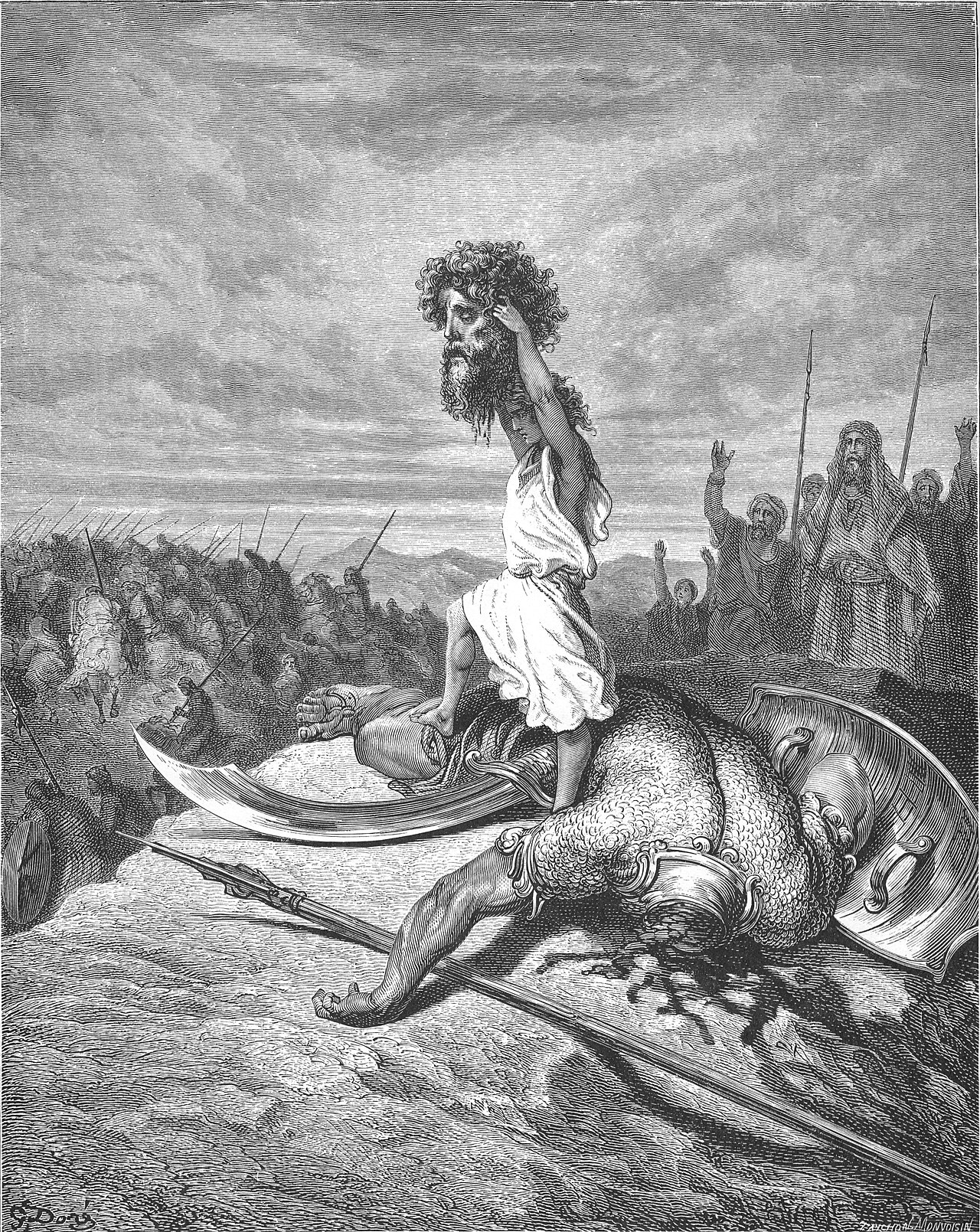
Who and where
2 names in this verse with a page on the site.
- PersonUnited MonarchyDavidSecond king of united Israel, shepherd-turned-monarch, ancestor of the Messiah, and traditional author of many Psalms.
- PersonUnited monarchySaulIsrael's first king, head and shoulders above the people; began in humility, ended in rejection — sparing what God devoted, consul…
This page draws on Adam Clarke, Commentary on the Bible; John Gill, Exposition of the Old Testament (1748-1763); John Wesley, Explanatory Notes upon the Old Testament and Matthew Henry, Commentary on the Whole Bible.