
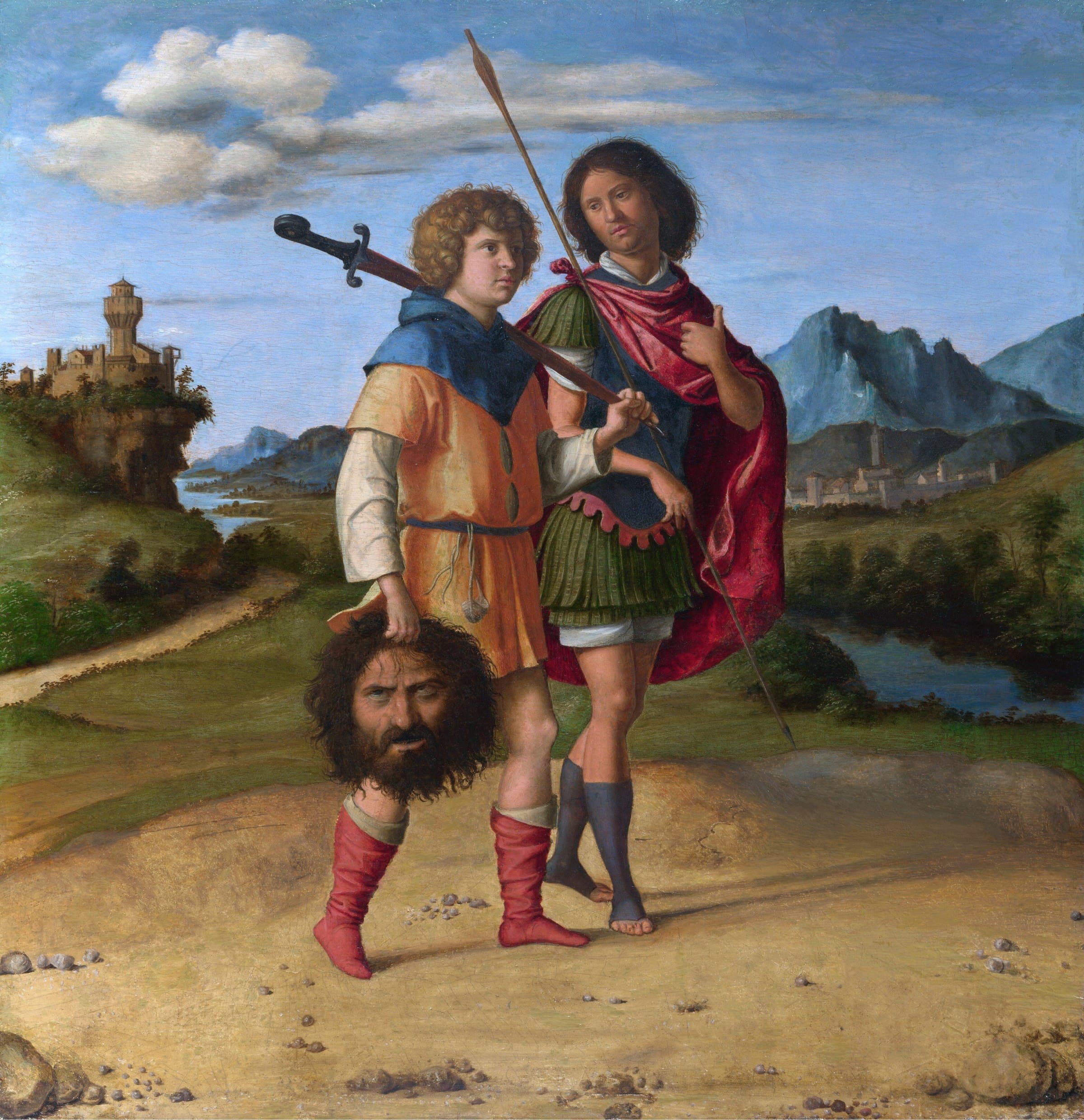
Proverbs 17:17 · Passage · Friendship
A Friend Loves at All Times
Proverbs 16 to 19 and Proverbs 27 set the friend who loves in every season against companions drawn by wealth and gifts.
Proverbs uses one verb, parad, to separate, for the gossip who parts close friends and for the poverty that parts a man from his friend.
A friend loves at all times, and a brother is born for adversity.
- The passage
- Proverbs 17:17, Proverbs 18:24, Proverbs 17:9, Proverbs 19:4, Proverbs 19:7, Proverbs 27:10
- Book
- Proverbs
- Hold in memory
- Proverbs 17:17, Proverbs 18:24
Summary
Proverbs teaches friendship by comparison. The friend it praises covers an offence instead of repeating it and keeps an old family friendship alive. The companions it warns against gather round a man in numbers and are gone on the day of need, and even his brothers may fail him. Its sayings are short, but together they draw the pattern of a faithful friend.
- Proverbs 17:17 and Proverbs 18:24 call the faithful friend 'ohev, one who loves.
- In Proverbs 19 the friends a man has follow his money.
- Proverbs sets the friend beside the brother four times, in Proverbs 17:17, Proverbs 18:24, Proverbs 19:7 and Proverbs 27:10.
- Proverbs 27:10 tells a man to keep his own friend and his father's friend.
The Friend in Proverbs
Most of the sayings stand in the first collection of the proverbs of Solomon.
A Friend Loves at All Times studies what the book of Proverbs says about the faithful friend and the false one, chiefly in Proverbs 17:17 and Proverbs 18:24 and in six sayings around them. It belongs to the value of friendship, because these sayings show what the Old Testament means by a friend long before Jesus calls His disciples friends.
The question the study answers is what marks the friend who stays and the friend who leaves. It reads each saying through its Hebrew word for the friend and weighs the friend against the brother. It also sets out the questions commentators have argued over in Proverbs 18:24.
The sayings of chapters 16 to 19 stand among "The proverbs of Solomon" that begin at Proverbs 10:1 and run until "the words of the wise" (Proverbs 22:17).
Proverbs 27:10 belongs to the proverbs of Solomon "copied by the men of Hezekiah king of Judah" (Proverbs 25:1).
The gossip and the whisperer as kinds of speech are taught in The Tongue, Death and Life in Proverbs, while the friendship they break is taught here.
The Sayings of the Two Friends
Each saying names its friend with a Hebrew noun, most often rea.
Of the five sayings, three show a friend lost or bought and two tell how a friendship is kept.
| Verse | The Berean words | The Hebrew word for the friend | What the saying says of him |
|---|---|---|---|
| Proverbs 16:28 | A perverse man spreads dissension, and a gossip divides close friends. | 'aluf, a close friend | A gossip parts him from his friend |
| Proverbs 17:9 | Whoever conceals an offense promotes love, but he who brings it up separates friends. | 'aluf, a close friend | Covering an offence keeps him, and repeating it parts him |
| Proverbs 19:4 | Wealth attracts many friends, but a poor man is deserted by his friend. | re'im, friends, and rea, a friend | Wealth gathers him and poverty loses him |
| Proverbs 19:6 | Many seek the favor of the prince, and everyone is a friend of the gift giver. | rea, a friend | A gift wins him |
| Proverbs 27:10 | Do not forsake your friend or your father’s friend, and do not go to your brother’s house in the day of your calamity; better a neighbor nearby than a brother far away. | rea, a friend, twice | He is to be kept from one generation to the next |
The Friend Who Loves at All Times
Proverbs 17 sets the love that holds in trouble beside the love that covers an offence.
The Hebrew of Proverbs 17:17 reads be-khol 'et 'ohev ha-rea, at every time the friend is loving. The word 'ohev is the participle of ahav, to love, so the friend is named by what he goes on doing.
The second line names the season when a brother is needed, le-tzarah, for adversity, and says he yivaled, is born, for it.
Earlier in the same chapter, Proverbs 17:9 calls covering an offence mevakesh 'ahavah, seeking love. The one who repeats the matter is mafrid 'aluf, separating a close friend, and Proverbs 16:28 uses the same phrase of the gossip.
And Saul’s son Jonathan came to David in Horesh and strengthened his hand in God,It stands here because Jonathan came to David while Saul was hunting him, the kind of hard time in which Proverbs 17:17 says a friend's love holds.
The Many and the One
Proverbs 18:24 weighs a crowd of companions against one friend who cleaves.
A man of many companions may come to ruin, but there is a friend who stays closer than a brother.It stands here because its two lines set the number of a man's companions against the faithfulness of one friend.
The first line reads 'ish re'im le-hitro'ea, a man of companions is to be broken. Its verb is tagged Strong's H7489 and glossed "[is] to be broken", and re'im and hitro'ea sound alike, so the line plays on the two words.
The second line has 'ohev davek me-'ach, one who loves, cleaving, more than a brother. The friend of this line is again 'ohev, the word of Proverbs 17:17.
The Friends of the Rich and the Poor
Three sayings of Proverbs 19 count the friends that money gathers and loses.
All the brothers of a poor man hate him—how much more do his friends avoid him! He may pursue them with pleading, but they are nowhere to be found.It stands here because it carries the poor man's loss past his friends to his own brothers and shows him pleading with people who are gone.
The friends of Proverbs 19:7 are mere'ehu, his friends, from merea, a noun used seven times in the Hebrew Bible, and the verb says they racheku, keep far away from him.
Proverbs 19:6 names the other side of the same world, where everyone is ha-rea le-'ish matan, the friend of a man of gift.
Matthew Henry stands here because he drew the scene at a great man's door that Proverbs 19:4 and Proverbs 19:6 assume.
“How those that are rich and great are courted and caressed, and have suitors and servants in abundance. The prince that has power in his hand, and preferments at his disposal, has his gate and his ante-chamber thronged with petitioners, that are ready to adore him for what they can get.”
Matthew Henry · Commentary on the Whole Bible · on Proverbs 19:4Puritan
The Friend and the Brother
Proverbs 27:10 tells a man whom to keep and where to go on the day of calamity.
Proverbs 27:10 has re'akha ve-rea 'avikha, so the friendship to be kept may be older than the one who keeps it.
Its last line uses another noun, shakhen karov, a neighbour who is near, for the one to seek on the day of calamity before a brother who is far away.
Ambrose of Milan stands here because he applied the saying to the question of whom a person trusts in time of need.
“Solomon says, ‘Better is a neighbor that is near than a brother far off.’ For this reason a person generally trusts himself to the good will of a friend rather than to the ties of relationship to his brother. So far does good will prevail that it often goes beyond the pledges given by nature.”
Ambrose of Milan · On the Duties of the Clergy 1.34.174 · on Proverbs 27:10Patristic
Where Commentators Divide
Commentators part over both lines of Proverbs 18:24.
The first question is whether the first line of Proverbs 18:24 warns of ruin or calls for friendliness.
Many companions bring ruinThe Berean Standard Bible; the American Standard Version
The Berean Standard Bible renders the line as a warning of ruin. Where the King James reads a call to friendliness, the American Standard Version of 1901 reads "He that maketh many friends doeth it to his own destruction" (Proverbs 18:24).
The objection: the King James translators heard in the same consonants a call to show friendship.
A man must show himself friendlyJohn Gill; Adam Clarke
John Gill, in his Exposition of the Old Testament (1748 to 1763), expounded the King James wording "A man that hath friends must show himself friendly". He wrote that "Friendship ought to be mutual and reciprocal".
Adam Clarke, in his Commentary on the Bible (1832), read the same line and wrote, "Love begets love".
The objection: the tagged Hebrew takes the verb as one of breaking, and a crowd set against one faithful friend suits a warning better than a duty of courtesy.
The second question is who the friend closer than a brother is.
The Friend of sinnersJamieson, Fausset and Brown; Charles Spurgeon
Jamieson, Fausset and Brown, in their Commentary Critical and Explanatory on the Whole Bible (1871), named Him with the title of Matthew 11:19, the Friend of sinners. Of the verse they wrote, "Indeed, there is a Friend who is better than a brother."
Charles Spurgeon preached the verse in his sermon A Faithful Friend (1857) and said a man who would be happy hereafter must find "a friend in the world to come, in the person of God".
The objection: the saying stands among sayings about people, and its first line speaks of a man's own companions.
A faithful human friendAlbert Barnes
Albert Barnes, in his Notes, Explanatory and Practical (1832 to 1869), took the friend as a human friend. In his words, "What we prize is the one whose love is stronger and purer even than all ties of kindred."
He wrote of the crowd in the first line, "It is not the multitude of so called friends that helps us."
The objection: the holders of the first reading keep the plain sense and apply the saying to Christ as the friend in whom it is most true.
A Friend to Be
The sayings describe a friend by what he does when trouble comes.
Taken together, the sayings test a friendship on the day it costs something: when a wrong is known, when money is gone and when calamity comes.
They speak to the reader as the one who keeps a friendship as well as the one who looks for it.
Each of the Hebrew nouns for the friend has a word page with its uses across the Old Testament.
Sources
Scripture is the Berean Standard Bible.
- The Holy Bible, American Standard Version (1901)
- STEP Bible, Translators Amalgamated Hebrew Old Testament, the tagged Hebrew text (Tyndale House, Cambridge), CC BY 4.0.
- STEP Bible, Translators Brief lexicon of Extended Strongs for Hebrew (Tyndale House, Cambridge), CC BY 4.0.
- Albert Barnes, Notes, Explanatory and Practical, on the Old and New Testaments (1832 to 1869), on Proverbs 18:24.
- Matthew Henry, Commentary on the Whole Bible (1710), on Proverbs 19:4.
- Ambrose of Milan, On the Duties of the Clergy 1.34.174, on Proverbs 27:10.
- Robert Jamieson, A. R. Fausset and David Brown, Commentary Critical and Explanatory on the Whole Bible (1871), on Proverbs 18:24.
- John Gill, Exposition of the Old Testament (1748 to 1763), on Proverbs 18:24.
- Adam Clarke, Commentary on the Bible (1832), on Proverbs 18:24.
- Charles Spurgeon, A Faithful Friend, sermon 120 (1857), The New Park Street Pulpit, on Proverbs 18:24.
Keep Studying
Read it1
Studies7
In this value5
People and groups12
Doctrines1