
1 Samuel 2:30
in 1 Samuel 2Therefore, the LORD, the God of Israel, declares: ‘I did indeed say that your house and the house of your father would walk before Me forever. But now the LORD declares: Far be it from Me! For I will honor those who honor Me, but those who despise Me will be disdained.
BSB
The same verse in ASV and KJV ▾
ASV
Therefore Jehovah, the God of Israel, saith, I said indeed that thy house, and the house of thy father, should walk before me for ever: but now Jehovah saith, Be it far from me; for them that honor me I will honor, and they that despise me shall be lightly esteemed.
KJV
Wherefore the Lord God of Israel saith, I said indeed that thy house, and the house of thy father, should walk before me for ever: but now the Lord saith, Be it far from me; for them that honour me I will honour, and they that despise me shall be lightly esteemed.
⋯
This verse in 1 Samuel 2
Commentary
19 notes on this verseShould walk before me for ever - See Exo 29:9; Exo 40:15; Num 25:10-13, where it is positively promised that the priesthood should be continued in the family of Aaron For Ever. But although this promise appears to be absolute, yet we plainly see that, like all other apparently absolute promises of God, it is conditional, i.e., a condition is implied though not expressed. But now - be it far from me - You have walked unworthily; I shall annul my promise, and reverse my ordinance. See Jer 18:9, Jer 18:
This site's exposition
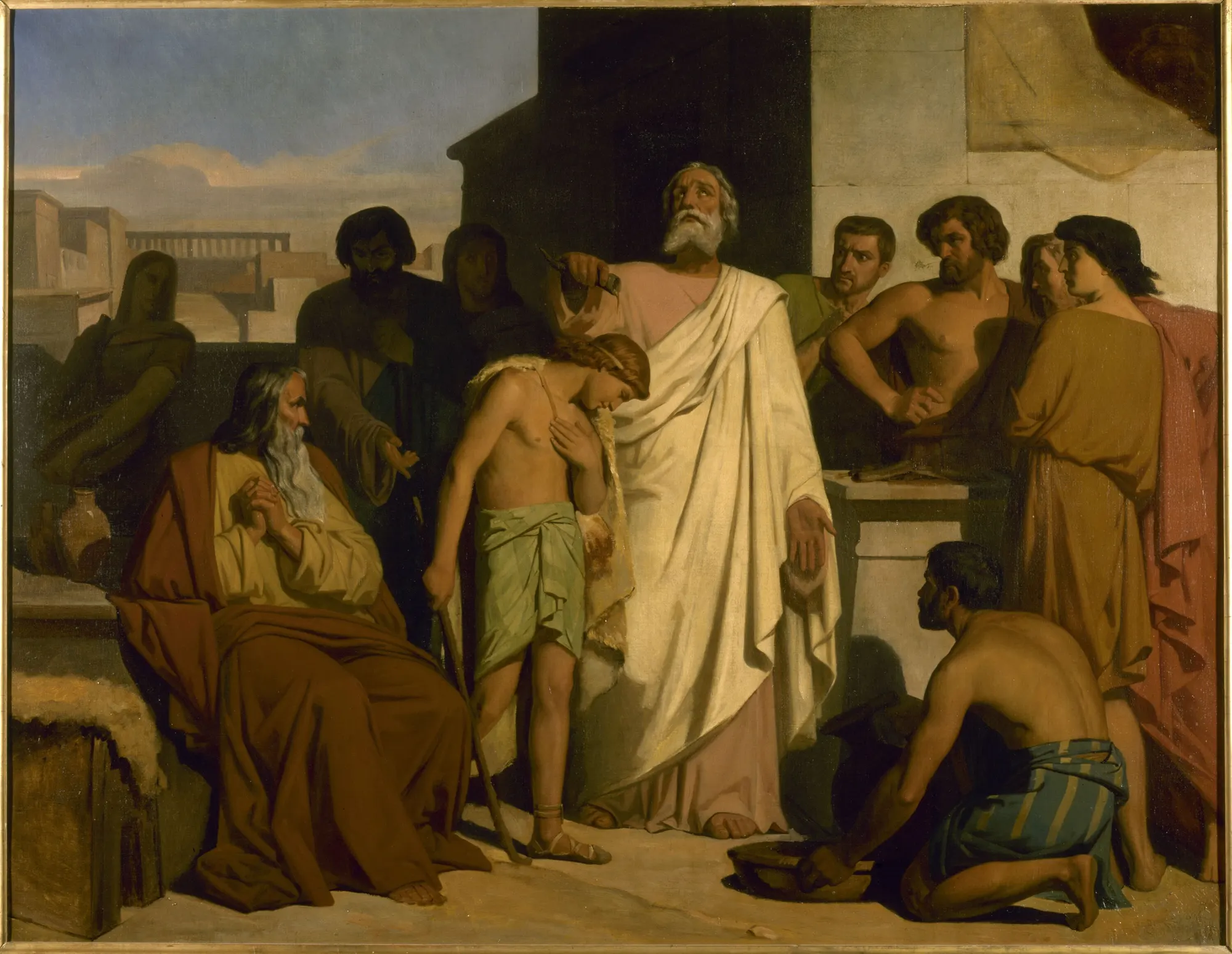
Then a man of God came to Eli
on 1 Samuel 2:27-30
An unnamed man of God reminds Eli that his father's house was chosen “to be My priest”. The charge follows, “You have honored your sons more than Me”. Verse 30 states the rule: “I will honor those who honor Me, but those who despise Me will be disdained”.
This site's exposition
Therefore, the LORD, the God of Israel, declares
Adam Clarke points to Exodus 29:9 and Numbers 25, where the LORD promised the priesthood to the house of Aaron forever. Matthew Henry puts it as a condition: the house would walk before the LORD as long as it served Him faithfully. Eli's house despised Him and lost it.
The record, by era
The Church Fathers4 voices
A pearl will shine in the midst of squalor, and a gem … will sparkle in the mire. This is what the Lord promised when he said, "Those who honor me I will honor." Others may understand this of the future when sorrow shall be turned into joy and when, although the world shall pass away, the saints shall receive a crown which shall never pass. But I for my part see that the promises made to the saints are fulfilled even in this present life.
If He says, "Them that honor Me I will honor, and they that despise Me shall be lightly esteemed," let us reflect that there is that which He requires of us also. True, it is the praise of His glory to save those that are enemies, but those who, after being made friends, continue His friends. So that if they were to return back to their former state of enmity, all were vain and to no purpose. There is not another Baptism, nor is there a second reconciliation again, but "a certain fearful expectation of judgment which shall devour the adversaries." If we intend at the same time to be always at enmity with Him and yet to claim forgiveness at His hand, we shall never cease to be at enmity, and to be wanton, to grow in depravity, and to be blind to the Sun of Righteousness which has risen.… But when thou hast tasted the goodness and the honey, if thou again abandonest them, and turnest to thine own vomit, what else art thou doing but bringing forward evidence of excessive hatred and contempt?
Now honor and glory are not mere words; and since He has honored us not by words only, but by what He has done for us, so let us honor Him by works and deeds. Yet this honor touches us, while that reaches not Him, for He needs not the honor that comes from us, we do need that which is from Him. In honoring Him, therefore, we do honor to ourselves. He who opens his eyes to gaze on the light of the sun, receives delight himself, as he admires the beauty of the star, but does no favor to that luminary, nor increases its splendor, for it continues what it was; much more is this true with respect to God. He who admires and honors God does so to his own salvation, and highest benefit; and how? Because he follows after virtue, and is honored by Him. For "them that honor Me," He says, "I will honor."
If we regard the sentence passed on him [the serpent] to be in the nature of a condemnation, God did not condemn the serpent in order to cause injury to humans. He pointed out what was to happen in the future. … What we are to expect can in some measure be gathered from our knowledge of what has been written: "Whoever shall glorify me, him will I glorify, and he that despises me shall be despised."
The Medieval Church1 voice
A commentator
Gregory the DialogistCommentary on 1 Kings, Book 2, Chapter 2 · Written before 604.
proposed
29. As if striking with an open and fitting meaning, he says: You honored your sons, so that you might eat the firstfruits of every sacrifice; but therefore the rights of the firstfruits are taken from you, because those who were honored were unworthy. For what does it mean to say: "Far be it from me that your house should minister in my sight," except: I cast you down from that summit to which the rights of the firstfruits were owed? By a wonderful execution of justice, therefore, he was caught, so that from the very thing for which he greedily sought the eating of the firstfruits, from that very thing he fasted from the receiving of the firstfruits. For he endured the Redeemer's death lest he lose the priestly gains, but He received from the triumph of death that by which He destroyed the profits of the old sacrifice. And He says: "I spoke and declared that your house and the house of your father would minister in my sight; but now, far be this from me." As if He were saying in plainer words: That you might stand on so great a height of dignity, I frequently admonished you, but now you are not such as I desired you to be. And because this is said concerning the rejection of the Jewish people, there is added concerning the order of the new preachers: (Verse 30.) "But whoever glorifies me, him will I glorify." 30. For now we behold the glory of the one who glorifies, because the preachers of holy Church sing the praises of almighty God with great splendor of life, and rejoice in their universal preeminence throughout the world. Behold, now all the Gentile nations are laid beneath the footsteps of the priests, and those whom they rejoice to submit themselves to in obedience they glory to possess as patrons in heaven. […]
11 more voices on this verse
The Medieval Church3 voices
A commentator
Gregory the DialogistCommentary on 1 Kings, Book 2, Chapter 3 · Written before 604.
proposed
Behold, Eli is deposed from the height of his dignity by divine sentence, who is convicted of having honored his wicked sons for the eating of the firstfruits, so that indeed the preachers of holy Church may understand that if through carnal love they knowingly commit spiritual ministries to the reprobate, they have fallen by the equity of the internal Judge from that summit on which they appear outwardly to stand. And because He subsequently added: (Verse 30.) But whosoever shall glorify me, him will I glorify. Their audacity also secretly suggests that He was dishonored. To whom indeed Paul also, reproaching this very thing, says: "The name of God is blasphemed among the Gentiles because of you" (Rom. 2:24). For because they stain the beauty of the dignity they received through the filth of a wretched reputation, they indeed dishonor the Lord. For he is rightly driven from the height of honor who does injury to the one by whom he is proved to have been honored. Against which He affirms with a general promise, saying: "But whoever glorifies me, I will glorify him." For the pastor glorifies God who shines by the example of good works for the imitation of the faithful, who from the height of governance radiates with the great light of an excellent manner of life, who, regarding the mirror of sacred orders, does not accept the persons of reprobate ministers, but chooses for the pattern of the subject flock those whom everyone who looks to imitation, because he follows the true light in them, does not stumble against. To whom indeed Truth speaks through Himself, saying: "So let your light shine before men, that they may see your good works, and glorify your Father who is in heaven" (Matt. 5:16). […]
Therefore, says the Lord God of Israel: He spoke, I said, etc. The question arises by what reason what was promised to last forever could be changed; but recall that the priesthood of Aaron was the shadow of the eternal priesthood, and the promise of …
Now the Lord says: Far be it from me, etc. Changing times, not changing plans, the Lord seeks elected ones from the nations for Himself in a spiritual priesthood, and deprives entirely the contemptuous sons of Aaron of any order of priestly office.
The Puritans and the Awakening3 voices
Walking is often put for discharging ones office; before me; may signify that he was the high-priest, whose sole prerogative it was to minister before God, or before the ark, in the most holy place. For ever - As long as the Mosaical law and worship lasts. Far from me - To fulfil my promise, which I hereby retract.
Wherefore the Lord God of Israel saith,....
But observe, the promise carried its own condition along with it: They shall walk before me forever, that is, "they shall have the honour, provided they faithfully do the service." Walking before God is the great condition of the covenant, Gen. xvii.
The Nineteenth Century5 voices
OUR chickens generally come home to roost. Our thoughts of other men become other men's thoughts of us. According as we measure out to our fellows, so do they measure back into our bosoms, for good or for evil. So especially, in reference to the Lord, Himself, the God of Justice sooner or later causes a man to reap his own sowing and gather his own scattering. See how the Lord keeps touch with His friends and foes and pays them in their own coin—"Those who honor Me I will honor, and those who despise Me shall be lightly esteemed."
A commentator
Charles Spurgeon1834–1892
The Metropolitan Tabernacle Pulpit, Sermon No. 2906: “Honor for Honor” (lightly modernized text, CCEL edition) · Written before 1892.
proposed
GOD is certain, sooner or later, to recompense men according to the rule of Infallible Justice and if it is so among saints, it is equally so among sinners. If we could really know the secret history of any man's life, we would be able to understand his career better than we now do. There is many a life of which we have had to say to the Lord, "Your way is in the sea, and Your path in the great waters, and your footsteps are not known."
OUR chickens generally come home to roost. Our thoughts of other men become other men's thoughts of us. According as we measure out to our fellows, so do they measure back into our bosoms, for good or for evil. So especially, in reference to the Lord, Himself, the God of Justice sooner or later causes a man to reap his own sowing and gather his own scattering. See how the Lord keeps touch with His friends and foes and pays them in their own coin—"Those who honor Me I will honor, and those who despise Me shall be lightly esteemed." A man's life is often its own echo. He sinned and he suffered after the likeness of his sin—you may see the sin in the punishment—as you see, today the footprint of the Egyptian dog in the brick which he trod upon when it was yet soft clay. The man sinned again, for it is the nature of sin to repeat itself and grow into habit and, behold, another sorrow was born in the likeness of that other sin! Thus the man lived in the present and formed his future life by one and the same act. He spoke and the echoes spoke to him in the years following. So does life repeat itself. So does the seed develop the flower and the flower again produce the seed. It is an endless chain, for the thing that has been, is the thing which shall be! A man may live to see a grim procession of all his old sins marching past him, robed in the sackcloth and ashes wherein Justice dooms them to be arrayed. So is it also with our joys. God gives us joy after the similitude of our service. Godly Fear fills her garden with many flowers and her house with music of different kinds. And the Lord appoints to her that she shall live of her ministry and that her oxen shall eat of the good corn which they tread out for others. When we have been faithful to God, He is always faithful to us and sends us a full reward. If we walk contrary to Him, He will walk contrary to us.
A commentator
Charles Spurgeon1834–1892
The Metropolitan Tabernacle Pulpit, Sermon No. 2906: “Honor for Honor” (lightly modernized text, CCEL edition) · Written before 1892.
proposed
GOD is certain, sooner or later, to recompense men according to the rule of Infallible Justice and if it is so among saints, it is equally so among sinners. If we could really know the secret history of any man's life, we would be able to understand his career better than we now do. There is many a life of which we have had to say to the Lord, "Your way is in the sea, and Your path in the great waters, and your footsteps are not known." Yet if we had known more about the man, it would have been all plain enough. If we had seen the sin that was hidden from human eyes, we would have understood the sorrow that was evident to all. That will suffice with regard to the general principle that is enunciated in our text. If we honor God, He will honor us. And if we despise Him, we shall be lightly esteemed. Now, taking only the first clause of the text, there are two things upon which I wish to speak with great earnestness. The first is, here is a plain duty, namely, to honor God and, secondly, here is a very generous reward—"Those who honor Me I will honor." I. First, then, HERE IS A PLAIN DUTY—to honor God. It is the natural duty of every creature to honor its Creator and with such a glorious and blessed God as Jehovah is, it certainly must be incumbent upon all who have any understanding of His existence, to render honor and homage to Him.
A commentator
Albert Barnes1798–1870
Notes, Explanatory and Practical, on the Old and New Testaments (1832-1869)
proposed
Be it far from me - The phrase so rendered is a favorite one in the Books of Samuel, where it occurs ten or eleven times. It is variously rendered in the King James Version, “God forbid,” and “Be it far from me, thee, etc.” Literally, “Be it an abomination to me.”
The words behind it
24 Hebrew wordsEvery Hebrew word of this verse in the order it stands, with what it means and the door to its own study. The last column counts the times a word stands in the whole Bible: the rarer the word, the more the places it appears belong together.
| Hebrew | Sound | Meaning | Word study | In the Bible |
|---|---|---|---|---|
| לָכֵ֗ן | lakhen | <to> therefore | H3651 → | 771 times |
| נְאֻם־ | neum- | [the] utterance of | H5002 → | |
| יְהוָה֮ | yahweh | Yahweh | H3068 → | 6520 times |
| אֱלֹהֵ֣י | ʾelohei | [the] God of | H430 → | 2601 times |
| יִשְׂרָאֵל֒ | yisrael | Israel | H3478 → | 2507 times |
| אָמ֣וֹר | ʾamor | certainly <to say> | H559 → | 5305 times |
| אָמַ֔רְתִּי | ʾamarti | I said | H559 → | 5305 times |
| בֵּֽיתְךָ֙ | beitekha | house your | H1004 → | 2046 times |
| וּבֵ֣ית | uveit | and [the] house of | H1004 → | 2046 times |
| אָבִ֔יךָ | ʾavikha | ancestor your | H1 → | 1212 times |
| יִתְהַלְּכ֥וּ | yithalekhu | they will walk about | H1980 → | 1546 times |
| לְפָנַ֖י | lefanai | <to> before me | H6440 → | 2123 times |
| עַד־ | ʾad- | until | H5704 → | 1261 times |
| עוֹלָ֑ם | olam | perpetuity | H5769 → | 438 times |
| וְעַתָּ֤ה | veatah | and now | H6258 → | 433 times |
| נְאֻם־ | neum- | [the] utterance of | H5002 → | |
| יְהוָה֙ | yahweh | Yahweh | H3068 → | 6520 times |
| חָלִ֣ילָה | chalilah | far be it | H2486 → | 21 times |
| לִּ֔י | li | to <the> me | ||
| כִּֽי־ | ki- | for | H3588 → | 4482 times |
| מְכַבְּדַ֥י | mekhabedai | [those who] honor me | H3513 → | 113 times |
| אֲכַבֵּ֖ד | ʾakhabed | I will honor | H3513 → | 113 times |
| וּבֹזַ֥י | uvozai | and [those who] despise me | H959 → | 44 times |
| יֵקָֽלּוּ׃ | yekalu | they will be insignificant | H7043 → | 82 times |
לָכֵ֗ן<to> therefore
lakhenH3651 →771 times
נְאֻם־[the] utterance of
neum-H5002 →
יְהוָה֮Yahweh
yahwehH3068 →6520 times
אֱלֹהֵ֣י[the] God of
ʾeloheiH430 →2601 times
יִשְׂרָאֵל֒Israel
yisraelH3478 →2507 times
אָמ֣וֹרcertainly <to say>
ʾamorH559 →5305 times
אָמַ֔רְתִּיI said
ʾamartiH559 →5305 times
בֵּֽיתְךָ֙house your
beitekhaH1004 →2046 times
וּבֵ֣יתand [the] house of
uveitH1004 →2046 times
אָבִ֔יךָancestor your
ʾavikhaH1 →1212 times
יִתְהַלְּכ֥וּthey will walk about
yithalekhuH1980 →1546 times
לְפָנַ֖י<to> before me
lefanaiH6440 →2123 times
עַד־until
ʾad-H5704 →1261 times
עוֹלָ֑םperpetuity
olamH5769 →438 times
וְעַתָּ֤הand now
veatahH6258 →433 times
נְאֻם־[the] utterance of
neum-H5002 →
יְהוָה֙Yahweh
yahwehH3068 →6520 times
חָלִ֣ילָהfar be it
chalilahH2486 →21 times
לִּ֔יto <the> me
li
כִּֽי־for
ki-H3588 →4482 times
מְכַבְּדַ֥י[those who] honor me
mekhabedaiH3513 →113 times
אֲכַבֵּ֖דI will honor
ʾakhabedH3513 →113 times
וּבֹזַ֥יand [those who] despise me
uvozaiH959 →44 times
יֵקָֽלּוּ׃they will be insignificant
yekaluH7043 →82 times
A shaded row is a word that stands 400 times or fewer in the Bible.
The walk
8 stopsEach card is a verse this one points to, and under it the verses that one points to in turn. Where several paths arrive at the same place, that place is listed first: the text keeps returning to it.
Through
Malachi 1:6“A son honors his father, and a servant his master. But if I am a father, where is My honor? And if I am a master, where is your fear of Me?” says the…
it leads to
- Luke 6:46
Why do you call Me ‘Lord, Lord,’ but not do what I say?
- Isaiah 1:2
Listen, O heavens, and give ear, O earth, for the LORD has spoken: “I have raised children and brought them up, but they have rebelled against Me.
- John 13:13–17
You call Me Teacher and Lord, and rightly so, because I am.
- Exodus 20:12
Honor your father and mother, so that your days may be long in the land that the LORD your God is giving you.
- 1 Peter 2:17–19
Treat everyone with high regard: Love the brotherhood of believers, fear God, honor the king.
- Luke 6:46
Through
2 Chronicles 15:2So he went out to meet Asa and said to him, “Listen to me, Asa and all Judah and Benjamin. The LORD is with you when you are with Him. If you seek Him,…
it leads to
- James 4:8
Draw near to God, and He will draw near to you. Cleanse your hands, you sinners, and purify your hearts, you double-minded.
- 2 Chronicles 24:20
Then the Spirit of God came upon Zechariah son of Jehoiada the priest, who stood up before the people and said to them, “This is what God says: ‘Why do you transgress the commandments…
- 2 Chronicles 15:4
But in their distress they turned to the LORD, the God of Israel, and sought Him, and He was found by them.
- James 4:8
Where this verse is studied
About 1 Samuel
This page draws on 16 works. Open the list of works
This page draws on Adam Clarke, Commentary on the Bible; Albert Barnes, Notes, Explanatory and Practical, on the Old and New Testaments (1832-1869); Ambrose of Milan, On Paradise, 15.74; Bede, Commentary on Samuel; Charles Spurgeon, The Metropolitan Tabernacle Pulpit, Sermon No. 1811: “The Road to Honor” (lightly modernized text, CCEL edition); Charles Spurgeon, The Metropolitan Tabernacle Pulpit, Sermon No. 2906: “Honor for Honor” (lightly modernized text, CCEL edition); Gregory the Dialogist, Commentary on 1 Kings, Book 2, Chapter 2; Gregory the Dialogist, Commentary on 1 Kings, Book 2, Chapter 3; Jerome, LETTER 66.7; John Chrysostom, HOMILIES ON EPHESIANS 2; John Chrysostom, HOMILIES ON 1 TIMOTHY 4; John Gill, Exposition of the Old Testament; John Gill, Exposition of the Old Testament (1748-1763); John Wesley, Explanatory Notes upon the Old Testament; Matthew Henry, Commentary on the Whole Bible and W. G. Blaikie, The First Book of Samuel (Expositor's Bible).