
1 Kings 22:29
in 1 Kings 22So the king of Israel and Jehoshaphat king of Judah went up to Ramoth-gilead.
BSB
The same verse in ASV and KJV ▾
ASV
So the king of Israel and Jehoshaphat the king of Judah went up to Ramoth-gilead.
KJV
So the king of Israel and Jehoshaphat the king of Judah went up to Ramoth–gilead.
⋯
This verse in 1 Kings 22
Commentary
5 notes on this verseSo the king of Israel, and Jehoshaphat the king of Judah, went up to Ramothgilead. Which, according to Bunting (r), was twenty four miles from Samaria.
This site's exposition
went up to Ramoth–gilead
on 1 Kings 22:29-30
The two kings go up together, but Ahab disguises himself for the battle while asking Jehoshaphat to wear the royal robes, a plan that places the ally in the danger the word had named for the king. It reads as a man trying to outmaneuver a prophecy he has just heard and still refuses to believe.
The record, by era
The Puritans and the Awakening1 voice
He was ready to give his opinion with the majority, and to conclude that it was 400 to one but they should succeed. Micaiah had not forbidden them to go; nay, at first, he said, Go, and prosper. If it came to the worst, it was only Ahab's fall that was foretold, and therefore Jehoshaphat hoped he might safely venture.
The Nineteenth Century2 voices
A commentator
Albert Barnes1798–1870
Notes, Explanatory and Practical, on the Old and New Testaments (1832-1869)
It might have been expected that Jehoshaphat would have withdrawn from the expedition when he heard Micaiah denounce it. He had, however, rashly committed himself to take part in the war by a solemn promise, before he bethought himself of inquiring what was the will of God in the matter. Now he was ashamed to draw back, especially as Ahab, whom the prophecy chiefly threatened, was resolved to brave it. He may also have had a personal affection for Ahab, and so have been loth to desert him in his need. Compare 2Ch 19:2.
A commentator
Jamieson, Fausset & Brown1802–1910
Commentary Critical and Explanatory on the Whole Bible (1871)
proposed
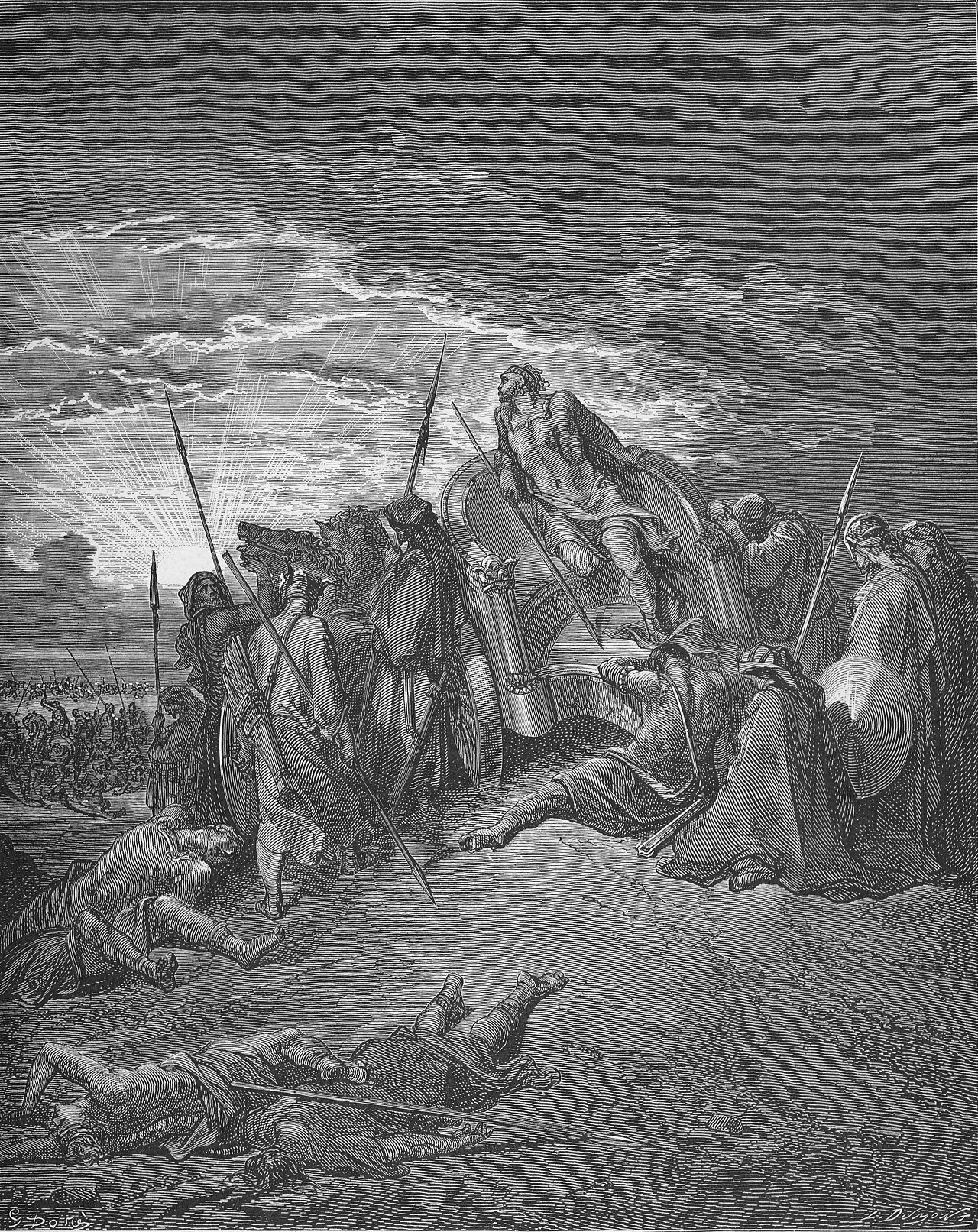
The corpse was conveyed to Samaria; and, as the chariot which brought it was being washed, in a pool near the city, from the blood that had profusely oozed from the wound, the dogs, in conformity with Elijah's prophecy, came and licked it [1Ki 21:19]. Ahab was succeeded by his son Ahaziah [1Ki 22:40].
The words behind it
8 Hebrew wordsEvery Hebrew word of this verse in the order it stands, with what it means and the door to its own study. The last column counts the times a word stands in the whole Bible: the rarer the word, the more the places it appears belong together.
| Hebrew | Sound | Meaning | Word study | In the Bible |
|---|---|---|---|---|
| וַיַּ֧עַל | vaiyaal | and he went up | H5927 → | 890 times |
| מֶֽלֶךְ־ | melekh- | [the] king of | H4428 → | 2525 times |
| יִשְׂרָאֵ֛ל | yisrael | Israel | H3478 → | 2507 times |
| וְיהוֹשָׁפָ֥ט | vihoshafat | and Jehoshaphat | H3092 → | 84 times |
| מֶֽלֶךְ־ | melekh- | [the] king of | H4428 → | 2525 times |
| יְהוּדָ֖ה | yehudah | Judah | H3063 → | 819 times |
| רָמֹ֥ת | ramot | Ramoth | H7418 → | 22 times |
| גִּלְעָֽד׃ | gilad | Gilead | H1568 → | 134 times |
וַיַּ֧עַלand he went up
vaiyaalH5927 →890 times
מֶֽלֶךְ־[the] king of
melekh-H4428 →2525 times
יִשְׂרָאֵ֛לIsrael
yisraelH3478 →2507 times
וְיהוֹשָׁפָ֥טand Jehoshaphat
vihoshafatH3092 →84 times
מֶֽלֶךְ־[the] king of
melekh-H4428 →2525 times
יְהוּדָ֖הJudah
yehudahH3063 →819 times
רָמֹ֥תRamoth
ramotH7418 →22 times
גִּלְעָֽד׃Gilead
giladH1568 →134 times
A shaded row is a word that stands 400 times or fewer in the Bible.
The walk
1 stopEach card is a verse this one points to, and under it the verses that one points to in turn. Where several paths arrive at the same place, that place is listed first: the text keeps returning to it.
Through
2 Chronicles 18:28So the king of Israel and Jehoshaphat king of Judah went up to Ramoth-gilead.
it leads to
- 1 Kings 22:29–33
So the king of Israel and Jehoshaphat king of Judah went up to Ramoth-gilead.
- 1 Kings 22:29–33
Where this verse is studied
On this page
About 1 Kings
Who and where
1 name in this verse with a page on the site.
This page draws on Adam Clarke, Commentary on the Bible; Albert Barnes, Notes, Explanatory and Practical, on the Old and New Testaments (1832-1869); Jamieson, Fausset & Brown, Commentary Critical and Explanatory on the Whole Bible; John Gill, Exposition of the Old Testament (1748-1763) and Matthew Henry, Commentary on the Whole Bible.