
1 Kings 18:28
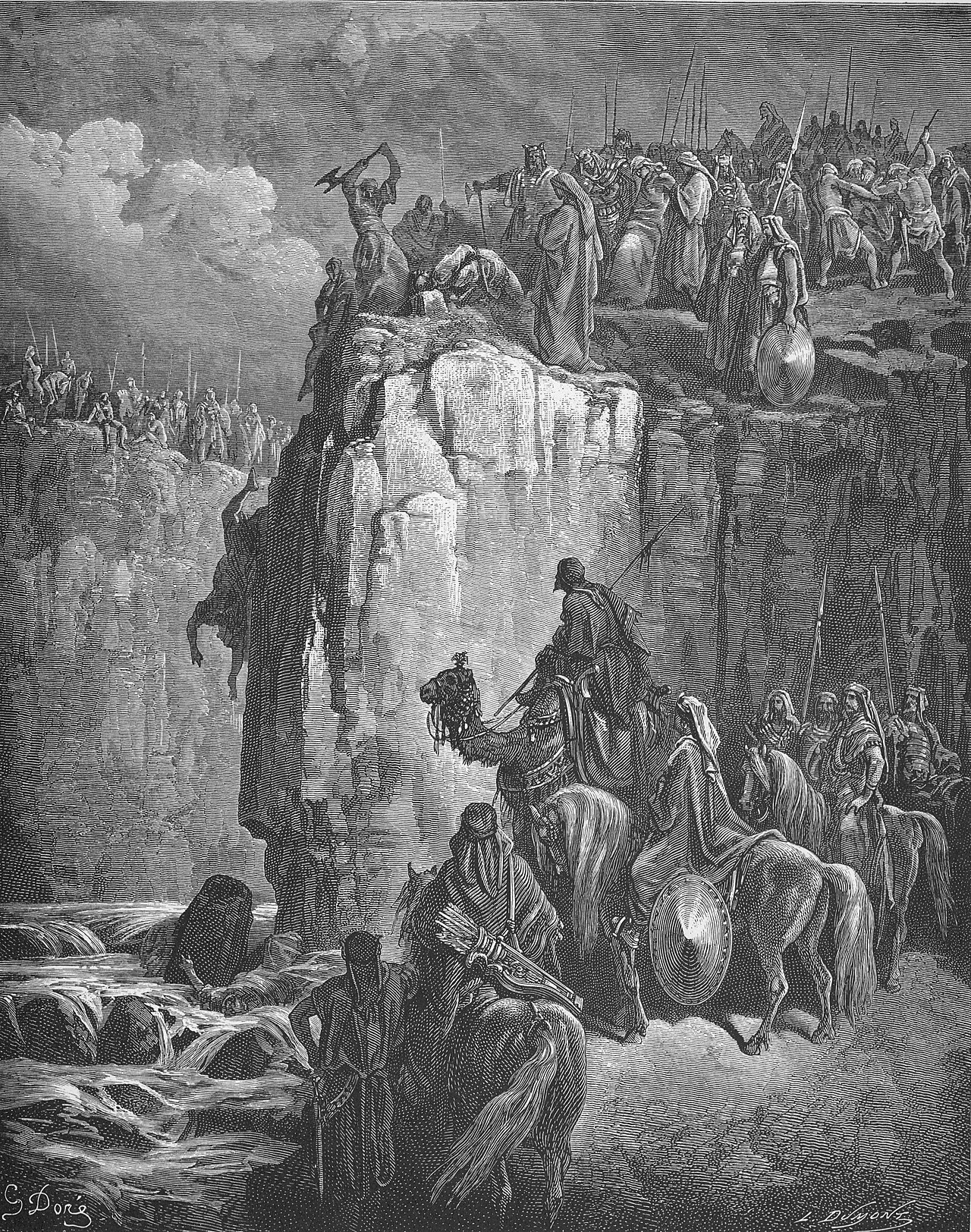
in 1 Kings 18So they shouted louder and cut themselves with knives and lances, as was their custom, until the blood gushed over them.
BSB
The same verse in ASV and KJV ▾
ASV
And they cried aloud, and cut themselves after their manner with knives and lances, till the blood gushed out upon them.
KJV
And they cried aloud, and cut themselves after their manner with knives and lancets, till the blood gushed out upon them.
⋯
This verse in 1 Kings 18
Commentary
7 notes on this verseAnd they cried aloud,.... Trying to make him hear, if possible: and cut themselves after their manner with knives and lancets, till the blood gushed out upon them; so the priests of Heathen deities used to slash themselves on their shoulders, arms, and thighs, in their devotions to them, as many writers observe (z), fancying their gods were delighted with human blood; particularly the priests of Bellona (a), and the worshippers of the Syrian goddess (b), and of the Egyptian Isis (c). (z) Vid. Kipping. Antiqu. Roman. l. 1. c. 10. p. 202. (a) Tertul Apolog. c. 9. Lactant.
This site's exposition
till the blood gushed out
on 1 Kings 18:28-29
The knives and lancets are their manner, self-wounding to force a god's attention, the precise practice Deut 14:1 forbade Israel because sons of the LORD do not bargain in blood. The frenzy runs past midday to the hour of the evening sacrifice, and the narrator closes the audit with a triple silence: neither voice, nor any to answer, nor any that regarded. The time stamp matters; the true altar's hour is about to keep the true altar's schedule.
The record, by era
The Puritans and the Awakening2 voices
God never required his worshippers thus to honour him; but the service of the devil, though in some instances it pleases and pampers the body, yet in other things it is really cruel to it, as in envy and drunkenness. It seems, this was the manner of the worshippers of Baal. God expressly forbade his worshippers to cut themselves, Deut. xiv.
Cut themselves - Mingling their own blood with their sacrifices; as knowing by experience, that nothing was more acceptable to their Baal (who was indeed the devil) than human blood; and hoping thereby to move their God to help them. And this indeed was the practice of divers Heathens in the worship of their false gods.
The Nineteenth Century3 voices
A commentator
Jamieson, Fausset & Brown1802–1910
Commentary Critical and Explanatory on the Whole Bible (1871)
proposed
In vain did they continue invoking their senseless deity from morning till noon, and from noon till evening, uttering the most piercing cries, using the most frantic gesticulations, and mingling their blood with the sacrifice. Elijah exposed their folly and imposture with the severest irony and, as the day was far advanced, commenced his operations.
They cried aloud - The poor fools acted as they were bidden. And cut themselves after their manner - This was done according to the rites of that barbarous religion; if the blood of the bullock would not move him they thought their own blood might; and with it they smeared themselves and their sacrifice. This was not only the custom of the idolatrous Israelites, but of the Syrians, Persians, Greeks, Indians, and in short of all the heathen world.
A commentator
Albert Barnes1798–1870
Notes, Explanatory and Practical, on the Old and New Testaments (1832-1869)
proposed
Elijah’s scorn roused the Baal-priests to greater exertions. At length, when the frenzy had reached its height, knives were drawn, and the blood spirted forth from hundreds of self-inflicted wounds, while an ecstasy of enthusiasm seized many, and they poured forth incoherent phrases, or perhaps an unintelligible jargon, which was believed to come from divine inspiration, and constituted one of their modes of prophecy. The practice of inflicting gashes on their limbs, in their religious exercises, was common among the Carians, the Syrians, and the Phrygians. We may regard it as a modification of the idea of human sacrifice. The gods were supposed to be pleased with the shedding of human blood. Lancets - Lancets, in our modern sense of the word, can scarcely have been intended by our translators. The Hebrew word is elsewhere always translated “spears,” or “lances;” and this is probably its meaning here.
The words behind it
11 Hebrew wordsEvery Hebrew word of this verse in the order it stands, with what it means and the door to its own study. The last column counts the times a word stands in the whole Bible: the rarer the word, the more the places it appears belong together.
| Hebrew | Sound | Meaning | Word study | In the Bible |
|---|---|---|---|---|
| וַֽיִּקְרְאוּ֙ | vaiyikreu | and they called out | H7121 → | 733 times |
| בְּק֣וֹל | bekol | with a voice | H6963 → | 506 times |
| גָּד֔וֹל | gadol | great | H1419 → | 526 times |
| וַיִּתְגֹּֽדְדוּ֙ | vaiyitgodedu | and they cut themselves | H1413 → | |
| כְּמִשְׁפָּטָ֔ם | kemishpatam | according to custom their | H4941 → | 422 times |
| בַּחֲרָב֖וֹת | bacharavot | with <the> swords | H2719 → | 413 times |
| וּבָֽרְמָחִ֑ים | uvaremachim | and with <the> lances | H7420 → | |
| עַד־ | ʾad- | until | H5704 → | 1261 times |
| שְׁפָךְ־ | shefokh- | poured out | H8210 → | 114 times |
| דָּ֖ם | dam | blood | H1818 → | 360 times |
| עֲלֵיהֶֽם׃ | ʾaleihem | over them | H5921 → | 5755 times |
וַֽיִּקְרְאוּ֙and they called out
vaiyikreuH7121 →733 times
בְּק֣וֹלwith a voice
bekolH6963 →506 times
גָּד֔וֹלgreat
gadolH1419 →526 times
וַיִּתְגֹּֽדְדוּ֙and they cut themselves
vaiyitgodeduH1413 →
כְּמִשְׁפָּטָ֔םaccording to custom their
kemishpatamH4941 →422 times
בַּחֲרָב֖וֹתwith <the> swords
bacharavotH2719 →413 times
וּבָֽרְמָחִ֑יםand with <the> lances
uvaremachimH7420 →
עַד־until
ʾad-H5704 →1261 times
שְׁפָךְ־poured out
shefokh-H8210 →114 times
דָּ֖םblood
damH1818 →360 times
עֲלֵיהֶֽם׃over them
ʾaleihemH5921 →5755 times
A shaded row is a word that stands 400 times or fewer in the Bible.
The walk
8 stopsEach card is a verse this one points to, and under it the verses that one points to in turn. Where several paths arrive at the same place, that place is listed first: the text keeps returning to it.
Through
Leviticus 19:28You must not make any cuts in your bodies for the dead or put tattoo marks on yourselves. I am the LORD.
it leads to
- Leviticus 21:5
Priests must not make bald spots on their heads, shave off the edges of their beards, or make cuts in their bodies.
Reached by 2 separate paths from here.
- Deuteronomy 14:1
You are sons of the LORD your God; do not cut yourselves or shave your foreheads on behalf of the dead,
- Leviticus 21:1
Then the LORD said to Moses, “Speak to Aaron’s sons, the priests, and tell them that a priest is not to defile himself for a dead person among his people,
- Jeremiah 16:6
“Both great and small will die in this land. They will not be buried or mourned, nor will anyone cut himself or shave his head for them.
- Jeremiah 48:37
For every head is shaved and every beard is clipped; on every hand is a gash, and around every waist is sackcloth.
- Leviticus 21:5
Through
Mark 5:5Night and day in the tombs and in the mountains he kept crying out and cutting himself with stones.
it leads to
- Job 2:7–8
So Satan went out from the presence of the LORD and infected Job with terrible boils from the soles of his feet to the crown of his head.
- Job 2:7–8
Through
Micah 6:7Would the LORD be pleased with thousands of rams, with ten thousand rivers of oil? Shall I present my firstborn for my transgression, the fruit of my body for the sin of my soul?
it leads to
- 2 Kings 16:3
Instead, he walked in the ways of the kings of Israel and even sacrificed his son in the fire, according to the abominations of the nations that the LORD had driven out before the…
- 2 Kings 16:3
Through
Deuteronomy 14:1You are sons of the LORD your God; do not cut yourselves or shave your foreheads on behalf of the dead,
it leads to
- Galatians 3:26
You are all sons of God through faith in Christ Jesus.
- Galatians 3:26
Where this verse is studied
On this page
Studies5
On this verse
About 1 Kings
This page draws on Adam Clarke, Commentary on the Bible; Albert Barnes, Notes, Explanatory and Practical, on the Old and New Testaments (1832-1869); Jamieson, Fausset & Brown, Commentary Critical and Explanatory on the Whole Bible; John Gill, Exposition of the Old Testament (1748-1763); John Wesley, Explanatory Notes upon the Old Testament; Keil, The Books of the Kings and Matthew Henry, Commentary on the Whole Bible.