
Psalm 18
50 verses · Royal psalm of thanksgiving
The LORD is my rock, my fortress, and my deliverer. My God is my rock, in whom I take refuge, my shield, and the horn of my salvation, my stronghold.
Introduction
David, the Victory Song, Book 1: The book of David, Poetry, Psalms Overview.
David wrote this song near the end of his wars, looking back on years of danger from Saul and from the nations around Israel. It stands a second time in Scripture as 2 Samuel 22, near the close of David's story. It is a royal song of thanksgiving and the longest psalm in the first book of the Psalter. Listen for three movements, God coming down in a storm to rescue, the reasons David gives for that rescue, and the victories God gives the king in battle. Listen too for the names David gives God at the start, each drawn from a soldier's knowledge of safe ground.
Context
- Who
- Israelites who had lived through the founding of the kingdom
- What
- A royal song of thanksgiving in which David recounts how the LORD rescued him and gave him victory.
- Where
- The strongholds of the Judean wilderness and the battlefields of David's wars.
- When
- Late in David's reign, about 990 BC, once his wars were behind him.
- Why
- To credit the founding of the kingdom to the LORD and to hold His covenant love to David's line before every later generation.
Historical context
The pile of titles the psalm opens with is a soldier's vocabulary. Rock, fortress and stronghold name the defensible crags of the Judean wilderness, where a few men with a spring behind them could hold off an army, and David had lived in exactly those places while Saul hunted him. The horn of verse 2 is the horn of a wild ox, the emblem used across the region for a king's raw strength. Verses 7 to 15 describe God's arrival in the language of a mountain storm, and where Israel's neighbours told such stories about Baal riding the clouds, the psalm gives the whole of that weather to the LORD by name, with the descent on Sinai behind it. The bow of bronze in verse 34 is the composite bow, the expensive military technology of the age and hard to string, and feet like a deer's are how the wild deer crosses a cliff face without slipping.
Significance
For Israel this was the account of how the kingdom was won, and it credits the army with none of it. The king says he was drawn out of deep waters, rescued from an enemy too strong for him and brought out into the open. Its last verse carries loving devotion to David and his descendants forever, so every later generation sang it as a promise still running.
This chapter in Jewish lifeWhat this chapter is in Jewish life and reading.
How it is read
Rashi is the only commentator the corpus carries with an English text on this chapter, and his reading of it will surprise a Christian reader. He is quoted here from the Judaica Press Tanach with Rashi. He dates the psalm to the end of David's life, "when he became old and all his troubles had already passed over him" (Rashi on Psalms 18:1:1). He then anchors the opening titles in particular escapes. The rock of the third verse is the Rock of the Divisions, where David was trapped between Saul and his men and got away (Rashi on Psalms 18:3:1). The praise of the fourth verse he reads as praise offered before the rescue rather than after it, "because I am confident that I will be saved from my enemies" (Rashi on Psalms 18:4:1). This psalm also stands a second time in Scripture, as the song of the twenty-second chapter of the second book of Samuel. The two texts set side by side are owed a page under docs/lanes/FEATURE-PAGES-OWED.md.
From the eighth verse the psalm turns into a storm theophany, and Rashi takes it out of David's life altogether. He holds that the shaking earth belongs to another rescue, when God "came to wreak the vengeance of His people, His servants, on Pharaoh and his people" (Rashi on Psalms 18:8:1). The bending of the heavens in the tenth verse is God coming down "to pass through the land of Egypt" (Rashi on Psalms 18:10:1). The hail of the thirteenth verse passes "onto the Egyptians at the Sea of Reeds" (Rashi on Psalms 18:13:1). The depths of the sixteenth verse appear "when the sea split" (Rashi on Psalms 18:16:1). The help sent from on high in the seventeenth is angels sent "to save Israel from the sea and from the Egyptians" (Rashi on Psalms 18:17:1). So in Rashi's hands the middle of the psalm is the Exodus, retold as the pattern of every rescue since.
That reading carries an instruction for how to read a psalm, and it is worth naming. The classical Jewish commentator treats the storm language as memory rather than as weather, and reaches for the one deliverance the whole nation shares. A Christian reader who takes the same verses as figures of speech for a private rescue will find the Jewish reading harder and larger. The two readings can stand together, since the psalm's own heading names David's enemies and the psalm's own words describe the sea.
Rashi keeps close to the language elsewhere in the chapter. He glosses the opening word as love, and proves it from the Targum's word for loving a neighbour (Rashi on Psalms 18:2:1). The bands of death in the fifth verse are wicked men who surrounded David many times (Rashi on Psalms 18:5:1). At the twelfth verse he answers an objection before it is made, that darkness around God might mean no light, and shows the brightness splitting the clouds (Rashi on Psalms 18:12:1). The righteousness David claims in the twenty-first verse Rashi limits to one thing, "the righteousness of my following Him in the desert" (Rashi on Psalms 18:21:1). The ordinances of the twenty-third verse are those David "always placed before my eyes" (Rashi on Psalms 18:23:1). Ibn Ezra comments on six verses of this chapter, and the corpus carries his refs without English text. He stands here cited and unquoted at Ibn Ezra on Psalms 18:14:1, 18:15:1, 18:18:1, 18:20:1, 18:22:1 and 18:24:1.
What the rabbis say
The corpus carries forty locators on this psalm and the text of none, so each is cited and linked here rather than quoted. Five are Talmudic. Three stand in Avot DeRabbi Natan, at 34:6 on the tenth verse, 27:2 on the eleventh and 33:2 on the thirteenth. Two more stand in the Jerusalem Talmud, at Pesachim 10:1:7 on the fifth verse and Sotah 1:10:4 later in the chapter.
The midrashic locators are spread thinly across a long psalm, which is why no one work dominates. Midrash Tehillim carries six, at 18:10 on the eighth verse, 18:19 on the eighteenth, 18:23 on the thirtieth, 18:26 on the thirty-second, 18:31 on the thirty-eighth and 18:32 on the forty-first. Six entries of Ein Yaakov stand across the chapter, at Megillah 1:25 and Sanhedrin 11:31 in the Glick Edition, and at Taanit 1:35, Nedarim 3:15, Niddah 3:8 and Yoma 5:1.
Devarim Rabbah carries three, at 2:1 on the seventh verse, 2:10 on the forty-second and 1:11 on the forty-fourth. Two entries of Kohelet Rabbah stand at 10:20:1 on the heading and 8:8:1 on the sixth verse. Two entries of Aggadat Bereshit stand at 50:1 on the ninth verse and 19:2 on the thirty-sixth. Three entries of Midrash Tanchuma stand at Tzav 3:1 and Nasso 33:1 in the Buber recension, on the fourteenth and twenty-first verses, and at Mishpatim 8:2 on the twenty-eighth. The rest are single, at Midrash Shmuel 19:6, Bereshit Rabbati on Bereshit 9, Mekhilta DeRabbi Yishmael, Shirah 4:2, Mekhilta DeRabbi Shimon Ben Yochai 14:28, Bamidbar Rabbah 15:5, Bereshit Rabbah 44:1 and Eikhah Rabbah 1:51. Four more stand at Midrash Lekach Tov on Deuteronomy 33:29:1 and on Exodus 9:14:1, Midrash Sekhel Tov on Exodus 2:10:3, and Midrash Aggadah on Leviticus 19:2:6. Two entries reach in from elsewhere, at Sifrei Aggadah on Esther and an entry of Otzar Midrashim on Psalm 118. What each of them teaches is a saying of the rabbis, and is reported as theirs wherever this site quotes one. The quotations wait on a fetch that carries the text.
Sources: Rashi, Rashi on Psalms 18:1:1 to 18:23:1, the Judaica Press complete Tanach with Rashi, translated by A. J. Rosenberg; Ibn Ezra, Ibn Ezra on Psalms 18:14:1, 18:15:1, 18:18:1, 18:20:1, 18:22:1 and 18:24:1, cited by ref because the corpus carries no English text; MannaFest, the songs that stand twice in Scripture, in docs/lanes/FEATURE-PAGES-OWED.md; The Sefaria corpus, scripts/data/sources/sefaria/psalms/18.json, the 5 Talmud and 35 Midrash locators of this chapter.
Psalms 18:1-3
I love You, O LORD: The psalm opens with love for the LORD, then a run of titles. Rock, fortress, deliverer, refuge, shield, horn of salvation and stronghold are a soldier's words for cover, each naming a different danger. He calls on the LORD and is saved from his enemies.
Psalms 18:1
“As the Scripture does not use the verb rhm, racham, for to love, except in the conjugation pihel, and as it is here put in the conjugation kal, some of the Jewish expositors explain it as here meaning to seek mercy; as if David had said, Lord, since I have so often experienced thee to be a merciful God, I will trust to and repose in thy mercies for ever.”
John Calvin · Commentaries (1554)reformed
1 more voice on this verseWhat preachers and commentators have said about this verse, in their own words.
Psalms 18:1
"I will love thee, O Lord." With strong, hearty affection will I cling to thee; as a child to its parent, or a spouse to her husband. The word is intensely forcible, the love is of the deepest kind. "I will love heartily, with my inmost bowels." Here is a fixed resolution to abide in the nearest and most intimate union with the Most High. Our triune God deserves the warmest love of all our hearts. Father, Son and Spirit have each a claim upon our love.
Charles Spurgeon · The Treasury of David, Vol. 1 (1869)Particular Baptist
the horn of my salvation: Verse 1 gave one title, and verse 2 piles up the rest. Charles Spurgeon heard the rock and fortress as the crags of Judea where David escaped the malice of Saul. John Wesley took the horn from the beasts whose strength lies in their horns.
Psalms 18:2
"The Lord is my rock and my fortress." Dwelling among the crags and mountain fastnesses of Judea David had escaped the malice of Saul, and here he compares his God to such a place of concealment and security. Believers are often hidden in their God from the strife of tongues and the fury of the storm of trouble. The clefts of the Rock of Ages are safe abodes. "My deliverer, " interposing in my hour of peril. When almost captured the Lord's people are rescued from the hand of the mighty by him who is mightier still.
Charles Spurgeon · The Treasury of David, Vol. 1 (1869)Particular Baptist
1 more voice on this verse
Psalms 18:2
“Unless one has a horn with which to rout his enemies, he is not worthy to be offered to God. That is why the Lord is described as a horn to those who believe in him; and it was with the horns of the cross that he routed his enemies. On the cross he confounded the devil and his entire army. To be sure, Christ was crucified in his body, but on the cross, it was he who was crucifying there the devils. It was not a cross; it was a symbol of triumph, a banner of victory.”
Jerome · written before 420 · Homily on Psalm 91[92]patristic
who is worthy to be praised: The titles of verse 2 become the ground of this call. Albert Barnes took the clause as a call upon the LORD as One every way worthy of praise. He took past rescue from enemies as ground to trust Him in days to come.
Psalms 18:3
“In this verse the happy poet resolves to invoke the Lord in joyful song, believing that in all future conflicts his God would deal as well with him as in the past. It is well to pray to God as to one who deserves to be praised, for then we plead in a happy and confident manner. If I feel that I can and do bless the Lord for all his past goodness, I am bold to ask great things of him. That word So has much in it. To be saved singing is to be saved indeed.”
Charles Spurgeon · The Treasury of David, Vol. 1 (1869)Particular Baptist
1 more voice on this verse
Psalms 18:3
“He sets himself to magnify the deliverances God had wrought for him, that he might be the more affected in his returns of praise. It is good for us to observe all the circumstances of a mercy, which magnify the power of God and his goodness to us in it. The more imminent and threatening the danger was out of which we were delivered the greater is the mercy of the deliverance.”
Matthew Henry · Commentary on the Whole Bible (1707-1721)puritan
Psalms 18:4-6
The cords of death encompassed me: The danger comes in pictures: cords, torrents and snares. Cords of death and cords of Sheol bind him, the torrents of chaos go over him, and the snares of death confront him. He called out, and from His temple the LORD heard his voice.
Psalms 18:4
"The sorrows of death compassed me." Death like a cruel conqueror seemed to twist round about him the cords of pain. He was environed and hemmed in with threatening deaths of the most appalling sort. He was like a mariner broken by the storm and driven upon the rocks by dreadful breakers, white as the teeth of death. Sad plight for the man after God's own heart, but thus it is that Jehovah dealeth with his sons. "The floods of ungodly men made me afraid."
Charles Spurgeon · The Treasury of David, Vol. 1 (1869)Particular Baptist
the snares of death confronted me: Verse 5 ties the cords of death in verse 4 to Sheol. Adam Clarke read the Hebrew chebley sheol as the cords of the grave, perhaps the ropes that lowered the dead into it. Jamieson, Fausset and Brown read death and Sheol as enemies that confronted him on his path.
Psalms 18:5
"The sorrows of hell compassed me about." From all sides the hell-hounds barked furiously. A cordon of devils hemmed in the hunted man of God; every way of escape was closed up. Satan knows how to blockade our coasts with the iron war-ships of sorrow, but, blessed be God, the port of all prayer is still open, and grace can run the blockade bearing messages from earth to heaven, and blessings in return from heaven to earth. "The snares of death prevented me."
Charles Spurgeon · The Treasury of David, Vol. 1 (1869)Particular Baptist
I cried to my God for help: Verse 6 answers the snares with prayer. Charles Spurgeon heard it grow from a call to a cry, and from the name of the LORD to my God in covenant. Albert Barnes read it as his habit in every distress, calling on the LORD and finding Him ready to help.
Psalms 18:6
"In my distress I called upon the Lord, and cried unto my God." Prayer is that postern gate which is left open even when the city is straitly besieged by the enemy; it is that way upward from the pit of despair to which the spiritual miner flies at once when the floods from beneath break forth upon him. Observe that he calls, and then cries; prayer grows in vehemence as it proceeds.
Charles Spurgeon · The Treasury of David, Vol. 1 (1869)Particular Baptist
1 more voice on this verse
Psalms 18:6
“He relates his methods to procure relief when distressed, and his success. temple--(Compare Ps 11:4). God's coming described in figures drawn from His appearance on Sinai (compare De 32:22).”
Jamieson, Fausset & Brown · Commentary Critical and Explanatory on the Whole Bible (1871)reformed
Psalms 18:7-9
the earth shook and quaked: This is a theophany, God appearing in the created world. The earth shook and quaked, the foundations of the mountains trembled, and the shaking came from His anger. Smoke rose from His nostrils, fire came from His mouth, and He came down with dark clouds under His feet.
Psalms 18:7
“When the Son of God journeyed on the earth in the time of his incarnation, whoever worshiped the natural elements of this earth were shaken and trembled, and everywhere his reputation became familiar to the ears of Greeks and barbarians; and truly those things he called the foundations of the mountains have trembled and quaked.… The mountains were all the lofty thoughts that were directed against the knowledge of God, namely, certain adversarial powers that through the long span of the ages had led all who dwelled on the earth into error and the worship of multiple gods.”
Eusebius of Caesarea · written before 339 · Commentary on Psalms 18:8patristic
1 more voice on this verse
Psalms 18:7
There was no great space between the cry and its answer. The Lord is not slack concerning his promise, but is swift to rescue his afflicted. David has in his mind's eye the glorious manifestations of God in Egypt, at Sinai, and on different occasions to Joshua and the judges; and he considers that his own case exhibits the same glory of power and goodness, and that, therefore, he may accommodate the descriptions of former displays of the divine majesty into his hymn of praise. "Then the earth shook and trembled."
Charles Spurgeon · The Treasury of David, Vol. 1 (1869)Particular Baptist
Smoke rose from His nostrils: The anger of verse 7 takes bodily form. Adam Clarke explained that the ancients placed anger in the nostrils, which betray a violent passion by heated breath. Charles Spurgeon added that God is free of the passions that govern His creatures and is pictured this way to suit human understanding.
Psalms 18:8
"There went up a smoke out of his nostrils." A violent oriental method of expressing fierce wrath. Since the breath from the nostrils is heated by strong emotion, the figure portrays the Almighty Deliverer as pouring forth smoke in the heat of his wrath and the impetuousness of his zeal. Nothing makes God so angry as an injury done to his children. He that toucheth you toucheth the apple of mine eye.
Charles Spurgeon · The Treasury of David, Vol. 1 (1869)Particular Baptist
He parted the heavens and came down: God Himself now comes down into the storm. Albert Barnes pictured a tempest with clouds so low that the heavens seemed brought nearer the earth. Matthew Henry noted that God came in person, as one afflicted in the afflictions of His people.
Psalms 18:9
“Amid the terror of the storm Jehovah the Avenger descended, bending beneath his foot the arch of heaven. " "He bowed the heavens also, and came down." He came in haste, and spurned everything which impeded his rapidity. The thickest gloom concealed his splendour, "and darkness was under his feet;"he fought within the dense vapours, as a warrior in clouds of smoke and dust, and found out the hearts of his enemies with the sharp falchion of his vengeance. Darkness is no impediment to God; its densest gloom he makes his tent and secret pavilion.”
Charles Spurgeon · The Treasury of David, Vol. 1 (1869)Particular Baptist
1 more voice on this verse
Psalms 18:9
Because we are little and lowly and unable to lift ourselves up to him, the Lord stoops down to us and in his compassionate kindness deigns to hear us. In fact, because we are people and cannot become gods, God became man and inclined himself, as it is written: "He inclined the heavens and came down."
Jerome · written before 420 · HOMILY ON PSALM 114(116a)patristic
Psalms 18:10-15
He mounted a cherub and flew: The appearing is a storm, and God acts from inside it. He mounted a cherub and flew, made darkness His hiding place, and set storm clouds around Him as a canopy. He shot arrows and hurled lightning, and the blast of His nostrils laid the sea's channels bare.
Psalms 18:10
“Secretly and with mysterious reckoning he represents his incarnation through [images of] darkness and thick clouds. At last he returns to the same place from whence he had set forth: and he ascends into the heavens with the cherubim and flies, although he had not descended with those cherubim, without the cherubim he himself bowed the heavens and descended. On his return it is said, "And he mounted on cherubs, and he flew," with the body he had assumed.”
Eusebius of Caesarea · written before 339 · Commentary on Psalms 18:11-13patristic
1 more voice on this verse
Psalms 18:10
“Cherub - Or, upon the cherubim, upon the angels, who are also called God's chariots, chap. lxviii, 17, upon which he is said to sit and ride. All which is not to be understood grossly, but only to denote God's using the ministry of angels, in raising such storms and tempests.”
John Wesley · Explanatory Notes upon the Old Testament (1765)evangelical
He made darkness His hiding place: Verse 11 hides the God who flew inside the storm. Matthew Henry read the darkness around Him as His glory and counsels hidden from sight, even when He comes in mercy. Charles Spurgeon added that faith sees Him at work in the dark clouds of the storm.
Psalms 18:11
“There is no doubt but that the clouds and darkness round about him were the body that the Lord Savior deigned to assume.… He appeared just as he willed to appear and not in accordance with his divine nature. "He made darkness the cloak about him." If God is light, how is light able to dwell in darkness? In that passage, darkness represents our imperfect knowledge and our infirmity, for we cannot gaze on his majesty.”
Jerome · written before 420 · Homily on Psalm 96[97]patristic
1 more voice on this verse
Psalms 18:11
“The storm thickened, and the clouds pouring forth torrents of rain combined to form the secret chamber of the invisible but wonder-working God. "Pavilioned in impervious shade" faith saw him, but no other eye could gaze through the "thick clouds of the skies." Blessed is the darkness which encurtains my God; if I may not see him, it is sweet to know that he is working in secret for my eternal good. Even fools can believe that God is abroad in the sunshine and the calm, but faith is wise, and discerns him in the terrible darkness and threatening storm.”
Charles Spurgeon · The Treasury of David, Vol. 1 (1869)Particular Baptist
From the brightness of His presence: The hidden God of verse 11 breaks out in light. Adam Clarke took the Hebrew nogah as the lightning, whose flash is seen before the thunder is heard. Albert Barnes pictured the flashes seeming to scatter the clouds until the whole heavens were ablaze.
Psalms 18:12
“Suddenly the terrible artillery of heaven was discharged; the brightness of lightning lit up the clouds as with a glory proceeding from him who was concealed within the cloudy pavilion; and volleys of hailstones and coals of fire were hurled forth upon the enemy. The lightnings seemed to cleave the clouds and kindle them into a blaze, and then hailstones and flakes of fire with flashes of terrific grandeur terrified the sons of men.”
Charles Spurgeon · The Treasury of David, Vol. 1 (1869)Particular Baptist
1 more voice on this verse
Psalms 18:12
“He came down and then ascended with the cherubim after he thundered in the heaven.… Against the Egyptian sorcerers the Lord who flies on the cherubim sends forth hailstones and coals of fire. I think, also, that those vengeful acts against skillful wicked powers are called hailstones and coals of fire. Those acts, therefore, appointed for punishment and revenge and directed in the secret way of the will of God against the demons who had brought the superstition of multiple gods, were driving away all those demons.”
Eusebius of Caesarea · written before 339 · Commentary on Psalms 18:14patristic
the voice of the Most High resounded—: Verse 12 gave the lightning, and verse 13 gives its thunder. Adam Clarke reported that the repeated hailstones and coals of fire are missing here in the Septuagint and in 2 Samuel. Some think a copyist carried them over from verse 12.
Psalms 18:13
“The Lord also thundered in the heavens,.... By his apostles and ministers, some of which were Boanergeses, sons of thunder, whose ministry was useful to shake the consciences of men, and bring them to a sense of themselves, Mar 3:17; and the Highest gave his voice; the same with thunder; for thunder is often called the voice of the Lord, Job 37:5; compare with this Psa 68:11; the Targum interprets it, "he lifted up his word"; the same effects as before follow, hail stones and coals of fire; See Gill on Psa 18:12.”
1 more voice on this verse
Psalms 18:13
“Over all this splendour of tempest pealed the dread thunder. "The Lord also thundered in the heavens, and the Highest gave his voice." Fit accompaniment for the flames of vengeance. How will men bear to hear it at the last when addressed to them in proclamation of their doom, for even now their hearts are in their mouths if they do but hear it muttering from afar? In all this terror David found a theme for song, and thus every believer finds even in the terrors of God a subject for holy praise.”
Charles Spurgeon · The Treasury of David, Vol. 1 (1869)Particular Baptist
He hurled lightning and routed them: Verse 14 names the storm's weapons. Adam Clarke took the second clause to explain the first, for lightning is the arrow of the Lord and its zigzag looks like an arrowhead. Albert Barnes read the scattered foes as the psalmist's enemies, who stay in view through the whole poem.
Psalms 18:14
“The lightnings were darted forth as forked arrows upon the hosts of the foe, and speedily "scattered them." Boastful sinners prove to be great cowards when Jehovah enters the lists with them. They despise his words, and are very tongue-valiant, but when it comes to blows they fly apace. The glittering flames, and the fierce bolts of fire "discomfited them." God is never at a loss for weapons. Woe be unto him that contendeth with his Maker! God's arrows never miss their aim; they are feathered with lightning, and barbed with everlasting death.”
Charles Spurgeon · The Treasury of David, Vol. 1 (1869)Particular Baptist
The channels of the sea appeared: The storm reaches down to the floor of the sea. John Gill heard an allusion to the drying of the sea when Israel passed through it. Albert Barnes took the picture as a violent wind driving the waters into heaps and leaving the bottom bare.
Psalms 18:15
“So tremendous was the shock of God's assault in arms that the order of nature was changed, and the bottoms of rivers and seas were laid bare. "The channels of waters was seen;" and the deep cavernous bowels of the earth were upheaved till "the foundations of the world were discovered." What will not Jehovah's "rebuke" do? If "the blast of the breath of thy nostrils, "O Lord, be so terrible, what must thine arm be?”
Charles Spurgeon · The Treasury of David, Vol. 1 (1869)Particular Baptist
1 more voice on this verse
Psalms 18:15
“Then the channels of water were seen,.... Or, "of the sea"; as in 2Sa 22:16. There seems to be an allusion to the drying up of the sea when the Israelites passed through it.”
Psalms 18:16-19
He reached down from on high: The storm turns into the rescue of one man. God reached down from on high and drew him out of deep waters, away from an enemy too mighty for him. He rescued him because He delighted in him.
Psalms 18:16
“Now comes the rescue. The Author is divine, "He sent;" the work is heavenly, "from above;" the deliverance is marvellous, "He drew me out of many waters." Here David was like another Moses, drawn from the water; and thus are all believers like their Lord, whose baptism in many waters of agony and in his own blood has redeemed us from the wrath to come. Torrents of evil shall not drown the man whose God sitteth upon the floods to restrain their fury.”
Charles Spurgeon · The Treasury of David, Vol. 1 (1869)Particular Baptist
from foes too mighty for me: Two readings name the enemy. Albert Barnes thought the psalmist had Saul chiefly in mind, while Adam Clarke asked whether the giant Ishbi-benob of 2 Samuel 21 was meant. Barnes added that David, mighty as he was in battle, credited God with his rescue from foes too strong for him.
Psalms 18:17
“When we have been rescued, we must take care to ascribe all the glory to God by confessing our own weakness, and remembering the power of the conquered enemy. God's power derives honour from all the incidents of the conflict. Our great spiritual adversary is a "strong enemy" indeed, much too strong for poor, weak creatures like ourselves, but we have been delivered hitherto and shall be even to the end. Our weakness is a reason for divine help; mark the force of the "for" in the text.”
Charles Spurgeon · The Treasury of David, Vol. 1 (1869)Particular Baptist
but the LORD was my support: Verse 18 sets one support against the day of calamity. Albert Barnes read the enemies as men who blocked his path, and the support as a prop that kept him from falling. Matthew Henry added that God bears His people up under their troubles before He brings them out.
Psalms 18:18
“It was an ill day, a day of calamity, of which evil foes took cruel advantage, while they used crafty means uterly to ruin him, yet David could say, "but the Lord is my stay." What a blessed but which cuts the Gordian knot, and slays the hundred-headed hydra! There is no fear of deliverance when our stay is in Jehovah.”
Charles Spurgeon · The Treasury of David, Vol. 1 (1869)Particular Baptist
1 more voice on this verse
Psalms 18:18
“But, in the midst of his troubles, the Lord was his stay, so that he did not sink. Note, God will not only deliver his people out of their troubles in due time, but he will sustain them and bear them up under their troubles in the mean time. That which especially magnified the deliverance was that his comfort was the fruit of it and God's favour was the root and fountain of it.”
Matthew Henry · Commentary on the Whole Bible (1707-1721)puritan
He brought me out into the open: The open ground answers the cords of verses 4 and 5. Jamieson, Fausset and Brown took the broad place as safety, set against the straits of distress. Albert Barnes read the delight as God's favor toward a man whose cause was just.
Psalms 18:19
"He brought me forth also into a large place." After pining awhile in the prison-house Joseph reached the palace, and from the cave of Adullam David mounted to the throne. Sweet is pleasure after pain. Enlargement is the more delightful after a season of pinching poverty and sorrowful confinement. Besieged souls delight in the broad fields of the promise when God drives off the enemy and sets open the gates of the environed city. The Lord does not leave his work half done, for having routed the foe he leads out the captive into liberty.
Charles Spurgeon · The Treasury of David, Vol. 1 (1869)Particular Baptist
1 more voice on this verse
Psalms 18:19
"He will deliver me because he has pleasure in me"; indeed, it was not that I had repented, or had been convicted concerning my sin or had a prophet sent to me, but it was because he took pleasure to deliver me. And I know and I am absolutely persuaded that in the day of his judgment of the righteous no mention will be made of my sin and the crimes that I committed in the day of my misery.
Eusebius of Caesarea · written before 339 · Commentary on Psalms 18:20-21patristic
Psalms 18:20-24
rewarded me according to my righteousness: The claim of righteousness is defined by the verses under it. Keeping the ways of the LORD, holding His ordinances in view, and keeping himself from iniquity are what the cleanness of hands means here. Verse 24 adds that all of it stood in His sight.
Psalms 18:20
"The Lord rewarded me according to my righteousness." Viewing this psalm as prophetical of the Messiah, these strongly-expressed claims to righteousness are readily understood, for his garments were as white as snow; but considered as the language of David they have perplexed many. Yet the case is clear, and if the words be not strained beyond their original intention, no difficulty need occur.
Charles Spurgeon · The Treasury of David, Vol. 1 (1869)Particular Baptist
1 more voice on this verse
Psalms 18:20
“Righteousness - Just cause. The innocency of my actions towards Saul, from whose blood I kept my hands pure.”
John Wesley · Explanatory Notes upon the Old Testament (1765)evangelical
have not wickedly departed from my God: Verse 21 gives the first reason for the reward. Charles Spurgeon saw the claim made in two forms, positive and negative, and took wickedly as a departure that is willful and defiant. Matthew Henry added that one who stumbles and repents has made no wicked departure from his God.
Psalms 18:21
“Here the assertion of purity is repeated, both in a positive and a negative form. There is "I have" and "I have not, " both of which must be blended in a truly sanctified life; constraining and restraining grace must each take its share. The words of this verse refer to the saint as a traveler carefully keeping to "the ways of the Lord, " and "not wickedly, "that is, designedly, wilfully, persistently, defiantly forsaking the ordained pathway in which God favours the pilgrim with his presence.”
Charles Spurgeon · The Treasury of David, Vol. 1 (1869)Particular Baptist
I have not disregarded His statutes: The claim moves from conduct to its guide. Albert Barnes took the word behind ordinances as what God has judged to be right, kept in view as the rule of conduct. Charles Spurgeon traced integrity in public to an inner love of the right.
Psalms 18:22
“For all his judgments were before me,.... That is, the precepts of the law of God, which David had a respect unto, loved, took delight and pleasure in, and so had them all in his sight, and made them the rule of his actions; and the law of God is delighted in by regenerate persons, after the inward man; and though it is abolished as a covenant of works, it is a rule of walk and conversation to the saints; and as such they keep it in view, and regard it impartially, not only some of its precepts, but all.”
1 more voice on this verse
Psalms 18:22
“Constant care to abstain from that sin, whatever it be, which most easily besets us, and to mortify the habit of it, will be a good evidence for us that we are upright before God. As David's deliverances cleared his integrity, so did the exaltation of Christ clear his, and for ever roll away the reproach that was cast upon him; and therefore he is said to be justified in the Spirit, 1 Tim. iii.”
Matthew Henry · Commentary on the Whole Bible (1707-1721)puritan
kept myself from iniquity: Blameless before Him, he names one iniquity he kept clear of. Jamieson, Fausset and Brown suggested the thought of putting Saul to death. Charles Spurgeon named the temper that might have slain Saul when he had him in his hands.
Psalms 18:23
"I was also upright before him." Sincerity is here claimed; sincerity, such as would be accounted genuine before the bar of God. Whatever evil men might think of him, David felt that he had the good opinion of his God. Moreover, freedom from his one great besetting sin he ventures also to plead, "I kept myself from mine iniquity." It is a very gracious sign when the most violent parts of our nature have been well guarded. If the weakest link in the chain is not broken, the stronger links will be safe enough.
Charles Spurgeon · The Treasury of David, Vol. 1 (1869)Particular Baptist
cleanness of my hands in His sight: Verse 24 repeats verse 20 and closes the argument. Albert Barnes read according to my righteousness as the LORD repaying David as a righteous man, and in His sight as God seeing him upright. Charles Spurgeon added that God first gives holiness and then rewards it.
Psalms 18:24
“Therefore hath the Lord recompensed me according to my righteousness,.... Having proved and supported this proposition by the above reasons, it is repeated, for confirmation's sake; according to the cleanness of my hands in his eyesight; this phrase, "in his eyesight", is here added, to show that the righteousness of Christ was clean, pure, and spotless in the sight of God; in the eye of divine justice: hence those that are clothed with it are holy and unblamable, and irreprovable in his sight, Col 1:22.”
1 more voice on this verse
Psalms 18:24
“God first gives us holiness, and then rewards us for it. We are his workmanship; vessels made unto honour; and when made, the honour is not withheld from the vessel; though, in fact, it all belongs to the Potter upon whose wheel the vessel was fashioned. The prize is awarded to the flower at the show, but the gardener reared it; the child wins the prize from the schoolmaster, but the real honour of his schooling lies with the master, although instead of receiving he gives the reward.”
Charles Spurgeon · The Treasury of David, Vol. 1 (1869)Particular Baptist
Psalms 18:25-27
To the faithful You show Yourself faithful: God meets a man in the terms the man brings. He shows Himself faithful to the faithful, blameless to the blameless, pure to the pure, and shrewd to the crooked. The same God saves an afflicted people and humbles those with haughty eyes.
Psalms 18:25
“Those that show mercy to others (even they need mercy, and cannot depend upon the merit, no, not of their works of mercy) shall find mercy with God, Matt. v. 7 . Those that are faithful to their covenants with God, and the relations wherein they stand to him, shall find him all that to them which he has promised to be.”
Matthew Henry · Commentary on the Whole Bible (1707-1721)puritan
1 more voice on this verse
Psalms 18:25
“Therefore, O bishop, together with your subordinate clergy, endeavor rightly to divide the Word of truth. For the Lord says, "If you walk cross-grained to me, I will walk cross-grained to you." … Walk therefore in holiness, that you may rather appear worthy of praise from the Lord than of complaint from the adversary.”
Apostolic Constitutions · written before 380 · Constitutions of the Holy Apostles 2:6.43patristic
to the crooked You show Yourself shrewd: Verse 26 ends the pairs with the pure and crooked. Adam Clarke took the Hebrew verb tithpattal as God setting Himself to wrestle, following the crooked through all their ways. Charles Spurgeon applied the word to the holy God only as a judge who shows Himself set against crooked men.
Psalms 18:26
"With the pure thou wilt shew thyself pure; and with the froward thou wilt shew thyself froward." The sinner's frowardness is sinful and rebellious, and the only sense in which the term can be applied to the Most Holy God is that of judicial opposition and sternness, in which the Judge of all the earth will act at cross-purposes with the offender, and let him see that all things are not to be made subservient to wicked whims and wilful fancies.
Charles Spurgeon · The Treasury of David, Vol. 1 (1869)Particular Baptist
1 more voice on this verse
Psalms 18:26
“By perverse, he means he will chastise sinners. For his natural uprightness … and his goodness toward those who believe obediently are immovable and unshakable.… Therefore, he treats them severely in the hope that perhaps he might curb their impulse toward death.”
Clement of Alexandria · written before 215 · The Instructor Book 3patristic
You humble those with haughty eyes: Albert Barnes read both clauses of verse 27 as general inferences. Others in affliction may hope as the psalmist did, and God will deal with the proud as He dealt with his haughty foes. Adam Clarke took the afflicted to be the humble, whom God has always befriended.
Psalms 18:27
"For thou wilt save the afflicted people." This is a comforting assurance for the poor in spirit whose spiritual griefs admit of no sufficient solace from any other than a divine hand. They cannot save themselves nor can others do it, but God will save them. "But will bring down high looks." Those who look down on others with scorn shall be looked down upon with contempt ere long. The Lord abhors a proud look. What a reason for repentance and humiliation! How much better to be humble than to provoke God to humble us in his wrath!
Charles Spurgeon · The Treasury of David, Vol. 1 (1869)Particular Baptist
1 more voice on this verse
Psalms 18:27
“For thou wilt save the afflicted people,.... As the people of God commonly are; they are afflicted with sin, and the corruption of their own hearts, and with Satan and his temptations, and with the world, its reproaches, and persecutions; but God in his own time saves them out of them, if not here, yet hereafter.”
Psalms 18:28-30
You, O LORD, light my lamp: The lamp is lit and the darkness with it. Charging an army and scaling a wall are both credited to God, and His way is called perfect and His word flawless. He is a shield to everyone who takes refuge in Him.
Psalms 18:28
"I will bring forth a horn to David; I have prepared a lamp for my anointed." The lamp is prepared for Christ, having arisen from the seed of David, for who other could it be than the offspring who has come forth from the succession of David according to the flesh; in what way does Christ who came into the womb of David become the ray of his own excellence and the light shining brightly for all people? Why in the aforesaid words does David speak prophetically: "Because you will light my lamp, Lord"?
Eusebius of Caesarea · written before 339 · Commentary on Psalms 18:29, 30patristic
1 more voice on this verse
Psalms 18:28
"For thou wilt light my candle." Even the children of the day sometimes need candle-light. In the darkest hour light will arise; a candle shall be lit, it will be comfort such as we may fittingly use without dishonesty—it will be our own candle; yet God himself will find the holy fire with which the candle shall burn; our evidences are our own, but their comfortable light is from above. Candles which are lit by God the devil cannot blow out.
Charles Spurgeon · The Treasury of David, Vol. 1 (1869)Particular Baptist
I can scale a wall: The lamp of verse 28 becomes strength for battle. Albert Barnes read the first clause as rushing upon armed bands, and the wall as escape from a siege or scaling an enemy's wall. Charles Spurgeon applied both to foes in the open field and behind a city's battlements.
Psalms 18:29
"For by thee have I run through a troop; and by my God have I leaped over a wall." Whether we meet the foe in the open field or leap upon them while they lurk behind the battlements of a city, we shall by God's grace defeat them in either case; if they hem us in with living legions, or environ us with stone walls, we shall with equal certainty obtain our liberty. Such feats we have already performed, hewing our way at a run through hosts of difficulties, and scaling impossibilities at a leap.
Charles Spurgeon · The Treasury of David, Vol. 1 (1869)Particular Baptist
1 more voice on this verse
Psalms 18:29
“Truly I have known that I am going to cross over that heavenly wall built by your strength and power; and then situated in a safe place, I will receive salvation from you. Or, in this way: I, whom they try to close out by surrounding me in order to stop me, will cross and leap over all the fortifications of the enemies, both fence and wall.”
Eusebius of Caesarea · written before 339 · Commentary on Psalms 18:29-30patristic
the word of the LORD is flawless: Verse 30 turns from the battle to God Himself. Albert Barnes held that the rescues told above lift the psalmist's thoughts to God as their source. Adam Clarke took the word behind flawless literally as tried in the fire, a word that has stood every test.
Psalms 18:30
“Perfect - His providence, though it may sometimes be dark, yet is always wise and just, and unblameable. Tried - The truth of God's promises is approved by innumerable experiences.”
John Wesley · Explanatory Notes upon the Old Testament (1765)evangelical
1 more voice on this verse
Psalms 18:30
“God's perfection is the source of his own, which has resulted from his trust on the one hand, and God's promised help on the other. tried--"as metals are tried by fire and proved genuine" (Ps 12:6). Girding was essential to free motion on account of the looseness of Oriental dresses; hence it is an expressive figure for describing the gift of strength.”
Jamieson, Fausset & Brown · Commentary Critical and Explanatory on the Whole Bible (1871)reformed
Psalms 18:31-34
who is God besides the LORD?: Verse 31 leaves one God and one Rock, the LORD. God arms him with strength, makes his way clear, makes his feet like a deer's and stations him on the heights. The hands trained for battle are trained by God.
Psalms 18:31
“Having mentioned his God, the psalmist's heart burns, and his words sparkle; he challenges heaven and earth to find another being worthy of adoration or trust in comparison with Jehovah. His God, as Matthew Henry says, is a None-such. The idols of the heathen he scorns to mention, snuffing them all out as mere nothings when Deity is spoken of. "Who is God save the Lord?"Who else creates, sustains, foresees, and overrules? Who but he is perfect in every attribute, and glorious in every act? To whom but Jehovah should creatures bow?”
Charles Spurgeon · The Treasury of David, Vol. 1 (1869)Particular Baptist
1 more voice on this verse
Psalms 18:31
“There is a God, and who is God save Jehovah? That God is a rock, for the support and shelter of his faithful worshippers; and who is a rock save our God? Thus he not only gives glory to God, but encourages his own faith in him.”
Matthew Henry · Commentary on the Whole Bible (1707-1721)puritan
who arms me with strength: From verse 32 to verse 36 God arms him piece by piece. Charles Spurgeon heard the victor praise God for each part of his armor, beginning with the belt of strength. Adam Clarke took the clear way as God directing his steps and blessing him in his undertakings.
Psalms 18:32
“He builds me up with his own strength and weapons, and he affirms by his grace my mortal and human strength; just like one having his limbs undergirded by his own strength, I will stand against my enemies. But as it is said above, "My God, his way is perfect," so also wishing me to be likened to his own image, he has made my way blameless by teaching, admonitions and discipline of whatever type he wishes, and he has refined and perfected my way or settled life.”
Eusebius of Caesarea · written before 339 · Commentary on Psalms 18:33-34patristic
1 more voice on this verse
Psalms 18:32
Surveying all the armour in which he fought and conquered, the joyful victor praises the Lord for every part of the panoply. The girdle of his loins earns the first stanza: "It is God that girdeth me with strength, and maketh my way perfect."
Charles Spurgeon · The Treasury of David, Vol. 1 (1869)Particular Baptist
my feet like those of a deer: After the belt of verse 32 come the feet. Albert Barnes took the deer's feet as speed to pursue a fleeing enemy or escape a swift one, and the heights as places of safety. Adam Clarke added that swiftness of foot marked the ancient hero, as with Homer's Achilles.
Psalms 18:33
“The conqueror's feet had been shod by a divine hand, and the next note must, therefore, refer to them. "He maketh my feet like hinds' feet, and setteth me upon my high places." Pursuing his foes the warrior had been swift of foot as a young roe, but, instead of taking pleasure in the legs of a man, he ascribes the boon of swiftness to the Lord alone. When our thoughts are nimble, and our spirits rapid, like the chariots of Amminadib, let us not forget that our best Beloved's hand has given us the choice favour.”
Charles Spurgeon · The Treasury of David, Vol. 1 (1869)Particular Baptist
1 more voice on this verse
Psalms 18:33
The same deer is swift in course as are also the righteous of God who look heavenward, not earthward, who seek the sublime; and this from a single love of the celestial kingdom. David ascribes his likeness to that of the righteous, strengthened by the grace of God, when he adds "and setting me on high places."
Eusebius of Caesarea · written before 339 · Commentary on Psalms 18:33-34patristic
bend a bow of bronze: The hands follow the feet in the list. Albert Barnes took the metal bow as a sign of extraordinary strength, the word naming a metal worked before steel was known. Charles Spurgeon added that such bows could scarcely be bent by the arms alone, so the archer used his foot.
Psalms 18:34
"He teacheth my hands to war." Martial prowess and skill in the use of weapons are gratefully acknowledged to be the result of divine teaching; no sacrifice is offered at the shrine of self in praise of natural dexterity, or acquired skilfulness; but, regarding all warlike prowess as a gift of heavenly favour, thankfulness is presented to the Giver. The Holy Spirit is the great Drillmaster of heavenly soldiers. "So that a bow of steel is broken by mine arms."
Charles Spurgeon · The Treasury of David, Vol. 1 (1869)Particular Baptist
Psalms 18:35-36
Your shield of salvation: Every piece of the equipment here is given. The shield of salvation, the right hand that upholds him, and the gentleness that exalts him all come from God. He broadens the path so the ankles do not give way.
Psalms 18:35
"Thou hast also given me the shield of thy salvation." Above all we must take the shield of faith, for nothing else can quench Satan's fiery darts; this shield is of celestial workmanship, and is in all cases a direct gift from God himself; it is the channel, the sign, the guarantee, and the earnest of perfect salvation. "Thy right hand hath holden me up." Secret support is administered to us by the preserving grace of God, and at the same time Providence kindly yields us manifest aid.
Charles Spurgeon · The Treasury of David, Vol. 1 (1869)Particular Baptist
2 more voices on this verse
Psalms 18:35
“Salvation - Thy protection, which hath been to me like a shield. Held - Kept me from, falling into those mischiefs, which mine enemies designed. Gentleness - Thy clemency, whereby thou hast pardoned my sins; thy grace and benignity.”
John Wesley · Explanatory Notes upon the Old Testament (1765)evangelical
Psalms 18:35
“God had given him victory over his enemies, the Philistines, Moabites, Ammonites, and all that fought against Israel: those especially he means, yet not excluding the house of Saul, which opposed his coming to the crown, and the partisans of Absalom and Sheba, who would have deposed him.”
Matthew Henry · Commentary on the Whole Bible (1707-1721)puritan
You broaden the path beneath me: Wide ground replaces the narrow places of distress. Charles Spurgeon traced the change from narrow mountain paths and caves to the open plains. Albert Barnes took the ankles as the small joint most given to sprain, and these feet held firm.
Psalms 18:36
"You have made room for my steps under me," the steps, namely, by which I cross from iniquity to moral excellence, from things perceived by my senses to those perceived by my mind, from the present to the future age, the steps that from the beginning seemed arduous and narrow to me because I was walking in a crooked way; but having progressed beyond them, I took notice of the widened places.
Eusebius of Caesarea · written before 339 · Commentary on Psalms 18:37patristic
1 more voice on this verse
Psalms 18:36
"Thou hast enlarged my steps." A smooth pathway leading to spacious possessions and camping-grounds had been opened up for him. Instead of threading the narrow mountain paths, and hiding in the cracks and corners of caverns, he was able to traverse the plains and dwell under his own vine and fig tree. It is no small mercy to be brought into full Christian liberty and enlargement, but it is a greater favour still to be enabled to walk worthily in such liberty, not being permitted to slip with our feet.
Charles Spurgeon · The Treasury of David, Vol. 1 (1869)Particular Baptist
Psalms 18:37-42
I pursued my enemies and overtook them: The psalm reports the battle in a king's own words. He pursued and overtook them, crushed them, ground them as dust in the wind, and trampled them like mud in the streets. They cried to the LORD for help, and He did not answer.
Psalms 18:37
“I have pursued mine enemies, and overtaken them,.... Which may refer to David's pursuing the Amalekites, who overtook them and recovered all they had carried away, 1Sa 30:8; so Kimchi explains it; neither did I turn again till they were consumed; for not a man escaped, save four hundred young men that rode on camels and fled, Psa 18:17.”
1 more voice on this verse
Psalms 18:37
“The mind must not through disbelief in the promised blessings give way to despair; and the soul once marked out for perdition must not refuse to apply remedies on the ground that its wounds are past curing.… Lo, I hear his promise: "I will pursue mine enemies and overtake them; neither will I turn again till they are consumed," so that I, who was once your enemy and a fugitive from you, shall be laid hold of by your hand. Cease not from pursuing me till my wickedness is consumed.”
Jerome · written before 420 · LETTER 122.1patristic
so they could not rise: The pursuit of verse 37 ends here. Albert Barnes applied the verse to the whole enemy army, crushed so that it could never rise again in battle array. John Gill named the Philistines, Moabites, Syrians and Edomites as fallen under David's feet, some dead and some made to serve him.
Psalms 18:38
“I have wounded them ... - I have so weakened them - so entirely prostrated them - that they were not able to rally again. This does not refer so much to wounds inflicted on individuals in the hostile ranks as to the entire host or army. It was so weakened that it could not again be put in battle array. The idea is that of successful pursuit and conquest.”
You have subdued my foes beneath me: Verse 39 turns from David's deeds to God's. The strength here repeats the gift of verse 32, and Albert Barnes noted that the Hebrew for subdued means caused to bow. Charles Spurgeon added that the triumph belongs far more to the Lord than to the fighter.
Psalms 18:39
“For thou hast girded me with strength unto the battle - See the note at Psa 18:32. Compare Job 12:18; Pro 31:17. Thou hast subdued under me - Margin, as in Hebrew, caused to bow. That is, God had caused them to submit to him; he had enabled him to overcome them; still acknowledging that all this was from God, and that the praise was due to Him, and not to the power of his own arm.”
1 more voice on this verse
Psalms 18:39
“It is impossible to be too frequent in the duty of ascribing all our victories to the God of our salvation. It is true that we have to wrestle with our spiritual antagonists, but the triumph is far more the Lord's than ours. We must not boast like the ambitious votaries of vainglory, but we may exult as the willing and believing instruments in the Lord's hand of accomplishing his great designs.”
Charles Spurgeon · The Treasury of David, Vol. 1 (1869)Particular Baptist
made my enemies retreat before me: The Hebrew here speaks of the necks of the enemies. John Gill read it as enemies who turn their backs in retreat, as in Joshua 7:8. Adam Clarke read it as the conqueror putting his feet on the neck of the fallen, and the Berean text takes the first sense.
Psalms 18:40
“Thou hast also given me the necks of mine enemies,.... Either to slay them, or to trample or put a yoke upon them; or rather the sense is, thou hast made them to fly before me, to turn their necks or backs unto me, as the word is used in Jos 7:8; and it is expressive of an utter rout and vanquishing of them; that I might destroy them that hate me; they not being able to face him and stand against him.”
1 more voice on this verse
Psalms 18:40
“The necks of mine enemies - Thou hast made me a complete conqueror. Treading on the neck of an enemy was the triumph of the conqueror, and the utmost disgrace of the vanquished.”
Adam Clarke · Commentary on the Bible (1810-1826)evangelical
there was no one to save them—: Verse 41 reverses verse 6, where David cried and was heard. Adam Clarke thought the cry to the LORD came from men such as Saul, Ishbosheth and Absalom, who professed the true God while opposing David. Charles Spurgeon added that God never helps His foes at His friends' expense.
Psalms 18:41
“They cried - They cried out for help, for mercy, for life. In modern language, “they begged for quarter.” They acknowledged that they were vanquished, and entreated that their lives might be spared. But there was none to save them - To preserve their lives. No help appeared from their own countrymen; they found no mercy in me or my followers; and God did not interpose to deliver them. Even unto the Lord - As a last resort.”
1 more voice on this verse
Psalms 18:41
"They cried, but there was none to save them; even unto the Lord, but he answered them not." Prayer is so notable a weapon that even the wicked will take to it to in their fits of desperation. Bad men have appealed to God against God's own servants, but all in vain; the kingdom of heaven is not divided, and God never succours his foes at the expense of his friends. There are prayers to God which are no better than blasphemy, which bring no comfortable reply, but rather provoke the Lord to greater wrath.
Charles Spurgeon · The Treasury of David, Vol. 1 (1869)Particular Baptist
like mud in the streets: Two pictures close the battle. Albert Barnes took the dust in the wind as a beaten army in flight, and the mud as enemies trodden down like street dirt. Adam Clarke tied the verse to David's treatment of the Moabites, the Ammonites and the people of Rabbah.
Psalms 18:42
“The defeat of the nations who fought with King David was so utter and complete that they were like powders pounded in a mortar; their power was broken into fragments and they became as weak as dust before the wind, and as mean as the mire of the roads. Thus powerless and base are the enemies of God now become through the victory of the Son of David upon the cross. Arise, O my soul, and meet thine enemies, for they have sustained a deadly blow, and will fall before thy bold advance.”
Charles Spurgeon · The Treasury of David, Vol. 1 (1869)Particular Baptist
1 more voice on this verse
Psalms 18:42
“Then did I beat them - God was with him, and they had only an arm of flesh. No wonder then that his enemies were destroyed. Small as the dust before the wind - This well expresses the manner in which he treated the Moabites, Ammonites, and the people of Rabbah: “He put them under saws, and under harrows of iron, and under axes of iron; and made them pass through the brick-kiln,” etc. See 2Sa 12:31 (note), and the notes there.”
Adam Clarke · Commentary on the Bible (1810-1826)evangelical
Psalms 18:43-45
delivered me from the strife: The victory widens from a man's enemies to nations. He is made the head of nations, and a people he had never known will serve him. Foreigners obey on hearing him, and they come trembling out of their strongholds.
Psalms 18:43
“Thou hast delivered me from the strivings of the people - From the contentions of the people; or, from the efforts which they have made to overcome and subdue me. The allusion is to the efforts made by the people, under the guidance of their leaders. It is not “strivings” among his own followers, but the efforts, the strivings, the contentions of his enemies, who endeavored to obtain the mastery over him, and to subdue him. Thou hast made me the head of the heathen - The head of the nations; that is, the nations round about.”
1 more voice on this verse
Psalms 18:43
“Thou hast delivered me from the strivings of the people,.... In 2Sa 22:44, it is read "my people", meaning the people of Israel; either Saul and his men, who contended with David, and sought his life; or rather the tribes of Israel, who, after Saul's death, refused to acknowledge David as their king, but afterwards came and anointed him in Hebron.”
foreigners cower before me: Verse 44 shows his name doing the work of battle. Albert Barnes noted that the Hebrew reads at the hearing of the ear, so those who hear obey at once. Adam Clarke added that his rapid victories struck such terror that some came under him without a battle.
Psalms 18:44
“As soon as they hear of me - His victories were so rapid and splendid over powerful enemies, that they struck a general terror among the people, and several submitted without a contest. Strangers shall submit themselves unto me - Some translate this: “The children of the foreign woman have lied unto me.” This has been understood two ways: My own people, who have sworn fealty to me, have broken their obligation, and followed my rebellious son.”
Adam Clarke · Commentary on the Bible (1810-1826)evangelical
1 more voice on this verse
Psalms 18:44
“THERE is no doubt that we have David speaking to us in this Psalm, but it is equally certain that we must not limit it to David. Paul quoted verses 2 and 49 as applying to David's Lord, and we shall not be wrong in following his example with regard to our text. I. I am going to make several observations upon the text, and the first is that IT TELLS US THE SAVIOR'S CLAIMS UPON THE HEARTS OF MEN. He claims that they should obey Him and submit themselves unto Him.”
Charles Spurgeon · written before 1892 · The Metropolitan Tabernacle Pulpit, Sermon No. 3310: “Prompt Obedience” (lightly modernized text, CCEL edition)Particular Baptist
come trembling from their strongholds: Albert Barnes took the Hebrew verb nabel, used of leaves and flowers that wither, as foreign nations wasting away until they were gone. Adam Clarke pictured men holding rocks and strongholds who come out trembling and give up without a siege.
Psalms 18:45
“The strangers shall fade away - Hebrew, “The sons of the stranger.” That is, foreigners. The word rendered fade away - נבל nâbêl - means properly to wilt, wither, fall away, as applicable to flowers, leaves, or plants, Psa 1:3; Psa 37:2; Isa 1:30; Isa 28:1. Here it means that those foreign nations would diminish in numbers and in power, until they should wholly disappear. The idea is, that all his foes would vanish, and that he and his kingdom would be left in peace.”
Psalms 18:46-48
The LORD lives: The praise returns to the title the psalm opened with, the Rock. The LORD lives, and the God of salvation is exalted, the one who avenges him and subdues nations beneath him. He rescues him from violent men.
the God who avenges me: Albert Barnes gave the Hebrew as God giving vengeance for him, repaying his enemies for their wrongs, and compared Romans 12:19. Charles Spurgeon judged personal revenge evil and saw David as the one through whom God avenges His people and subdues His enemies. Vengeance, he added, belongs to the LORD.
Psalms 18:47
“It is God that avengeth me - Margin, giveth avengements for me. The marginal reading is a literal translation of the Hebrew. The meaning is, that God had punished the enemies of the author of the psalm for all the wrongs which they had done to him. Compare Rom 12:19. And subdueth the people under me - Margin, destroyeth. The idea is that he had subdued the nations so that they became obedient to him.”
1 more voice on this verse
Psalms 18:47
"It is God that avengeth me, and subdueth the people under me." To rejoice in personal revenge is unhallowed and evil, but David viewed himself as the instrument of vengeance upon the enemies of God and his people, and had he not rejoiced in the success accorded to him he would have been worthy of censure. That sinners perish is in itself a painful consideration, but that the Lord's law is avenged upon those who break it is to the devout mind a theme for thankfulness.
Charles Spurgeon · The Treasury of David, Vol. 1 (1869)Particular Baptist
You rescue me from violent men: The Hebrew speaks of one violent man. Albert Barnes and Adam Clarke both saw Saul in him, and Barnes widened it to all violent men of that kind. Charles Spurgeon noted that the LORD's anointed, delivered from his enemies, at last reigned over Saul and all his foes.
Psalms 18:48
“From all enemies, and especially from one who was pre-eminent in violence, the Lord's anointed was preserved, and at the last over the head of Saul and all other adversaries he reigned in honour. The like end awaits every saint, because Jesus who stooped to be lightly esteemed among men is now made to sit far above all principalities and powers.”
Charles Spurgeon · The Treasury of David, Vol. 1 (1869)Particular Baptist
2 more voices on this verse
Psalms 18:48
“He delivereth me - That is, he hath delivered me, and continues to deliver me, from all that rise up against me. The violent man - Saul; this applies particularly to him.”
Adam Clarke · Commentary on the Bible (1810-1826)evangelical
Psalms 18:48
“The language of Ps 18:50 justifies this view in its distinct allusion to the great promise (compare 2Sa 7:12). In all David's successes he saw the pledges of a fulfilment of that promise, and he mourned in all his adversities, not only in view of his personal suffering, but because he saw in them evidences of danger to the great interests which were committed to his keeping.”
Jamieson, Fausset & Brown · Commentary Critical and Explanatory on the Whole Bible (1871)reformed
Psalms 18:49-50
I will praise You, O LORD: The praise is sung where the nations can hear it. Paul quotes this verse at Romans 15:9, so that the Gentiles may glorify God for His mercy. The psalm closes on the king, His anointed, David and his descendants forever.
Psalms 18:49
“Paul cites this verse (Romans 15:9): "And that the Gentiles might glorify God for his mercy; as it is written, For this cause I will confess to thee among the Gentiles, and sing unto thy name." This is clear evidence that David's Lord is here, but David is here too, and is to be viewed as an example of a holy soul making its boast in God even in the presence of ungodly men. Who are the despisers of God that we should stop our mouths for them?”
Charles Spurgeon · The Treasury of David, Vol. 1 (1869)Particular Baptist
1 more voice on this verse
Psalms 18:49
“Heathen - David is here transported beyond himself, and speaks this in special relation to Christ who was to be his seed, and of whom he was an eminent type, and by whom alone this was done.”
John Wesley · Explanatory Notes upon the Old Testament (1765)evangelical
Cross references
Psalms 18:49
- Quoted inRomans 15:9so that the Gentiles may glorify God for His mercy. As it is written: “Therefore I will praise You among the Gentiles; I will sing hymns to Your name.”
'I will confess to thee among the Gentiles' (Gentile-praise catena, 'as it is written')
Great salvation He brings to His king: The last verse names the singer as God's king. Albert Barnes noted that the Hebrew for salvation is plural, the many rescues this psalm has told, and that the king reigned for God. John Wesley and Matthew Henry carried the descendants forward to the Messiah, called the seed of David.
Psalms 18:50
“His king - To the king whom God himself chose and anointed, and to all his posterity; and especially to the Messiah, who is called David's seed, Acts xiii, 23 Rom. i, 3.”
John Wesley · Explanatory Notes upon the Old Testament (1765)evangelical
1 more voice on this verse
Psalms 18:50
“He shows mercy to his anointed, his Messiah, to David himself, the anointed of the God of Jacob in the type, and to his seed for evermore. He saith not unto seeds, as of many, but to his seed, as of one, that is Christ, Gal. iii. It is he only that shall reign for ever, and of the increase of whose government and peace there shall be no end.”
Matthew Henry · Commentary on the Whole Bible (1707-1721)puritan
How this psalm is built
The form: A hymn of triumph consecrated to the Author of all victories after David's victory over his enemies, as Caesarea classes it.
The patterns in this chapter
| Device | What it does | Where to see it |
|---|---|---|
| The names piled up before anything is said | Verse 2 gives God nine titles in a row before the psalm reports a single event. Adam Clarke counts them as nine particulars and reads verse 3 as the natural result, since a man who knows his God on those terms will call on Him and expect to be saved. Wesley explains two of them from ordinary life, the rock as the place Israel fled to for refuge and the horn as a figure taken from animals whose strength is in their horns. Spurgeon ties the rock and the fortress to the crags of Judea where David had already escaped from Saul.Adam Clarke, Commentary on the Bible, 1832, on Psalm 18:3. | Psalm 18:2, Psalm 18:3 |
| The line repeated at verses 20 and 24 | Verse 20 says the LORD rewarded him according to his righteousness and the cleanness of his hands, and verse 24 says it again with the words in his sight added. John Gill states plainly that the line is repeated for confirmation, once the reasons between the two have been given. The three verses it encloses are the reasons: ways kept, ordinances held before him, iniquity held off. Spurgeon notes that verse 21 makes the claim twice over, once as what he did and once as what he refused to do.John Gill, Exposition of the Old Testament (1748 to 1763), on Psalm 18:24. | Psalm 18:20, Psalm 18:21, Psalm 18:24 |
| God answering each man in his own terms | Verses 25 and 26 run four clauses on one pattern: faithful with the faithful, blameless with the blameless, pure with the pure, and shrewd with the crooked. Spurgeon reads the pattern as the rule of God's moral government, where every man has his meat weighed in his own scales and his land measured with his own rod. Wesley states it as measure for measure. Clement of Alexandria reads the fourth clause as chastisement meant to check a man's run toward death rather than as anything in God that matches the crooked.Charles Spurgeon, The Treasury of David, Vol. 1, 1869, on Psalm 18:25. | Psalm 18:25, Psalm 18:26, Psalm 18:27 |
| The praise that opens the psalm and closes it | Verses 1 to 3 declare love for God, name Him the rock, and promise to call on Him as one worthy to be praised. Verses 46 to 49 bless the same Rock, exalt the God of salvation and promise praise among the nations. Spurgeon marks the return, saying the psalm concludes in the same loving spirit that shone at its commencement. Everything between the two ends is the evidence that the opening claim was earned.Charles Spurgeon, The Treasury of David, Vol. 1, 1869, on Psalm 18:50. | Psalm 18:1, Psalm 18:2, Psalm 18:46, Psalm 18:49 |
The structure
8 more paragraphs on the patterns
The psalm runs fifty verses with no Selah, and it is held together at both ends and in the middle. The praise of verses 1 to 3 returns at verses 46 to 49. The line about righteousness and clean hands at verse 20 returns at verse 24, which Gill says is repetition for confirmation, and the three verses between them carry the reasons. Spurgeon treats verses 4 to 19 as one movement with four parts, the sorrow, the cry, the descent of the Divine One and the rescue of the afflicted, and treats verses 29 to 45 as a second telling of the same mercy.
In the New Testament
Paul quotes verse 49 at Romans 15:9, where he is proving that the Gentiles were always meant to glorify God for His mercy. Spurgeon says the quotation is clear evidence that David's Lord is in the psalm, and adds that David is in it as well, as a holy soul making its boast in God in front of men who despise Him. Clarke reads the same quotation as proof that the calling of the Gentiles was predicted and was fulfilled when it came.
The last verse points down a line rather than back at a battle. Jamieson, Fausset and Brown hear in verse 50 a direct allusion to the promise God made to David about his house, and say David read every success as a pledge of it. Wesley takes the seed of verse 50 to the New Testament places that name David's seed at Acts 13:23 and Romans 1:3. Matthew Henry presses the singular noun as Paul presses it at Galatians 3, so that the mercy promised to the seed runs to one descendant in particular.
The pattern inside the psalm
One word holds the whole together. God is the rock in verse 2, the Rock besides whom there is no other in verse 31, and the Rock who is blessed and living in verse 46. The same is true of the hands. The cleanness of his hands is the ground of the reward in verses 20 and 24, and at verse 34 it is his hands that God trains for battle.
Where it sits in the Psalter
The psalm belongs with the psalms sung of and for the king, and it carries one of the historical superscriptions that tie a psalm to an event in Samuel. It is the long first person account of what those ceremonies assumed, and a reader who has met Psalm 20 and Psalm 21, the prayer before a campaign and the thanksgiving after one, meets here the king's own telling of the whole war.
Keep studying
People and groups1
Sources for this chapter
The summary
Jamieson, Fausset & Brown, Commentary Critical and Explanatory; John Calvin, Commentaries; John Wesley, Notes on the Old Testament and Matthew Henry, Complete Commentary.
The form and classifications
Augustine of Hippo, Exposition on Psalm 18, 430, on Psalm 18:1; Charles Spurgeon, The Treasury of David, Vol. 1, 1869, on Psalm 18:4; Eusebius of Caesarea, Commentary on Psalms 18:1, 339, on Psalm 18:1 and Jamieson, Fausset and Brown, Commentary Critical and Explanatory on the Whole Bible, 1871, on Psalm 18:48.
The exposition
Adam Clarke, Commentary on the Bible; Albert Barnes; Charles Spurgeon, The Treasury of David; Franz Delitzsch, Biblical Commentary on the Psalms; Jamieson, Fausset & Brown, Commentary Critical and Explanatory on the Whole Bible; John Gill, Exposition of the Old Testament; John Wesley, Explanatory Notes upon the Old Testament and Matthew Henry, Commentary on the Whole Bible.
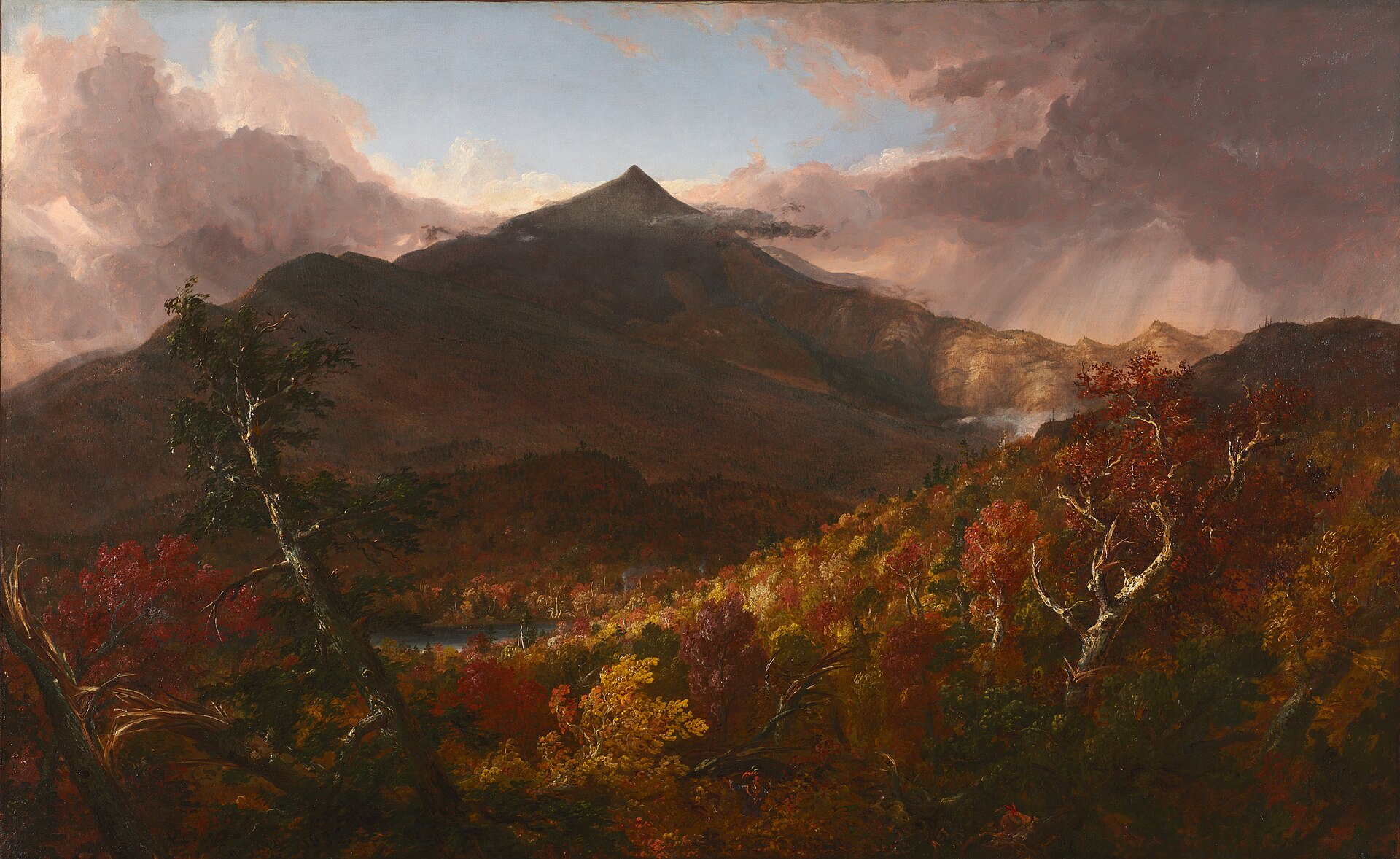
The painting
View of Schroon Mountain, Essex County, New York, After a Storm. Thomas Cole, 1838. Cleveland Museum of Art. Public domain.