
Psalms 18:1
in Psalms 18I love You, O LORD, my strength.
BSB
The same verse in ASV and KJV ▾
ASV
I love thee, O Jehovah, my strength.
KJV
I will love thee, O Lord, my strength.
⋯
This verse in Psalms 18
Commentary
4 notes on this verseI will love thee, O Lord, my strength. These words are not in twenty second chapter of Second Samuel: the psalm there begins with Psa 18:
This site's exposition
I love You, O LORD
on Psalms 18:1-3
The psalm opens with love for the LORD, then a run of titles. Rock, fortress, deliverer, refuge, shield, horn of salvation and stronghold are a soldier's words for cover, each naming a different danger. He calls on the LORD and is saved from his enemies.
The record, by era
The Reformation1 voice
As the Scripture does not use the verb rhm, racham, for to love, except in the conjugation pihel, and as it is here put in the conjugation kal, some of the Jewish expositors explain it as here meaning to seek mercy; as if David had said, Lord, since I have so often experienced thee to be a merciful God, I will trust to and repose in thy mercies for ever.
The Nineteenth Century1 voice
"I will love thee, O Lord." With strong, hearty affection will I cling to thee; as a child to its parent, or a spouse to her husband. The word is intensely forcible, the love is of the deepest kind. "I will love heartily, with my inmost bowels." Here is a fixed resolution to abide in the nearest and most intimate union with the Most High. Our triune God deserves the warmest love of all our hearts. Father, Son and Spirit have each a claim upon our love.
How the passage was read
What the Jewish commentators add
on the day the Lord saved him etc. When he became old and all his troubles had already passed over him and he was saved from them.
This section is reception history: how the passage was read and kept in the Jewish tradition. Where a reading parts from an essential of the Christian faith, the section says so at that point.
Texts and citation data: Sefaria; each excerpt follows its version’s licence. 4 further sources are cited on this chapter that carry no English text this site may quote or only restate the verse.
The words behind it
4 Hebrew wordsEvery Hebrew word of this verse in the order it stands, with what it means and the door to its own study. The last column counts the times a word stands in the whole Bible: the rarer the word, the more the places it appears belong together.
| Hebrew | Sound | Meaning | Word study | In the Bible |
|---|---|---|---|---|
| וַיֹּאמַ֡ר | vaiyomar | and he said | H559 → | 5305 times |
| אֶרְחָמְךָ֖ | ʾerchamekha | I love you | H7355 → | 47 times |
| יְהוָ֣ה | yahweh | O Yahweh | H3068 → | 6520 times |
| חִזְקִֽי׃ | chizki | strength my | H2391 → |
וַיֹּאמַ֡רand he said
vaiyomarH559 →5305 times
אֶרְחָמְךָ֖I love you
ʾerchamekhaH7355 →47 times
יְהוָ֣הO Yahweh
yahwehH3068 →6520 times
חִזְקִֽי׃strength my
chizkiH2391 →
A shaded row is a word that stands 400 times or fewer in the Bible.
The walk
8 stopsEach card is a verse this one points to, and under it the verses that one points to in turn. Where several paths arrive at the same place, that place is listed first: the text keeps returning to it.
Through
Philippians 4:13I can do all things through Christ who gives me strength.
it leads to
- Ephesians 6:10
Finally, be strong in the Lord and in His mighty power.
Reached by 2 separate paths from here.
- Isaiah 41:10
Do not fear, for I am with you; do not be afraid, for I am your God. I will strengthen you; I will surely help you; I will uphold you with My right hand…
- 2 Corinthians 12:9–10
But He said to me, “My grace is sufficient for you, for My power is perfected in weakness.” Therefore I will boast all the more gladly in my weaknesses, so that the power of…
- Colossians 1:11
being strengthened with all power according to His glorious might so that you may have full endurance and patience, and joyfully
- Isaiah 40:29–31
He gives power to the faint and increases the strength of the weak.
- Ephesians 6:10
Through
1 John 4:19We love because He first loved us.
it leads to
- 1 John 4:10
And love consists in this: not that we loved God, but that He loved us and sent His Son as the atoning sacrifice for our sins.
- John 3:16
For God so loved the world that He gave His one and only Son, that everyone who believes in Him shall not perish but have eternal life.
- John 15:16
You did not choose Me, but I chose you. And I appointed you to go and bear fruit—fruit that will remain—so that whatever you ask the Father in My name, He will give you.
- 1 John 4:10
About Psalms
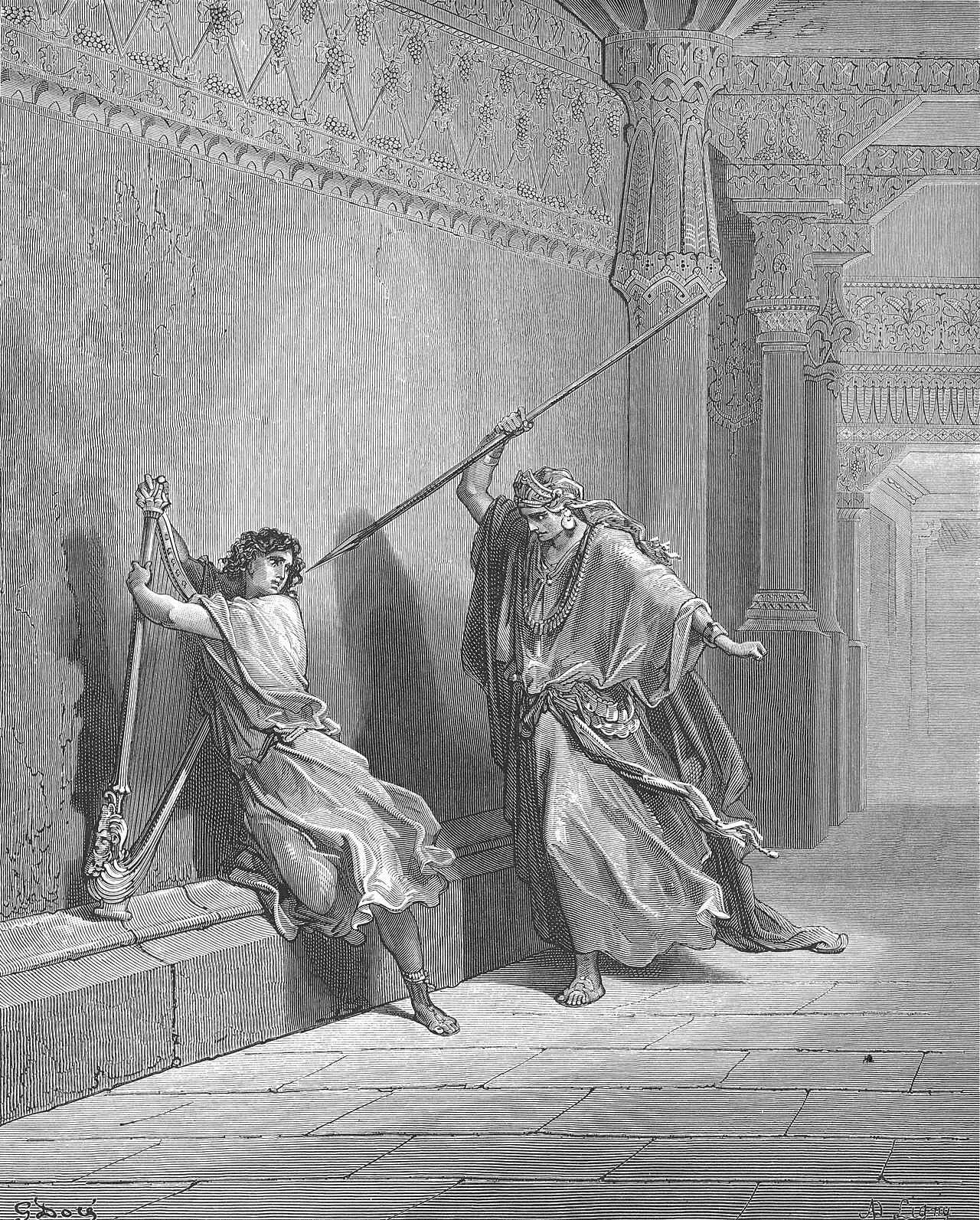
This page draws on Charles Spurgeon, The Treasury of David; Charles Spurgeon, The Treasury of David, Vol. 1; Franz Delitzsch, Biblical Commentary on the Psalms; John Calvin, Commentaries and John Gill, Exposition of the Old Testament (1748-1763).