
Psalms 18:10
in Psalms 18He mounted a cherub and flew; He soared on the wings of the wind.
BSB
The same verse in ASV and KJV ▾
ASV
And he rode upon a cherub, and did fly; Yea, he soared upon the wings of the wind.
KJV
And he rode upon a cherub, and did fly: yea, he did fly upon the wings of the wind.
⋯
This verse in Psalms 18
Commentary
13 notes on this verseSecretly and with mysterious reckoning he represents his incarnation through [images of] darkness and thick clouds. At last he returns to the same place from whence he had set forth: and he ascends into the heavens with the cherubim and flies, although he had not descended with those cherubim, without the cherubim he himself bowed the heavens and descended. On his return it is said, "And he mounted on cherubs, and he flew," with the body he had assumed.
This site's exposition
He mounted a cherub and flew
on Psalms 18:10-15
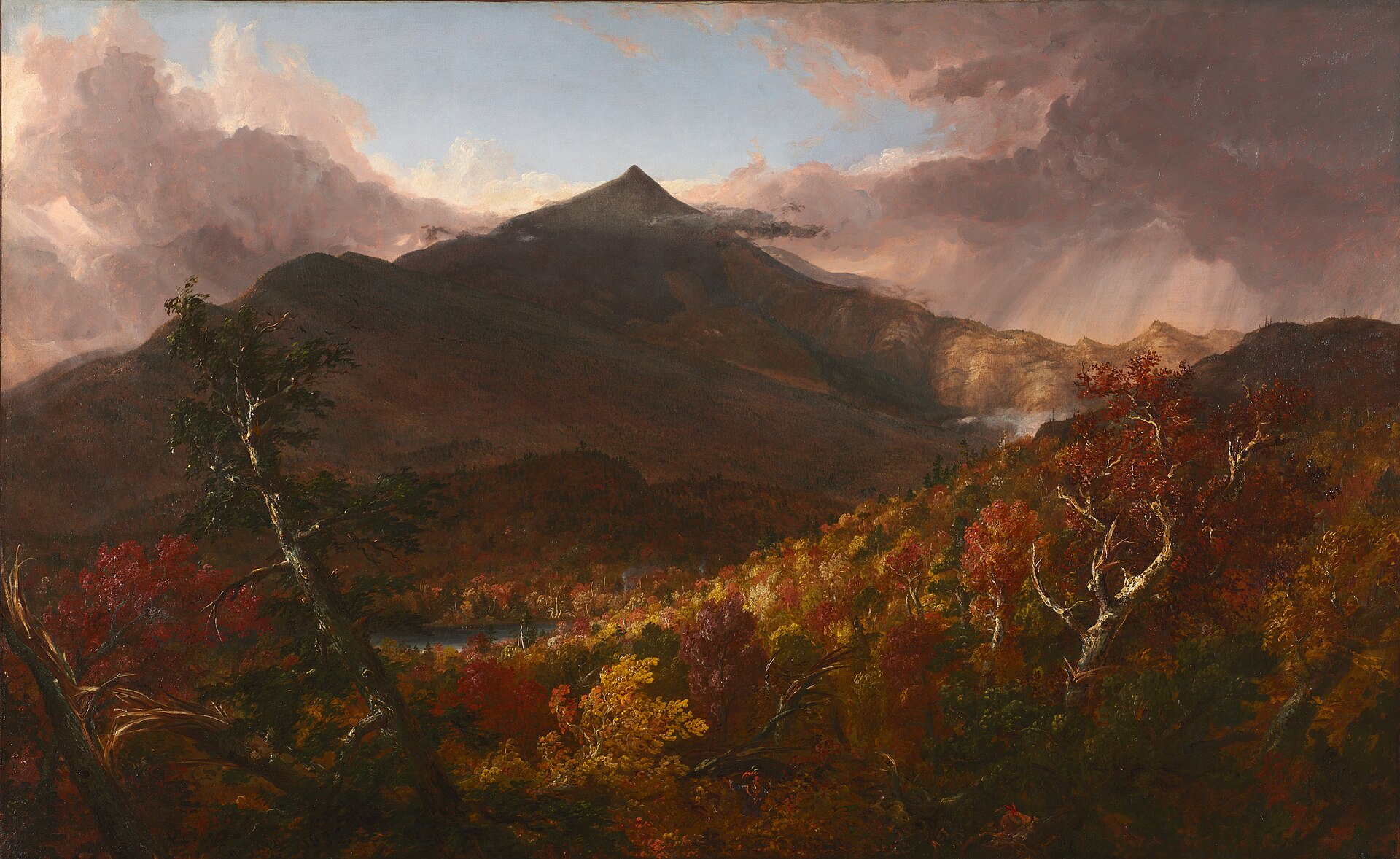
The appearing is a storm, and God acts from inside it. He mounted a cherub and flew, made darkness His hiding place, and set storm clouds around Him as a canopy. He shot arrows and hurled lightning, and the blast of His nostrils laid the sea's channels bare.
The record, by era
The Church Fathers1 voice
"And He mounted above the cherubim, and did fly" [Psalm 18:10]. And He was exalted above the fullness of knowledge, that no man should come to Him but by love: for "love is the fulfilling of the law." [Romans 13:10] And full soon He showed to His lovers that He is incomprehensible, lest they should suppose that He is comprehended by corporeal imaginations. "He flew above the wings of the winds." But that swiftness, whereby He showed Himself to be incomprehensible, is above the powers of souls, whereon as upon wings they raise themselves from earthly fears into the air of liberty.
The Medieval Church1 voice
"And he flew." Here he treats of the changes of the air according to corporeal effects; and there is a threefold change: namely in winds, in clouds, and in thunder; and he treats of each. Regarding the first he proposes three things. First, the efficient …
The Puritans and the Awakening2 voices
Cherub - Or, upon the cherubim, upon the angels, who are also called God's chariots, chap. lxviii, 17, upon which he is said to sit and ride. All which is not to be understood grossly, but only to denote God's using the ministry of angels, in raising such storms and tempests.
And he rode upon a cherub, and did fly,....
The Nineteenth Century1 voice
A commentator
Jamieson, Fausset & Brown1802–1910
Commentary Critical and Explanatory on the Whole Bible (1871)
proposed
cherub--angelic agents (compare Ge 3:24), the figures of which were placed over the ark (1Sa 4:4), representing God's dwelling; used here to enhance the majesty of the divine advent.
quarantine:debris (2026-07-29) — starts-lowercase
6 more voices on this verse
The Nineteenth Century6 voices
In most poetical language the Psalmist now describes his experience of Jehovah's delivering power. Poesy has in all her treasures no gem more lustrous than the sonnet of the following verses; the sorrow, the cry, the descent of the Divine One, and the rescue of the afflicted, are here set to a music worthy of the golden harps.
In most poetical language the Psalmist now describes his experience of Jehovah's delivering power. Poesy has in all her treasures no gem more lustrous than the sonnet of the following verses; the sorrow, the cry, the descent of the Divine One, and the rescue of the afflicted, are here set to a music worthy of the golden harps. The Messiah our Saviour is evidently, over and beyond David or any other believer, the main and chief subject of this song; and while studying it we have grown more and more sure that every line here has its deepest and profoundest fulfilment in Him; but as we are desirous not to extend our comment beyond moderate bounds, we must leave it with the devout reader to make the very easy application of the passage to our once distressed but now triumphant Lord.
There is inimitable grandeur in this verse. Under the Mosaic system the cherubim are frequently represented as the chariot of God; hence Milton, in "Paradise Lost, " writes of the Great Father, — He on the wings of cherubim Uplifted, in paternal glory rode Far into chaos." Without speculating upon the mysterious and much-disputed subject of the cherubim, it may be enough to remark that angels are doubtless our guards and ministering friends, and all their powers are enlisted to expedite the rescue of the afflicted. "He rode upon a cherub, and did fly." Nature also yields all her agents to be our helpers, and even the powers of the air are subservient: "yea, he did fly upon the wings of the wind." The Lord comes flying when mercy is his errand, but he lingers long when sinners are being wooed to repent. The flight here pictured is as majestic as it is swift; "flying all abroad" is Sternhold's word, and he is not far from correct. As the eagle soars in easy grandeur with wings outspread, without violent flapping and exertion, so comes the Lord with majesty of omnipotence to aid his own.
There is inimitable grandeur in this verse. Under the Mosaic system the cherubim are frequently represented as the chariot of God; hence Milton, in "Paradise Lost, " writes of the Great Father, — He on the wings of cherubim Uplifted, in paternal glory rode Far into chaos." Without speculating upon the mysterious and much-disputed subject of the cherubim, it may be enough to remark that angels are doubtless our guards and ministering friends, and all their powers are enlisted to expedite the rescue of the afflicted. "He rode upon a cherub, and did fly."
He rode upon a cherub, and did fly - That is, as it is immediately explained, Yea, he did fly upon the wings of the wind. God was in the storm, and by the ministry of angels guided the course of it, and drove it on with such an impetuous force as nothing could withstand. He ‘rides in the whirlwind and directs the storm.’ Angels are in a peculiar sense the attendants and messengers of the Almighty, whom he employs as his ministers in effecting many of those great events which take place in the administration of his providence; and particularly such as manifest his immediate interposition in the extraordinary judgments which he inflicts for the punishment of sinful nations. See Psa 103:20; Psa 104:4. The cherub is particularly mentioned as an emblem of the Divine presence, and especially as employed in supporting and conveying the chariot of the Almighty, when he is represented as riding in his majesty through the firmament of heaven: - - Forth rush’d with whirlwind sound The chariot of paternal Deity; Flashing thick flames, wheel within wheel undrawn, Itself instinct with spirit, but convey’d By four cherubic shapes. Par. Lost, lib. vi. This seems to be the image intended to be conveyed in the place before us. “He rode upon a cherub, and did fly; he flew on the wings of the wind,” i.e., the cherub supported and led on the tempest, in which the Almighty rode as in his chariot. This is agreeable to the office elsewhere ascribed to the cherubim. Thus they supported the mercy-seat, which was peculiarly the throne of God under the Jewish economy. God is expressly said to “make the clouds his chariot,” Psa 104:3; and to “ride upon a swift cloud,” Isa 19:1: so that “riding upon a cherub,” and “riding upon a swift cloud,” is riding in the cloud as his chariot, supported and guided by the ministry of the cherubim. […]
A commentator
Albert Barnes1798–1870
Notes, Explanatory and Practical, on the Old and New Testaments (1832-1869)
proposed
And he rode upon a cherub - Compare Isa 14:13, note; Isa 37:16, note. The cherub in the theology of the Hebrews was a figurative representation of power and majesty, under the image of a being of a high and celestial nature, “whose form is represented as composed from the figures of a man, ox, lion, and eagle,” Ezek. 1; 10. Cherubs are first mentioned as guarding the gates of Paradise, Gen 3:24; then as bearing the throne of God upon their wings through the clouds, Ezek. 1; 10; and also as statues or images made of wood and overlaid with gold, over the cover of the ark, in the inner sanctuary of the tabernacle, and of the temple, Exo 25:18 ff; 1Ki 6:23-28. Between the two cherubim in the temple, the Shechinah, or visible symbol of the presence of God, rested; and hence, God is represented as “dwelling between the cherubim,” Exo 25:22; Num 7:89; Psa 80:1; Psa 99:1. The cherubim are not to be regarded as real existences, or as an order of angels like the seraphim Isa 6:2-3, but as an imaginary representation of majesty, as emblematic of the power and glory of God. Here God is represented as “riding on a cherub;” that is, as coming forth on the clouds regarded as a cherub (compare Ezek. 1), as if, seated on his throne, he was borne along in majesty and power amidst the storm and tempest. And did fly - He seemed to move rapidly on the flying clouds. Yea, he did fly upon the wings of the wind - Rapidly as the clouds driven along by the wind. The “wings of the wind” are designed to represent the rapidity with which the wind sweeps along. Rapid motion is represented by the flight of birds; hence, the term wings is applied to winds to denote the rapidity of their movement. The whole figure here is designed to represent; the majesty with which God seemed to be borne along on the tempest. Herder renders it, “He flew on the wings of the storm.”
How the passage was read
What the Jewish commentators add
And He bent the heavens, and He came down to pass through the land of Egypt. “He came down” is to be understood in its simple meaning. Another explanation is “i atonvit” in Old French, to flatten, as (in Exod.:3), and the radical is רדד.
This section is reception history: how the passage was read and kept in the Jewish tradition. Where a reading parts from an essential of the Christian faith, the section says so at that point.
Texts and citation data: Sefaria; each excerpt follows its version’s licence. 4 further sources are cited on this chapter that carry no English text this site may quote or only restate the verse.
The words behind it
8 Hebrew wordsEvery Hebrew word of this verse in the order it stands, with what it means and the door to its own study. The last column counts the times a word stands in the whole Bible: the rarer the word, the more the places it appears belong together.
| Hebrew | Sound | Meaning | Word study | In the Bible |
|---|---|---|---|---|
| וַיִּרְכַּ֣ב | vaiyirkav | and he rode | H7392 → | 78 times |
| עַל־ | ʾal- | on | H5921 → | 5755 times |
| כְּ֭רוּב | keruv | a cherub | H3742 → | 91 times |
| וַיָּעֹ֑ף | vaiyaof | and he flew | H5774 → | 26 times |
| וַ֝יֵּ֗דֶא | vaiyede' | and he soared | H1675 → | |
| עַל־ | ʾal- | on | H5921 → | 5755 times |
| כַּנְפֵי־ | kanfei- | [the] wings of | H3671 → | 109 times |
| רֽוּחַ׃ | ruach | [the] wind | H7307 → | 378 times |
וַיִּרְכַּ֣בand he rode
vaiyirkavH7392 →78 times
עַל־on
ʾal-H5921 →5755 times
כְּ֭רוּבa cherub
keruvH3742 →91 times
וַיָּעֹ֑ףand he flew
vaiyaofH5774 →26 times
וַ֝יֵּ֗דֶאand he soared
vaiyede'H1675 →
עַל־on
ʾal-H5921 →5755 times
כַּנְפֵי־[the] wings of
kanfei-H3671 →109 times
רֽוּחַ׃[the] wind
ruachH7307 →378 times
A shaded row is a word that stands 400 times or fewer in the Bible.
The walk
8 stopsEach card is a verse this one points to, and under it the verses that one points to in turn. Where several paths arrive at the same place, that place is listed first: the text keeps returning to it.
Through
Psalms 80:1Hear us, O Shepherd of Israel, who leads Joseph like a flock; You who sit enthroned between the cherubim, shine forth
it leads to
- Revelation 21:23
And the city has no need of sun or moon to shine on it, because the glory of God illuminates the city, and the Lamb is its lamp.
- Psalms 77:20
You led Your people like a flock by the hand of Moses and Aaron.
- Psalms 50:2
From Zion, perfect in beauty, God shines forth.
- Revelation 21:23
Through
Psalms 104:3laying the beams of His chambers in the waters above, making the clouds His chariot, walking on the wings of the wind.
it leads to
- Amos 9:6
He builds His upper rooms in the heavens and founds His vault upon the earth. He summons the waters of the sea and pours them over the face of the earth. The LORD is…
- 2 Samuel 22:11
He mounted a cherub and flew; He soared on the wings of the wind.
- Amos 9:6
Through
Psalms 99:1The LORD reigns; let the nations tremble! He is enthroned above the cherubim; let the earth quake!
it leads to
- Psalms 97:1
The LORD reigns, let the earth rejoice; let the distant shores be glad.
- Exodus 25:22
And I will meet with you there above the mercy seat, between the two cherubim that are over the ark of the Testimony; I will speak with you about all that I command you…
- Psalms 97:4
His lightning illuminates the world; the earth sees and trembles.
- Psalms 97:1
Where this verse is studied
On this page
About Psalms
This page draws on 11 works. Open the list of works
This page draws on Adam Clarke, Commentary on the Bible; Albert Barnes, Notes, Explanatory and Practical, on the Old and New Testaments (1832-1869); Augustine of Hippo, Exposition on Psalm 18; Charles Spurgeon, The Treasury of David, Vol. 1; Eusebius of Caesarea, COMMENTARY ON PSALMS 18:11-13; Franz Delitzsch, Biblical Commentary on the Psalms; Jamieson, Fausset & Brown, Commentary Critical and Explanatory on the Whole Bible; John Gill, Exposition of the Old Testament; John Gill, Exposition of the Old Testament (1748-1763); John Wesley, Explanatory Notes upon the Old Testament and Thomas Aquinas, Exposition on the Psalms of David.