
Psalms 18:12
in Psalms 18From the brightness of His presence His clouds advanced— hailstones and coals of fire.
BSB
The same verse in ASV and KJV ▾
ASV
At the brightness before him his thick clouds passed, Hailstones and coals of fire.
KJV
At the brightness that was before him his thick clouds passed, hail stones and coals of fire.
⋯
This verse in Psalms 18
Commentary
12 notes on this verseHe came down and then ascended with the cherubim after he thundered in the heaven.… Against the Egyptian sorcerers the Lord who flies on the cherubim sends forth hailstones and coals of fire. I think, also, that those vengeful acts against skillful wicked powers are called hailstones and coals of fire. Those acts, therefore, appointed for punishment and revenge and directed in the secret way of the will of God against the demons who had brought the superstition of multiple gods, were driving away all those demons.
This site's exposition
He mounted a cherub and flew
on Psalms 18:10-15
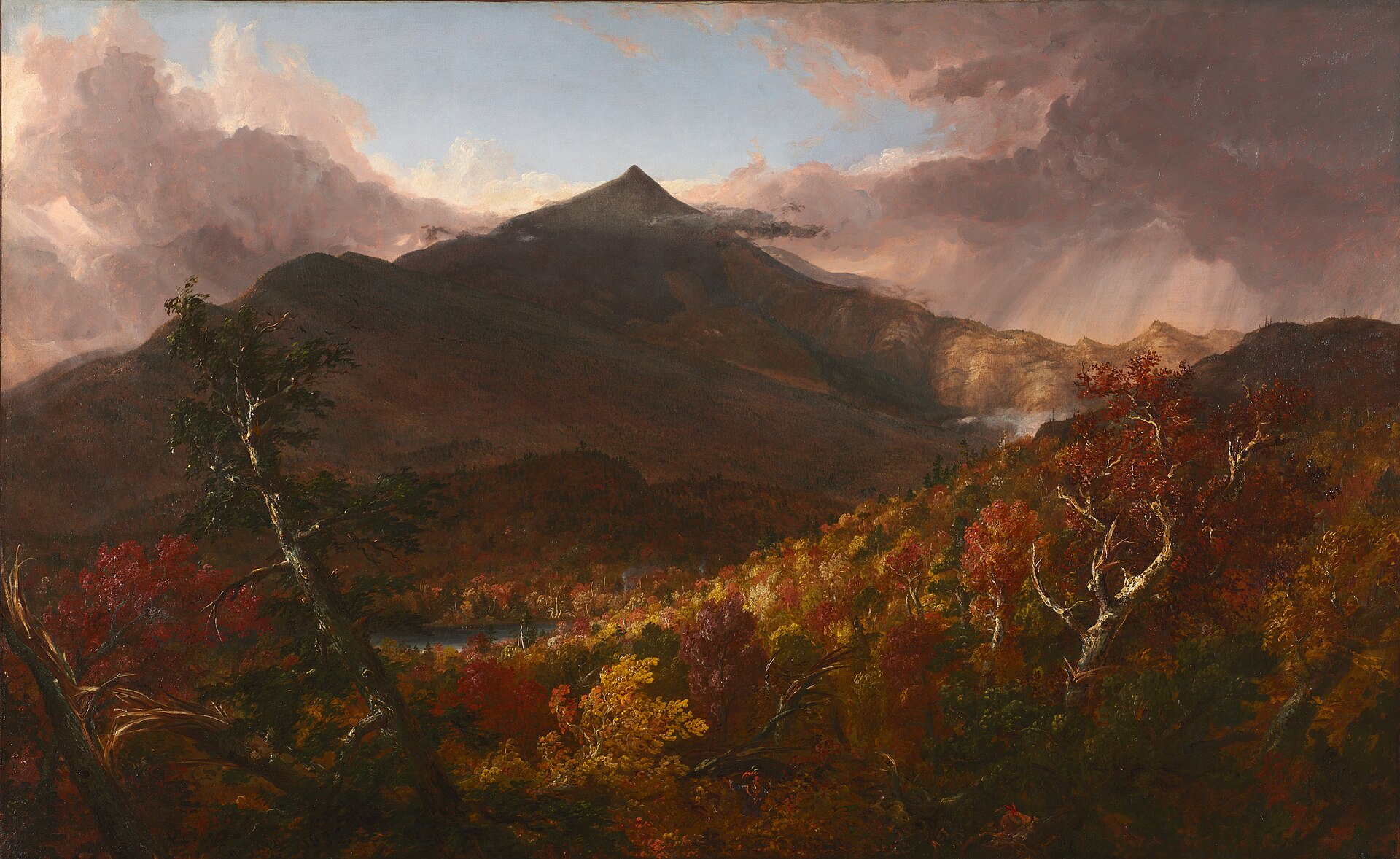
The appearing is a storm, and God acts from inside it. He mounted a cherub and flew, made darkness His hiding place, and set storm clouds around Him as a canopy. He shot arrows and hurled lightning at the foes, and the blast of His nostrils laid the sea's channels bare.
The record, by era
The Church Fathers1 voice
"In respect of the brightness in His sight" [Psalm 18:12]: in comparison with the brightness, which is in the sight of His manifestation. "His clouds have passed over." The preachers of His word are not now bounded by the confines of Judæa, but have passed over to the Gentiles. "Hail and coals of fire." Reproofs are figured, whereby, as by hail, the hard hearts are bruised: but if a cultivated and genial soil, that is, a godly mind, receive them, the hail's hardness dissolves into water, that is, the terror of the lightning-charged, and as it were frozen, reproof dissolves into satisfying doctrine; and hearts kindled by the fire of love revive. All these things in His clouds have passed over to the Gentiles.
The Medieval Church1 voice
"And he flew." Here he treats of the changes of the air according to corporeal effects; and there is a threefold change: namely in winds, in clouds, and in thunder; and he treats of each. Regarding the first he proposes three things. First, the efficient …
The Puritans and the Awakening2 voices
), comfort returns, the face of affairs is changed, and that which was gloomy and threatening becomes serene and pleasant. The greater the difficulties are that lie in the way of deliverance the more glorious the deliverance is.
quarantine:debris (2026-07-29) — leading-punctuation+unbalanced-parens
At the brightness that was before him, The lightning that came out of the thick clouds; which may denote, either the coming of Christ to take vengeance on the Jewish nation, which was swift and sudden, clear and manifest; or the spreading of the Gospel in the Gentile world, in which Christ, the brightness of his Father's glory, appeared to the illumination of many; see Mat 24:27; and both may be intended, as the effects following show; his thick clouds passed; that is, passed away; the gross darkness, which had for so many years covered the Gentile world, was removed when God sent forth his light and truth; and multitudes, who were darkness itself, were made light in the Lord; hail stones and coals of fire; the same Gospel that was enlightening to the Gentiles, and the savour of life unto life unto them, was grievous, like hail stones, and tormenting, scorching, irritating, and provoking, like coals of fire, and the savour of death unto death, to the Jews; when God provoked them, by sending the Gospel among the Gentiles, and calling them: or these may design the heavy, awful, and consuming judgments of God upon them, which are sometimes signified by hail storms; see Rev 8:7. In 2Sa 22:13, it is only, "through the brightness before him were coals of fire kindled".
The Nineteenth Century1 voice
Suddenly the terrible artillery of heaven was discharged; the brightness of lightning lit up the clouds as with a glory proceeding from him who was concealed within the cloudy pavilion; and volleys of hailstones and coals of fire were hurled forth upon the enemy. The lightnings seemed to cleave the clouds and kindle them into a blaze, and then hailstones and flakes of fire with flashes of terrific grandeur terrified the sons of men.
5 more voices on this verse
The Nineteenth Century5 voices
A commentator
Jamieson, Fausset & Brown1802–1910
Commentary Critical and Explanatory on the Whole Bible (1871)
proposed
Out of this obscurity, which impresses the beholder with awe and dread, He reveals Himself by sudden light and the means of His terrible wrath (Jos 10:11;
quarantine:debris (2026-07-29) — unbalanced-parens
In most poetical language the Psalmist now describes his experience of Jehovah's delivering power. Poesy has in all her treasures no gem more lustrous than the sonnet of the following verses; the sorrow, the cry, the descent of the Divine One, and the rescue of the afflicted, are here set to a music worthy of the golden harps. The Messiah our Saviour is evidently, over and beyond David or any other believer, the main and chief subject of this song; and while studying it we have grown more and more sure that every line here has its deepest and profoundest fulfilment in Him; but as we are desirous not to extend our comment beyond moderate bounds, we must leave it with the devout reader to make the very easy application of the passage to our once distressed but now triumphant Lord.
In most poetical language the Psalmist now describes his experience of Jehovah's delivering power. Poesy has in all her treasures no gem more lustrous than the sonnet of the following verses; the sorrow, the cry, the descent of the Divine One, and the rescue of the afflicted, are here set to a music worthy of the golden harps.
At the brightness that was before him his thick clouds passed - The word נגה nogah signifies the lightning. This goes before him: the flash is seen before the thunder is heard, and before the rain descends; and then the thick cloud passes. Its contents are precipitated on the earth, and the cloud is entirely dissipated. Hail-stones and coals of fire - This was the storm that followed the flash and the peal; for it is immediately added: -
A commentator
Albert Barnes1798–1870
Notes, Explanatory and Practical, on the Old and New Testaments (1832-1869)
proposed
At the brightness that was before him - From the flash - the play of the lightnings that seemed to go before him. His thick clouds passed - or, vanished. They seemed to pass away. The light, the flash, the blaze, penetrated those clouds, and seemed to dispel, or to scatter them. The whole heavens were in a blaze, as if there were no clouds, or as if the clouds were all driven away. The reference here is to the appearance when the vivid flashes of lightning seem to penetrate and dispel the clouds, and the heavens seem to be lighted up with a universal flame. Hail-stones - That is, hailstones followed, or fell. And coals of fire - There seemed to be coals of fire rolling along the ground, or falling from the sky. In the corresponding place in 2Sa 22:13 the expression is, “Through the brightness before him were coals of fire kindled.” That is, fires were kindled by the lightning. The expression in the psalm is more terse and compact, but the reason of the change cannot be assigned.
How the passage was read
What the Jewish commentators add
the darkness of waters that are in the thick clouds of the skies are the darkness that is about Him.
1 more on this passage, in their own words ▾
passed Heb. עברו, trepasant in Old French, passed. The hail split and passes through onto the Egyptians at the Sea of Reeds.
This section is reception history: how the passage was read and kept in the Jewish tradition. Where a reading parts from an essential of the Christian faith, the section says so at that point.
Texts and citation data: Sefaria; each excerpt follows its version’s licence. 4 further sources are cited on this chapter that carry no English text this site may quote or only restate the verse.
The words behind it
7 Hebrew wordsEvery Hebrew word of this verse in the order it stands, with what it means and the door to its own study. The last column counts the times a word stands in the whole Bible: the rarer the word, the more the places it appears belong together.
| Hebrew | Sound | Meaning | Word study | In the Bible |
|---|---|---|---|---|
| מִנֹּ֗גַהּ | minogah | from [the] brightness | H5051 → | |
| נֶ֫גְדּ֥וֹ | negdo | before him | H5048 → | 151 times |
| עָבָ֥יו | ʾavav | dark clouds his | H5645 → | 31 times |
| עָבְר֑וּ | ʾaveru | they passed on | H5674 → | 556 times |
| בָּ֝רָ֗ד | barad | hail | H1259 → | 29 times |
| וְגַֽחֲלֵי־ | vegachalei- | and coals of | H1513 → | 18 times |
| אֵֽשׁ׃ | ʾesh | fire | H784 → | 378 times |
מִנֹּ֗גַהּfrom [the] brightness
minogahH5051 →
נֶ֫גְדּ֥וֹbefore him
negdoH5048 →151 times
עָבָ֥יוdark clouds his
ʾavavH5645 →31 times
עָבְר֑וּthey passed on
ʾaveruH5674 →556 times
בָּ֝רָ֗דhail
baradH1259 →29 times
וְגַֽחֲלֵי־and coals of
vegachalei-H1513 →18 times
אֵֽשׁ׃fire
ʾeshH784 →378 times
A shaded row is a word that stands 400 times or fewer in the Bible.
The walk
8 stopsEach card is a verse this one points to, and under it the verses that one points to in turn. Where several paths arrive at the same place, that place is listed first: the text keeps returning to it.
Through
Matthew 17:5While Peter was still speaking, a bright cloud enveloped them, and a voice from the cloud said, “This is My beloved Son, in whom I am well pleased. Listen to Him!”
it leads to
- Matthew 3:17
And a voice from heaven said, “This is My beloved Son, in whom I am well pleased!”
- Matthew 12:18
“Here is My Servant, whom I have chosen, My beloved, in whom My soul delights. I will put My Spirit on Him, and He will proclaim justice to the nations.
- Deuteronomy 18:15
The LORD your God will raise up for you a prophet like me from among your brothers. You must listen to him.
- Mark 9:7
Then a cloud appeared and enveloped them, and a voice came from the cloud: “This is My beloved Son. Listen to Him!”
- Hebrews 2:1–3
We must pay closer attention, therefore, to what we have heard, so that we do not drift away.
- Matthew 3:17
Through
Matthew 17:2There He was transfigured before them. His face shone like the sun, and His clothes became as white as the light.
it leads to
- Psalms 104:2
He wraps Himself in light as with a garment; He stretches out the heavens like a tent,
- Matthew 28:3
His appearance was like lightning, and his clothes were white as snow.
- Psalms 104:2
Through
Revelation 16:21And great hailstones weighing almost a hundred pounds each rained down on them from above. And men cursed God for the plague of hail, because it was so horrendous.
it leads to
- Revelation 11:19
Then the temple of God in heaven was opened, and the ark of His covenant appeared in His temple. And there were flashes of lightning, and rumblings, and peals of thunder, and an earthquake,…
- Revelation 11:19
About Psalms
This page draws on 11 works. Open the list of works
This page draws on Adam Clarke, Commentary on the Bible; Albert Barnes, Notes, Explanatory and Practical, on the Old and New Testaments (1832-1869); Augustine of Hippo, Exposition on Psalm 18; Charles Spurgeon, The Treasury of David, Vol. 1; Eusebius of Caesarea, COMMENTARY ON PSALMS 18:14; Franz Delitzsch, Biblical Commentary on the Psalms; Jamieson, Fausset & Brown, Commentary Critical and Explanatory on the Whole Bible; John Gill, Exposition of the Old Testament; John Gill, Exposition of the Old Testament (1748-1763); Matthew Henry, Commentary on the Whole Bible and Thomas Aquinas, Exposition on the Psalms of David.