
Psalms 18:11
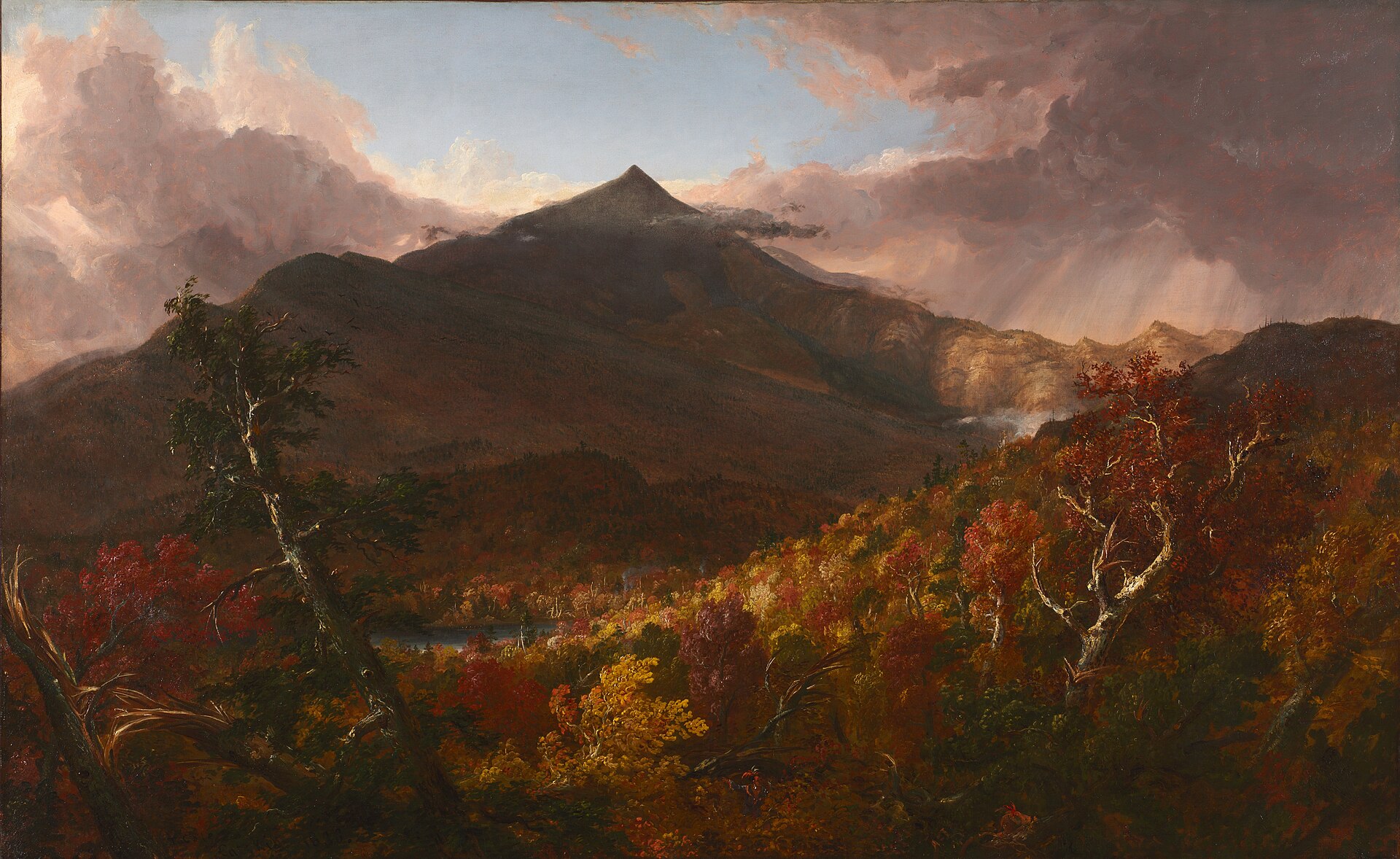
in Psalms 18He made darkness His hiding place, and storm clouds a canopy around Him.
BSB
The same verse in ASV and KJV ▾
ASV
He made darkness his hiding-place, his pavilion round about him, Darkness of waters, thick clouds of the skies.
KJV
He made darkness his secret place; his pavilion round about him were dark waters and thick clouds of the skies.
⋯
This verse in Psalms 18
Commentary
17 notes on this verseThere is no doubt but that the clouds and darkness round about him were the body that the Lord Savior deigned to assume.… He appeared just as he willed to appear and not in accordance with his divine nature. "He made darkness the cloak about him." If God is light, how is light able to dwell in darkness? In that passage, darkness represents our imperfect knowledge and our infirmity, for we cannot gaze on his majesty.
This site's exposition
He mounted a cherub and flew
on Psalms 18:10-15
The appearing is a storm, and God acts from inside it. He mounted a cherub and flew, made darkness His hiding place, and set storm clouds around Him as a canopy. He shot arrows and hurled lightning, and the blast of His nostrils laid the sea's channels bare.
This site's exposition
He made darkness His hiding place
Verse 11 hides the God who flew inside the storm. Matthew Henry read the darkness around Him as His glory and counsels hidden from sight, even when He comes in mercy. Charles Spurgeon added that faith sees Him at work in the dark clouds of the storm.
The record, by era
The Church Fathers5 voices
"And has made darkness His hiding place" [Psalm 18:11]. And has settled the obscurity of the Sacraments, and the hidden hope in the heart of believers, where He may lie hidden, and not abandon them. In this darkness too, wherein "we yet walk by faith, and not by sight," [2 Corinthians 5:7] as long as "we hope for what we see not, and with patience wait for it." [Romans 8:25] "Round about Him is His tabernacle." Yet they that believe Him turn to Him and encircle Him; for that He is in the midst of them, since He is equally the friend of all, in whom as in a tabernacle He at this time dwells. "Dark water in clouds of air." Nor let any one on this account, if he understand the Scripture, imagine that he is already in that light, which will be when we shall have come out of faith into sight: for in the prophets and in all the preachers of the word of God there is obscure teaching.
When God wished to appear visibly to people and desired also to teach them in person what he had first laid down in the law, he tempered the force, the power of the divine, by taking on the human and "made the darkness his cover round about him," when he concealed himself in the tent of the flesh.
It is said of God in the eighteenth psalm that "God made darkness his hiding place." This is a Hebrew way of showing that the ideas of God that people understand in accordance with their merits are obscure and unknowable, since God hides himself as if in darkness from those who cannot bear the radiance of the knowledge of him and who cannot see him, partly because of the defilement of the mind that is bound to a human "body of humiliation," partly because of its restricted capacity to comprehend God.… Moreover, our Savior and Lord, the Logos of God, shows the depth of the knowledge of the Father, and that, although a derived knowledge is possessed by those whose minds are illuminated by the divine Logos himself, absolute understanding and knowledge of the Father is possessed by himself alone in accordance with his merits, when he says, "No one has known the Son save the Father, and no one has known the Father save the Son, and him to whom the Son will reveal him." Neither can anyone worthily know the uncreated and firstborn of all created nature in the way that the Father who begat him knows him; nor can anyone know the Father in the same way as the living Logos who is God's wisdom and truth. By participation in him who took away from the Father what is called darkness, which he made "his hiding place," and what is called his covering, "the great deep," thus revealing the Father, anyone whatever who has the capacity to know him may do so.
The reasons of the divine dispensation and providence are most obscure. For "God made darkness his hiding place." Those desiring audaciously and rashly to examine this darkness and appropriating for themselves one thing from another have fallen headlong into the dense "darkness" of errors.
[Daniel 2:22] "It is He who reveals deep and hidden things, and He knows what is placed in the darkness, and with Him is the light." A man to whom God makes profound revelations and who can say, "O the depth of the riches of the knowledge and wisdom of God!" (Romans 11:33), he it is who by the indwelling Spirit probes even into the deep things of God, and digs the deepest of wells in the depths of his soul. He is a man who has stirred up the whole earth, which is wont to conceal the deep waters, and he observes the command of God, saying: "Drink water from thy vessels and from the spring of thy wells" (Proverbs 5:15). As for the words which follow, "He knows what is placed in the darkness, and with Him is the light," the darkness signifies ignorance, and the light signifies knowledge and learning. Therefore as wrong cannot hide God away, so right encompasses and surrounds Him. Or else we should interpret the words to mean all the dark mysteries and deep things (concerning God), according to what we read in Proverbs: "He understands also the parable and the dark saying." (Proverbs 1:6, LXX) This in turn is equivalent to what we read in the Psalms: "Dark waters in the clouds of the sky" (Psalm 18:11). For one who ascends to the heights and forsakes the things of earth, and like the birds themselves seeks after the most rarified atmosphere and everything ethereal, he becomes like a cloud to which the truth of God penetrates and which habitually showers rain upon the saints. Replete with a plenitude of knowledge, he contains in his breast many dark waters enveloped with deep darkness, a darkness which only Moses can penetrate and speak with God face to face (Exodus 33:11), of Whom the Scripture says: "He hath made darkness His hiding-place" (Psalm 18:11).
9 more voices on this verse
The Church Fathers1 voice
This verse suggests the ineffable dispensation of God and our inability to comprehend his wisdom. As with these eyes of ours we cannot look into an unfathomable depth, neither are we able to contemplate the majesty or the wisdom of God.
The Medieval Church1 voice
"And he flew." Here he treats of the changes of the air according to corporeal effects; and there is a threefold change: namely in winds, in clouds, and in thunder; and he treats of each. Regarding the first he proposes three things. First, the efficient …
The Puritans and the Awakening2 voices
. his glory is invisible, his counsels are unsearchable, and his proceedings unaccountable, and so, as to us, clouds and darkness are round about him; we know not the way that he takes, even when he is coming towards us in ways of mercy; but, when his designs are secret, they are kind; for, though he hide himself, he is the God of Israel, the Saviour.
quarantine:debris (2026-07-29) — leading-punctuation
He made darkness his secret place,....
The Nineteenth Century5 voices
The storm thickened, and the clouds pouring forth torrents of rain combined to form the secret chamber of the invisible but wonder-working God. "Pavilioned in impervious shade" faith saw him, but no other eye could gaze through the "thick clouds of the skies." Blessed is the darkness which encurtains my God; if I may not see him, it is sweet to know that he is working in secret for my eternal good. Even fools can believe that God is abroad in the sunshine and the calm, but faith is wise, and discerns him in the terrible darkness and threatening storm.
In most poetical language the Psalmist now describes his experience of Jehovah's delivering power. Poesy has in all her treasures no gem more lustrous than the sonnet of the following verses; the sorrow, the cry, the descent of the Divine One, and the rescue of the afflicted, are here set to a music worthy of the golden harps. The Messiah our Saviour is evidently, over and beyond David or any other believer, the main and chief subject of this song; and while studying it we have grown more and more sure that every line here has its deepest and profoundest fulfilment in Him; but as we are desirous not to extend our comment beyond moderate bounds, we must leave it with the devout reader to make the very easy application of the passage to our once distressed but now triumphant Lord.
In most poetical language the Psalmist now describes his experience of Jehovah's delivering power. Poesy has in all her treasures no gem more lustrous than the sonnet of the following verses; the sorrow, the cry, the descent of the Divine One, and the rescue of the afflicted, are here set to a music worthy of the golden harps.
He made darkness his secret place - God is represented as dwelling in the thick darkness, Deu 4:11; Psa 97:2. This representation in the place before us is peculiarly proper; as thick heavy clouds deeply charged, and with lowering aspects, are always the forerunners and attendants of a tempest, and greatly heighten the horrors of the appearance: and the representation of them, spread about the Almighty as a tent, is truly grand and poetic. Dark waters - The vapors strongly condensed into clouds; which, by the stroke of the lightning, are about to be precipitated in torrents of rain. See the next verse.
A commentator
Albert Barnes1798–1870
Notes, Explanatory and Practical, on the Old and New Testaments (1832-1869)
proposed
He made darkness his secret place - Herder has beautifully rendered this verse, “Now he wrapped himself in darkness; Clouds on clouds enclosed him round.” The word rendered “secret place” - סתר sêther - means properly a hiding; then something hidden, private, secret. Hence, it means a covering, a veil. Compare Job 22:14; Job 24:15. In Psa 81:7 it is applied to thunder: “I answered thee in the secret place of thunder;” that is, in the secret place or retreat - the deep, dark cloud, from where the thunder seems to come. Here the meaning seems to be, that God was encompassed with darkness. He had, as it were, wrapped himself in night, and made his abode in the gloom of the storm. His pavilion - His tent, for so the word means. Compare Psa 27:5; Psa 31:20. His abode was in the midst of clouds and waters, or watery clouds. Round about him - Perhaps a more literal translation would be, “the things round about him - his tent (shelter, or cover) - were the darkness of waters, the clouds of the skies.” The idea is that he seemed to be encompassed with watery clouds. Dark waters - Hebrew, darkness of waters. The allusion is to clouds filled with water; charged with rain. Thick clouds of the skies - The word rendered skies in this place - שׁחקים shachaqiym - means, in the singular, dust, as being fine; then a cloud, as a cloud of dust; then, in the plural, it is used to denote clouds, Job 38:37; and hence, it is used to denote the region of the clouds; the firmament; the sky; Job 37:18. Perhaps a not-inaccurate rendering here would be, “clouds of clouds;” that is, clouds rolled in with clouds; clouds of one kind rapidly succeeding those of another kind - inrolling and piled on each other. […]
How the passage was read
What the Jewish commentators add
On the verses either side of this one
And He bent the heavens, and He came down to pass through the land of Egypt. “He came down” is to be understood in its simple meaning. Another explanation is “i atonvit” in Old French, to flatten, as (in Exod.:3), and the radical is רדד.
1 more on this passage, in their own words ▾
the darkness of waters that are in the thick clouds of the skies are the darkness that is about Him.
This section is reception history: how the passage was read and kept in the Jewish tradition. Where a reading parts from an essential of the Christian faith, the section says so at that point.
Texts and citation data: Sefaria; each excerpt follows its version’s licence. 4 further sources are cited on this chapter that carry no English text this site may quote or only restate the verse.
The words behind it
9 Hebrew wordsEvery Hebrew word of this verse in the order it stands, with what it means and the door to its own study. The last column counts the times a word stands in the whole Bible: the rarer the word, the more the places it appears belong together.
| Hebrew | Sound | Meaning | Word study | In the Bible |
|---|---|---|---|---|
| יָ֤שֶׁת | yashet | he made | H7896 → | 83 times |
| חֹ֨שֶׁךְ׀ | choshekh | darkness | H2822 → | 80 times |
| סִתְר֗וֹ | sitro | covering his | H5643 → | 36 times |
| סְבִֽיבוֹתָ֥יו | sevivotav | around him | H5439 → | 336 times |
| סֻכָּת֑וֹ | sukato | canopy his | H5521 → | |
| חֶשְׁכַת־ | cheshkhat- | darkness of | H2824 → | |
| מַ֝֗יִם | mayim | waters | H4325 → | 581 times |
| עָבֵ֥י | ʾavei | dark clouds of | H5645 → | 31 times |
| שְׁחָקִֽים׃ | shechakim | clouds | H7834 → | 21 times |
יָ֤שֶׁתhe made
yashetH7896 →83 times
חֹ֨שֶׁךְ׀darkness
choshekhH2822 →80 times
סִתְר֗וֹcovering his
sitroH5643 →36 times
סְבִֽיבוֹתָ֥יוaround him
sevivotavH5439 →336 times
סֻכָּת֑וֹcanopy his
sukatoH5521 →
חֶשְׁכַת־darkness of
cheshkhat-H2824 →
מַ֝֗יִםwaters
mayimH4325 →581 times
עָבֵ֥יdark clouds of
ʾaveiH5645 →31 times
שְׁחָקִֽים׃clouds
shechakimH7834 →21 times
A shaded row is a word that stands 400 times or fewer in the Bible.
The walk
8 stopsEach card is a verse this one points to, and under it the verses that one points to in turn. Where several paths arrive at the same place, that place is listed first: the text keeps returning to it.
Through
Psalms 91:1He who dwells in the shelter of the Most High will abide in the shadow of the Almighty.
it leads to
- Psalms 32:7
You are my hiding place. You protect me from trouble; You surround me with songs of deliverance. Selah
- Psalms 27:5
For in the day of trouble He will hide me in His shelter; He will conceal me under the cover of His tent; He will set me high upon a rock.
- Psalms 36:7
How precious is Your loving devotion, O God, that the children of men take refuge in the shadow of Your wings!
- Psalms 17:8
Keep me as the apple of Your eye; hide me in the shadow of Your wings
- 1 John 4:15–16
If anyone confesses that Jesus is the Son of God, God abides in him, and he in God.
- Psalms 32:7
Through
Psalms 81:7You called out in distress, and I rescued you; I answered you from the cloud of thunder; I tested you at the waters of Meribah. Selah
it leads to
- Exodus 19:19
And as the sound of the ram’s horn grew louder and louder, Moses spoke and God answered him in the thunder.
- Exodus 19:19
Through
Psalms 97:2Clouds and darkness surround Him; righteousness and justice are His throne’s foundation.
it leads to
- Psalms 89:14
Righteousness and justice are the foundation of Your throne; loving devotion and faithfulness go before You.
- Exodus 19:9
The LORD said to Moses, “Behold, I will come to you in a dense cloud, so that the people will hear when I speak with you, and they will always put their trust in…
- Psalms 89:14
Where this verse is studied
About Psalms
This page draws on 16 works. Open the list of works
This page draws on Adam Clarke, Commentary on the Bible; Albert Barnes, Notes, Explanatory and Practical, on the Old and New Testaments (1832-1869); Augustine of Hippo, Exposition on Psalm 18; Augustine of Hippo, SERMON 371:2; Charles Spurgeon, The Treasury of David; Charles Spurgeon, The Treasury of David, Vol. 1; Franz Delitzsch, Biblical Commentary on the Psalms; Jerome, HOMILY ON PSALM 96[97]; Jerome, St. Jerome, Commentary on Daniel, CHAPTER TWO; Jerome, HOMILY ON PSALM 103[104]; John Gill, Exposition of the Old Testament; John Gill, Exposition of the Old Testament (1748-1763); Matthew Henry, Commentary on the Whole Bible; Origen of Alexandria, AGAINST CELSUS 6:17; Origen of Alexandria, HOMILIES ON PSALMS 4:7 and Thomas Aquinas, Exposition on the Psalms of David.