
Matthewchapter 21
46 verses · BSBMatthew book hub →
Speaks with:Mark 11×11Luke 20×6Luke 19×6Matthew 21×5Luke 7×6John 12×4
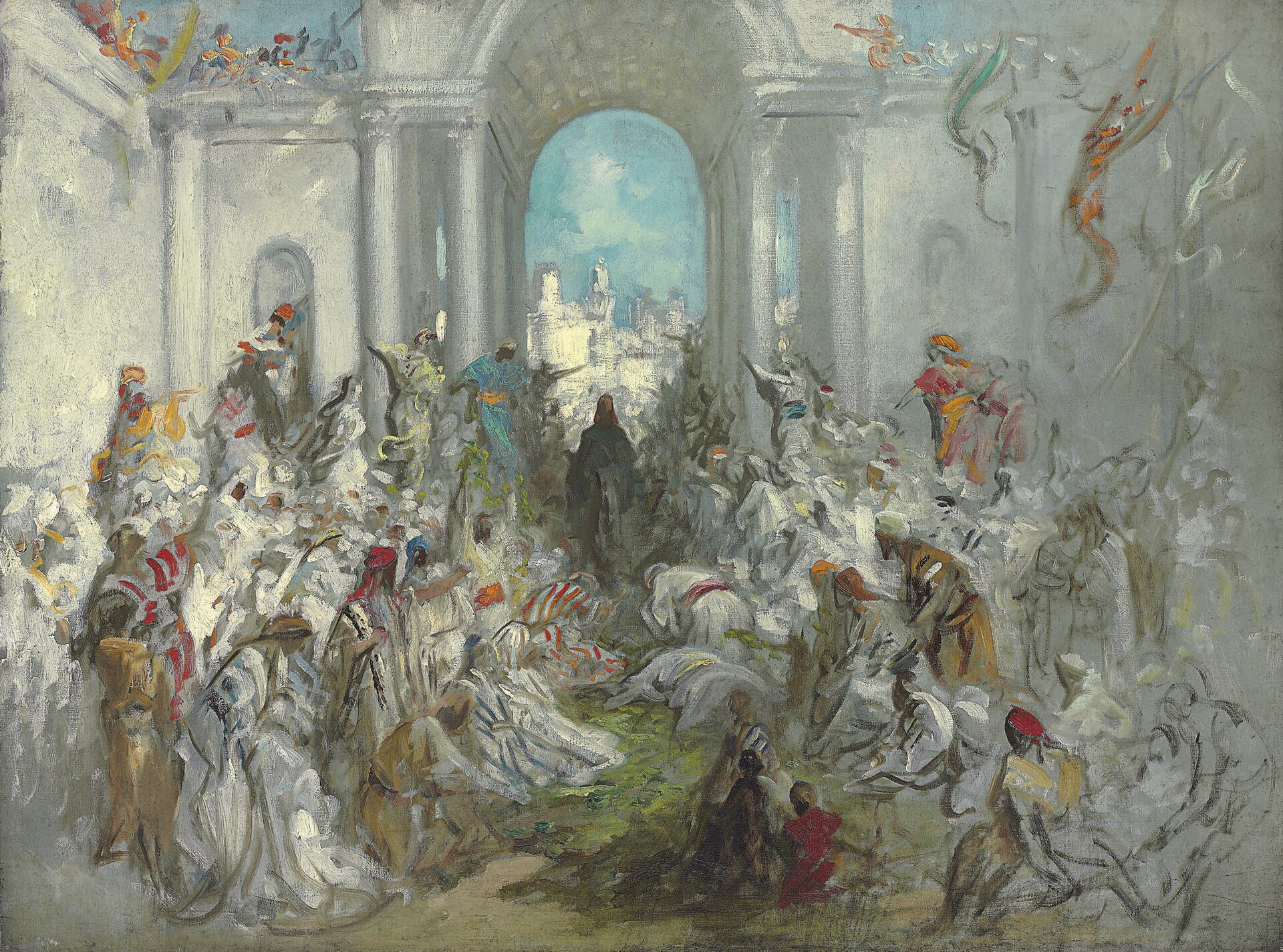
The Triumphal Entry into Jerusalem — Gustave Doré (engraving), public domain
A.Riding into Jerusalem on a Borrowed Coltvv. 1–11
1As they approached Jerusalem and came to Bethphage on the Mount of Olives, Jesus sent out two disciples,
5“Say to the Daughter of Zion, ‘See, your King comes to you, gentle and riding on a donkey, on a colt, the foal of a donkey.’”
8A massive crowd spread their cloaks on the road, while others cut branches from the trees and spread them on the road.
9The crowds that went ahead of Him and those that followed were shouting: “Hosanna to the Son of David!” “Blessed is He who comes in the name of the Lord!” “Hosanna in the highest!”
B.Tables Overturned; Children Crying Hosannavv. 12–17
12Then Jesus entered the temple courts and drove out all who were buying and selling there. He overturned the tables of the money changers and the seats of those selling doves.
13And He declared to them, “It is written: ‘My house will be called a house of prayer.’ But you are making it ‘a den of robbers.’”
16“Do You hear what these children are saying?” they asked. “Yes,” Jesus answered. “Have you never read: ‘From the mouths of children and infants You have ordained praise’?”
C.The Fig Tree That Withered Awayvv. 18–22
D.By What Authority Do You Do These Things?vv. 23–27
23When Jesus returned to the temple courts and began to teach, the chief priests and elders of the people came up to Him. “By what authority are You doing these things?” they asked. “And who gave You this authority?”
25What was the source of John’s baptism? Was it from heaven or from men?” They deliberated among themselves and said, “If we say, ‘From heaven,’ He will ask, ‘Why then did you not believe him?’
E.Two Sons and the Wicked Vinedressersvv. 28–46
28But what do you think? There was a man who had two sons. He went to the first one and said, ‘Son, go and work today in the vineyard.’
31Which of the two did the will of his father?” “The first,” they answered. Jesus said to them, “Truly I tell you, the tax collectors and prostitutes are entering the kingdom of God before you.
33Listen to another parable: There was a landowner who planted a vineyard. He put a wall around it, dug a winepress in it, and built a tower. Then he rented it out to some tenants and went away on a journey.
42Jesus said to them, “Have you never read in the Scriptures: ‘The stone the builders rejected has become the cornerstone. This is from the Lord, and it is marvelous in our eyes’?
The exposition on this chapter draws on 9 works.
The exposition on this chapter draws on Adam Clarke, Commentary on the Bible; Albert Barnes, Notes, Explanatory and Practical, on the Gospels; Jamieson, Fausset & Brown, Commentary Critical and Explanatory on the Whole Bible; John Calvin, Commentary on a Harmony of the Evangelists; John Chrysostom, Homilies on the Gospel of Matthew; John Gill, Exposition of the New Testament; John Lightfoot, Horae Hebraicae et Talmudicae on Matthew; John Wesley, Explanatory Notes upon the New Testament and Matthew Henry, Commentary on the Whole Bible.
Words in this chapter
Counted by lemma: every form of one word counts as one use. The article, the object marker, the negatives and the common prepositions are left out.
- WhoG5101×7 uses
τίςtis · τίti · Τίti
- ifG1437×5 uses
ἐάνean · ἐὰνean
- HosannaG5614×3 uses
ὡσαννὰhosanna
- AmenG281×2 uses
ἀμὴνamen
- NeitherG3761×2 uses
οὐδὲoude
- BethphageG967×1 use
Βηθφαγὴbethphage
- thatG2443×1 use
ἵναina
- of Zion;G4622×1 use
Σιών·sion
- NazarethG3478×1 use
Ναζαρὲθnazareth
- HowG4459×1 use
πῶςpos
- as much asG3745×1 use
ὅσαhosa
- FromG3844×1 use
παρὰpara
- sayingG3004×23 uses
λέγωνlegon · λέγοντος·legontos · λέγοντες·legontes · λέγουσα·legousa · ἔλεγον·elegon · λέγειlegei · λέγοντας·legontas · λέγουσιν;legousin · λέγωlego · λέγουσινlegousin · λέγων·legon · Λέγειlegei · λέγει.legei
- may sayG2036×15 uses
εἴπῃeipe · εἴπατεeipate · εἶπανeipan · εἶπενeipen · εἴπητε·eipete · εἴπητέeipete · εἴπωμεν·eipomen · εἶπαν·eipan · εἶπεν·eipen · εἶπονeipon
- having doneG4160×11 uses
ποιήσαντεςpoiesantes · ποιεῖτεpoieite · ἐποίησενepoiesen · ποιήσετε,poiesete · ποιεῖςpoieis · ποιῶ.poio · ποιῶ.¶poio · ἐποίησανepoiesan · ποιήσειpoiesei · ποιοῦντιpoiounti
- JesusG2424×10 uses
Ἰησοῦςiesous · Ἰησοῦς,iesous · Ἰησοῦiesou · Ἰησοῦς·iesous
- cameG2064×7 uses
ἦλθονelthon · ἔρχεταίerchetai · ἐρχόμενοςerchomenos · ἦλθενelthen · ἐλθόντοςelthontos · ἔλθῃelthe
- to Me.G3165×6 uses
μοι.moi · μουmou · μοιmoi · ἡμῖν·hemin · μου.¶mou · ἡμῶν;¶hemon
- has,G2192×6 uses
ἔχει,echei · ἔχητεechete · ἔχουσινechousin · εἶχενeichen · σχῶμενschomen · εἶχον.¶eichon
- [the] foalG5207×6 uses
υἱὸνhuion · υἱῷhuio · υἱόνhuion
- to farmersG1092×6 uses
γεωργοῖςgeorgois · γεωργοὺςgeorgous · γεωργοὶgeorgoi
- sentG649×5 uses
ἀπέστειλενapesteilen · ἀποστελεῖapostelei
- LordG2962×5 uses
κύριοςkurios · κυρίου,kuriou · κύριε·kurie · κυρίουkuriou
- has come to passG1096×5 uses
γέγονενgegonen · γένηταιgenetai · γενήσεται·genesetai · ἐγενήθηegenethe · ἐγένετοegeneto