
Lukechapter 19
48 verses · Luke · about AD 62 · The Gospels
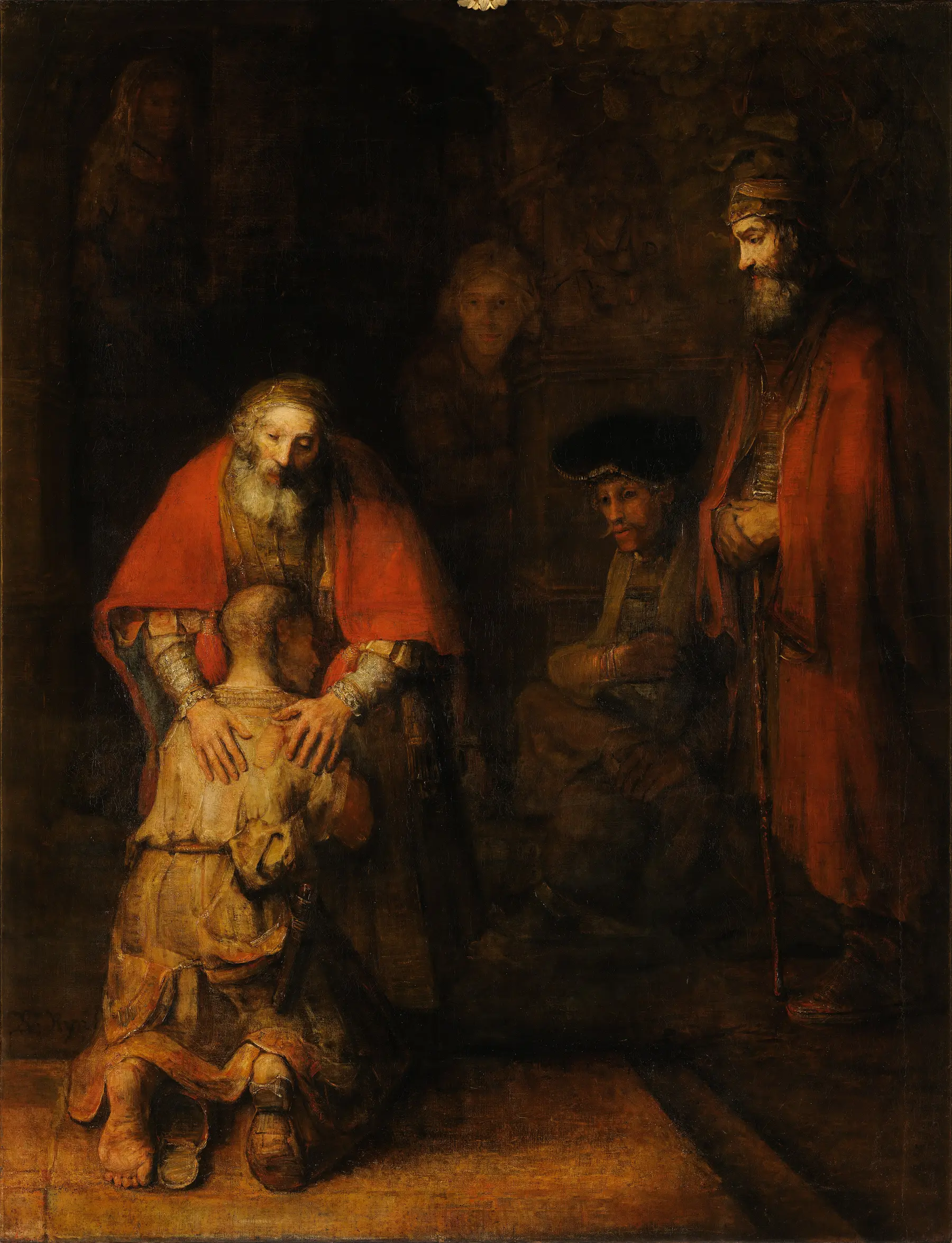
As Jesus approached Jerusalem and saw the city, He wept over it
Introduction
Luke, The Gospels, Luke Overview.
Luke wrote this chapter as the hinge of his Gospel, where the long road ends and Jesus reaches Jerusalem. It begins in Jericho, a rich town on the trade route, and climbs the steep road to the Mount of Olives and the temple. Along the way comes a parable that Luke says was told because the crowd expected the kingdom to appear at once. Listen for the word today, and for the contrast between joy on the road and tears over the city. The chapter ends with the people hanging on His words and the leaders looking for a way to destroy Him.
Context
- Who
- A Greek reader who would recognise the politics behind the parable
- What
- The conversion of Zacchaeus, the parable of the ten minas, the entry into Jerusalem, the lament over the city and the clearing of the temple.
- Where
- Jericho, the road up to Jerusalem, Bethphage and Bethany on the Mount of Olives, and the temple courts.
- When
- At the end of the road, in the days before the Passover at which Jesus was crucified, about AD 30 or 33.
- Why
- To show that the Son of Man came to find and rescue the lost, and that Jerusalem did not recognise the time of its visitation.
Historical context
Zacchaeus holds an unusual title, chief tax collector, and Jericho explains it. The town sat on the trade route where goods crossed into Judea, and its balsam groves produced one of the most valuable commodities in the empire. A man who held the collection rights there, with others working under him, would be extremely wealthy and extremely resented.
Show the rest of the historical context, 3 more paragraphs
The sycamore-fig he climbs is a broad, low-branching tree that grows along roads in that valley, an easy climb for a short man, and an undignified place for a rich one. His restitution goes past what the Law demanded; fourfold repayment was the penalty for outright theft of livestock, and he applies it to himself voluntarily.
The parable of the nobleman who travels to a far country to receive a kingdom is drawn from recent history everyone knew. When Herod the Great died, his son Archelaus sailed to Rome to have his rule confirmed, and a delegation of Jews followed to petition against him. Archelaus got a reduced authority and dealt harshly with his opponents on his return. Josephus tells the story, and Jericho, where Jesus tells it, had a palace connected with that family.
The entry follows the road over the Mount of Olives, and the city comes into view suddenly at the ridge, which is where Luke places the weeping. His description of what is coming is a siege in detail: an embankment thrown up, the city surrounded, hemmed in on every side. Rome did exactly that in AD 70, and Josephus describes the wall the legions built around Jerusalem.
Significance
Zacchaeus gives Luke his thesis line: the Son of Man came to seek and to save the lost. The chief tax collector of a rich town is the last person on any respectable list, and salvation comes to his house today.
Show the rest of the significance, 1 more paragraph
The tears over the city then explain the tragedy Luke's readers had lived through. You did not know the time of your visitation. And the temple action that follows, my house shall be a house of prayer, set up the confrontation that would end the journey.
The heads below are this chapter's scenes. The numbered points under each are its verses.
Zacchaeus Up the Sycamore Tree
Luke 19:1-4
Then Jesus entered Jericho: and was passing through, one more meeting on the road to Jerusalem after the blind beggar of chapter 18. Zacchaeus was a chief tax collector, who was very wealthy, a Jew collecting Rome's taxes from his own people. Small in stature, he climbed a sycamore tree.
Luke 19:1
“This city was build under a curse, yet Christ honoured it with his presence, for the gospel takes away the curse. Though it ought not to have been built, yet it was not therefore a sin to live in it when it was built.”
Matthew Henry · Commentary on the Whole Bible (1707-1721)puritan
a chief tax collector: Barnes notes that the name Zacchaeus is Hebrew and means pure, so this chief tax collector was a Jew. Ambrose sets him beside the blind man by the road. Jesus shows mercy to the one and stays in the house of the other.
Luke 19:2
“Zaccheus - It is not unlikely that this person was a Jew by birth, see Luk 19:9; but because he had engaged in a business so infamous, in the eyes of the Jews, he was considered as a mere heathen, Luk 19:7. Chief among the publicans - Either a farmer-general of the taxes, who had subordinate collectors under him: or else the most respectable and honorable man among that class at Jericho. He was rich - And therefore the more unlikely to pay attention to an impoverished Messiah, preaching a doctrine of universal mortification and self-denial.”
Adam Clarke · Commentary on the Bible (1810-1826)evangelical
he was small in stature: Jamieson, Fausset and Brown read his wish to see who Jesus was as curiosity at first, overruled for more than he sought. Ambrose asks why Luke gives the stature of this man alone. He offers that Zacchaeus was young in wickedness or still weak in faith.
Luke 19:3
“Who he was - Rather “what sort of person,” he was, or how he appeared. He had that curiosity which is natural to people to see one of whom they have heard much. It would seem, also, that in this case mere “curiosity” led to his conversion and that of his family. Compare 1Co 14:23-25. God makes use of every principle - of curiosity, or sympathy, or affection, or hope, or fear - to lead people in the way of salvation, and to impress truth on the minds of sinners. The press - The crowd; the multitude that surrounded Jesus.”
1 more voice on this verse
Luke 19:3
“He could not get his curiosity gratified in this matter because he was little, and the crowd was great. Christ did not study to show himself, was not carried on men's shoulders (as the pope is in procession), that all men might see him; neither he nor his kingdom came with observation.”
Matthew Henry · Commentary on the Whole Bible (1707-1721)puritan
climbed a sycamore tree: Jamieson, Fausset and Brown identify the sycamore as the Egyptian fig, with leaves like the mulberry. A wealthy man runs ahead and climbs a tree to see over the crowd. Augustine reads Zacchaeus as humble and the crowd as haughty.
Luke 19:4
“He has well added, that our Lord was to pass that way, either where the sycamore-tree was, or where he was who was about to believe, that so He might preserve the mystery, and sow the seeds of grace. For He had so come as that through the Jews He came to the Gentiles. He sees then Zacchæus above, for already the excellence of his faith shone forth amidst the fruits of good works, and the loftiness of the fruitful tree; but Zacchæus stands out above the tree, as one who is above the law.”
Ambrose of Milan · written before 397 · Catena Aurea by Aquinaspatristic
1 more voice on this verse
Luke 19:4
“He ran before - The shortness of his stature was amply compensated by his agility and invention. Had he been as tall as the generality of the crowd, he might have been equally unnoticed with the rest. His getting into the tree made him conspicuous: had he not been so low of stature he would not have done so. Even the imperfections of our persons may become subservient to the grace of God in our eternal salvation.”
Adam Clarke · Commentary on the Bible (1810-1826)evangelical
Luke 19:5-7
Jesus calls Zacchaeus by name and invites Himself: I must stay at your house today. Today is Luke's word for salvation arriving now, as to the shepherds at 2:11 and the thief at 23:43. When all who saw this began to grumble, the objection of chapters 7 and 15 returned.
Luke 19:5
“Abide at thy house - Remain there, or put up with him. This was an honor which Zacchaeus did not expect. The utmost, it seems, which he aimed at was to see Jesus; but, instead of that, Jesus proposed to remain with him, and to give him the benefit of his personal instruction.”
2 more voices on this verse
Luke 19:5
“Zaccheus, make haste, and come down. It is a remarkable instance of favor, that the Lord anticipates Zaccheus, and does not wait for his invitation, but of his own accord asks lodging at his house.”
John Calvin · Commentaries (1554)reformed
Luke 19:5
I THINK this is the only instance in which our Lord invited Himself to anybody's house. He often went when He was invited, but this time, if I may use the expression, He did the inviting Himself! Usually we must seek the Lord if we want to find Him. To the eye, at any rate, the apparent work of Grace goes on in this way—a man begins to cry for mercy, as the blind man who heard that Jesus of Nazareth was passing by, cried to Him, "You Son of David, have mercy on me."
Charles Spurgeon · written before 1892 · The Metropolitan Tabernacle Pulpit, Sermon No. 2755: “Must He?” (lightly modernized text, CCEL edition)Particular Baptist
welcomed Him joyfully: Jamieson, Fausset and Brown ask where sudden joy came from in the cold heart of an avaricious tax collector. They answer that the change within him was complete and instant. Henry notes that Zacchaeus came from curiosity and received more than he sought.
Luke 19:6
“THIS morning [Sermon #1624, Volume 27—WELCOME! WELCOME!"] I showed you, dear Friends, how joyfully Jesus receives sinners—how He welcomes them— how glad He is to find those whom He came to seek and to save. From this text it appears that when sinners receive Jesus, they receive Him joyfully, so that there is joy on both sides. It is a joyful business altogether—the Savior is glad to save and the sinner is glad to be saved!”
Charles Spurgeon · written before 1892 · The Metropolitan Tabernacle Pulpit, Sermon No. 2701: “Jesus Joyfully Received” (lightly modernized text, CCEL edition)Particular Baptist
4 more voices on this verse
Luke 19:6
“See here, the camel disencumbered of his hunch passes through the eye of a needle, that is, the rich man and the publican abandoning his love of riches, and loathing his dishonest gains, receives the blessing of his Lord's company. It follows, And he made haste, and came down, and received him joyfully.”
Bede · written before 735 · Catena Aurea by Aquinaspatristic
Luke 19:6
“And he made haste,.... Such power went along with the words of Christ, that they immediately reached his heart, awakened his conscience, affected his mind, and drew his soul to Christ, and knit him to him, that be made all imaginable haste to be with him.”
Luke 19:6
“But Zacchæus made no delay in what he did, and so was accounted worthy of the favour of God, which gives sight to the blind, and calls them who are afar off.”
Cyril of Alexandria · written before 444 · Catena Aurea by Aquinaspatristic
Luke 19:6
“Received him joyfully - He had now seen Who he was, and he wished to hear What he was; and therefore he rejoiced in the honor that God had now conferred upon him. How often does Christ make the proposal of lodging, not only in our house, but in our heart, without its being accepted!”
Adam Clarke · Commentary on the Bible (1810-1826)evangelical
Jamieson, Fausset and Brown note that being the guest of a man goes further than eating with sinners, the complaint of 15:2. All who saw began to grumble. Bede reads the grumbling as hostility to the salvation of the nations.
Luke 19:7
“Murmured - Found fault, complained. To be a guest - To remain with, or to be entertained by. A man that is a sinner - All publicans they regarded as great sinners, and the “chief” of the publicans, therefore, they regarded as especially wicked. It would appear also from Zacchaeus’ confession that his character “had been” that of an oppressive man. But the people seemed to forget that he might be a penitent, and that the Messiah came to save that which was lost.”
1 more voice on this verse
Luke 19:7
“PUBLICANS, or tax-gatherers, among the Jews were objects of intense aversion. The nation was always restless under the Roman yoke, for the Israelite's pride of lineage made him boast that he was born free and was never in bondage unto any man. Moreover, they had hopes of a great future under a Messiah who would lead them on to conquest and, therefore, the Roman yoke galled their shoulders exceedingly and the payment of taxes to a foreign power was a heavy grievance.”
Luke 19:8-10
half of my possessions: Zacchaeus pledges half of my possessions to the poor, and fourfold to anyone he cheated, more than the law required. Jesus answers, Today salvation has come to this house, because this man too is a son of Abraham. His purpose recalls chapter 15: to seek and to save the lost.
Luke 19:8
“There was no demand made for either; but, as if to revenge himself on his hitherto reigning sin (see on Joh 20:28), and to testify the change he had experienced, besides surrendering the half of his fair gains to the poor, he voluntarily determines to give up all that was ill-gotten, quadrupled. He gratefully addressed this to the "Lord," to whom he owed the wonderful change.”
Jamieson, Fausset & Brown · Commentary Critical and Explanatory on the Whole Bible (1871)reformed
2 more voices on this verse
Luke 19:8
“He does not expect to be justified by his works as the Pharisee who boasted of what he had done, but by his good works he will, through the grace of God, evidence the sincerity of his faith and repentance; and here he declares what his determination was.”
Matthew Henry · Commentary on the Whole Bible (1707-1721)puritan
Luke 19:8
“The half of my goods I give to the poor - Probably he had already done so for some time past; though it is generally understood that the expressions only refer to what he now purposed to do.”
Adam Clarke · Commentary on the Bible (1810-1826)evangelical
this man too is a son of Abraham: Theophylact reads the house as the man who lives in it, so the salvation announced is Zacchaeus's own. Son of Abraham answers the grumbling of verse 7. Clement of Alexandria notes that Jesus bid rich tax collectors entertain Him and left them their property.
Luke 19:9
“Finally, he also calls sons of Abraham those whom he perceives are active in helping and nourishing the poor. Zacchaeus said, "Behold, I give one half of my possessions to the poor, and if I have defrauded anyone of anything, I restore it fourfold." Jesus responded, "Today salvation has come to this house, since he too is a son of Abraham." If Abraham believed in God and it was accounted to him as righteousness, then he who gives alms according to the command of God certainly believes in God. He that possesses the true faith keeps the fear of God.”
Cyprian · written before 258 · Treatise VIII. On Works and Alms 8patristic
4 more voices on this verse
Luke 19:9
“Salvation is come to this house - This family. They have this day received the blessings of the gospel, and become interested in the Messiah’s kingdom. Salvation “commences” when people truly receive Christ and their sins are pardoned; it is “completed” when the soul is sanctified and received up into heaven. Forasmuch - Because. For he has given “evidence” that he is a new man, and is disposed to forsake his sins and receive the gospel. The son of Abraham - Hitherto, although a Jew, yet he has been a sinner, and a great sinner.”
Luke 19:9
“And Jesus said unto him,.... The Persic version reads, "Jesus said to the multitude, and to his disciples"; to which well enough agree the following words: this day is salvation come to this house: to the master of it, and it may be to others in it; the Arabic version reads, "to the inhabitants of this house".”
Luke 19:9
“OBSERVE, dear Friends, that our Lord spoke this sentence to Zacchaeus. Some of us may have fancied that He said it to the objecting people, but He did not. They may have heard it and their objection may have been answered by it, but the main purpose of our blessed Lord, in uttering those words, was not to answer objectors, but to comfort one who might feel dispirited by their murmuring remark. Therefore, "Jesus said unto him, This day is salvation come to this house." It is always better to comfort Believers than to answer quibblers.”
Charles Spurgeon · written before 1892 · The Metropolitan Tabernacle Pulpit, Sermon No. 2665: “A Day to Be Remembered” (lightly modernized text, CCEL edition)Particular Baptist
Luke 19:9
“But salvation to a house is an exceedingly precious idea, expressing the new air that would henceforth breathe in it, and the new impulses from its head which would reach its members (Ps 118:15; Ac 16:15, 16, 31). son of Abraham--He was that by birth, but here it means a partaker of his faith, being mentioned as the sufficient explanation of salvation having come to him.”
Jamieson, Fausset & Brown · Commentary Critical and Explanatory on the Whole Bible (1871)reformed
Theophylact reads the saying as Jesus shutting the mouths of those who grumbled that He entered a sinful man's house. The Son of Man seeks first and then saves. Bonaventure hears behind it the psalm's prayer of a sheep gone astray, asking to be sought.
Luke 19:10
“Christ undertook the cause when it was given up for lost: undertook to bring those to themselves that were lost to God and all goodness. Observe, Christ came into this lost world to seek and save it. His design was to save, when there was not salvation in any other.”
Matthew Henry · Commentary on the Whole Bible (1707-1721)puritan
1 more voice on this verse
Luke 19:10
“HOW FOND OUR MASTER WAS of the sweet title, the “Son of Man!” If he had chosen, he might always have spoken of himself as the Son of God, the Everlasting Father, the Wonderful, the Counseller, the Prince of Peace. He hath a thousand gorgeous titles, resplendent as the throne of heaven, but he careth not to use them: to express his humility and let us see the lowliness of him whose yoke is easy and whose burden is light.”
Ten Servants and the Pounds Entrusted to Them
Luke 19:11-14
proceeded to tell them a parable: Jesus told a parable, because He was near Jerusalem and they thought the kingdom of God would appear imminently. A nobleman went to a distant country to lay claim to his kingship, as Herod's sons had travelled to Rome for such confirmation.
Luke 19:11
“There were some who thought that our Saviour's kingdom would commence at His first coming, and they were expecting it shortly to appear when He was preparing to go up to Jerusalem; so astonished were they by the divine miracles which He did. He therefore informs them, that He should not receive the kingdom from His Father until He had left mankind to go to His Father.”
Eusebius of Caesarea · written before 339 · Catena Aurea by Aquinaspatristic
3 more voices on this verse
Luke 19:11
“He spake a parable - This parable has in some respects a resemblance to the parable of the “talents” in Mat 25:14-28, but it is not the same. They differ in the following respects: That was spoken “after” he had entered Jerusalem; this, while on his way there. That was delivered on the Mount of Olives; this, in the house of Zacchaeus. That was delivered to teach them the necessity of “improving” the talents committed to them; this was for a different design. He was now near Jerusalem. A great multitude attended him.”
Luke 19:11
“They thought the kingdom of God - A glorious temporal kingdom, would immediately appear.”
John Wesley · Explanatory Notes upon the New Testament (1755)evangelical
Luke 19:11
“Christ must go to heaven, to sit down at the right hand of the Father there, and to receive from him honour and glory, before the Spirit was poured out by which his kingdom was to be set up on earth, and before a church was to be set up for him in the Gentile world. He must receive the kingdom, and then return.”
Matthew Henry · Commentary on the Whole Bible (1707-1721)puritan
to lay claim to his kingship and then return: Wesley reads the distant country as heaven, where Christ went to receive all authority in heaven and earth. The departure answers the hope of verse 11 with a delay. Basil calls Him noble in His manhood as well as His Godhead, sprung from the seed of David.
Luke 19:12
“He went into a far country to receive a kingdom - Christ went to heaven, to receive his sovereign power as wan, even all authority in heaven and earth.”
John Wesley · Explanatory Notes upon the New Testament (1755)evangelical
1 more voice on this verse
Luke 19:12
“A certain nobleman - In the following parable there are two distinct morals intended; let it be viewed in these two points of light. 1. The behavior of the citizens to the nobleman; and, 2. The behavior of his own servants to him. 1. By the behavior of the citizens, and their punishment, (Luk 19:14, Luk 19:27), we are taught that the Jews, who were the people of Christ, would reject him, and try to prevent his reigning over them in his spiritual kingdom, and would for that crime be severely punished by the destruction of their state.”
Adam Clarke · Commentary on the Bible (1810-1826)evangelical
Each servant receives the same sum, one mina. Augustine reads the ten minas as the law of the ten commandments. The ten servants are those under the law to whom grace was preached.
Luke 19:13
“Ten servants - Nothing in particular is denoted by the number “ten.” It is a circumstance intended to keep up the narrative. In general, by these servants our Saviour denotes his disciples, and intends to teach us that talents are given us to be improved, for which we must give an account at his return. Ten pounds - The word translated “pound” here denotes the Hebrew “minah,” which was equal to about 15 dollars, or 3 British pounds.”
Jamieson, Fausset and Brown take the subjects to be the Jews of that day. At John 19:15 they said they had no king but Caesar. The delegation is sent after him.
Luke 19:14
It says that his citizens hated him. Likewise, Christ admonishes the Jewish crowds, saying, "If I had not done among them the works which no one else did, they would not have sin; but now they have seen and hated both me and my Father." They would not let him reign over them, and yet the holy prophets were constantly speaking predictions of Christ as a king. One of them even said, "Rejoice greatly, daughter of Zion, for your King comes to you, just, and a Savior; he is meek, and riding on a donkey, and on a new foal."
Cyril of Alexandria · written before 444 · Commentary on Luke, Homily 128patristic
1 more voice on this verse
Luke 19:14
“They not only opposed him, while he was in obscurity; but, when he was gone into glory, to be invested in his kingdom, then they continued their enmity to him, protested against his dominion, and said, We will not have this man to reign over us. [1.] This was fulfilled in the prevailing infidelity of the Jews after the ascension of Christ, and the setting up of the gospel kingdom.”
Matthew Henry · Commentary on the Whole Bible (1707-1721)puritan
Luke 19:15-19
what each one had earned: The master summoned the servants to find out what each one had earned, so the minas were for use. Ten minas win ten cities and five win five, rule for being faithful in a very small matter. This answers the servant saying of chapter 17 from the other side.
Luke 19:15
“When he was returned - When he came to punish the disobedient Jews; and when he shall come to judge the world. See the parable of the talents, Mat 25:14 (note), etc.”
Adam Clarke · Commentary on the Bible (1810-1826)evangelical
The servant credits the gain to his master's mina. Bede reads the first servant as the order of teachers sent to the circumcision, given one faith to preach, whose one mina gained ten.
Luke 19:16
“But the ten cities are the souls over whom he is rightly placed who has deposited in the minds of men his Lord's money and the holy words, which are tried as silver is tried in the fire. For as Jerusalem is said to be built as a city, (Ps. 121:3.) so are peace-making souls. And as angels have rule, so have they who have acquired the life of angels. It follows, And the second came, saying, Lord, thy pound has gained five pounds.”
Ambrose of Milan · written before 397 · Catena Aurea by Aquinaspatristic
2 more voices on this verse
Luke 19:16
“Lord, thy pound hath gained ten - The principal difference between this parable and that of the talents above referred to is, that the mina given to each seems to point out the gift of the Gospel, which is the same to all who hear it; but the talents distributed in different proportions, according to each man’s ability, seem to intimate that God has given different capacities and advantages to men, by which this one gift of the Gospel may be differently improved.”
Adam Clarke · Commentary on the Bible (1810-1826)evangelical
Luke 19:16
“Those that are diligent and faithful in serving Christ are commonly blessed in being made blessings to the places where they live. They shall see the travail of their soul, and not labour in vain. And yet all that are alike faithful are not alike successful.”
Matthew Henry · Commentary on the Whole Bible (1707-1721)puritan
faithful in a very small matter: Ten cities repay a very small matter. The Ancient Greek Expositor reads the ten cities as the reward of the servant's own good works. Bede calls that servant faithful who does not adulterate the word of God.
Luke 19:17
“Over ten cities - This is to be understood as referring to the new kingdom which the nobleman had just received. His former trustiest and most faithful servants he now represents as being made governors, under him, over a number of cities, according to the capacity he found in each; which capacity was known by the improvement of the minas.”
Adam Clarke · Commentary on the Bible (1810-1826)evangelical
The second servant gained half as much as the first. Gill calls him less useful yet equally diligent and active. Bede reads him as those sent to preach the gospel to the uncircumcised, whose one mina of faith gained five.
Luke 19:18
“That servant is the assembly of those who were sent to preach the Gospel to the uncircumcision, whose pound, that is the faith of the Gospel, gained five pounds, because it converted to the grace of Evangelical faith, the nations before enslaved to the five senses of the body.”
Bede · written before 735 · Catena Aurea by Aquinaspatristic
The reward matches the gain, five minas and five cities. Henry reads it as degrees of glory in heaven, every vessel full though some larger than others, and the degrees according to usefulness here. The master gives this servant no word of praise.
Luke 19:19
“And he said likewise to him, Be thou also over five cities; that is, be exalted to shine through the faith and conversation of those souls which thou hast enlightened.”
Bede · written before 735 · Catena Aurea by Aquinaspatristic
1 more voice on this verse
Luke 19:19
“And he said likewise to him,.... He commended him as a good and faithful servant, though this is not expressed; and added, be thou over five cities; which does not denote any inequality of glory in Christ's ministers, who will all shine as the firmament, and as the stars for ever and ever; at least, there will be no inequality in the ultimate state of happiness, when all the saints shall shine as the sun in the kingdom of their Father, whatever there may be in the kingdom state, or in Christ's personal reign with his saints on earth.”
Luke 19:20-23
here is your mina: The third servant gives fear as his reason for laying the mina away in a piece of cloth: you are a harsh man. The master takes the description as the charge without disputing it: I will judge you by your own words.
Luke 19:20
“It is all one to them whether the interests of Christ's kingdom sink or swim, go backward or forward; for their parts, they will take no care about it, no pains, be at no expenses, run no hazard. Those are the servants that lay up their pound in a napkin who think it enough to say that they have done no hurt in the world, but did no good.”
Matthew Henry · Commentary on the Whole Bible (1707-1721)puritan
1 more voice on this verse
Luke 19:20
“A napkin - A towel. He means by it that he had not wasted it nor thrown it by carelessly, but had been “very careful” of it; so much so as to be at the pains to tie it up in a towel and put it in a safe place, as if he had been “very faithful” to his trust. So many people employ their talents, their learning, their property, their influence.”
you are a harsh man: The servant says he was afraid of a harsh man who withdraws what he did not deposit. Henry calls the plea a sham. Bonaventure reads him as the sluggard of Proverbs 22, who excuses himself through fear.
Luke 19:21
“An austere man - Hard, severe, oppressive. The word is commonly applied to unripe fruit, and means “sour,” unpleasant; harsh. In this case it means that the man was taking every advantage, and, while “he” lived in idleness, was making his living out of the toils of others. Thou takest up ... - Thou dost exact of others what thou didst not give. The phrase is applied to a man who “finds” what has been lost by another, and keeps it himself, and refuses to return it to the owner.”
1 more voice on this verse
Luke 19:21
“He had no reason to fear his master's austerity, nor blame his expectations, but this was a mere sham, a frivolous groundless excuse for his idleness, which there was no manner of colour for. Note, The pleas of slothful professors, when they come to be examined, will be found more to their shame than in their justification.”
Matthew Henry · Commentary on the Whole Bible (1707-1721)puritan
I will judge you by your own words: The master takes the servant's own description and makes it the charge. Bede calls him wicked for being lazy in doing business and insolent in accusing his master. His own words convict him.
Luke 19:22
“Else, if it is the Creator whom He has here delineated as the "austere man," who "takes up what he laid not down, and reaps what he did not sow," my instructor even here is He, (whoever He may be, ) to whom belongs the money He teaches me fruitfully to expend.”
Tertullian · written before 220 · Against Marcion Book IVpatristic
1 more voice on this verse
Luke 19:22
“Out of thine own mouth - By your own statement, or your own views of my character. If you “knew” that this was my character, and “knew” that I would be rigid, firm, and even severe, it would have been the part of wisdom in you to have made the best use of the money in your power; but as you “knew” my character beforehand, and was well acquainted with the fact that I should demand a strict compliance with your obligation, you have no right to complain if you are condemned accordingly.”
deposit my money in the bank: The bank was the least the servant could have done, a deposit that earns interest with no labor. Augustine reads the bank as the public profession of religion. Bede reads the interest as works that repay the word received by faith.
Luke 19:23
“Wherefore then gavest not thou my money into the bank,.... Or "on the table", at which the bankers sat, and received and delivered money on interest.”
1 more voice on this verse
Luke 19:23
“But money or silver is the preaching of the Gospel and the word of God, for the words of the Lord are pure words as silver tried in the fire. (Ps. 12:6.) And this word of the Lord ought to be given to the bank, that is, put into hearts meet and ready to receive it.”
Bede · written before 735 · Catena Aurea by Aquinaspatristic
Luke 19:24-27
The master gives the mina to the one who has ten minas, by the rule that everyone who has will be given more. Verse 27 returns to the subjects of verse 14.
Luke 19:24
“It is the work of teachers to engraft in their hearers' minds wholesome and profitable words, but of divine power to win the hearers to obedience, and render their understanding fruitful. Now this servant, so far from being commended or thought worthy of honour, was condemned as slothful, as it follows, And he said unto them that stood by, Take from him the pound, and give to him that hath ten pounds.”
Cyril of Alexandria · written before 444 · Catena Aurea by Aquinaspatristic
1 more voice on this verse
Luke 19:24
“It is fit that those should lose their gifts who will not use them, and that those who have dealt falsely should be no longer trusted. Those who will not serve their Master with what he bestows upon them, why should they be suffered to serve themselves with it? It is given to him that had the ten pounds.”
Matthew Henry · Commentary on the Whole Bible (1707-1721)puritan
Those standing by object to the master: the first servant already has ten minas. Clarke notes that the Codex Bezae omits the verse. Gill offers envy at the servant's greater gifts as one reason the bystanders said it.
Luke 19:25
“And they said unto him,.... The bystanders; Lord, he hath ten pounds; which they say either through envy, at his superior gifts, and usefulness; for it is generally the lot of the most eminent and useful servants of Christ to be envied by others; or in surprise, as wondering at the conduct of Christ in giving more to such, who had so much already. The Ethiopic version reads the words by way of interrogation, "hath he not ten pounds?" is not that enough? why should he have more? This verse is left out in Beza's most ancient copy.”
1 more voice on this verse
Luke 19:25
“And because this seems unreasonable and incredible, that he should give to one who has abundance, therefore it is added: And they said to him: Lord, he has ten minas, as if they were saying: this does not seem to be a right judgment.”
Bonaventure · written before 1257 · Commentary on Luke, Chapter 19patristic
everyone who has will be given more: The master's answer is a rule of the kingdom. Theophylact reads it as more given to the one who increased a small sum tenfold. In his reading the idle servant loses even the mina he held, so that the Lord's account has no gap.
Luke 19:26
“And from him that hath not - See this particularly explained Mat 13:12 (note). Perhaps it would be well, with Bishop Pearce, to supply the word gained - give it to him who hath gained ten minas; for I say unto you, That unto every one who hath gained shall be given; and, from him who hath not gained, even that which he hath received, shall be taken away.”
Adam Clarke · Commentary on the Bible (1810-1826)evangelical
2 more voices on this verse
Luke 19:26
“For I say unto you,.... And it may be depended on as truth, and what will be found matter of fact: that unto every one that hath, shall be given; greater and larger gifts, fitting him for greater usefulness: he that has gifts, and makes use of them, increases in them; they enlarge with their use, and become brighter, and he more useful.”
Luke 19:26
“Another thing they expected was, that, when the kingdom of God should appear, the body of the Jewish nation would immediately fall in with it, and submit to it, and all their aversions to Christ and his gospel would immediately vanish; but Christ tells them that, after his departure, the generality of them would persist in their obstinacy and rebellion, and it would be their ruin.”
Matthew Henry · Commentary on the Whole Bible (1707-1721)puritan
these enemies of mine: The parable ends with the enemies of verse 14, unwilling for the nobleman to rule over them as king. Augustine reads these enemies as the Jews who refused to be converted to Him. Theophylact reads the slaying as their destruction.
Luke 19:27
“We are ready to think that none are Christ's enemies but persecutors of Christianity, or scoffers at least; but you see that those will be accounted so that dislike the terms of salvation, will not submit to Christ's yoke, but will be their own masters.”
Matthew Henry · Commentary on the Whole Bible (1707-1721)puritan
The Colt, the Cloaks, and the Crying Stones
Luke 19:28-31
He went on ahead: , going up to Jerusalem, and the road begun at 9:51 reaches the city. The colt on which no one has ever sat was unused like the beasts the law set apart for sacred use (Numbers 19:2).
Luke 19:28
“He went before - Joyfully to anticipate his death, say some. Perhaps it means that he walked at the head of his disciples; and that he and his disciples kept on the road before other companies who were then also on their way to Jerusalem, in order to be present at the feast.”
Adam Clarke · Commentary on the Bible (1810-1826)evangelical
3 more voices on this verse
Luke 19:28
“As long as it was fitting that he should travel the country of the Jews trying to win by lessons and admonitions superior to the law many to the grace that is by faith, he did not cease to do so. The time was now calling Christ to the passion for the salvation of the whole world. He therefore goes up to Jerusalem to free the inhabitants of the earth from the tyranny of the enemy, to abolish death, and to destroy the sin of the world.”
Cyril of Alexandria · written before 444 · Commentary on Luke, Homily 129patristic
Luke 19:28
“No man has a property in his estate against Christ, but that his title is prior and superior. Christ sent to fetch an ass and her colt from their owner's and master's crib, when he had occasion for their service, and might do so, for all the beasts of the forest are his, and the tame beasts too. Christ has all men's hearts both under his eye and in his hand.”
Matthew Henry · Commentary on the Whole Bible (1707-1721)puritan
Luke 19:28
“Let us mark, for one thing, in these verses — the perfect knowledge of our Lord Jesus Christ. We see Him sending two of His disciples to the entrance of a village, and telling them that they would find "a colt tied, which no one has ever ridden." We see Him describing what they would see and hear, with as much confidence as if the whole transaction had been previously arranged. In short, He speaks like one to whom nothing in all creation is hidden from His sight — everything is uncovered and laid bare before His eyes.”
Bethphage and Bethany at the Mount of Olives: Theophylact gives Bethany as house of obedience and Bethphage as house of jaws, a place fit for priests under Deuteronomy 18:3. Ambrose notes that two disciples are sent and suggests Peter to Cornelius and Paul to the rest. The Mount of Olives faces the city from the east.
Luke 19:29
“He came to the Mount of Olives so that he could plant new olive trees on the heights of virtue, the mother of which is the Jerusalem that is above. The heavenly Gardener is on this mountain so that all those who are planted in the house of the Lord may say, "But I am as a fruitful olive in the house of the Lord." Perhaps that mountain is Christ himself. Who else could produce such fruits, not in many round berries but in the fullness of spirit in the fruitful Gentiles?”
Ambrose of Milan · written before 397 · Commentary on Lukepatristic
on which no one has ever sat: Theophylact reads the colt, tied and with many masters, as the Gentile people, untied by the disciples sent. Augustine answers the difference with Matthew, who names a donkey and its colt: where both were present, naming one contradicts nothing. The colt had never been ridden.
Luke 19:30
“For they were in the village, and the colt was tied with its mother, nor could it be loosed except by the command of the Lord. The apostle's hand looses it. Such was the act, such the life, such the grace. Be such, that thou mayest be able to loose those that are bound. In the ass indeed Matthew represented the mother of error, but in the colt Luke has described the general character of the Gentile people.”
Ambrose of Milan · written before 397 · Catena Aurea by Aquinaspatristic
Gill holds that Jesus, knowing all things, foresaw the owners' question and gave the disciples their answer. Origen notes that the colt had many masters until the Saviour needed it, and then no other. Jesus names Himself the Lord.
Luke 19:31
“And if any man ask you, why do ye loose him?.... As our Lord, being God omniscient, knew this question would be asked by the owners, and therefore prepares his disciples with an answer to it: thus shall ye say unto him, because the Lord hath need of him.”
1 more voice on this verse
Luke 19:31
“There were then many masters of this colt, before that the Saviour had need of him. But as soon as He began to be the master, there ceased to be any other. For no one can serve God and mammon. (Matt. 6:24.) When we are the servants of wickedness we are subject to many vices and passions, but the Lord has need of the colt, because He would have us loosed from the chain of our sins.”
Origen of Alexandria · written before 253 · Catena Aurea by Aquinaspatristic
Luke 19:32-35
those who were sent went out: So those who were sent went out and found it just as Jesus had told them, down to the owners' question. Their whole answer, The Lord needs it, is enough. The cloaks they threw over the colt become the cloaks spread on the road in verse 36.
Luke 19:32
“And they that were sent went their way,.... The two disciples that were sent by Christ, were obedient to him, and went, as he directed them, and did as he ordered them; and found, even as he had said unto them. The Vulgate Latin and Ethiopic versions, and so some copies, add, "the colt standing"; that is, in the place, and manner which he had described to them; See Gill on Mar 9:4.”
2 more voices on this verse
Luke 19:32
“Those men who were directed, when they were loosing the colt, did not use their own words, but spoke as Jesus had told them, that you may know that not by their own words, but the word of God, not in their own name but in Christ's, they implanted the faith among the Gentile nations; and by the command of God the hostile powers ceased, which claimed to themselves the obedience of the Gentiles.”
Cyril of Alexandria · written before 444 · Catena Aurea by Aquinaspatristic
Luke 19:32
“Many can be willing to attend Christ at other people's expense who care not to be at any charge upon him themselves; but those disciples not only fetched the ass's colt for him, but cast their own garments upon the colt, and were willing that they should be used for his trappings. Christ's triumphs are the matter of his disciples' praises.”
Matthew Henry · Commentary on the Whole Bible (1707-1721)puritan
its owners asked: The colt has more than one owner. Bede reads the many owners as the teachers of error who held the Gentiles. Titus of Bostra holds that the owners were struck dumb by the greatness of His power, for the Lord is a name of majesty.
Luke 19:33
“And as they were loosing the colt,.... In order to bring it away, as Christ bid them: the owners thereof said unto them, why loose ye the colt?”
1 more voice on this verse
Luke 19:33
“They who had tied the ass are struck dumb, because of the greatness of His mighty power, and are unable to resist the words of the Saviour; for "the Lord" is a name of majesty, and as a King was He about to come in the sight of all the people.”
Titus of Bostra · written before 378 · Catena Aurea by Aquinaspatristic
The disciples repeat the exact words they were given, and the owners let the colt go. Bede notes that those who resisted the loosing grew quiet at the name of the Lord. Bonaventure sees the power of the divine command in it.
Luke 19:34
“And they said, the Lord hath need of him. Or, our Lord, as the above versions in verse 31 (Vulgate Latin and Ethiopic). They used the words Christ directed them to, and it had the effect he said it would; for the owners both let them go, and the colt with them directly; See Gill on Mat 21:6 and See Gill on Mar 11:6.”
threw their cloaks over it: Theophylact reads the ride as fulfilling Zechariah 9:9, where the King comes seated on a beast of burden. The cloaks serve as a saddle for a colt never ridden. Bede reads the garments as the teaching of the apostles.
Luke 19:35
“And they brought him to Jesus,.... That is, the colt: and they cast their garments upon the colt; that is, the disciples, who brought him to Jesus; the Persic version here, as in Mat 21:7 renders it very wrongly, "Jesus put his own garment on its back, and sat on it"; it follows, and they set Jesus thereon; in order to ride upon him, as he did to Jerusalem.”
1 more voice on this verse
Luke 19:35
“The apostles threw down their own garments before Christ. By their preaching of the gospel, they would present the glory of their action. In Holy Scripture, very often garments are virtues, which are to soften the hardness of the Gentiles to some extent by their own virtue, so that with zealous good will they may show the undisturbed obedience of a joyful passage. The Lord of the world was not happy to be carried in a public spectacle on the back of a donkey. With the generalship of piety, he subdued the accustomed disposition of the Gentile people.”
Ambrose of Milan · written before 397 · Commentary on Lukepatristic
Luke 19:36-40
the people spread their cloaks: The disciples' cry, Blessed is the King who comes in the name of the Lord, takes up Psalm 118:26. Asked by Pharisees to rebuke them, He answers that the very stones will cry out.
Luke 19:36
“And as he went,.... Riding on the colt towards Jerusalem: they spread their clothes in the way; not the disciples, for they had put their garments upon the colt; but the multitude, which either came with him from Jericho, and other parts, or that met him from Jerusalem, or both; see Mat 21:8 and so the Persic version here; "men put off their clothes and cast them in the way, that he might pass over then"; See Gill on Mat 21:8.”
the descent from the Mount of Olives: The praise breaks out at the descent from the Mount of Olives, on the road down toward Jerusalem. Jamieson, Fausset and Brown read the wording as a burst of admiration wider and deeper than any seen before. The praise is for the miracles they had seen.
Luke 19:37
“And when he was come nigh,.... To the city of Jerusalem, and which was then in sight, even now at the descent of the Mount of Olives; being come to the foot of that mount, which lay to the east of Jerusalem, and was about five furlongs from it, or a little more than half a mile (o): the whole multitude of the disciples: not only the twelve, but the large company that followed Christ out of Galilee, and were joined by more in Judea, as they came along, some going before him, and others behind him.”
1 more voice on this verse
Luke 19:37
“For it pleased not the Lord of the world to be borne upon the ass's back, save that in a hidden mystery by a more inward sitting, the mystical Ruler might take His seat in the secret depths of men's souls, guiding the footsteps of the mind, bridling the wantonness of the heart. His word is a rein, His word is a goad.”
Ambrose of Milan · written before 397 · Catena Aurea by Aquinaspatristic
The words come from Psalm 118:26, with King added. Theophylact reads peace in heaven as the end of the old enmity between God and men. The crowd echoes the angels' song at the birth in 2:14.
Luke 19:38
“He is blessed for ever, and we will speak well of him. Let the God of heaven send peace and success to his undertaking, and then there will be glory in the highest. It will redound to the glory of the most high God; and the angels, the glorious inhabitants of the upper world, will give him the glory of it.”
Matthew Henry · Commentary on the Whole Bible (1707-1721)puritan
Cross references
Luke 19:38
- QuotingPsalms 118:26“Blessed is he who comes in the name of the LORD. From the house of the LORD we bless you.”
'Blessed be the King that cometh in the name of the Lord'
Theophylact reads the Pharisees as hearing sedition in the name King and blasphemy in praise of Jesus as God. They call Him Teacher and ask Him to silence it. Henry notes that Christ accepts the praises of the humble and despises the contempt of the proud.
Luke 19:39
“Nor is it wonderful that the stones against their nature should chaunt forth the praises of the Lord, whom His murderers, harder than the rocks, proclaim aloud, that is, the multitude, in a little while about to crucify their God, denying Him in their hearts, whom with their mouths they confess. Or perhaps it is said, because, when the Jews were struck silent after the Lord's Passion, the living stones, as Peter calls them, (1 Pet. 2:5.) were about to cry out.”
Ambrose of Milan · written before 397 · Catena Aurea by Aquinaspatristic
Wesley reads the saying as God raising up still more unlikely instruments to declare His praise. Theophylact holds that the crowd praised Him under the compulsion of the mighty works they had seen. The praise will be given one way or another.
Luke 19:40
“But the Lord forbade not them that glorified Him as God, but rather forbade those that blamed them, so bearing witness to Himself concerning the glory of the Godhead. Hence it follows, He answered and said unto them, I tell you, if these should hold their peace, the stones would immediately cry out.”
Cyril of Alexandria · written before 444 · Catena Aurea by Aquinaspatristic
3 more voices on this verse
Luke 19:40
“If these should hold their peace, the stones would - cry out - Of such importance is my present conduct to you and to others, being expressly predicted by one of your own prophets, Zec 9:9, as pointing out the triumph of humility over pride, and of meekness over rage and malice, as signifying the salvation which I bring to the lost souls of men, that, if this multitude were silent, God would give even to the stones a voice, that the advent of the Messiah might be duly celebrated.”
Adam Clarke · Commentary on the Bible (1810-1826)evangelical
Luke 19:40
“If these should hold their peace, the stones, which lie before you, would cry out - That is, God would raise up some still more unlikely instruments to declare his praise.”
John Wesley · Explanatory Notes upon the New Testament (1755)evangelical
Luke 19:40
“This was, in effect, literally fulfilled, when, upon men's reviling Christ upon the cross, instead of praising him, and his own disciples' sinking into a profound silence, the earth did quake and the rocks rent.”
Matthew Henry · Commentary on the Whole Bible (1707-1721)puritan
Weeping Over the City; Cleansing the Temple
Luke 19:41-44
He wept over it: Hailed as King, Jesus wept over the city. If only you had known on this day what would bring you peace names an opportunity now closing. The text gives the cause of the siege Rome laid in AD 70: you did not recognize the time of your visitation from God.
Luke 19:41
“And when he was come near, he beheld city,.... Of Jerusalem; being now nearer, and in a situation to take a full view of it, he lift up his eyes, and looking wistfully on it, and beholding the grandeur and magnificence of it, the number of the houses, and the stately structures in it, and knowing what calamities, in a few years, would come upon it; with which being affected, as man, he looked upon it, and wept over it; touched with a tender concern for it, his natural passions moved, and tears fell plentifully from his eyes.”
2 more voices on this verse
Luke 19:41
“ON three occasions we are told that Jesus wept. You know them well, but it may be worth while to refresh your memories. The first was when our Lord was about to raise Lazarus from the dead. He saw the sorrow of the sisters and He meditated upon the fruit of sin in the death and corruption of the body and He groaned in spirit and it is written that "Jesus wept." Those who divided the chapters did well to make a separate verse of that simple sentence.”
Luke 19:41
“Probably, it was when he was coming down the descent of the hill from the mount of Olives, where he had a full view of the city, the large extent of it, and the many stately structures in it, and his eye affected his heart, and his heart his eye again. What a tender spirit Christ was of; we never read that he laughed, but we often find him in tears.”
Matthew Henry · Commentary on the Whole Bible (1707-1721)puritan
what would bring you peace!: Gregory the Dialogist reads the unfinished sentence as meaning that Jerusalem would weep if it knew, where now it rejoices. Eusebius holds that His coming was to bring peace to the whole world. The chance was this day, and now it is hidden.
Luke 19:42
“The things which belong unto thy peace! - It is very likely that our Lord here alludes to the meaning of the word Jerusalem, ירושלים from ירה yereh, he shall see, and שלום shalom, peace or prosperity. Now, because the inhabitants of it had not seen this peace and salvation, because they had refused to open their eyes, and behold this glorious light of heaven which shone among them, therefore he said, Now they are hidden from thine eyes, still alluding to the import of the name.”
Adam Clarke · Commentary on the Bible (1810-1826)evangelical
your enemies will barricade you: Gregory the Dialogist reads the enemies as the Roman leaders, and the siege as the one laid by the emperors Vespasian and Titus. Barricade translates a word for a siege rampart around the city. Jamieson, Fausset and Brown record that the days came and all was fulfilled to the letter.
Luke 19:43
“Cast a trench about thee - This was literally fulfilled when this city was besieged by Titus. Josephus gives a very particular account of the building of this wall, which he says was effected in three days, though it was not less than thirty-nine furlongs in circumference; and that, when this wall and trench were completed, the Jews were so enclosed on every side that no person could escape out of the city, and no provision could be brought in, so that they were reduced to the most terrible distress by the famine which ensued.”
Adam Clarke · Commentary on the Bible (1810-1826)evangelical
1 more voice on this verse
Luke 19:43
“But our Jerusalem is also wept over, because after sin enemies surround it, (that is, wicked spirits,) and cast a trench round it to besiege it, and leave not a stone behind; especially when a man after long continency, after years of chastity, is overcome, and enticed by the blandishments of the flesh, has lost his fortitude and his modesty, and has committed fornication, they will not leave on him one stone upon another, according to Ezekiel, His former righteousness I will not remember. (Ezek 18:24.)”
Origen of Alexandria · written before 253 · Catena Aurea by Aquinaspatristic
Theophylact reads the visitation as His own coming to visit and save the city. Gregory the Dialogist saw the overthrow in the altered site of the city, rebuilt around the place where Christ was crucified. The judgment answers a visit that went unrecognized.
Luke 19:44
"They shall not leave in you a stone upon a stone"—even the very relocation of that city now testifies, because while it is now built in the place where the Lord had been crucified outside the gate, that former Jerusalem, as it is said, was utterly destroyed. From what fault the punishment of its destruction was inflicted upon it is added: "Because you did not know the time of your visitation." For the Creator of all things deigned to visit it through the mystery of his incarnation, but it did not remember the fear and love of him.
Gregory the Dialogist · written before 604 · Forty Gospel Homilies, Homily 39patristic
2 more voices on this verse
Luke 19:44
“The time of thy visitation - That is, the time of God’s gracious offers of mercy to thee. This took in all the time which elapsed from the preaching of John the Baptist to the coming of the Roman armies, which included a period of above forty years.”
Adam Clarke · Commentary on the Bible (1810-1826)evangelical
Luke 19:44
“The manner of speaking is abrupt: If thou hadst known! O that thou hadst, so some take it; like that O that my people had hearkened unto me, Ps. lxxxi.”
Matthew Henry · Commentary on the Whole Bible (1707-1721)puritan
Luke 19:45-46
began to drive out those: Luke's account of the cleansing is brief beside the other Gospels. My house will be a house of prayer comes from Isaiah 56:7, where the house is for all nations. A den of robbers comes from Jeremiah 7:11.
Luke 19:45
“God does not want his temple to be a trader's lodge but the home of sanctity. He does not preserve the practice of the priestly ministry by the dishonest duty of religion but by voluntary obedience. Consider what the Lord's actions impose on you as an example of living.… He taught in general that worldly transactions must be absent from the temple, but he drove out the moneychangers in particular. Who are the moneychangers, if not those who seek profit from the Lord's money and cannot distinguish between good and evil? Holy Scripture is the Lord's money.”
Ambrose of Milan · written before 397 · Commentary on Lukepatristic
The first line comes from Isaiah 56:7 and the second from Jeremiah 7:11. Ambrose holds that God wants His temple to be the dwelling place of holiness and its service a free and willing obedience. A den is where robbers hide between raids.
Luke 19:46
“Saying unto them, it is written,.... In Isa 56:7 my house is the house of prayer; built and devoted for that service: but ye have made it a den of thieves; which clause is not written in the above prophecy, but are the words of Christ referring to Jer 7:11. The Ethiopic version adds, "and robbers"; and the Persic version adds, "and a place of cut-purses"; See Gill on Mat 21:13.”
Cross references
Luke 19:46
Luke 19:47-48
teaching at the temple every day: Jesus was teaching at the temple every day, in the courts He had just cleared. The chief priests, scribes, and leaders of the people were intent on killing Him, but waited, because all the people hung on His words.
Luke 19:47
“As one who possessed authority over the temple, he took care of it.… Their duty was to worship him, as One who with God the Father was Lord of the temple. In their great folly, they did not do this, but rather being savagely eager for hatred, they set up the sharp sting of wickedness against him and hurried to murder, which is the neighbor and brother of envy. It says that they sought to destroy him but could not, because all the people were hanging on him to hear him.”
Cyril of Alexandria · written before 444 · Commentary on Luke, Homily 132patristic
1 more voice on this verse
Luke 19:47
“And he taught daily in the temple - This he did for five or six days before his crucifixion. Some suppose that it was on Monday in the passion week that he thus entered into Jerusalem, and purified the temple; and on Thursday he was seized late at night: during these four days he taught in the temple, and lodged each night at Bethany. See the note on Mat 21:17.”
Adam Clarke · Commentary on the Bible (1810-1826)evangelical
all the people hung on His words: The people's attention holds back the rulers. Barnes notes that hung on His words means literally hung upon Him to hear, an anxious desire. Bede reads the chief priests and scribes as fearing a tumult among the people and so unable to find a way to kill Jesus.
Luke 19:48
“But the people held Christ in far higher estimation than the Scribes and Pharisees, and chiefs of the Jews, who not receiving the faith of Christ themselves, rebuked others. Hence it follows, And they could not find what they might do: for all the people were very attentire to hear him.”
Cyril of Alexandria · written before 444 · Catena Aurea by Aquinaspatristic
2 more voices on this verse
Luke 19:48
“And could not find what they might do,.... The Vulgate Latin, Syriac, and Ethiopic versions, and so Beza's most ancient copy, add, "to him"; they could not find an opportunity of seizing him, nor any advantage against him; they knew not what steps to take, nor how to bring about their wicked design of destroying him.”
Luke 19:48
“Were very attentive to hear him - Or, They heard him with the utmost attention, εξεκρεματο αυτου ακουων, literally, They hung upon him, hearing. The same form of speech is used often by both Greek and Latin writers of the best repute. - Ex vultu dicentis, pendet omnium vultus. The face of every man hung on the face of the speaker. - Pendetque iterum narrantis ab ore. Virg. Aen. iv. 79 And she hung again on the lips of the narrator.”
Adam Clarke · Commentary on the Bible (1810-1826)evangelical
Keep studying
Studies17
People and groups1
Words12
Subjects1
Sources for this chapter
The summary
Jamieson, Fausset & Brown, Commentary Critical and Explanatory; John Calvin, Commentaries; John Wesley, Explanatory Notes Upon the New Testament and Matthew Henry, Complete Commentary.
The exposition
Adam Clarke, Commentary on the Bible; Albert Barnes, Notes, Explanatory and Practical, on the Old and New Testaments (1832-1869); Alexander Maclaren, Expositions of Holy Scripture, Luke; Ambrose of Milan, Catena Aurea by Aquinas; Ancient Greek Expositor, Catena Aurea by Aquinas; Augustine of Hippo; Basil of Caesarea, Catena Aurea by Aquinas; Bede; Bonaventure, Commentary on Luke, Chapter 19; Clement of Alexandria, Who is the Rich Man that Shall Be Saved?; Cyril of Alexandria, COMMENTARY ON LUKE, HOMILY 128; Eusebius of Caesarea, Catena Aurea by Aquinas; Gregory the Dialogist; J. C. Ryle, Expository Thoughts on the Gospels, Luke; Jamieson, Fausset & Brown, Commentary Critical and Explanatory on the Whole Bible; John Gill; John Wesley, Explanatory Notes upon the New Testament; Matthew Henry, Commentary on the Whole Bible; Origen of Alexandria, Catena Aurea by Aquinas; Theophylact of Ohrid and Titus of Bostra, Catena Aurea by Aquinas.