

Jesus Christ · On Himself
Why He Said He Came
Jesus told people, in plain sentences, why He had come. Not once, in one tidy summary, but several times, in several settings, at a tax collector’s table, on a road to Jerusalem, in a rich man’s house in Jericho, to a crowd still chasing yesterday’s bread. Read together, the sentences all run the same direction: toward the lost, toward sinners, toward a ransom paid, toward a will that was never His own to begin with.
James Tissot, Jesus Unrolls the Book in the Synagogue, c. 1886-1894. Public domain.
Summary
This page gathers four times Jesus stated his own mission in plain words, at a tax collector's table, on the road, in Jericho, and in Capernaum, opened by the manifesto he read in Nazareth.
- Luke 4:18-21 has Jesus announce his mission from Isaiah's scroll before any of it happens.
- Mark 10:45 names his life as a ransom, a price paid to free those who cannot free themselves.
- Luke 19:10, at Zacchaeus's house, gives the clearest single-sentence statement of his mission in the Gospels.
- John 6:38-40 grounds all of it in the Father's will, not Jesus's own.
The Manifesto
Luke 4:18-21, a synagogue in Nazareth, before any of the rest
Before any of the mission statements below, Jesus stood up in His hometown synagogue, was handed the scroll of Isaiah, and read a passage about the Spirit of the Lord anointing someone to preach good news to the poor, freedom for captives, and sight for the blind. Then He sat down and said the passage was about Him, that day, in that room. Everything the ledger below records Him saying about why He came is this same announcement, worked out case by case.
“The Spirit of the Lord is on Me, because He has anointed Me to preach good news to the poor. He has sent Me to proclaim liberty to the captives and recovery of sight to the blind, to release the oppressed, to proclaim the year of the Lord’s favor.” Then He rolled up the scroll, returned it to the attendant, and sat down. The eyes of everyone in the synagogue were fixed on Him, and He began by saying, “Today this Scripture is fulfilled in your hearing.”“This day is this scripture fulfilled in your ears”, the mission stated before any of it happens.
In His Own Words: Why I Came
four settings, four sentences, one direction
At Matthew's table, to Pharisees offended He ate with tax collectors and sinners
“But go and learn what this means: ‘I desire mercy, not sacrifice.’ For I have not come to call the righteous, but sinners.””
On the road to Jerusalem, after James and John asked for the seats of honor
“For even the Son of Man did not come to be served, but to serve, and to give His life as a ransom for many.””
In Jericho, over the objection of a crowd that grumbled He'd gone to a sinner's house
“For the Son of Man came to seek and to save the lost.””
At Capernaum, the day after He fed the five thousand, to a crowd still chasing bread
“For I have come down from heaven, not to do My own will, but to do the will of Him who sent Me.”
Not the Righteous, but Sinners
Matthew 9:13, Matthew's table
Jesus calls Matthew, a tax collector, and then eats at his house with “publicans and sinners.” Watching Pharisees object, and Jesus answers with a line from Hosea and a plain statement of purpose: He did not come for people who think themselves already right with God. He came for the ones who know they are not.
But go and learn what this means: ‘I desire mercy, not sacrifice.’ For I have not come to call the righteous, but sinners.”“I am not come to call the righteous, but sinners, to repentance.”
(Verse 13) I desire mercy, and not sacrifice. For I did not come to call the righteous, but sinners. And the Lord was going to the feasts of sinners, so that He may have an opportunity to teach and provide spiritual food to His invited guests. Ultimately, as He was frequently described as going to feasts, it is only important what He did there, what He taught, in order to demonstrate both the humility of the Lord in going to sinners and the power of His teaching in the conversion of repentant sinners.
Jerome · Commentary on Matthew (420), Matt 9:13
But go ye and learn what that meaneth-- (Ho 6:6), I will have mercy, and not sacrifice--that is, the one rather than the other. "Sacrifice," the chief part of the ceremonial law, is here put for a religion of literal adherence to mere rules; while "mercy" expresses such compassion for the fallen as seeks to lift them up.
Jamieson, Fausset & Brown · Commentary Critical and Explanatory on the Whole Bible (1871), Matt 9:13
But go ye and learn ... - To reprove them, and to vindicate his own conduct, he appealed to a passage of Scripture with which they ought to have been acquainted: I will have mercy, and not sacrifice, Hos 6:6. This is not a declaration on the part of God that he was opposed to sacrifices or offerings for sin; for he had appointed and commanded many, and had therefore expressed his approbation of them.
Albert Barnes · Notes, Explanatory and Practical (1832-1869), Matt 9:13
A Ransom for Many
Mark 10:45, on the road, after James and John ask for the best seats
Two disciples have just asked for the places of highest honor in Jesus’s coming kingdom. Jesus answers by redefining greatness as service, and then names His own life as the pattern: the Son of Man did not come to be served, but to serve, and to give His life a ransom for many. A ransom is a price paid to free someone who cannot free themselves.
For even the Son of Man did not come to be served, but to serve, and to give His life as a ransom for many.”Service first, then the price: His own life, a ransom for many.
It is profitable to me to know that for my sake Christ bore my infirmities, submitted to the affections of my body, that for me and for all he was made sin and a curse, that for me and in me was he humbled and made subject, that for me he is the lamb, the vine, the rock, the servant, the Son of a handmaid, knowing not the day of judgment, for my sake ignorant of the day and the hour.
Ambrose of Milan · Exposition of the Christian Faith 2.92 (397), Mark 10:45
The Served of all came to be the Servant of all; and His last act was the grandest Service ever beheld by the universe of God--"HE GAVE HIS LIFE A RANSOM FOR MANY!", &c. "Many" is here to be taken, not in contrast with few or with all, but in opposition to one--the one Son of man for the many sinners.
Jamieson, Fausset & Brown · Commentary Critical and Explanatory on the Whole Bible (1871), Mark 10:45
Misery is the object of mercy, his own miserable case he recommends to the compassion of the Son of David, of whom it was foretold, that, when he should come to save us, the eyes of the blind should be opened, Isa. xxxv. In coming to Christ for help and healing, we should have an eye to him as the promised Messiah, the Trustee of mercy and grace.
Matthew Henry · Commentary on the Whole Bible (1710), Mark 10:45
To Seek and to Save the Lost
Luke 19:10, Zacchaeus's house, Jericho
Zacchaeus is a chief tax collector, wealthy, and despised for how he got that way. Jesus invites Himself to his house before Zacchaeus has done anything to deserve it, and the crowd grumbles that Jesus has gone to be the guest of a sinner. Zacchaeus repents on the spot, giving half his goods to the poor and repaying what he had cheated fourfold. Jesus’s summary is the clearest single-sentence statement of His mission anywhere in the Gospels.
For the Son of Man came to seek and to save the lost.”The Son of man is come to seek and to save that which was lost.
He will love the flesh which is, so very closely and in so many ways, His neighbour-(He will love it), although infirm, since His strength is made perfect in weakness; although disordered, since "they that are whole need not the physician, but they that are sick; " although not honourable, since "we bestow more abundant honour upon the less honourable members; " although ruined, since He says, "I am come to save that which was lost; " although sinful, since He says, "I desire rather the salvation of the sinner than his death; " although condemned, for says He, "I shall wound, and also heal.
Tertullian · On the Resurrection of the Flesh (220), Luke 19:10
Christ undertook the cause when it was given up for lost: undertook to bring those to themselves that were lost to God and all goodness. Observe, Christ came into this lost world to seek and save it. His design was to save, when there was not salvation in any other.
Matthew Henry · Commentary on the Whole Bible (1710), Luke 19:10
The Father's Will, Not His Own
John 6:38-40, Capernaum, the day after the feeding of the five thousand
A crowd Jesus had just fed comes looking for Him again, chasing more bread. Jesus answers with the Bread of Life discourse, and inside it, a statement about His own coming that goes underneath all the others: He did not come down from heaven to run His own errand. He came to carry out the Father’s will, and the Father’s will, He says plainly, is that everyone who looks to the Son and believes should have everlasting life, and be raised up at the last day.
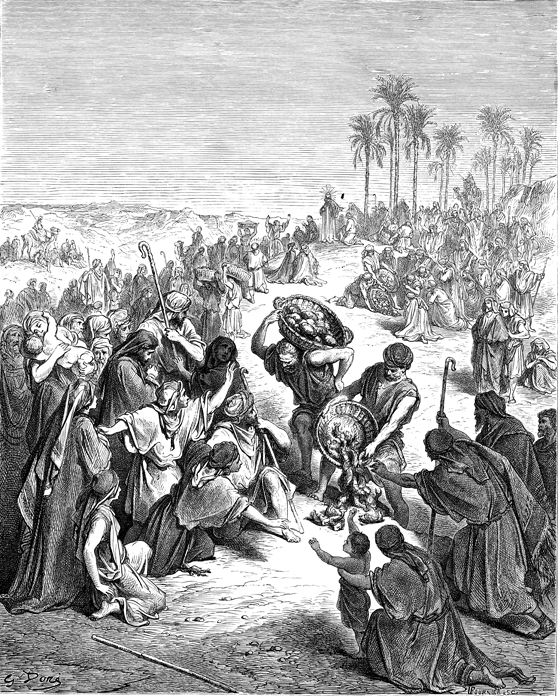
For I have come down from heaven, not to do My own will, but to do the will of Him who sent Me.Not His own will, the Father's, and the Father's will comes next.
And this is the will of Him who sent Me, that I shall lose none of those He has given Me, but raise them up at the last day. For it is My Father’s will that everyone who looks to the Son and believes in Him shall have eternal life, and I will raise him up at the last day.”The Father's will named: none lost, and raised up at the last day.
For I came down from heaven not to do Mine own will--to play an independent part. but--in respect to both the foregoing things, the divine and the human side of salvation. the will of Him that sent Me--What this twofold will of Him that sent Him is, we are next sublimely told (Joh 6:39, 40):
Jamieson, Fausset & Brown · Commentary Critical and Explanatory on the Whole Bible (1871), John 6:38
Not to do mine own will - I am come, not to act according to human motives, passions, or prejudices; but according to infinite wisdom, goodness, and mercy. Jewish passions and prejudices would reject publicans and sinners as those alluded to, and shut the gate of heaven against the Gentiles; but Gods mercy receives them, and I am come to manifest that mercy to men.
Adam Clarke · Commentary on the Bible (1832), John 6:38
Christ speaks here of the whole of his humanity, which he had taken on him in its entirety at his birth. Then shall the sheep that was lost and was wandering in the lower world be carried healthy on the Savior's shoulders. And the sheep that was sick with sin shall be taken care of by the mercy of the Judge.
Jerome · Against John of Jerusalem 34 (420), John 6:39
This is the will of him that sent me - Lest they should take a wrong meaning out of his words, as many have done since, he tells them that, far from any person being excluded from his mercy, it was the will of God that every one who saw him might believe and be saved. The power, without which they could not believe, he freely gave them; but the use of that power was their own. God gives the grace of repentance and faith to every man; but he neither repents nor believes for any man.
Adam Clarke · Commentary on the Bible (1832), John 6:40
Where It Points
every road in this page ends at the same place
Mercy to sinners, a ransom paid, the lost sought and found, the Father’s will carried out to the end, none of these are separate errands. They are one mission, described four times from four angles, and every description ends at the cross. What Jesus said He came to do is what He did.
Closing
Four settings, four sentences, and not one contradicts another. Jesus said He came for sinners, for the lost, to serve rather than be served, and to do a will that was never His own to overrule. He said it before it happened, in Nazareth, and then He kept His word, all the way to the cross.