
Exoduschapter 2
25 verses · BSBExodus book hub →
Speaks with:Acts 7×10Hebrews 11×5Exodus 6×3Exodus 3×4Exodus 1×2Exodus 2×2
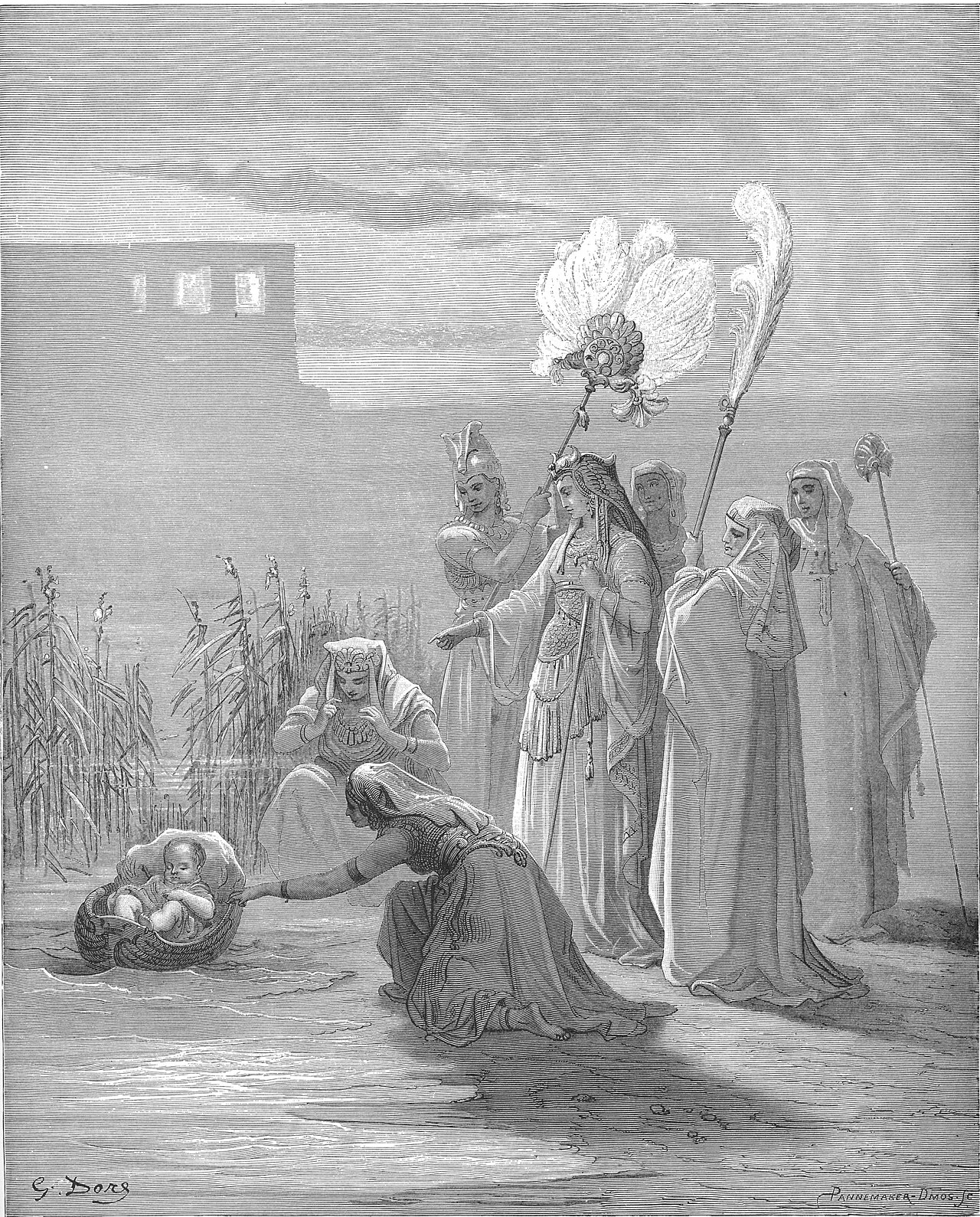
The Finding of Moses — Gustave Doré, Doré's English Bible (1866), public domain
3But when she could no longer hide him, she got him a papyrus basket and coated it with tar and pitch. Then she placed the child in the basket and set it among the reeds along the bank of the Nile.
7Then his sister said to Pharaoh’s daughter, “Shall I go and call one of the Hebrew women to nurse the child for you?”
10When the child had grown older, she brought him to Pharaoh’s daughter, and he became her son. She named him Moses and explained, “I drew him out of the water.”
B.Moses Kills and Fleesvv. 11–15
11One day, after Moses had grown up, he went out to his own people and observed their hard labor. He saw an Egyptian beating a Hebrew, one of his own people.
13The next day Moses went out and saw two Hebrews fighting. He asked the one in the wrong, “Why are you attacking your companion?”
14But the man replied, “Who made you ruler and judge over us? Are you planning to kill me as you killed the Egyptian?” Then Moses was afraid and thought, “This thing I have done has surely become known.”
15When Pharaoh heard about this matter, he sought to kill Moses. But Moses fled from Pharaoh and settled in the land of Midian, where he sat down beside a well.
C.A Stranger in the Land of Midianvv. 16–22
16Now the priest of Midian had seven daughters, and they came to draw water and fill the troughs to water their father’s flock.
18When the daughters returned to their father Reuel, he asked them, “Why have you returned so early today?”
The exposition on this chapter draws on Adam Clarke, Commentary on the Bible; John Calvin, Commentary on the Four Last Books of Moses Arranged in the Form of a Harmony; John Gill, Exposition of the Old Testament; Keil and Delitzsch, Biblical Commentary on the Old Testament: The Pentateuch and Matthew Henry, Commentary on the Whole Bible.
Words in this chapter
Counted by lemma: every form of one word counts as one use. The article, the object marker, the negatives and the common prepositions are left out.
- there notH369×1 use
אֵ֣יןʾein
- ReuelH7467×1 use
רְעוּאֵ֖לreuel
- a sojournerH1616×1 use
גֵּ֣רger
- and she saidH559×13 uses
וַתֹּ֕אמֶרvatomer · וַתֹּ֣אמֶרvatomer · וַתֹּֽאמֶר־vatomer- · וַתֹּ֧אמֶרvatomer · וַיֹּ֙אמֶר֙vaiyomer · וַ֠יֹּאמֶרvaiyomer · אֹמֵ֔רʾomer · וַיֹּאמַ֔רvaiyomar · וַיֹּ֕אמֶרvaiyomer · וַתֹּאמַ֕רְןָvatomarna · וַיֹּ֥אמֶרvaiyomer · אָמַ֔רʾamar
- [the] daughter ofH1323×9 uses
בַּת־bat- · לְבַת־levat- · בָּנ֑וֹתbanot · בְּנֹתָ֖יוbenotav · בִתּ֖וֹvito
- a manH376×8 uses
אִ֖ישׁʾish · אִ֣ישׁʾish · אִישׁ־ʾish- · אִ֑ישׁʾish · לְאִ֨ישׁleish · הָאִ֔ישׁhaish · הָאִ֑ישׁhaish
- the childH3206×8 uses
הַיֶּ֔לֶדhaiyeled · מִיַּלְדֵ֥יmiyaldei · הַיָּֽלֶד׃haiyaled · הַיֶּ֤לֶדhaiyeled · הַיֶּ֖לֶדhaiyeled · הַיֶּ֗לֶדhaiyeled
- MosesH4872×8 uses
מֹשֶׁ֔הmosheh · מֹשֶׁה֙mosheh · מֹשֶׁ֑הmosheh · מֹשֶׁ֖הmosheh · לְמֹשֶֽׁה׃lemosheh
- and she sawH7200×7 uses
וַתֵּ֤רֶאvatere' · וַתִּרְאֵ֣הוּvatirehu · וַיַּ֖רְאvaiyar' · וַיַּרְא֙vaiyar' · וַיַּ֥רְאvaiyar'
- PharaohH6547×7 uses
פַּרְעֹה֙paroh · פַּרְעֹה֒paroh · פַּרְעֹ֖הparoh · פַּרְעֹ֗הparoh · פַּרְעֹ֔הparoh · פַרְעֹ֔הfaroh
- and he wentH1980×6 uses
וַיֵּ֥לֶךְvaiyelekh · הֹלְכֹ֖תholekhot · הַאֵלֵ֗ךְhaelekh · לֵ֑כִיlekhi · וַתֵּ֙לֶךְ֙vatelekh · הֵילִ֜יכִיheilikhi
- a sonH1121×5 uses
בֵּ֑ןben · לְבֵ֑ןleven · בֵּ֔ןben · בְנֵֽי־venei- · בְּנֵ֣יbenei
- and will I call?H7121×5 uses
וְקָרָ֤אתִיvekarati · וַתִּקְרָ֖אvatikra' · וַתִּקְרָ֤אvatikra' · קִרְאֶ֥ןkiren · וַיִּקְרָ֥אvaiyikra'
- and she took himH935×5 uses
וַתְּבִאֵ֙הוּ֙vateviehu · וַתָּבֹ֣אנָהvatavonah · וַיָּבֹ֥אוּvaiyavou · וַתָּבֹ֕אנָהvatavonah · בֹּ֖אbo'
- <the> GodH430×5 uses
הָאֱלֹהִ֖יםhaelohim · אֱלֹהִ֖יםʾelohim · אֱלֹהִים֙ʾelohim · אֱלֹהִֽים׃ סʾelohim
- and he tookH3947×4 uses
וַיִּקַּ֖חvaiyikach · וַתִּֽקַּֽח־vatikach- · וַתִּקָּחֶֽהָvatikacheha · וַתִּקַּ֧חvatikach
- the HebrewsH5680×4 uses
הָֽעִבְרִ֖יםhaivrim · הָעִבְרִיֹּ֑תhaivriyot · עִבְרִ֖יʾivri · עִבְרִ֖יםʾivrim
- a suckling-nurseH3243×4 uses
מֵינֶ֔קֶתmeineket · וְתֵינִ֥קveteinik · וְהֵינִקִ֣הוּveheinikihu · וַתְּנִיקֵֽהוּ׃vatenikehu
- in the daysH3117×4 uses
בַּיָּמִ֣יםbaiyamim · בַּיּ֣וֹםbaiyom · הַיּֽוֹם׃haiyom · בַיָּמִ֨יםvaiyamim
- EgyptianH4713×4 uses
מִצְרִ֔יmitzri · הַמִּצְרִ֔יhamitzri · הַמִּצְרִ֑יhamitzri
- the womanH802×3 uses
הָאִשָּׁ֖הhaishah · אִשָּׁ֣הʾishah · הָאִשָּׁ֛הhaishah
- and she putH7760×3 uses
וַתָּ֤שֶׂםvatasem · וַתָּ֥שֶׂםvatasem · שָֽׂמְךָ֞samekha
- the RiverH2975×3 uses
הַיְאֹֽר׃hayor · הַיְאֹ֔רhayor · הַיְאֹ֑רhayor
- to knowH3045×3 uses
לְדֵעָ֕הledeah · נוֹדַ֥עnoda' · וַיֵּ֖דַעvaiyeda'